|
|
| Home | Marine Aquariums |
Freshwater Aquariums |
Planted Aquariums |
Brackish Systems |
Ponds,
lakes & fountains |
Turtles & Amphibians |
Aquatic Business |
Aquatic Science |
Ask the WWM Crew a Question |
| Please visit our Sponsors | ||||
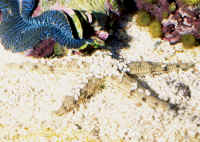
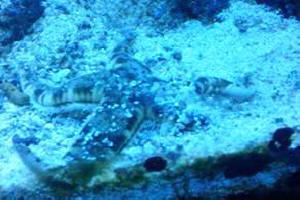
Sand Sifting Star 3/21/08 Hey guys. <Hi Jay.> I had a question about sand sifting stars. I heard from the guys at the LFS that sand sifting stars will take all the nutrients out of live sand. Is this true? <More of the fauna in the sand is what they go after, not desirable.> Because I have several fish that need live sand to thrive and I was just wondering if I need to take this guy back to the store. <I would unless your system is large and you want the sand sifter.> Also what is the smallest tank you would recommend for one of these guys? <100 gallons is the bare minimum for one. The problem being they will deplete the life in the sand bed and eventually starve.> Thanks again you guys, Jay <Welcome, good luck, Scott V.> - This is the End of My Pets and the Tank - All starfishes and worms appears to be dead, and all begins to decay. :( :( :( :( :cry. And so well.. I should tell back the first storyline why this is can happened. I have a 3 gallon tanks (I guess; it was 60 x 30 x 36) and the inhabitants were living with harmony and living happily. The water was so clear, never polluted and nitrates were very low. But... When I want a horned starfish (Protoreastor) I see in the aquaria, I just foolishly selected it and without any guesswork and considers what could be happened. The seller were so clumsy and looked not so smart (did you know how he put the stars in the transport bags?? He took them out from the water and expose them to the air!! <Next time, don't buy them if the store clerk bags them up that way - refuse to pay for them and tell them why; Seastars should not be exposed to the air.> and I'd be sure they became stressed) And, when I opened the bag in my home, milky saturation exists replacing the water. I ignoring it, and started to put the stars in my aquaria (sorry, this ones without acclimatization and I just put them into the small tank because of the heavy bag to put floating in aquarium.) and they starts to exudes the rotting secretion to water, and next day the vision was totally obscured. So, I went to the second aquaria marketplace (with my mother began shouting to me) to buy two gallons of saltwater (hey.. in this country no salt mixes available for this; Bob Fenner maybe had been here, for diving in Bunaken and Bali) and using water changes for this. I change it, and waiting to Monday. Next day, all stars die (they as prominently exuding slime and ossicles were falling apart), worms sheds the crown and die. The only survivors is the semi-terrestrial mangrove Ceriths and they now hanging creeping above water surface. And I am fully aware and sure the water were boosting to high-ammonia, nitrites, nitrates.* sob, sob, waahhh !!!!* Mercifully, my mother did, tolerant this likely unforgivable event and I promised to be more careful in selection and care. So, I planned to restart all of this. I started with Archasters, and some others. Can you give me a recommendation for tankmates for Archasters? <Unless space is a real issue for you, can I convince you to get a slightly larger tank? Three gallons is smaller than small, and as you've now seen things can go badly very fast in a tank of this size. Even so, if you must keep this small system, I really wouldn't put much in it - perhaps one Seastar, one Featherduster, and maybe one shrimp, but that's all. If you put too much life in this tank, you'll have a repeat of this bad experience.> (I would be happy if I can put some other starfish species and Brittlestars) and can I use the old sand (I scared if it was contaminated) for the new setting? <You should be able to use the old sand - just let the tank run for a week or so with nothing else in it.> Thanks a lot!!! Anargha. <Cheers, J -- > Archaster typicus Bob, What are your thoughts on the theory that the Archaster typicus starfish consumes too much of the bacteria in the live sand, depleting the aquarium of the bacteria needed for maintaining the biological equilibrium. <Not a practical consideration. No problem> I have a 40 gallon reef tank that runs on the Berlin system, and I have one Archaster star; I was wondering if this was a legitimate issue. Thanks for the input. B. Brown <Not IMO/E. Bob Fenner> Sand Sifting Star Detrimental to Plenum Setup? I have 40 gallon with a small sump (10 gallon aquarium) that has a 1" plenum and 3" of aragonite sand. Is it possible that the sand sifting star that is in sump could be removing the beneficial bacteria absorbing/eating it)? Or is it doing more help than bad by stirring it up and removing detritus? Are there better creatures for this? (stirring the substrate that is) <Good questions... the Archaster star is doing more good than harm. There are other organisms you could use instead, in addition. Please use the search tool, or marine index to read about "Sand Sifters"... on www.WetWebMedia.com Bob Fenner> Thanks in advance, Dan Sand-sifting Star Compatibility with Cleanup Crew? Hi guys, Haven't written to you in a while, but have been reading the emails everyday. Still amazing answers, just as ever!! <thanks kindly> Today I'd like to ask your take on the following. I have 1 of the common sand sifting stars in my 125g tank. Now before I continue I'd like to say, yes, I know they are not good for the DSB, <actually... I like them and recommend them. They serve the greater good in many displays for the sheer volume of diatoms they handle. Some other high profile, land-locked aquarists espouse to the contrary although their experience with large, mature reef aquaria seems to be limited> but as I said my tank is a 125g, and I have a refuge plumbed in that supplies lots of refresher buggy life to the main tank constantly, and my DSB has not diminished in performance. <agreed and not surprised as one who used such stars in about 2,000 gallons of culture pools in my coral greenhouse> What I'd like to know is if they are compatible with various smaller cleaners like say Nassarius snails, or Cerith snails, <definitely> or either a fighting or queen conch? <hmmm... some concern about adequate food hear as the gastropods mature> I'm wondering especially about the small ones like the Nassarius, which I know can stand their ground against things, <no worries> but is the star fast enough to catch them, or am I completely wrong, as the stars only eat micro-life and such? <exactly... this sea star is very low risk as an opportunistic omnivore... very "reef-safe" with all including the Nassarius. Best Regards, Anthony>
Angels And The Star... Hello can I keep a sand sifting sea star with a Blueface angel or a emperor angel? Thanks. <Should be fine. The angels may occasionally take a little nip at the starfish from time to time, but this is not a common occurrence. I wouldn't worry about it. I'm sure that the angels will be much more interested in picking at your rocks for food items. Regards, Scott F> -Insuring sand star survival- What can I do to insure the survival of my Sand Star? My tank is only two months old, I have a 80 gal. tank w/ about 45lbs. live rock and about a 3" sand bed. I have two sand sifting gobies <First, remove these guys, they're competing for the same food as the star.>,4 blue-green chromies,1Burgundy clown,2 cleaner shrimp, 1 royal Gramma, 1 bubble tip anemone, 1 hammer coral, 1 fox coral, 1lg. chili coral, Candy cane coral, that is all I have for now. Any suggestions for me. <Sand stars require an abundance of sand to keep going. IMO they have no place in an aquarium with a deep live sand bed since they devour the very critters that keep the sandbed healthy. -Kevin> Thank you, Mark W. Puffers and starfish I recently purchased a sand sifting starfish without realizing that they are not compatible with puffers. I have a saddleback and was curious why these would be problematic to each other. I do realize that they will nip at other fish and invertebrates but did not think the sand sifter was in its fooooood chain. <Jose, most invertebrates are not safe with puffers. It's not worth taking the chance. James (Salty Dog)> Sand-Sifting Starfish (Needs Lots of Space!) - 07/16/05 I was thinking about purchasing a Sand-Sifting Starfish, and I was wondering if it would harm other star fish? I have a brittle starfish and a chocolate chip star fish. I also was concerned if it would harm a scooter blenny? <<As a rule no, it won't harm the organisms you mention, but do research/rethink this purchase (start by having a read here: http://www.wetwebmedia.com/sndsftstrfaqs.htm). These creatures can/will deplete the biota in a sand bed very quickly. This in itself is not good for your tank, but bodes even worse for the starfish. Unless your tank is large (125g or more) with a mature DSB, this animal will likely starve to death within a year. Regards, Eric R.>> Sand
Sifting Star...Gotta Have One - 11/23/05 Hi guys, my sincere hope
you enjoy your Holiday! <<Hello and thank you...hope you do the
same.>> No pun, but I'm going to dive right in
here. I keep finding conflicting information about
sand-sifting star fish. Books and web based information
claim sand-sifting stars eat algae and waste -including your fact
page. However, I have read your write-backs to concerned
aquarists that sand sifting stars eat the fauna in the sand bed and you
encouraged against keeping them. <<Yes, very effective at what
they do. They can decimate the biota in a live sand bed very
quickly...and left to starve as a result.>> So I decided to see
what I could find out about fauna and its life cycle and turnover
rate. I did find articles and tried to make sense out of
what I was reading, but the articles did a better job of boosting my
confidence that marine biology was alive and well with me guessing if I
understood what I was reading. Is fauna really waste that is
generated through a cycle? <<Um, nope...fauna is the animal life
found in a particular region, like in your sand bed.>> If so,
then what creates it? <<The fauna is not "waste" but
rather the worms/micro-crustaceans in your sand bed...though it likely
feeds on much of it.>> I understand it's leftover food and
fish waste. <<I think you may be confusing fauna with
detritus.>> Is there such a thing as having too much fauna?
<<Yes, in the sense of overstocking a tank with fishes, other
large life...but not usually in the sense you are referring to.>>
If sand sifting stars eat fauna, then it stands to reason a sufficient
territory will both feed this species and still allow the regeneration
of fauna. <<Agreed...but most home aquaria don't have sand
beds of sufficient size to support these creatures in the long
term.>> Am I on the right track? <<Mmm...sort of...>> I
really want a sand sifting star because my research confirms they will
eat waste day and night <<And a whole lot more.>>, not
attack my fish, not climb on rocks or up viewing panes. My
tank, fish and food info are as follows: 180 gallon with 6 ft. x 18
inch territory of sand. Fish Stock: Starting with the
largest Naso Tang, Green Bird Wrasse, Hawaiian Foxface, Coral Beauty,
True Percula Clown, Yellow Tang, Royal Gamma, 3 striped Damsels, 3 Blue
Damsels, Six-Line Wrasse. Foods: Nori, Clams, Spirulina,
Plankton, & Ocean's Formula 2. <<If this sand bed is
mature (12 mos.) and 4+ inches deep it "might" support a
single specimen...but to the detriment of the sand bed in the long
run...in my opinion.>> Thanks much, Debi Stanley-Viloria
<<Regards, EricR>> |
|

|
Features: |
|
| Featured Sponsors: |