 |
|
| Home | Marine Aquariums |
Freshwater Aquariums |
Planted Aquariums |
Brackish Systems |
Ponds,
lakes & fountains |
Turtles & Amphibians |
Aquatic Business |
Aquatic Science |
Ask the WWM Crew a Question |
| Please visit our Sponsors | ||||
Seastar Issue 8/11/12 Stocking options, sea/ brittle- star
choices 3/21/12 Curling upside down Starfish --
03/05/10 Re: Curling upside down Starfish
3/8/2010
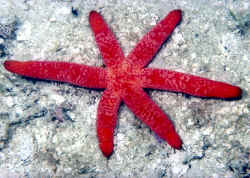
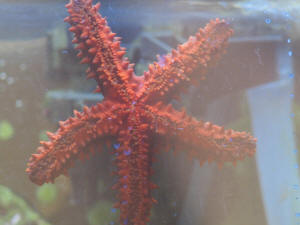
Seastars, sel. reading - 1/26/08 I really would like to include a starfish in my reef tank. However, I know that a number of species aren't reef compatible. Which types of starfish would you suggest to me? <Posted> I'm not looking for an "expert only" species. I know that some species are more vulnerable to disease than others. I'm looking for one that is somewhat hardy, and isn't known for having certain problems such as starvation, infections, or unexplained deaths. Any suggestions? <All need to be carefully examined/selected, acclimated/needs met, kept in stable conditions... Some species are far better than others. A bit covered here: http://wetwebmedia.com/marind5_5.htm toward the bottom of the page. Bob Fenner> From Ocean to Aquarium..? 01/13/2008 I really hope you can help me with this.. <Me too!> My boyfriend LOVES to walk around the shallow beaches nearby and catch fish, but always has to put them back because he had nowhere to put them. We recently (about 2 mts ago) started a 30 gal saltwater aquarium. We have a few live rocks, 3 damsels (which we are giving back to the fish store soon), <I am hoping you didn't use them to cycle.> 3 clown fish, <Too many fish!> an anemone, <Your setup is too new to be keeping an anemone. Really don't belong in a talk less than a year old.> a bottom feeder, <???> and a skunk shrimp (all of which are store-bought). <OK.> He found a beautiful starfish in the ocean today and really wants to add it to our tank. <A very bad idea. The diets of most starfish are poorly understood. If you add this star to your tank it is most likely doomed to die.> But we have no idea what to do.. <Leave it where it can live.> I don't want to harm our tank, and I've heard that it is safe if the fish is "quarantined" before it is put in. <It is best to QT all new additions. More here: http://www.wetwebmedia.com/quarinverts.htm http://www.wetwebmedia.com/QuarMarFishes.htm http://www.wetwebmedia.com/quaranti.htm http://www.wetwebmedia.com/ca/volume_3/cav3i4/quarantine/Quarantine.htm > I'm not too sure what that means exactly.. So I guess I'm asking for a step-by-step guide of how to get it safely into my tank, if it is even possible at all. <I implore you to leave the star in the sea where it may live and not slowly starve in your aquarium.> We also don't know what to feed it.. since it isn't "farm raised." I wouldn't want to go through the process of putting it in our aquarium, and then have it starve! <EXACTLY! Leave it where you found it!> thanks in advance! >> ALI. <Welcome! Mich> Protoreaster lincki... Inappropriate For Captive Care -11/27/2007 Hello. <Hi there, Mich here.> I have had my FOWLR going for over a year; things seem stable, pH is about 8.1, temp 70-75 F, <Oh! Should be warmer, closer to 78 F.> no ammonia or nitrites, and nitrates are <20 (it is only 30 gal and I can't seem to get them below 20...). <Some thoughts here: http://www.wetwebmedia.com/nutrientcontrol.htm http://www.wetwebmedia.com/nitratesmar.htm http://www.wetwebmedia.com/water.htm http://www.wetwebmedia.com/refugium.htm http://www.wetwebmedia.com/hagenrefugart.htm > I have a four-striped damsel (2") <Oh, for now... You will likely end up with only one damsel... These start out cute, but can become real terrors!> and a Hawkfish (3") that I have had together for a while. Today I purchased an African sea star and a scarlet/blood cleaner shrimp from my LFS.... The employee said that they would all be fine together, in my small tank. HOWEVER, I have been reading up on the sea star and have found that it is pretty carnivorous and can get up to 1 foot large. Right now the star is about 3" and shrimp is 2". I have read the FAQs dealing with compatibility, and it seems that it will be fine with the fish and shrimp right now, correct? <Yes, but the Protoreaster lincki will likely starve.> I would like to know how fast the sea star will grow. I am planning on getting a larger 75-135 gallon predator tank (lions and eels) in the future. When will I need to move the star into the bigger tank? <Unfortunately the Protoreaster lincki will probably die before this becomes and issue. It is unfortunate that these creatures are offered for sale.> Thank you. <Welcome, Mich> Re: Protoreaster lincki... Inappropriate For Captive Care 11/29/2007 Well, that makes me sad! <Makes me sad too! It is a shame that these creatures are removed from their home as they generally cannot survive long term in captivity.> I guess I'll try my best, I do have a zoology professor that can make good use of dead sea star... :( <Perhaps some good will come out of its removal from the sea.> Oh, and I only have a single damsel that is has four stripes, <OH! Excellent. Much better!> and I'm buying a heater today. <Good! It's chilly in your tank!> South Texas doesn't get this cold very often! <No matter, the tank should be kept at a relatively consistent temperature and presumably this is quite a fluctuation from summer temps.> Thanks again for the advice, awesome website. <Welcome! Mich> Sea Star Recommendation... None. How About a Brittle Star - 09/14/07 I have a 90-gallon aquarium with 40 pounds live rock, 1-inch aragonite sand, 3 blue Damsels, 1 Huma trigger, and 1 lawnmower blenny. I would like a sea star and would like to know what you recommend. <There aren't any sea stars that I would recommend. Most generally slowly starve to death in captivity. I would highly discourage you from purchasing one of these beauties as most are generally doomed. A similar but much better alternative would be a brittle star (Ophioderma spp.) The Red Caribbean Brittlestar (Ophioderma squamosissimum) or (Ophioderma rubicundum) are particularly striking and generally well behaved if well fed. If not well fed they can be predatory, but these species are the least predatory and among the best of the Brittlestars. Do make sure to avoid the Green Brittlestar (Ophiarachna incrassata) also know as "The Green Death" because of its highly predatory ways. More here: http://www.wetwebmedia.com/brittlestars.htm Cheers, Mich> Starfish, sel. - 08/22/07 My son is three years old and he loves starfish. Not sure if you could get them at pet stores? My questions is if I buy one how do take care of them. <Definitely not a good pet for 3 year old. Don't even *think* about keeping fish until a child is at least 6, in my opinion. Animals are a responsibility; by all means keep fish yourself for your own pleasure, but don't buy any animal for a child this young. For now, stick with picture books and toys or even fossils.> 1 Must they be salt water? <Yes.> 2 Are they safe for children <Mostly, yes. One or two are toxic or irritate the handler. But mostly they contain saponins as an anti-predation device. This is basically soap. Tastes nasty, which is why few animals eat starfish. On the other hand, a clumsy child can easily damage a starfish -- or for that matter any other animal. Until a child is around 6 years old, concepts like "handle carefully" or "know your own strength" are pretty meaningless.> 3 what do they eat and how would I sent up a tank for them <Please read up on marine fishkeeping. Starfish aren't difficult to keep as far as marine organisms go, but they do require at least average marine fishkeeping skills. For the zero-experience fishkeeper, much better to start with robust tropical fish (not goldfish!) for a few years, and then if you're prepared to spend the 100s/1000s of dollars, then graduate to marines. Cheers, Neale> Re: Are These Sponges? 7/4/07 Most certainly
James. Attaching your earlier reply to my letter. <Thank you.>
Thanks for the ID on the sponges. <You're welcome.> You
probably mistake me for someone who asks you about a Coral Banded
Shrimp LOL. <No, just couldn't remember, was thinking Coral
Banded.> If you accidentally deleted my earlier letter, I am quite
impressed as you manage to remember my question about the trigger fish.
I am not interested with any other kind of shrimp other than my two
cleaner shrimps I have though. <OK, but do delete the trigger from
your list.> How about a Red Sea Star (Fromia milleporella) in my
current tank? Star fish reminds me of the beaches (so beautiful) back
home - Philippines. Because of this hobby, I'll be sure to take
diving lessons on my next vacation there. <Ah, one of my favorite
but delicate to acclimate. The Fromia stars are hardy when handled
properly, and this includes shipping procedures, but they are sensitive
to changes in specific gravity, temperature, pH, and oxygen levels that
can occur during shipping. Do not expose them to air during the
acclimation procedure. Keep with plenty of live rock where they will
graze algae and microorganisms. Do read FAQ's here on this subject.
http://www.wetwebmedia.com/fromiastarfaqs.htm> Thanks James.
<You're welcome Jon. James (Salty Dog)> Jon Glorioso
Culcita sel., fdg., 03/25/07 Many thanks for all the info that you've posted. I have questions about a starfish that doesn't seem very popular, <They are difficult to keep, and require care that is beyond the capabilities/commitment/finance of most aquarists.> a pillow (pincushion) star, Culcita novaeguineae. <Hmmm.> We have a well-established 135 marine tank, full of live rock and 4-plus inches of sand, but no corals in this tank. <These eat coral.> We have always purchased livestock from a trusted local store, but we keep a fairly light load. We recently acquired a large (5 inch) pillow star ("Lumpy"). We were told that he wasn't reef-safe but that he would like the live rock and be easy to keep. <Actually no they are not really easy to keep. See above.> We were told to feed him algae wafers and cube food (formula1). <They might eat this, but will likely waste away slowly. You need to vary this diet as much as you possibly can. If you could occasionally get coral for this creature that would be a plus.> He seems to have acclimated well, but I have been researching him online, and I can't find any references that confirm the diet. <Again, this is why they are not really popular. I have seen studies that indicate that they prefer certain Scleractinians.> Are there other indications for feeding? <Bivalves, fish meat, snails, tablets, and coral.> Do you have any other suggestions for care? <Very high water quality, and constant salinity.> His tank makes consist of an Annularis, a Passer angel, a sail-fin tang, a yellow tang, a Royal Gramma, a "rainbow" wrasse, a tomato clown and a bubble tip anemone. (Except for the Annularis, which we got last year, they have all been together for many years.) <Quite a few very large fish in a relatively small volume. I would consider purchasing a larger tank for the Zebrasoma.> We feed a mix of frozen food (meat, sponge & algae), plus some specialty food. Many thanks for any suggestions <I hope that I have given some that help.> - we want to do what it takes to make Lumpy happy. <Good luck with this. Brandon.> - Peggy Selective stray current? - 3/12/07 Hello! <Hello Kimberly! Brandon here tonight.> I am a regular lurker here! <Me too!> I have a strange question for you today… <Impress me.> I work weekends at a popular on line retailer, we have recently moved and set up all new systems. Over the weekend, I had a customer who needed snails, I placed my hand in the tub of snails and ZAPPP! <Been there more times than I care to count. Perhaps I should pay closer attention to the wires.> I looked at my hand and there was a cut on my finger, but this was more than just the sting from a cut touching saltwater. I was not getting zapped in the main displays , so I tried the other hand.. same thing! Two tubs down, another employee was bagging up some crabs from a tub that is plumbed into the same system mine is, he was unaffected. I ask him to try the tub I was having issues with and he felt nothing. I had him get my snails, I didn't want to get ZAPPED again! I touched the water of another tank about 10 minutes later, nothing. Unfortunately, about a half an hour later I was ZAPPED again while getting some crabs. This tub was plumbed into the same system as the other tub that zapped me. By then I was a little freaked. I grabbed another employee and had him try the tub. HE HE! Hard to believe people will stink there fingers in water to see if it shocks them! <People are funny like that.> He felt nothing. Then a few other employees came by to test it and comment that it must be my 'electrical personality. HA HA! I told the manager, he said he too had been shocked once about a week ago. He placed a grounding probe on the system and will be investigating the equipment. So, any ideas why I was getting ZAPPED and nobody else? <I had the same problem Saturday as a matter of fact. I happened to be drip acclimating a few Acroporids, and I noticed after being shocked, that the finger that was shocked, had a small cut on it. Out of curiosity, I tried the other hand. To my surprise there was no shock. Now I am no electrician, and this is not professional advice, but my guess would be that the current was so minute, that it only shocked the super-sensitive, sub dermal layers of skin that were exposed due to the cut. I would further imagine that the same thing happened in your case.><<Mmm, much more likely a matter of what shoes... grounding or not was in place... At any length, very dangerous to the livestock and people involved... Please read here: http://www.wetwebmedia.com/elecmar.htm and the linked files above, particularly re GFCI use... VERY important. RMF>> Another quick question, if you don't mind. A customer brought in a Seastar he had caught himself. I am about 95% sure it is a Pentaceraster cumingi, <You could check here to confirm, http://www.wetwebmedia.com/seastars2.htm. Scroll down to Family Oreastridae. There are three pictures shown. Does it look like one of these?> the Panamic Cushion Star. He stated it was eating his corals so we placed it in one of the 100 gallon refugiums. I have two tanks, one is a 125 gallon reef the other a 240 gallon FOWLR. The manager told me I could take him for my 240. He doesn't think it will survive long in the refugium. I am afraid, however, that it won't last long in my FOWLR ! Your website states it's not the hardiest of Seastars. <I think that it is not so much a matter of hard, as much as starving to death. These stars get rather large, and their feeding habits are very specialized. Micro-fauna in the substrate, benthic algae, seagrass, other echinoderms, and possibly corals. In a large, very established tank with a large refugium as well, with no other competitors or predators, if you could get it to eat prepared foods you might have a chance. But again, these are a lot of ifs. To me it would be worth the shot if the above conditions could be met, but do realize that it will most likely starve to death, much like Astropecten spp.> What do you think? <Please see above. Re: very established system.> It is really pretty, my kids would love it. I am just really finicky about what I place in my tanks! Thank you for your time and your opinions! <You are very welcome. Brandon.> Kim Re: Starfish and Hydroids? Blue Linckia (Linckia laevigata) Better Left in the Sea. 2/9/07 <Hello again Travis!> Thanks for the great info, Mich! I'll avoid the blue Linckia star! <Very good!> Follow-up question: <Sure.> Would any/all starfish be damaged/irritated by crawling over rocks covered in hydroids? <Yes, it is possible.> i.e. If my rocks are mostly covered in hydroids, do I have to rid my tank of them before I could add any (non-sand-dwelling) starfish? <Mmm, no, but again not for the reasons you state. I am hesitant to recommend any starfish that are of the "rock scrubbing" type which I believe you are considering. Most just don't do well. Serpent and brittle stars should be fine. I wouldn't recommend the sand sifting star either, as it will take out much of the beneficial fauna in the sand bed and then starve. Hope that helps! -Mich> Travis. Red Fromia...Good Beginner's Choice? 12.29.2006 Happy Holidays to the WWM Crew! Got a gift certificate for Christmas (LFS) and would like to use it purchase a Red Fromia Sea Star. (also received CMA as a x-mas gift... looks like Fromia is one of the best 'beginner' sea stars). I have never intentionally kept a sea star before, however I have noticed an abundance of small Asterina in my tank. I have watched these guy grow from tiny little white blobs (very indistinct star shape) to dime/nickel sized stars (about their max size from what I've read…) Does the fact that I have successfully kept these little guys bode well for my ability to keep a larger star? Because stars are so sensitive to water quality changes I'm nervous about introducing one into my tank. I've noticed that adding SeaChem Alk/buffer/ca++ with fresh top up water can have a fairly immediate/significant effect on WQ (even when added relatively slowly). Also, do these guys need to be quarantined? Tank: 40 gal FOWLR (approx 50lbs LR) Compact fluorescent lighting AquaC Remora PS (working incredibly well) 3 powerheads HOT filter Bought tank from a co-worker approx 6 months ago (they had it running for about 4 years) WQ: PH: 8.2 Alk: 3.5 meq/l Ca: 350 NH3: 0 NO2: 0 N03: <10 ppm (IO powder test kit can't read below 10) Temp: 79 Sal: 1.022 Residents: 2 - a. ocellaris 1 - Coral beauty angel 1 - cleaner shrimp blue legged hermit crabs (5) snails (5) I am also very pleased to report that my apparent Cryptocaryon problem has completely disappeared with increased water change frequency, new protein skimmer (replaced Prizm) and changing carbon in filters more often. Thank you so much Bob! You're the best. My fish have already reaped the rewards of your advice. I even suggested that LFS include your website in their "Getting Started" information package given out to new customers. q <Hi Q, Ryan with you today. I'm so glad that you're making use of the books out there- They are truly valuable. Yes, a Red Fromia is a good beginner's choice if you are really looking to keep a sea star- But beware that it would likely compete with your Asterina for food. The natural abundance of Asterina is a great sign of pristine water quality and good amounts of dissolved oxygen. 50 lbs of live rock should give a Red Fromia enough surface area to graze on. Remember, they (like all sea stars) are sensitive to SG, temp, ph and oxygen changes, and should not be removed from the water if possible.> Astropecten articulatus ... a Seastar by the seashore 10/26/06 Hey, My three year old and I found a sea star (Astropecten articulatus) washed up on the beach in Florida in July and it was still alive. We put the star in a sand bucket in ocean water and brought it home. We then bought a 10 gallon tank at the local pet store and named it Patrick. It was very active and seem to be doing well. It would come out to eat every time we feed it. Then I decided that since Patrick was now a member of the family I would buy him a bigger tank. I bought a 30 gallon tank and let it mature for a month there is 15lbs of live rock, 3 snails and a new addition, a fire shrimp named Sparkles. When I moved the pets from the 10 to the 30 tank, my PH dropped to 7.8 but all other levels continued to be acceptable. The temp. is about 76 degrees and the salinity is high, now in his new home Patrick is listless. <Mmm, many marine invertebrates take weeks and more to adjust...> He sifts thru the sand but he never comes out of the sand when I feed the brine shrimp. <Is a molluscivore...> He is still firm to the touch and has no blemishes. But I never see him unless I hunt him in the sand. <Is about what they do, where they do it...> I also need to mention the 10 tank had coral rocks in the bottom and now I have 2 inches of sand in the bottom of 30 tank. Could he just be so glad to have sand that He stays buried. <Ah, yes. Good way to put this> I need any information you can give me about how to take care of my star. You mention about extra feeding in one of your articles. Please tell me how and what to feed him extra. <Mmm... would be better to have deeper sand... and more total size of the system...> Everyone I ask tells me that I am doing all I need to do to feed him but I have read that these stars starve to death in captivity. <Yes, very common> I wanted to add to my tank also, but all additions must be safe for Patrick. My daughter insists on one fish, maybe a sea horse would satisfy her. <Err... most not easily kept... perhaps a hardy species of Damselfish... even a tank-bred/reared "Nemo"...> What kind of sponges can I put in with him, <These also are likely to prove very problematical... easily dying, polluting the tank> hopefully in the yellow category. We need a Sponge Bob to go with Patrick. Thank you for any help you can give me. P.S. I enjoyed your book on invertebrates. <Thank you. Bob Fenner> Eliza Linckias... "take the blue... or the orange..." - 09/14/06 Crew, I bought one blue and one orange Linckia yesterday. I think I acclimated them slowly enough, but the orange one has been hanging out near the water surface (doing laps around the tank on the glass). The blue one has moved his arms some but not traveled. I understand from your site that 90% of these creatures do not survive. <More> We bought them "out-of-the-box" at our LFS because they give a discount and because we thought one acclimation was better than two. <...> How will we know if they are dying/dead? <Decay... the death of your other livestock...> Since the survival rate is so low I want to watch for an early demise and remove them from the system if necessary. My system has been up and doing well for a few months now and I would hate to have a big ammonia spike. Thanks, Mike <... BobF> Night Abductions... Sick red African Star, also dwarf lionfish Scotter's go 7/27/06 Hello Bob, <Scott F. in for Bob tonight> I love your book and your wonderful website. You guys are keeping my fish alive! <Well, YOU are doing the hard part- we're just along for the ride!> Here are a few questions for you… <Okay..> I have a two months old (relatively new) 55G reef setup and green and brown algae are starting to form. So I ran out and got a sea star to clean the tank. It turned out to be an (Protoreastor lincki) African or Horned Sea Star, which I don't know if it is reef safe. <Not really, IMO.. They can eat all sorts of sessile inverts.> I guess I may not have gone though the acclimation procedures long enough (30 min) when I put him in the tank. A few minutes after it went in, clear, slimy strings start to floats around it. The body goes from being totally smooth to slight sandpapery in texture. Although he changes shaped a little bit, he hasn't moved since I put him in the tank last night. I also tested the water in the bag after the fact, and it is at SG .018 and my tank water is at .023. Is it too drastic of a change for him? Although it is not moving, I can still see some wiggling tube feet coming out at the bottom of the star. Is he going to make it? <Potentially problematic...The environmental change may have been too drastic. This could be a response to extreme stress by the animal. Keeping environmental parameters stable is the best you can do right now.> My existing serpent star is doing great! Which sea star is right for cleaning algae in a reef tank? <I'd rely on snails for that job, myself.> Secondly, I have a 5" dwarf Fuzzy Lionfish (my sea puppy) which I just love. <Very endearing fish!> He is well fed (he eats anything I put in front of him) and doing very well except for a slightly clouded eye on one side. He never hides, always out in the open (day and night) playing power head surfing by zooming across the tank. Here is the problem; some of my other fish (over half its size) are disappearing one after another overnight. Two Maroon Clowns and three Damsels, along with a 3" Royal Gramma. There is no evidence that they ever get sick and died and turned into hermit crab's lunch. Yet, I can't be sure (and refuse to believe) that my cute little Lionfish could have eaten all these good sized fish. I have found nothing on the floor. Power head and filters are free of fish filets. Are we looking at a possible case of UFO fish abductions? <Before you call out Moulder and Skulley, I'd think that it is possible for this Lionfish to do some chomping on fishes that are a good percentage of his own size! You might also be looking at a Mantis Shrimp, crab, or other predatory live rock hitchhiker that comes out at night. Perhaps checking out the tank in the middle of the night could yield some evidence.> Thanks for your help! -Hosh <The truth is out there, Hosh...Keep searching! Regards, Scott F.> Sick red African Star, also dwarf lionfish tankmate meals RMF's go 7/27/06 Hello Bob, <Hosh> I love your book and your wonderful website. You guys are keeping my fish alive! <Actually you are... am glad we can/help you> Here are a few questions for you… I have a two months old (relatively new) 55G reef setup and green and brown algae are starting to form. So I ran out and got a sea star to clean the tank. <Mmm... Asteroids are not really "algae eaters"> It turned out to be an (Protoreastor lincki) African or Horned Sea Star, which I don't know if it is reef safe. <... Is not... and inappropriate for this sized system> I guess I may not have gone though the acclimation procedures long enough (30 min) when I put him in the tank. A few minutes after it went in, clear, slimy strings start to floats around it. The body goes from being totally smooth to slight sandpapery in texture. Although he changes shaped a little bit, he hasn't moved since I put him in the tank last night. <Echinoderms don't "like" chemical, physical changes in their world> I also tested the water in the bag after the fact, and it is at SG .018 and my tank water is at .023. <Yeeikes> Is it too drastic of a change for him? <Oh, yes> Although it is not moving, I can still see some wiggling tube feet coming out at the bottom of the star. Is he going to make it? <Doubtful for long here> My existing serpent star is doing great! Which sea star is right for cleaning algae in a reef tank? <None> Secondly, I have a 5" dwarf fuzzy lionfish (my sea puppy) which I just love. He is well fed (he eats anything I put in front of him) and doing very well except for a slightly clouded eye on one side. He never hides, always out in the open (day and night) playing power head surfing by zooming across the tank. Here is the problem; some of my other fish (over half its size) are disappearing one after another overnight. <Inhaled likely by this Lion> Two maroon clowns and three damsels, along with a 3" royal Gramma. There is no evident that they ever get sick and died and turned into hermit crabs lunch. Yet, I can't be sure (and refuse to believe) that my cute little lionfish could have eaten all these good sized fish. <Did do so most likely> I have found nothing on the floor. Power head and filters are free of fish filets. Are we looking at a possible case of UFO fish abductions? <Heeee! Just bigger, faster tankmates. Bob Fenner> Thanks for your help! -Hosh Starfish compatibility, and sel. 6/14/06 Dear Bob, <Hi, Chris with you tonight.> Is it possible to keep a blue starfish and a white sand sifting starfish with a red starfish Fromia elegans which has black tips on the end of its arms, and its arms are very dumpy and short. will these 3 starfishes get on well with each other and does the red starfish Fromia elegans eat mushroom corals? <No> I hope to get a reply from you soon. YOURS SINCERELY ALAN R. <Both the Blue Linckia star and sand sifting star have terrible survival records in captivity. No one really seems sure what the Linckias actually eat, and most die of starvation within a year. Sand sifters need very large tank to support themselves. Often it is recommended that there be 6 feet of tank space to support a single star, although I'm not completely convinced this is even always enough. Out of the three stars you name only the Fromia Elegans has a good track record in aquariums, but does require some supplemental feeding.> <Chris> Long-range planning for 55G aquarium 01-08-06 I set up my first marine aquarium one month ago. The 55G tank now has no ammonia or nitrites, and the nitrates and pH are good according to my tracking software. The tank now houses eight small hermit crabs (all less than an inch across), six small Astraea snails, two peppermint shrimp and three blue devil damsels. I have no real interest in getting corals. I do somewhat like feather duster worms, and I plan to get several ocellaris clownfish so would like the option to get an anemone for them. (I do realize they don't desperately need one, since my LFS sells only captive-raised clowns, but I'd like to see them living together.) I do, however, want a starfish. I've spent several hours today perusing your site. My LFS carries chocolate chip starfish, Fromia starfish and I believe I saw Linckias there a while ago. I think it's too early for me to consider adding a starfish, but I definitely want to make sure that I don't put myself into a position where I can't have one. Would a chocolate chip starfish be likely to eat my crabs and snails? I know it wouldn't do well with an anemone (or to be more precise, the anemone wouldn't survive the starfish!) - would a Fromia leave an anemone alone? The blue Linckia is gorgeous but your site clearly indicates that they rarely survive, which would be very sad, so I likely will not go that route. I don't want to rush my tank, and it's very important to me that all my creatures thrive. I'm hoping that you can help me do this. As I said, I have read your FAQs, and haven't seen anything that suggests that my crabs and snails are at risk, but I'm concerned I've missed something. <First let me say I am extremely glad to see you are planning your aquarium in advance. I wish everyone would do that. As for your tank, I would start by staying away from anemones. Anemones are very demanding creatures and will limit your choices, not to mention your pocket-book. An anemone would require high quality lighting to survive. The next thing I would like to address is your statement that you would like to have "several" clownfish. I would suggest limiting this to 2 clownfish. Most times a pair will form and kill the outsiders. As for starfish, make sure to research your choices and even look at the substrates they will do best in. Some may need sand or at least small particle sized substrate to survive.> Many thanks for all the information you make freely available! <Glad to help, Travis> Heather Face to Face Meeting for Adam J and Starfish Selection 11/28/05 Ok you guys, I saw my 'sand sifting' question posted. Apparently my determination to really understand 'why not' mislead the group that I was NOT going to heed the advice given. <No worries, I understand it can be difficult to express ones true emotions/feelings through writings at times.> Just want you all to know I did behave and did not get the sand sifting star. <Glad to hear it.> Instead, I got a black brittle star which does come with glowing reviews on this site. <Yes much more so than its predatory green cousin.> I also got an 'Atta girl' when visiting XXXX <"X'ed" out for posting purposes. While I don't officially work there anymore I still enjoy popping in every few months, not only for myself, but to help out folks. While I wouldn't trade my wetweb gig for anything it is nice to talk to people face to face now and then.>> <<If it's a good shop, then why not let the name be known? Marina, who can say that Discount Tropical Fish is nothing like what it used to be when Doug Swinehart owned it.>> in Los Angeles. Timing is everything. I ran into a nice young man who has the same tank we do and said he also has the Black Brittle and been very happy with it, <Hey that's me.> and I was right to get one. <Well yes good scavenger and much more suited to aquaria than the sand-sifting star which does so poorly and depletes your sand bed.> As our conversation continued I told him where I got my advice and find out he contributes write backs for this site. Of course we both boasted about the vast amount of awesome information Bob has contributed in articles and pictures. Bob you gotta know your name comes up all over the web! I'm sure you know who this young man is I'm talking about. He really is honored to mentor with you. <*Blush.> As we parted ways, he shared that he is determined to some day be able to write a species name like Bob can without having to look them up. <Well maybe not as good as Bob I'll settle for half as good.> In case you haven't figured out who this young man is, this helpful hint should end the guessing. He has two sixty gallon tanks in his attic that help serve to spoil the life in his 170 gallon reef tank. p.s. We both like Bob's sense of humor. I personally like the pic of Green Brittle Stars in containers with the caption saying here's the way to keep them. <Normally I would have let him respond to this but he's not in at the moment and I wanted to thank you personally, nice meeting you. Adam J.> Debi Stanley-Viloria <<Thank you both for your kind, encouraging words. RMF>> Urchin's everywhere, ID, selection 9/24/05 Kind crew, I added some live rock from Gulf View about two months ago, every night or so, when i had time to check, I've noticed some urchin hitch hikers usually one, maybe two. Last night I counted seven, not including two black ones that I saw a previous evening. <Testimony to the good quality, careful, expedient handling of this natural product> It looks sim to Echinometra mathaei from the WWM urchin page but it's from Florida, they range from one at 1/8 inch in dia, to one a little over a half inch. They come out at night to feed on the rock and I never spotted one in the day time. Trying to identify, but my big concern is quantity and to find out how big they might get. I might have a deal worked out with LFS to maybe trade up on some snails?? <Okay> Or would I be better off keeping the urchins? <Likely better to trade... too many will scour the tank too much, poke sessile invertebrates> The tanks a 75 gal and wondering about how many urchins should I limit myself to. Any help would be appreciated. Thanks, Dave <Likely are Echinometra lacunter, perhaps E. viridis... I'd stick with one, two. Bob Fenner> Atlantic Burgundy Seastar I am interested in buying, what the owner of the fish store, calls an Atlantic Burgundy Seastar. I have been unable to find any information on this particular star fish, and even though she assured me it is safe around my fire shrimp and other fish, I would like to know if you have heard of it and if you think it is safe? This particular starfish is obviously burgundy, but is has gold coloration to it as well. Thanks for your help. <Michele, the only burgundy sea star I'm aware of is from the Tonga/Fiji area. If it is indeed an Atlantic species, I'd probably stay away from it since it will prefer colder water. The Tonga/Fiji species may harm clams and small anemones so I wouldn't recommend it for a reef tank. James (Salty Dog)> Michele Asterina and Nano Challenges (5/11/05) Yes, these are the little ones and I have yet to see one get very large...not much larger than a fingertip and they are irregular in shape. <Definitely Asterina> They came with the rock and I was hoping to see them grow larger =( <There are larger stars that can be kept in large systems set up with them in mind.> 12K miles/month!?!? My God, I can not even imagine! <I couldn't either until I started doing it this year. At my age, my father was putting in about 250K miles per year between our home in Silicon Valley, Tokyo, London, Hong Kong, Germany, elsewhere. That was back in the days before video conferencing, Internet, etc. I've met some folks on planes who do more. You can tell the seasoned frequent flyers--they all have iPods and Bose headphones.> The trip to Hawaii for our honeymoon had me in bad shape for days after the flight! <Not a good thing on one's honeymoon. I hope your injuries improve so that you can travel with less discomfort someday.> There were some amazing fish to see out there in Hawaii... kind of spoils it when you go elsewhere like the Caribbean. <I've snorkeled only on the Kona coast. You're right--it's incredible what's down there. I'd love to go to the Caribbean someday.> Joining the forum will be great. Yes, I will be happy to post some pictures of the tank but my purpose will be to discourage smaller tanks despite my success with this one. There are a host of reasons past the ones given in articles on the site. They just are not flexible and the small space is confining to the point (I think anyway) of being somewhat cruel. <Your input on the Nano forum will be very helpful I'm sure.> If we are going to enjoy our kept friends wouldn't we want to maximize their captive pleasure? <No disagreement here.> Sincerely, James Zimmer Garfield, NJ <I look forward to exchanging thoughts on the forum, Steve Allen.> How Many Chocolate Chip Stars? & "Rant" on Aquarium Suitability of Starfish In General 4/15/05 Hello! <Hi. Steve Allen with you tonight.> I love the website - it's been very helpful in the research I have been doing before I order my echinoderm. <I do love those echinoderms. It's great that you are responsible enough to learn first and buy later. Thousands of animals would survive if everyone would do this.> Now, on to my question: I have a 55-gallon tank set up and aged, and am interested in the Chocolate Chip Sea Star. <Protoreastor nodosus. Attractive and generally hardy.> I was wondering if three specimens would be suitable for the tank size, or if I should only order one or two sea stars. Any information you could give me would be appreciated. Thanks again! Ashley <Well Ashley, I'd recommend only one. These are actually voracious eaters. More than one will be quite the bioload. They easily grow to 6 inches in diameter. Mine seems to be exceeding that after nearly two years (started out at about 4 inches). They can be difficult to keep alive due to nutritional issues. I hand feed mine a variety of chunks of marine fish, shellfish, and crustaceans fortified with Selcon and vitamins. They are not reef safe--they will eat all sessile invertebrates and any mobile ones they can sneak up on and capture. Remember to acclimate over several hours. (Some starfish species, such as Linckia laevigata, need to be drip acclimated over 6-8 hours. All starfish require excellent and stable water conditions. All are very sensitive to fluctuations in pH, oxygen or salinity for example. They will also be harmed by excessive nitrate. Read as much as you can about them before buying. I've tried a lot of starfish over the past few years, and I've decided that most of them are best left in the sea. I would not recommend other species that you may come across in your research and shopping. Truth be told, the Chocolate Chips don't have such a great survival record themselves. Here's my short take on some of the others: The African Red-Knobbed Star (Protoreastor lincki) gets much bigger than the Chocolate Chip. I suspect they're harder to nourish too. I've had one just as long as my nodosus. I've fed it the same way, yet it has not grown at all. It does look healthy, but it won't grow. The vast majority of Blue Linckia (Linckia laevigata) die either before anyone gets a chance to buy them or shortly after purchase. Most other Linckia species suffer the same fate. The Sand-Sifting Star (Archaster typicus) will "sterilize" all but the largest sandbeds by eating all of the organisms, including the beneficial ones. For a reef-safe star, the rather small (3" or less) Fromia species are more hardy than the Linckias and are worth considering. However, Dr. Ron Shimek states that they often starve eventually after several months. My own personal experience corroborates this. I'd love to try a Double Sea Star (Iconaster longimanus), but they have a poor record as well. Same goes for Tamaria species. There are a lot of other species that occasionally turn up in stores and on the net (such as Mithrodia, Pentaceraster, and Nardoa). I would not recommend these to anyone other than an expert aquarist willing to set up a large tank specifically meant to support the star. There are a number of oddball seastars that turn up at some stores, many of which you cannot even determine the species of. All are not reef safe and most get very large or have unknown needs.> Orange Starfish Problem Thanks for answering. But the arms of the starfish are not white, they're just swelled up. If it is going to die I would really like to get another star. What is an easier species to take care of? <Any of the brittle stars aren't quite as sensitive. Keep in mind that most stars are relatively hardy but require careful acclimation to their new home. Try not to expose them to air during acclimation. James (Salty Dog)> Blue Linckia Sea Star Date: Tue, 08 Feb 2005 Hi, I'm thinking of getting a Blue Linckia Sea Star, but I've heard that they can be hard to keep and I wanted to know what goes into taking care of them before I got one (or decided not to). All of my water parameters are normal, no ammonia etc., I have double-fluorescent strip lights and I have a yellow tang, two ocellaris clownfish and two black percula clownfish (both mated pairs), a purple Firefish and a blue and yellow damselfish. I also have a skunk cleaner shrimp and a couple of hermit crabs. I supplement with CoralVite. What do I need to do to keep a blue Linckia? <Hello Liz. I can tell you that in the wild they are omnivorous, feeding on bacterial film, sponges and dead mollusks. They are hardy if handled properly but are sensitive to changes in salinity, so watch that. You can offer bits of clam meat or shrimp meat and place it under the starfish. You need to be careful handling them as the arms on this starfish are easily broken. And most of all, don't take them out of the water. Good luck. James (Salty Dog)> <<Most Linckia seastars are dead within two weeks... they eat detritus... some carrion as foods... James! Please read here: http://www.wetwebmedia.com/linckiafaqs.htm BobF>> Purple Leiaster sea star 6/11/04 Am becoming educated and learning patience. I would like to acquire a purple Leiaster but can find very little information other than they are hardier than Linckia variety. <they at least ship better since collectors tend to send them in larger bags with more water because of their higher value. Still... I recall your query from yesterday. Your tank is too small, and has other sea stars in it. I cannot recommend another Asteroid species like this purple star as it will surely starve to death slowly in time> I have a variety of fish including a damsel, a brain coral (I think) and two anemones. Been told anemones and corals bad together can you tell me why exactly or recommend a site to check out. <begin here my friend: http://www.wetwebmedia.com/marine/inverts/index.htm and follow the many links at the top of each page. You will learn much/more> Can you tell me anything else about this starfish i.e.. safeness with coral (I may get other corals in the future) <most Asteroids species are not reef-safe, but the Ophiuroids (brittle and serpent stars) generally are> and anemones, is anyone at risk here? <no anemones with corals... they rarely occur together, and more importantly they do not live well together in captivity. Their chemical aggression in a closed system causes the anemone to often wander around the tank. This will lead to more battles with corals and if that does not kill one of them, then the anemone invariably wanders too close to a pump intake, overflow or like peril. The result is often wiping out the whole tank in the process> Will I be able to get any form of trigger fish in future or will they harm starfish? <triggerfish prey on many sessile invertebrates. A few species are relatively well-behaved though like Niger Odonus red-tooth triggers. Anthony> Linckia questions >Bob >>Not Bob today, Marina. >This is a really great website. I have fallen asleep many a night reading your awesome information... >>Heh, the dreaded QWERTY disease! Presents itself first with QWERTY embedded on your forehead. >I have two questions I was hoping you could help me with. >>Let's try. >1 - I have a 110 gallon reef tank with a small refugium on it. What is the best macroalgae to use to absorb as many nutrients as possible? >>Many macros will do this fairly well, but for me, given its propensity to GROW, Caulerpa would be one. However, know that it is toxic, ESPECIALLY if it goes into a sexual reproduction mode (caused by pruning incorrectly - do a search on the site for more), or experiences a die-off. Chaetomorpha is one very popular macro with which you don't quite have the same issues. >Right now I have spaghetti algae in there and have the light on 24/7 and is starting to die so I think I am doing something wrong. Do you have any suggestions regarding algae and light timing? >>I know many people do use constant lighting, I never have (just too cheap to waste energy like that!). You don't say what lighting you have, but some macros do need more than others. Again, with Caulerpa, I did fine with it under a bank of mixed 4'-40W normal output fluoros. I think it would also do just fine under a cool white daylight bulb. >2 - I would like to purchase a purple Linckia star and was wondering if it would be safe with corals, electric scallops, clams, shrimps and snails. >>To the best of my knowledge it is. >I've heard they are not compatible with clams if they get bigger. What is your opinion? >>First and foremost, that that "if" is a pretty big "IF"! Also, IF it does become a problem, it would really be quite easy to remove. I'm going to assume that you're well-versed in quarantine and acclimation procedures, but will remind you (and everyone reading) that with sea stars, ESPECIALLY delicate species like Linckia, poor acclimation can kill it quick! Even a very slight difference in salinity can cause trouble. >I wish I could be a fraction as knowledgeable as you someday. >>I just KNOW you mean Bob. Sometimes I wonder how (or if) he sleeps, what with all that up there. He probably has THE most wrinkled brain of anyone I have ever known. >Thanks so much for your assistance... Jim Hoffman >>You're welcome, Jim. Glad you're enjoying Bob's love child. Marina Can I Have a Starfish? (4/27/04) My 37 gallon tank will be a year old in a few months, and I am considering adding a starfish to the system. Right now I have a false percula clown, a peppermint shrimp, six hermit crabs, and a pile of live rock in there. I would really like to add a royal Gramma <Nice choice. Have you considered Firefish?>, a cleaner shrimp, and the starfish to the tank. So first of all, should they all get along? <The cleaner ant the Peppermint could have trouble, but probably not.> If they will, is a Fromia star suitable for my size tank, or do you have some other suggestions? <Fromia are perfect for this tank. They are much, much hardier that Linckias. I highly recommend one. Do choose a healthy specimen and acclimate slowly.> I am partial to the "regular" stars over the brittle stars. <A couple of smaller Serpent Stars, such as Ophiolepsis superba, would be very useful additions as cleaners, and they are actually rather interesting. Read the excellent article in the June issue of Tropical Fish Hobbyist.> Thanks for the info! <Hope this helps--Steve Allen, echinoderm aficionado.> Picking a Starfish (4/5/04) Hello Crew, <Steve Allen covering echinoderms tonight.> I have been reading over the site for a while now in search of a starfish. I have a 45G SW with about 60lbs of LR, and a 3-4" LS bed. Everything is pretty well aged as much as it could be in 11 months. An Aquafuge sits on the top with algae LR, LS, and a killer amphipod community which feeds my mandarin. <Doing well I hope.> A small lime green leather and green button polyps are also housed in the tank. I have read a lot about good choices and "reef safe" stars on the net. I haven't seen anything written about amphipods and stars, and more so stars not eating amphipods. <I doubt hey move fast enough to catch a lot of amphipods, but you never know.> I would love the addition of a star, but would never want to make the mandarin compete for food. I got rid of 2 small chocolate chip stars about 4 months before the addition of the mandarin and the amphipods. I know how they can literally suck the life out of your system. Any thoughts on small star that would stick to the normal clean up duties, without cleaning up my amphipods? <Brittle stars are nice, but hide a lot. Genus Fromia is your best bet. Skip genus Linckia--too many die right away. You are right to avoid Chocolate Chips and similar stars. Hope this helps.> Steve Iconaster longimanus for the Aquarium (3/17/04) How hard are these guys (Iconaster longimanus) to care for?? How much damage could they do to my reef tank? <Steve Allen tackling echinoderm inquiries this evening. This is certainly an attractive Seastar. It just amazes me what a variety of beautiful echinoderms there are. Anyway, this can be a troublesome specimen. Like all echinoderms, it must be slowly and careful acclimated. They prefer live rock and a sandy bottom with lots of live foods growing in/on them. Their eating habits are not well known, but they are considered "reef safe" for all that's really worth. As per Bob & Anthony's reef invertebrate book, I. longimanus is not for the casual or novice aquarist. They are also hard to get. Here's Drs. Foster & Smith's page on them. I have not seem them marked as in stock in the six month's I've been checking: http://www.liveaquaria.com/product/prod_Display.cfm?siteid=23&pCatId=1467 Hope his helps.> Doughboy! Oh, Sea Star You guys are great. Thanks for your previous help. This time, I want to know if you can suggest where a Chorister granulatus (Doughboy Sea Star) may be purchased. I have searched all over the net with no success and the LFS are of no help. What can you suggest? <Mmm, first off, want to make sure you're aware of what you're up to... need large systems, eat corals... please see here re this species: http://www.wetwebmedia.com/seastars2.htm I would contact Marine Center, Drs. Foster & Smith, MarineDepotLive... re this animal if you can accommodate it. Bob Fenner> - Seastar Questions - Hi crew, Long time reader first time writer. I just want to make sure my last purchase is a smart one. <Ok.> First I'll start off with some tank facts. Saltwater 55 Gallon FO ammonia- 0 nitrite- 0 nitrate- 0 pH-8.3 Sal. - 1.023 don't test anything else carbon run 24x7. protein skim with a Versi-jet skimmer (cheap I know, but actually has wonderful performance for me, about 4-8 oz of dark skimmate daily.) 3.5-4" crushed coral substrate cheap lighting (perfecto strip of I would guess two 15" fluorescents) Inhabitants - a few damsels clarkii clown Pseudochromis very small valentini puffer. I am looking into getting a star, particularly the chocolate chip star. I would like to get this star to help clean my substrate and glass. <Not a sure thing.> Also I have heard its very hardy. <Hardy in what sense? All seastars could be lumped into the category of 'not hardy' although some may tough it out longer than others.> Are my conditions good enough for this star to thrive? <Hard to be certain - are many variables, health of organism on arrival, appetite of that puffer, available food, etc.> There is plenty of algae that I have to clean biweekly to weekly off the substrate and glass. <Can't guarantee that this Seastar will eat this.> Will this be enough for him along with the left overs from my fish feeding (frozen krill, frozen brine shrimp, dry blood worms, flake, frozen silversides, frozen clams)? <Well... I'm sure you know that these animals don't move very fast, so it may not get the opportunity to get to all this food or clean the glass as quickly as might be useful for you.> Would you suggest a different star (although I would like to stay with a hardy specimen) <Again, really no such thing as a hardy Seastar in the pet-fish trade - are all delicate and responsive [in a negative way] to water quality issues. There are others, like the general star that are impractical to keep that would rate higher on the hardiness scale than a chocolate chip star.> I would love to add some live rock too but I know my lighting wont be sufficient for the invert. <Wouldn't be so concerned about this - live rock with or without lighting will provide benefit to your tank.> hitchhikers and coralline growth. So I think I will wait for better lighting till I get the LR. <I wouldn't wait if I were you.> Thanks, APM <Cheers, J -- > Shooting For A Star8/1/03 Dear crew,<Phil here to help tonight!> I am wanting to get another chocolate chip starfish.<A favorite of mine...> but I have had trouble with the past 3 that I have had. what all should I know about taking care of a starfish and its water? <I would start reading here. http://www.wetwebmedia.com/seastars.htm How big is your tank? How's the water quality? What's in the tank? What did you feed your last Seastar? Just a few of the questions I need answered before I can give you a better answer. Hope this helps and please get back with me so I can better understand your system. Phil> Chocolate Chip Starfish I'm thinking about the addition of a Chocolate Chip Starfish to my aquarium. I have read many posts regarding these starfish but I still have a few questions. Is a 30 gallon tank with 2 clowns large enough? Is filtration consisting of a power filter and protein skimmer sufficient? What and how often should they be fed for best health and longevity? Thanks for any help and guidance, Blake < The tank is large enough when they are small but he will eventually outgrow it. The filtration should be good enough. Every other day try slipping a piece of krill or other food in his path and he should be able to find it. Also consider adding some live rock, I consider it one of the most important if the not most important component of a successful aquarium. It acts a filter and a natural food source. Cody> Starfish Hi Bob I have a question on Starfish. I purchased a Orange Tile Starfish from FFExpress the other day. They said that this was a hearty starfish and very easy to keep, unlike the Linckia. <Hmm, I see they have an "Orange Knobby Starfish" listed, illustrated...> I acclimated this little critter as patiently as I always acclimate my new livestock. When morning arrived, he was stuck to the side of my tank and he was falling apart. My tank is a very healthy,120gal Berlin system. It has been set up for about 7 years now and all of the corals, crabs, etc are all flourishing as per usual. Is this little star in the Fromia family of star's?? <Family? The Fromia genus is part of the Ophidiasteridae... can't tell what the species/family of what is pictured on FFE is.> Would it be ok if I ordered another one of these or should I just be satisfied with my Brite red serpent star I have?? <Don't know... have you contacted FFE? I would> I also have had problems with the Linckia species. As I had read on your site , I will be staying well away of this species. I do have a sand star that is 4 years old and doing great. Just for the record, my water parameters are all excellent, as I am a picky one when it comes to my tank environment. Are there any other stars that are reef safe and kind of cool looking that I could purchase?? As always, thanks in advance. Take Care. <Look to the Fromias, perhaps the Purple "Linckia"... other "best" species listed on WWM. Bob Fenner> Question please reply if able, thanks Hello Mr. Fenner Once again I need your honest expert opinion. <What else is there?> For my 120 Berlin reef tank besides crabs , 1 brittle star, and 1 sand star, what would be ideal for stirring up the sand? <You with a dowel of wood or plastic... maybe a small species of Goatfish (family Mullidae)... these are covered on the site: www.WetWebMedia.com) I have read that a lot of folks like the cucumbers, are they as good as they say? <Most, no... do little... very slow moving... and toxic downsides> Myself, I would like to add another little sand star, what do you think? <An Archaster? Fine> My other question, I really like the Linckia star but I read that they are hard to ship, and hard to keep. I also wondered about an orange star, (I can't remember the scientific name). <Look for Seastars of the genus Fromia) Would the orange or blue star's also work as good sand stirrers? <No, neither make their lives this way> Thank you for your time and patience only come to you for advice because you are honest , and are an expert in the field.( I need not go anyplace else. Take care and thank you very much. <No, my friend, you need to have more exposure, trust... read over the current reference works in the field... Many folks sell these. I have many such companies listed on the WWM Links pages. Bob Fenner> Temperate Starfish... is it warm in here? Hi Bob, 11 days ago I found a star fish at Myrtle Beach. <I am very sorry to hear it...seriously> It traveled home and I have setup a tank for her. She seems to be doing fine. I would like to know what she is and how to take care of her. She's gray on top with teeth like spines all round her arms. They are reddish at the base and white on the tips. She is peach and orange underneath. I also brought sand and shells from her beach to setup my tank with. She likes to bury herself under the sand. This morning I found her completely on the glass, which to me is a social improvement. Please help me if you can, or at least point me in the right direction. Thank you so much, Tammy Shilling <my friend... this is a temperate species that will suffer and die in time if not provided with chilled water. Even room temperature is too warm for year around maintenance. And a tank without a heater will allow temperature fluctuations that are even more stressful between night and day. I'm sorry to be a buzz kill, but such animals belong in the ocean if they cannot be provided for adequately in captivity. Temperate species need refrigeration units (chillers) that cost nearly $1000 for hobbyists models. Without it, your starfish will hang in there for some months perhaps. Over a year in rare cases. My advice is to find a local public aquarium that will take it in assuming they have temperate species displays. Best regards, Anthony> Starfish Hello! For a Fish with Live rock and anything that grows on it tank, I was wondering if you could give me some brief info on Starfish. In particular, Starfish that wouldn't get larger than 5 or 6 inches, <many such species> would have attractive colors, are not dangerous to or in danger from Hermit crabs, snails, larger Angelfish, Wrasses or Tangs, <ahh... there's the problem. If we are talking dwarf angels and tiny wrasse species then we have Fromia and many brittle and serpent stars to fit this bill (with the possible exception always of the hermit crabs attacking the stars. HOWEVER... if you are talking standard angels (French, emperor, Koran, etc) and full size wrasses (lunare, Christmas and the like) then the only stars with a chance of surviving are very predatory> likes the inside of the aquarium more than the outside and wouldn't be able to move rocks 3 lbs or larger form their arranged location. WOW, sounds like a personal ad. I've got to get out more! Beyond that, I read many articles recommending large numbers of Cerith snails, <I love them... very helpful> Hermit crabs and Starfish to take care of the detritus, but I worry that the snails and starfish will all be hanging out on the front glass and I won't be able to see into the aquarium! Are there snails and starfish that are more partial to rock than glass? <a myth that any favor a specific substrate. Rock and glass are both "hard substrates" and are likely to be treated the same> If I keep the inside glass wiped clean, would that keep them off? <it would be better/easier to control algae on the glass through aggressive skimming (one great skimmer or two dueling skimmers)> My main concern is to keep the rock clean. What else lurks out there with a taste for fish poop and algae? <yep... Bob Fenner if you ferment the mixture just right... better than peyote> Rich <kindly, Anthony Calfo> Starfish as furniture? 2/6/03 Hello: In the interest of having a bit of this and that, I would like to get a starfish for my 55gal FOWLR w/DSB. <hmmm... I'm guessing and hoping you really don't mean that the way it sounds <G>. Its rather flip for any living creature, but especially so with Asteroids (sea stars) with any consideration of their challenging needs in captivity. A few predatory species are hardy with regard for feeding, but even they suffer terrible morbidity and mortality on import. All sea stars (all creatures really) should be quarantined on arrival in a QT tank for 2- 4 weeks minimum to stabilize and acclimate them. Furthermore... the colourful Reef species (Fromia, Linckia, etc) like most Asteroids need a minimum tank of 100 gallons and aged (over 1 year old typically) with mature live rock and copious algae and other benthic organisms to graze from.> I don't have, nor will I obtain, any known predators of such an animal, so I would like it to remain on the small side. <do consider Ophiuroid starfish instead (brittle and serpent)... they are much hardier than most sea stars and they will live in a younger and smaller aquarium> I have looked over the starfish section, and some FAQ's say don't get a sand-sifter which I thought would seem right for a DSB. <correct, but your DSB is not even remotely large enough to support one even if you do not have any other sand-sifting creatures (hermit crabs, cucumbers, fishes, etc)> Love the Blue Linckia, but terrible survival. <correct> Any suggestions? Thanks - Rich. <do check out the Harlequin serpent from the Atlantic. Beautiful black and white checkered species and extremely hardy. I kept two together for almost a decade. Anthony> Starfish Addition Possibilities (cucumber too?) - 2/6/03 Hey again: Furniture - ugh! Definitely not how I meant it. <heehee... didn't think so :) But you scared me a little <G>> Thanks for the sea star advice. "Freshwater veteran, Marine newbie" - I am taking this endeavor very seriously (and I take deaths very badly)! <very good, my friend> But, alas, I have fallen short grammatically :(! <I have that problem daily and I get paid (a little) to do it. Ha!> I currently have a 10 gal QT and all future inhabitants will rest there first. <excellent!> Now that you mention it, any chance for a cucumber too? <a few are hardy... most are not worth the trouble. One of the easiest serves no useful purpose at all but is quite handsome. The Bright Yellow Fijian Cucumarid is a filter feeder that fares well and reproduces by division easily> I haven't gotten to that section of your site yet. I have some hitchhiking slugs from LR (or I think they are - they look like snails without shell, but with sort of a pint-size shell on bodies). <actually... you have a paper shell snail of the genus Stomatella... do use that genus name to find pics on the Internet to confirm> I did read in a recent AFM article (or other Mag) that cucumbers are too hard, and to get a lettuce slug instead. <although most nudibranchs are even more delicate than the Holothuroid cucumbers at large, I would agree that the lettuce slug is hardy if you can grow enough to keep it fed. Still... the choices overall are weak (sea star, cucumber or sea slug). Have you considered any of the hardier Echinoid urchins instead? Some real beauties like the Tuxedo urchin> Would you agree with that statement (if I have paraphrased correctly)? <agreed> I just love all the different life forms, but I know I am limited by tank size. <actually... by species selection at this point. Do consider some hardier options to be safe. Brittle and serpent starfish are excellent too> Thanks, again! Rich <best regards, Anthony> Re: Blue Linckia Hi fellas, I'm really bummed because I think my new Blue Linckia may be dying. I brought him home on Thursday of last week and drip acclimated him before putting him into the tank. Within a few hours he had crawled behind a live rock where he's been ever since. He does move around and I see his arms moving so he's alive. Since Saturday I can see protruding from that area two long skinny things that look like innards of some kind, but I can't see his mouth or his topside (covered by rocks) so I can't tell where they're coming from. Any thoughts? I really like this guy!! Ana M. Saavedra <Sorry to read of your star's apparent failing health. Unfortunately this genus is not generally an aquarium hardy species. Most die soon after export... due to poor collection, handling, the trauma of shipping principally. Please see here: http://www.wetwebmedia.com/seastars.htm and the FAQs files beyond... or input the name in the search tool on WetWebMedia.com and you will see your experience is common. Bob Fenner> Re: Blue Linckia <Anthony Calfo with the follow up.> Wow - I had read that they were supposed to be relatively easy to keep. <although they are understandably popular for their beauty and common availability/low price... I have never read a single reputable reference that cites them as hardy.> Do you think there is anything I can do at this point? <it is likely to die... still, let me suggest that you keep it (or put it) in quarantine for healing or damage control (to prevent the fouling of you whole tank). Please be sure to always use a QT vessel for every new fish and invertebrate. Read through WWM archives on the importance of QT. Starting here (two QT articles on this list recently): http://www.wetwebmedia.com/Latest%20Articles.htm > What do you think the long skinny things are? <the matter is covered redundantly if you have the time to browse the FAQs (4 pages on seastars which much of it specifically on blue stars... links at top of this page: http://www.wetwebmedia.com/seastars.htm The gist of it though is that they ship very poorly and even when you get a good one, you need a minimum tank size of 100 gallons that is mature (over one year old) with copious algae to support their strict diet. Else they simply starve to death slowly> In fact, here's a quote from the page you sent me to!! "Among the favored species are the very attractive Sand Sifting Star, Archaster typicus, the Little Red Starfish and Orange Marble Starfish (Fromia elegans and Fromia monilis respectively), Blue Starfish (Linckia laevigata), and Purple "Linckia", Tamaria stria." <indeed... true, my friend. They are "Favored" in the trade... very popular. But that does not make them hardy. Just cheap, pretty and purchased too often by ill-advised/ill prepared aquarists. No slight to you. You did say you read somewhere that they are hardy. To avoid such events in the future, perhaps simply read a wider scope of information for a better consensus. I wish you luck as always. Kindly, Anthony> |
|

|
Features: |
|
| Featured Sponsors: |