|
Related FAQs: Wrasses In General, Wrasses, Wrasse Selection, Wrasse Compatibility, Wrasse Feeding, Wrasse Diseases,
Related Articles: Wrasses, Anampses, Hogfishes/Bodianus,
Maori Wrasses/Cheilinus &
Oxycheilinus, Fairy/Velvet
Wrasses/Cirrhilabrus, Coris & Coris gaimard,
Bird
Wrasses/Gomphosus, Halichoeres,
Cleaner Wrasses/Labroides, Tubelip Wrasses/Labropsis, Leopard Wrasses/Macropharyngodon,
Pencil
Wrasses/Pseudojuloides, Razorfishes, Pseudocheilinus, Stethojulis, Thalassoma
Over to other Regional Accounts
of Wrasses:
Wrasses of
Indonesia
Part One of
Three
To Part Two, Three,
|
|
|
By Bob
Fenner
|
|
Genus Anampses:
|
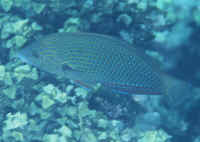
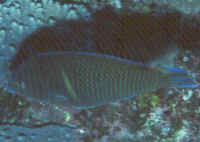
Anampses caeruleopunctatus Ruppell 1829, the
Blue-Spotted Wrasse, is often sold under the notorious
"miscellaneous" moniker. Most likely you will find
females offered and at way too small a starting size of a few
inches. Even the best initial size ones of 4-5 inches rarely live
for more than a few weeks. Grows to almost a foot and a half
overall length. Female and male shown in the wild.
|
|
|
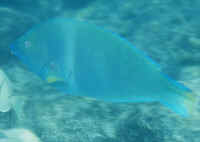
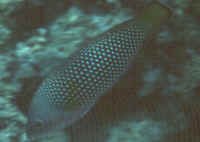
Anampses cuvier Quoy & Gaimard 1824, the
Flag or Pearl Wrasse named in honor of Georges Cuvier is amongst
the heartiest species of the genus, but still rates a dismal for
survivability. This fish readily consumes fresh or prepared meaty
foods, but must also regularly have natural greens. Male and
female in Hawai'i shown.
|
|
| Anampses geographicus Valenciennes 1840, the
Geographic Wrasse. Indo-West Pacific. A giant of the genus at more
than a foot in maximum length. Variable in color, but generally not
a great beauty, and no hardier than the rest of the Anampses. A
rare import into the ornamental trade. |
|
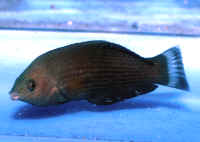
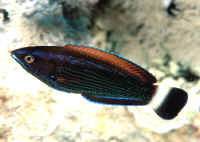
| Anampses lineatus Randall 1972, the Lined
Wrasse. Indo-West Pacific; Red Sea to Indonesia. To a little under
five inches in length. |
|
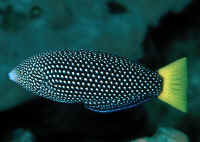
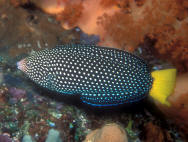
| Anampses meleagrides Valenciennes 1840, the
Yellowtail Wrasse. Indo-Pacific; Red Sea, eastern Africa to the
Tuamotus. To nearly nine inches in length. Females off Gili Air,
Lombok, and N. Sulawesi Indonesia. |
|
|
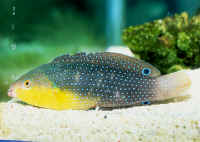
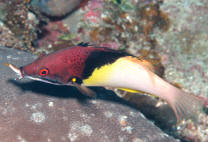
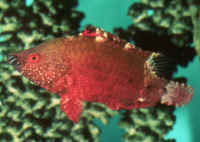
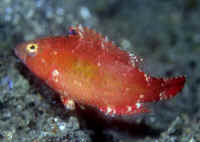
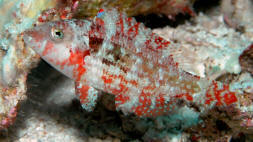
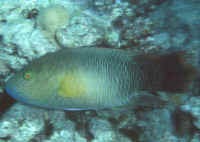
Anampses neoguinaicus Bleeker 1878, the New
Guinea Wrasse (3) is a real beauty but fares no better than the
rest of the genus. Shipping stress and traumas like mouth damage
claim almost all of them. Pictured: a juvenile initial phase
aquarium specimen and one of about the same development and a
male in Australian waters. Western Pacific. To eight inches in
length.
|
Genus Bodianus: Hogfishes
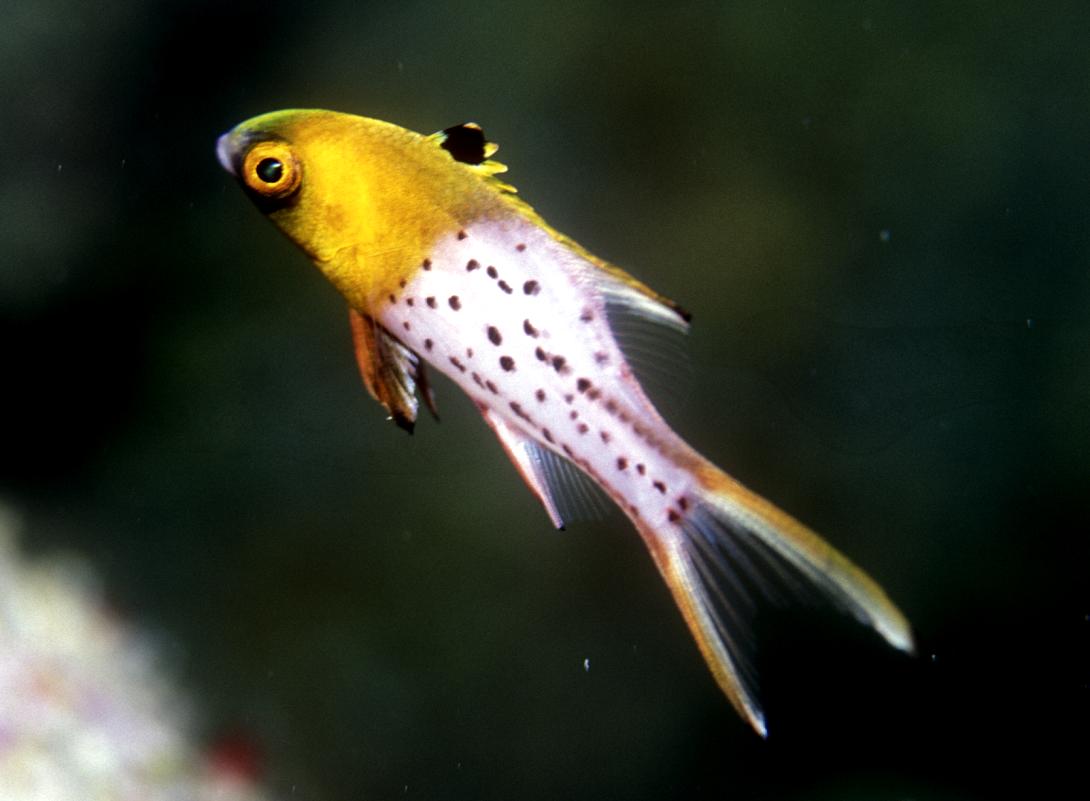
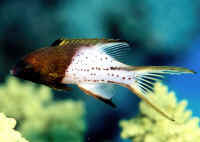
| Bodianus anthioides (Bennett 1832), the
Lyretail Hogfish. Indo-Pacific, including the Red Sea (where this
picture was made) out to the Tuamotus. To nine inches in length. A
gentle beauty as the genus goes. One and three inch juveniles
and six inch adult in the Red Sea. |
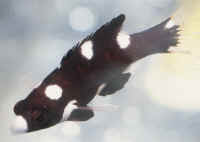
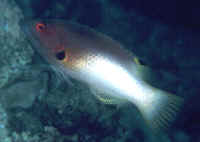
| Bodianus axillaris (Bennett 1832), the Axilspot
Hogfish. Indo-Pacific, including the Red Sea (where this picture
was made) out to the Tuamotus. To eight inches maximum length. Two
inch juvenile in captivity and six inch subadult in the Maldives
shown. |
|
|
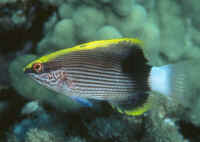
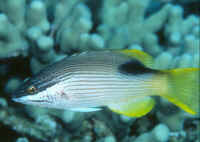
Bodianus bilunulatus (Lacepede 1801), the
Black Spot Hogfish or Tarry Hogfish to science, is often offered
retail. Punctuated distribution in the Indo-west Pacific
including Hawai'i, where these images were taken. Three inch
juvenile and six inch sub-adults shown. Grows to twenty two
inches in length in the wild.
|
|
|
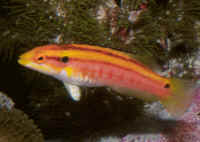
Bodianus bimaculatus Allen 1973, the
Twinspot or Yellow Hogfish is a supremely desirable peaceful
all-fish to reef tank species (1). Indo-Pacific. To only four or
so inches and truly beautiful.
|
|
|
Bodianus diana (Lacepede 1801), my
wife's namesake-favorite, Diana's Hogfish (1). Well-named
after mythology's Goddess of the Hunt, this species can
become belligerent toward its tankmates beyond it's ten inch
size. Indo-Pacific, including the Red Sea, where the adult
picture (below right) was taken. Small juveniles in waters about
S. Sulawesi and Gili Air, Lombok, Indonesia.
|
Genus Cheilinus:
|
Cheilinus chlorourus (Bloch 1791), the
Floral Wrasse (1). Hardy, but not as good-looking as some of its
congeners. To twenty inches long in the wild; much smaller in
captivity. Indo-Pacific out to the Tuamotus. The first one a
small juvenile in Australia, another more adult in Pulau Redang,
Malaysia, and one in Fiji.
|
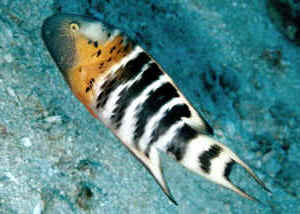
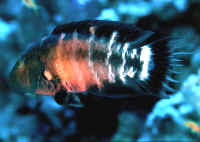
| Cheilinus fasciatus, (Bloch 1791), the
Redbreasted Wrasse. Indo-Pacific; Red Sea, East Africa to Samoa. To
sixteen inches overall length. Red Sea juvenile and adult. |
  |
|
Cheilinus trilobatus Lacepede 1801, the
Tripletail Wrasse (2) we'll list as it is occasionally sold
in the business. This is another aquarium-tough, medium-shipper
that gets big (about two feet). Indo-Pacific; Red Sea to the
Tuamotus. Here are images from the Maldives, Red Sea and
Malaysia.
|
|
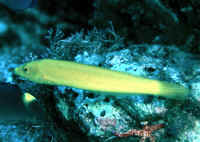
Genus Cheilio: I'll mention the
seagrass-dwelling Cigar Wrasse, Cheilio inermis (Forsskal
1775) (3), only because it occasionally is offered in pet-fish
markets, and rarely lives in captivity. Indo-Pacific, including
the Red Sea, out to Hawai'i. To twenty inches in length. At
right: one in the Gilis, Indonesia in a typical flanking
behavior, disguised with a Goatfish. Below: Three color varieties
in S. Sulawesi.
|
|
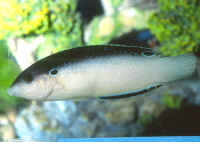
Genus Choerodon:
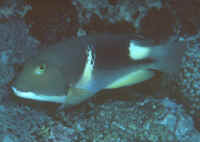
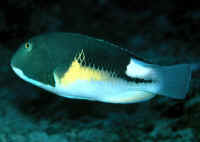
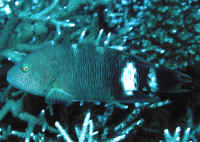
| Choerodon anchorago (Bloch 1791), the
Orange-Spotted Tuskfish. Indo-West Pacific; Sri Lanka to French
Polynesia. To about fifteen inches maximum length. A one foot
specimen in Bunaken/Manado/Celebes/Indonesia, another in Redang,
Malaysia. |
|
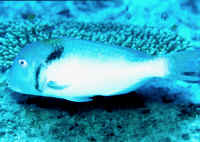
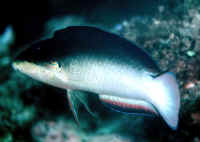
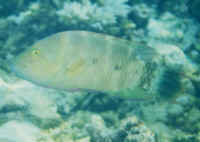
| Choerodon cephalotes (Castelnau 1875), the
Grass Tuskfish. Queensland to Indonesia. To fifteen inches in
length. Found associated with grass beds. This one off of the
Whitsundays in Australia. |
|
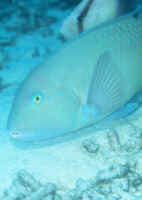
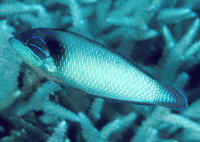
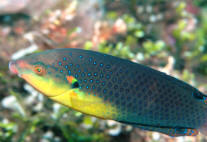
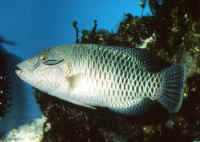
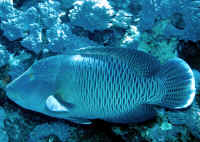
| Choerodon schoenleinii (Valenciennes 1839),
the Blackspot Tuskfish. Indo-West Pacific, Japan to Australia.
Largest member of the genus. Up to 38 inches long (1 meter) and 16
kilograms in weight. This one in Australia. |
|
To Part Two, Three,
|
|


.JPG)

.jpg)
.JPG)
.JPG)