|
Related FAQs: Wrasses In General, Wrasses, Wrasse Selection, Wrasse Compatibility, Wrasse Feeding, Wrasse Diseases,
Related Articles: Wrasses, Anampses, Hogfishes/Bodianus,
Maori Wrasses/Cheilinus &
Oxycheilinus, Fairy/Velvet
Wrasses/Cirrhilabrus, Coris & Coris gaimard,
Bird
Wrasses/Gomphosus, Halichoeres, Hemigymnus &
Hologymnosus Wrasses, Cleaner Wrasses/Labroides, Tubelip Wrasses/Labropsis, Leopard Wrasses/Macropharyngodon,
Pencil
Wrasses/Pseudojuloides, Razorfishes, Pseudocheilinus, Stethojulis, Thalassoma
Over to other Regional Accounts
of Wrasses:
Wrasses of
Indonesia
Part Three
of Three
To Part One, Two,
|
|
|
By Bob
Fenner
|
Hemigymnus fasciatus
|
Genera Hemigymnus & Hologymnosus:
|
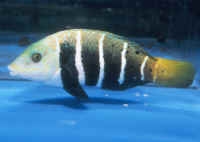
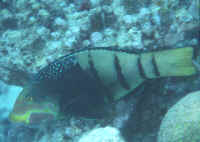
Hemigymnus fasciatus (Bloch 1792), the
Barred Thicklip Wrasse (2). Indo-Pacific, including the Red Sea,
east to Tahiti. To thirty two inches long in the wild. Pictured
are a six inch juvenile in an aquarium, Fiji, one of fifteen
inches in N. Sulawesi and a two foot adult in the Maldives.
|
|
Hemigymnus melapterus (Bloch 1791), the
Blackeye Thicklip Wrasse (2). Indo-Pacific, including the
Red Sea, east to Tahiti. To thirty six inches in the wild. Shown
are a too-small, two inch juvenile in captivity, a four inch
individual in Fiji (about the best aquarium starting size), and a
sixteen inch adult in the Red Sea.
|
|
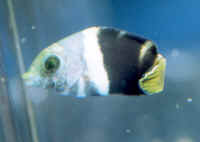
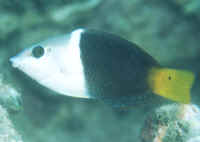
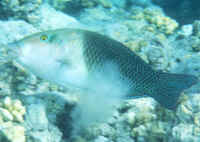
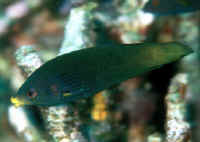
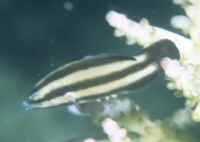
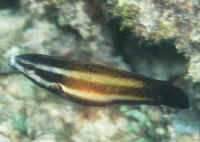
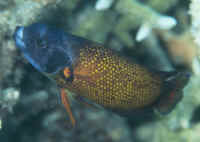
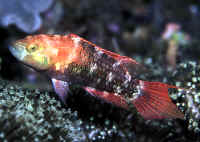
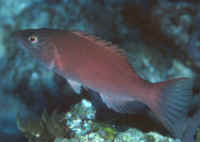
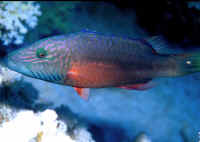
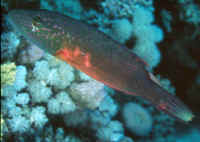
Hologymnosus annulatus (Lacepede 1801), the
Ring Wrasse (2). Indo-Pacific, including the Red Sea east to the
Marianas. To sixteen inches in length. Here are images of a
juvenile (3"), female and male in the Red Sea.
|
|
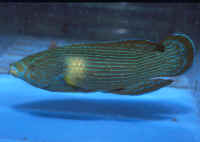
Hologymnosus doliatus (Lacepede 1801), the
Pastel Ring or Candycane Wrasse (2). Indo-Pacific east to the
Line Islands. To eighteen inches. Images: juveniles and adult
female in an aquarium.
|
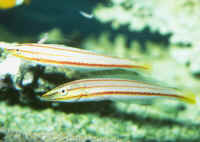 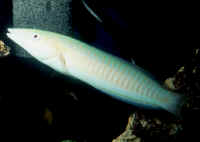 |
| Genus Labrichthys: The sole
member of this genus is the Tubelip Wrasse, Labrichthys
unilineatus (Guichenot 1847). Indo-Pacific, east Africa
to Samoa. To seven inches in length in the wild. Below: a juvenile
off Heron Island, Australia a female in Pulau Redang, Malaysia, and
a four inch male in a collector's aquarium in Fiji. |
|
|
Genus Labroides:
|
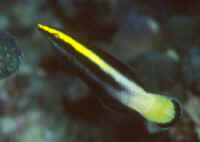
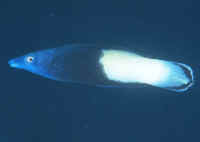
Labroides bicolor Fowler & Bean 1928,
the Bicolor Cleaner Wrasse (3), easily recognized, easily lost
Indo Pacific beauty. Indo-Pacific, east Africa to Micronesia. To
five and a half inches in length. Here are images of a juvenile
and adult in Maldives and Fiji respectively.
|
|
|
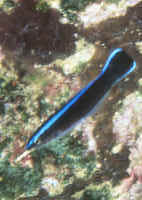
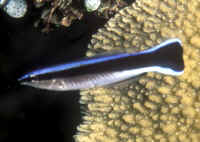
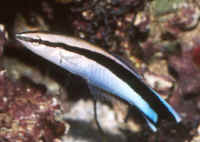
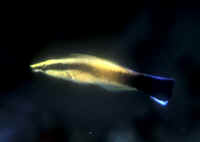
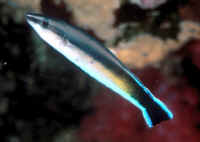
Labroides dimidiatus (Valenciennes 1839),
the common or Blue Cleaner Wrasse (3). Thousands will be
collected today and thousands will die. One out of thousands
lives for a year in captivity. Indo-Pacific, east Africa, Red Sea
to the Marquesas. To four and a half inches in length. Juvenile
in Bunaken/Sulawesi/Indonesia, intermediate phase in N. Sulawesi
and an adult, likely for only a short while, in captivity.
|
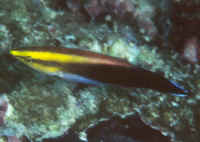
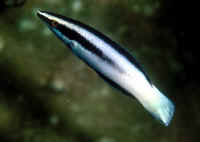
| Labroides pectoralis Randall & Springer
1975, the Blackspot Cleaner Wrasse. Indo-Pacific, Christmas Island
to the Line Islands. To four and a half inches in length. One in
Bunaken/Sulawesi/Indonesia, another off of Queensland,
Australia. |
|
|
Labroides rubrolabiatus Randall 1958, the
Red Lip Cleaner Wrasse (3), of the Pacific's Oceania ought to
be left in the sea as well. To four inches in length. On a Moray
Eel (Gymnothorax javanicus) in Moorea, French Polynesia, a
juvenile in Nuka Hiva, Marquesas and an adult in Fiji.
|
Genus Labropsis: Tubemouth Wrasses
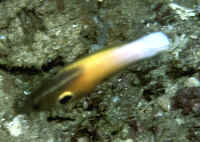
| Labropsis alleni Randall 1981, Allen's
Tubelip Wrasse. Indo-Australian; Philippines, Marshall's,
Solomon's, Indonesia. To 10 cm.
Fishbase link. Adults likely feed on coral polyps, juveniles
are facultative cleaners. N. & S. Sulawesi
pix. |
|
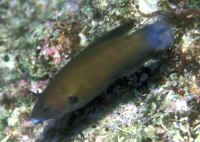
| Labropsis manabei Schmidt 1931, Northern
Tubelip Wrasse. Western Pacific; Southern Japan, Philippines,
Indonesia. To 10 cm.
Fishbase link. N. Sulawesi pic. |
|
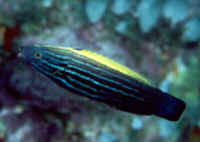
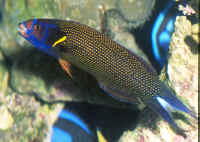
| Labropsis xanthonata Randall 1981, the
Comet, Yellowback or V-Tail Tubelip Wrasse (3). An expensive
addition from the South Pacific. Maldives image of juvenile stage,
aquarium image of adult. |
  |
Genus Macropharyngodon: Leopard Wrasses
Razorfishes and Rock Movers:
|
This genus contains the most prominent "Rock
Mover" or Razorfish species, The Dragon Wrasse, N.
taeniourus (Lacepede 1801)(formerly in the genus
Hemipteronotus). There are actually a few other genera (e.g.
Xyrichthys) and several species of these specialized,
wedge-headed fishes in the Worlds tropical seas. Most are too
plain, or get too rambunctious to be of interest/use to
aquarists. All are prodigious diggers and movers of decor that
need digging room, substrate and well assembled decor to prevent
toppling.
Novaculichthys taeniourus (Lay & Bennett 1839)
the Rock Mover, Dragon or Indian Wrasse (2) is a very hardy fish
that is more often killed by aquarists than dies from other
influences. As an aquarium specimen this species requires regular
"beefy" feedings of animal-based foods. It is a
gluttonous feeder that quickly starves if underfed. Not for reef
tanks, Razorfishes are territorial and aggressive fishes. To
about a foot in length. Juvenile in the wild (Hawai'i),
one in captivity and adult in Hawai'i shown. One other
species in this genus. Not used in the trade.
|
Genus Oxycheilinus:
|
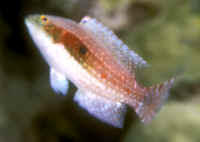
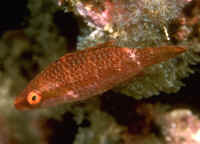
Oxycheilinus bimaculatus (Valenciennes
1840), the Twinspot Wrasse (2) is right about the right size at 6
inches maximum, but this shy beauty really takes a beating in the
process of collection, holding and shipping from the wild.
Indo-Pacific out to the Hawaiian Islands. Formerly placed in the
genus Cheilinus. At right, a male and female in
Hawai'i. Below: a juvenile, intermediate and adult in N.
Sulawesi pictured.
|
|
|
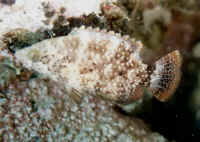
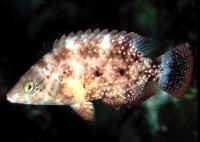
Oxycheilinus celebicus (Bleeker
1853), the Celebes or Slender Splendour Wrasse (2) also
grows to about nine inches and perishes for the same
"induced" reasons as the Twinspot. West-central
Pacific. These two and four inch specimens in Pulau Redang,
Malaysia.
|
|
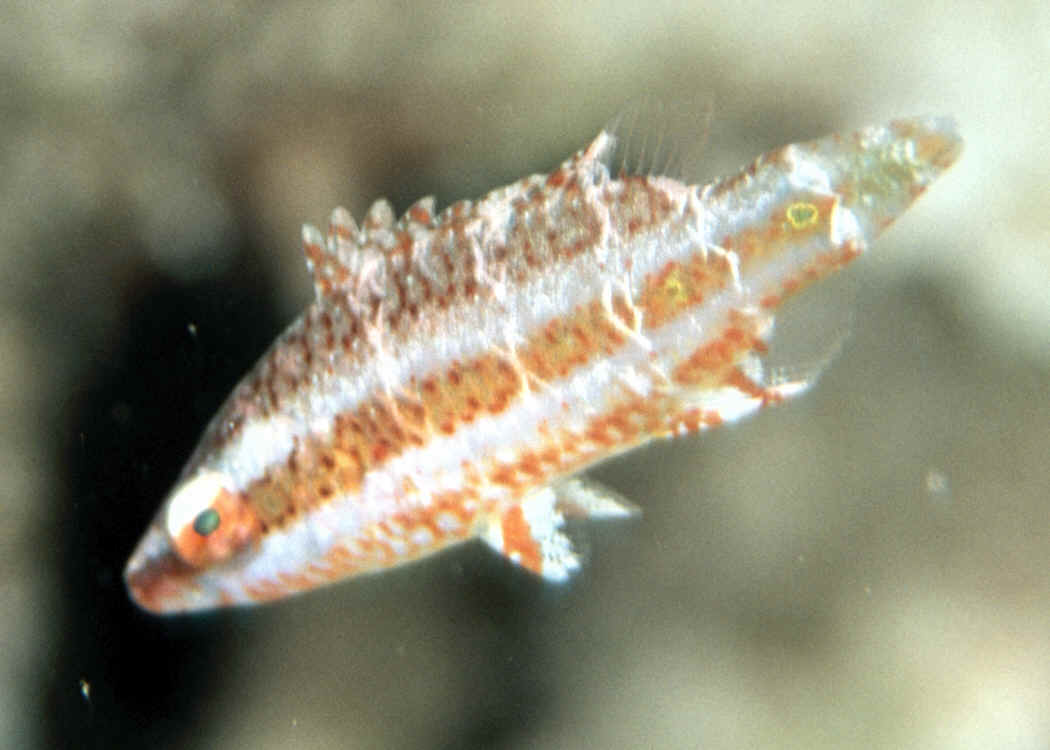
| Oxycheilinus digrammus (Lacepede 1801), the
Cheeklined Wrasse (2) is probably the most commonly offered member
of the genus. Initially healthy specimens do well, but most are
received from the wild in poor condition. Indo-Pacific, including
the Red Sea, out to Samoa. To sixteen inches in length in the wild.
Here are some images taken in (the first at right of a tiny one
inch or so specimen in Pulau Redang, Malaysia, adults below in the
Maldives, the other two in the Red Sea to illustrate how varying
this species appears. |
|
|
Oxycheilinus orientalis (Gunther 1862), the
Oriental Maori Wrasse. Western Pacific. To six inches in length.
Replaced by Cheilinus mentalis in the Indian Ocean.
|
No pic
|
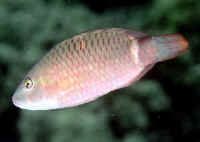
| Oxycheilinus unifasciatus (Streets 1877),
the Ring Tail or One-Banded Wrasse (2) is the widest ranging member
of the genus. Found across the Pacific's Oceania through the
Indian Ocean and Red Sea, and growing only to about a foot, it
still does poorly in captivity. Formerly placed in the genus
Cheilinus. At right a subadult and adult color phase
individual in Hawai'i, Below juveniles in Hawaii and a bit
older one in Roratonga in the Cooks. |
|
Genus Paracheilinus:
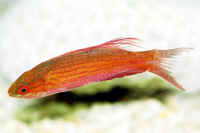
| Paracheilinus bellae Randall 1988,
Bell's Flasher Wrasse. Western central Pacific, Kwajalein
Atoll, Marshall Islands. To two and a half inches in length. |
|
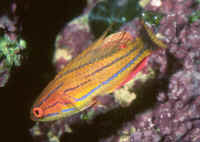
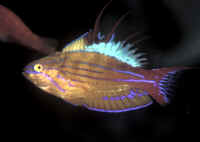
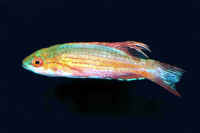
| Paracheilinus carpenteri Randall &
Lubbock 1981, the Pink Flasher Wrasse. Indo-west Pacific.
Philippines, Taiwan, Indonesia. To three inches in length. Males in
captivity and N. Sulawesi. |
|
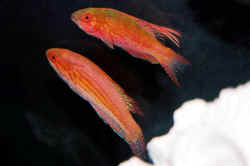
| Paracheilinus cyaneus Kuiter & Allen,
1999. Western Central Pacific: Indonesia. To three inches in
length. Found in sheltered areas of broken coral rubble. Aquarium
photo of a 5 cm. male upper, and a P. filamentosus and males
below by Hiroyuki Tanaka. |
|
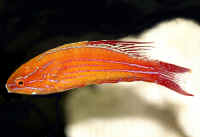
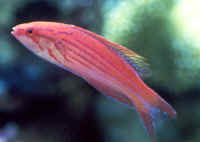
| Paracheilinus filamentosus Allen 1974, the
Filamentous Wrasse. Indo-Pacific. To six inches total length. Lives
in rubble zones, near the bottom, feeding on zooplankton. At right,
an aquarium photo of a male by Hiroyuki Tanaka. Below: Aquarium
image, and an excited and not males (and female, lower) I chased in
N. Sulawesi. |
|
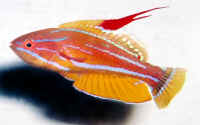
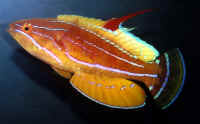
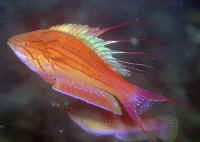
| Paracheilinus flavianalis Kuiter & Allen
1999. Eastern Indian Ocean: Indonesia and northwestern Australia.
To 8.5 cm. in length. Pix of two males displaying by Hiroyuki
Tanaka. |
|
Genus Pseudocheilinus:
|
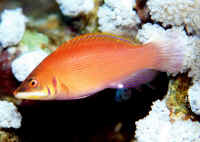
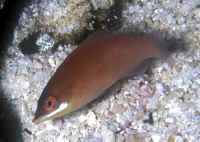
Pseudocheilinus evanidus Jordan &
Evermann 1903, the Pin-Striped or Striated Wrasse (2). I like
this fish's other common names, the Disappearing or Vanishing
Wrasse for its bashfulness. To a grand size of three inches.
Indo-Pacific, including Red Sea and Hawai'i. Two in the Red
Sea.
|
|
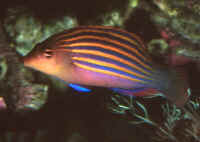
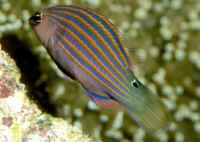
| Pseudocheilinus hexataenia (Bleeker 1857),
the Sixline Wrasse (2). A feisty, though small (to 4") a reef
tank species. Indo-Pacific, including the Red Sea in its
distribution. Aquarium and Queensland, Australia images. |
|
|
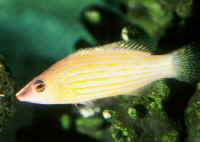
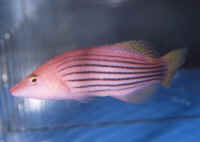
Pseudocheilinus octotaenia Jenkins 1901, the
Eight-Lined Wrasse (2) comes in two color morphs, one more
orange, the other more pinkish in body hue. Both can become
agonistic toward other fishes. Under-crowding, over-decorating
and keen observation are called for here, as always.
Indo-Pacific, including Hawai'i.. To five and a half inches
in length. Both color morphs shown in captivity.
|
|
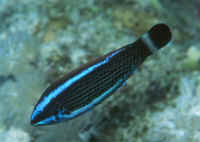
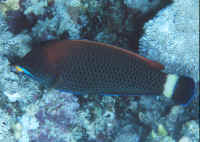
| Pseudodax
moluccanus (Valenciennes 1839), the Chiseltooth Wrasse.
Monotypic. Indo-Pacific; Red Sea to the Tuamotus. Up to a foot in
length in the wild. Occasionally imported for the aquarium trade,
rarely lives due to captive trauma. A juvenile and adult in the
upper Red Sea shown. |
  |
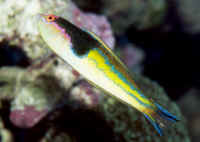
| Pseudojuloides severnsi Bellwood &
Randall, 2000. Indo-West Pacific; Sri Lanka, Ryukyu Islands,
Indonesia. To about four inches in length. |
|
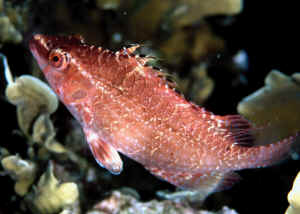
| Pteragogus cryptus
(Valenciennes 1839), the Cocktail Wrasse. Indo-West Pacific; East
Africa to PNG, south to Australia, north to Japan. To eight inches
overall length. This four inch specimen off Gili Air, Lombok,
Indonesia. |
|
Genus Stethojulis:
|
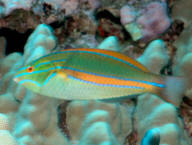
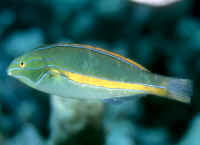
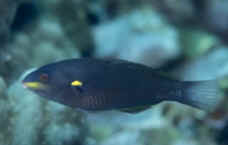
Stethojulis balteata (Quoy & Gaimard
1824), the Belted Wrasse (3), is an Hawaiian endemic. This is the
most common and hardiest member of the genus, but still has a
dismal survival rate. Two male pix and a female off of the Big
Island. To six inches long.
|
|
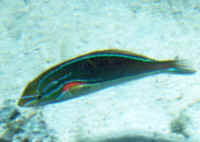
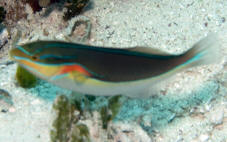
| Stethojulis bandanensis (Bleeker 1851), the
Red-Shoulder Wrasse. Indo-Pacific, from eastern Africa to the
tropical eastern Pacific coast. To six inches in length. Shown:
Males in French Polynesia and S. Sulawesi. |
|
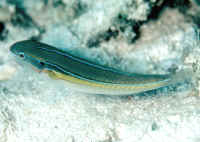
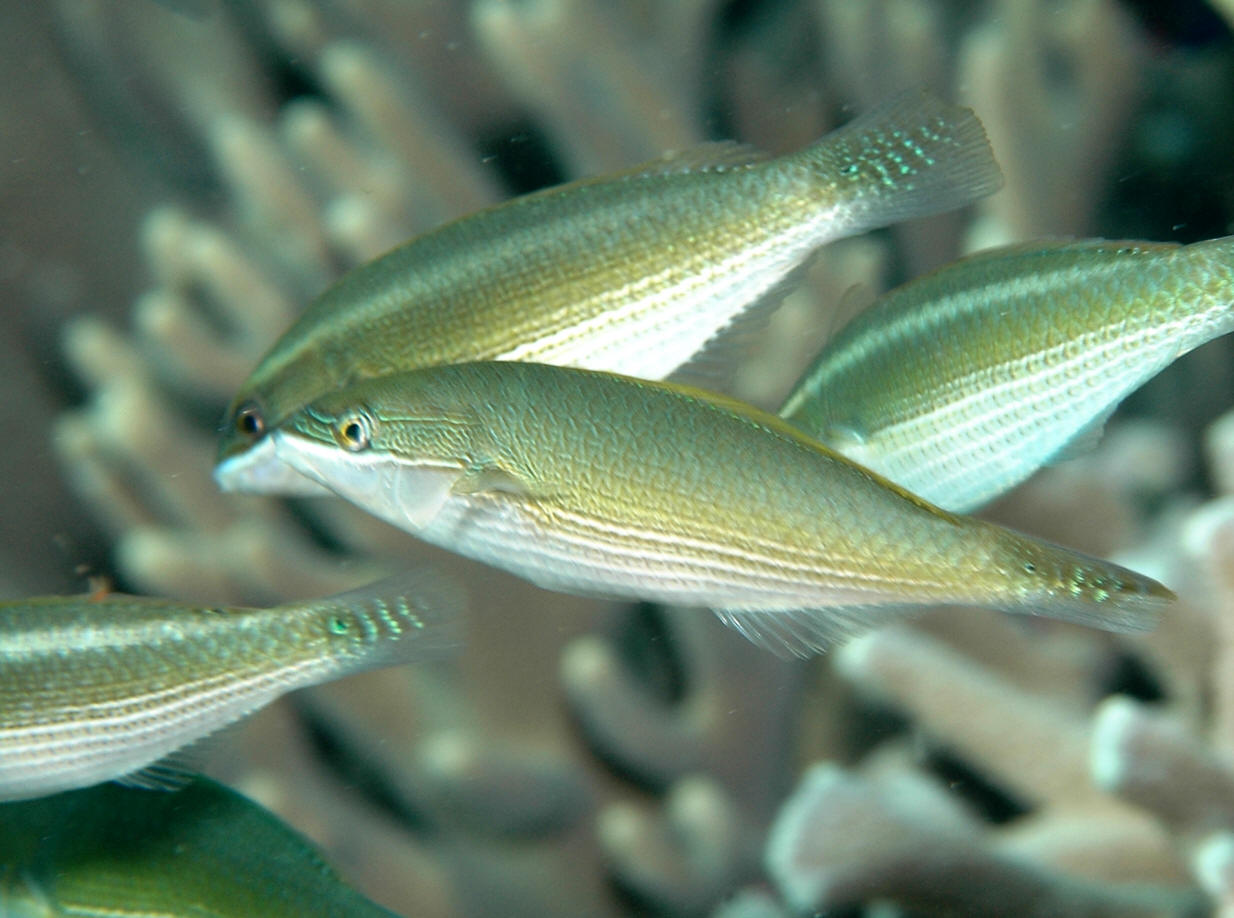
| Stethojulis strigiventer (Bennett 1832), the
Stripebelly Wrasse. Females are actually striped on their abdomens.
East Africa to Samoa, Micronesians. A male off of the Whitsundays
in Queensland, Australia, and a nice grouping of females/initial
phase individuals in S. Sulawesi. |
|
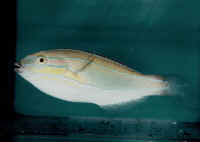
| Stethojulis trilineata (Bloch &
Schneider 1801), the Three-Lined Wrasse. Indo-West Pacific;
Maldives to north Australia, Palau, Samoa, southern Japan. To six
inches in length. A washed-out male in captivity and one in S.
Sulawesi shown. |
|
Genus Thalassoma:
|
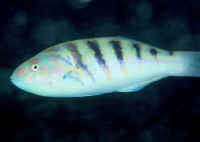
Thalassoma hardwicke (Bennett 1830),
the Six-Barred Wrasse (3). Indo-Pacific, to eight inches. The
first one in the Maldives, the second in the Cooks.
|
|
|
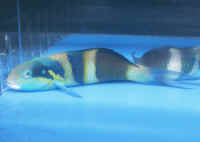
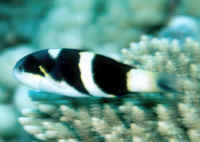
Thalassoma jansenii (Bleeker 1856),
Jansen's Wrasse. Indo-West Pacific. To eight inches. Not a
great beauty but hardy by standards for the genus (2). Specimen
in a tank in a Fiji wholesaler's and Australia.
|
|
|
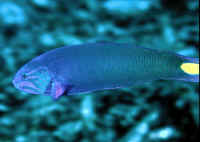
Thalassoma lunare (Linnaeus 1758), the Moon
Wrasse (2), sometimes comes in great, other times... all die. Red
Sea and Indian Ocean, to the Line Islands. Length to ten
inches. Can be more green or blue in overall coloration. Young
have a dark spot on their caudal and mid-dorsal fins. A male off
of Gili Air, Lombok, Indonesia, and female in the Red
Sea.
|
|
|
Thalassoma purpureum (Forsskal 1775),
the Surge Wrasse (3). Indo-Pacific, to more than one foot long.
This one in the Seychelles.
|

|
|
Thalassoma quinquevittatum (Lay &
Bennett 1839), the Red-Ribbon Wrasse (3). Indo-Pacific, to
six inches. Aquarium image.
|

|
|
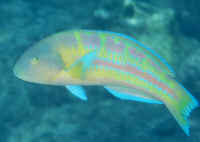
Thalassoma trilobatum (Lacepede 1801), I
wish was called the Three-Line Wrasse, but it's another of
the Christmas Wrasses (just how many labrids are green and red
anyway?)(3). To twelve inches overall length. This image taken in
Hawai'i.
|
|
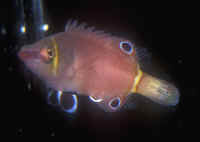
| Wetmorella nigropinnata (Seale
1901), Sharpnose or Possum Wrasse. One of two species.
Indo-Pacific; Red Sea to the Marquesas, Southern Japan, Micronesia.
To three inches in length. Lives in caves and crannies; secretive
species. Feed on small benthic invertebrates. Aquarium
photo. |
|
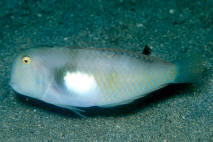
| Iniistius aneitensis (Gunther 1862), the
Yellow-Blotch Razorfish. Indo-Pacific: Chagos to Hawaiian Islands,
Micronesia. To 24 cm. Here in N. Sulawesi. |
|
To Part One, Two,
|
|


.JPG)
%20juv.JPG)