|
Related FAQs: Sea Squirts, Ascidians
2, Ascidian ID, Ascidian Behavior, Ascidian Compatibility, Ascidian Selection, Ascidian Systems, Ascidian Feeding, Ascidian Disease, Ascidian Reproduction,
Related Articles: Live Rock, Review
of Tyree's "Cryptic Filtration" Bk,
Sponges,
/The Conscientious Reef Aquarist
Almost Us!? Sea
Squirts, Tunicates, Ascidians, Subphylum Urochordata, Phylum
Chordata pt 2.
To: Part 1,
Part
3, Part
4, Part 5,
|
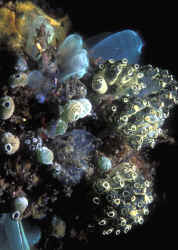
|
|
By Bob Fenner
|
Ascidian City!
|
Genus Clavelina: Bulbous small zooids, stalked to
degrees
| Clavelina sp. Bulb Tunicates. Grow in clusters. These
ones common in Florida, Bahamas, the Caribbean. |
|
| Clavelina sp. 2. Colonies appear as crowded bulbous
zooids. Clear to translucent with white wing patches. |
|
| Clavelina sp. 3. Colonies appear as crowded bulbous
zooids. Blue translucent and light lined bodied with white wing patches.
Here in Raja Ampat. |
%20MD.JPG)
|
Bigger PIX:
The images in this table are linked
to large (desktop size) copies. Click on "framed" images
to go to the larger size. |
|
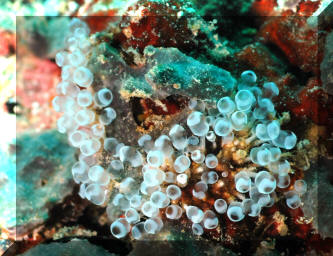
|
| Clavelina cyclus Herdman 1886, the Pale Club Sea
Squirt. Tropical Indo-West Pacific. Less than an inch in height. Not easily
kept... short lived (about a year), not known to reproduce in captivity. |
|
| Clavelina detorta (Sluiter 1904), (a) stalked
tunicate. Indo-W. Pacific. Typical habitat is under rocky shelves in coastal
reefs. Here in S. Leyte, P.I. |
%20MD.JPG)
|
| Clavelina cf. flava Monniot 1988, Trapezoidal zooids,
with short stalks. Most colors are orange to yellow. Western Pacific. Here
in S. Leyte 2013 |
%20MD.JPG)
|
Bigger PIX:
The images in this table are linked
to large (desktop size) copies. Click on "framed" images
to go to the larger size. |
|
%20MD.JPG)
%20MD.JPG)
|
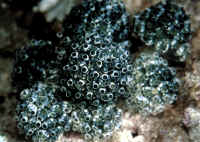
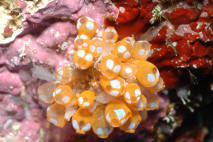
| Clavelina diminuta Kott 1957. Western
Pacific; Australia, Indonesia, Philippines. Colonies form masses of
rounded heads of highly variable color. Kott (1990) moved this
species to the genus Pycnoclavella. Off the north (Gilis) of
Lombok, and N. Sulawesi, Indo. |
|
Bigger PIX:
The images in this table are linked to large (desktop size) copies.
Click on "framed" images to go to the larger size. |
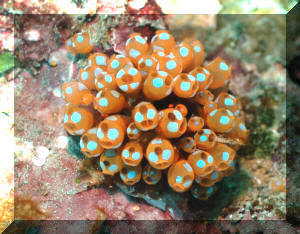 |
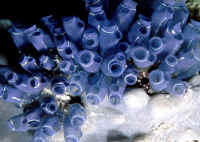
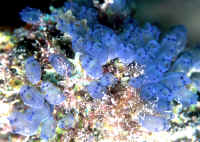
| Clavelina moluccensis (Sluiter 1904).
Australia, Indonesia, Singapore, Philippines. Colonies occur as
many ovoid zooids on thick stalks. Color varies from dark to light
blue to violet. One colony off Pulau Redang, Malaysia,
another off Queensland, Austr.. |
|
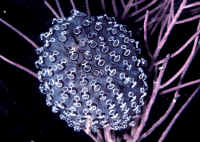
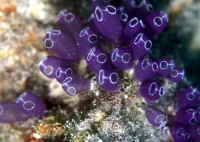
| Clavelina picta, the Painted Tunicate.
Florida, Bahamas, Caribbean. Frequently found in clusters of
hundreds of individuals hanging on to gorgonians, black coral,
sponges. Translucent bodies of variable cool colors. Siphon rims
reddish to dark purple. A colony in the Bahamas on a Sea Fan, and
one off St. Thomas. |
|
Bigger PIX:
The images in this table are linked
to large (desktop size) copies. Click on "framed" images
to go to the larger size. |
|
%20MD.JPG)
%20MD.JPG)
|
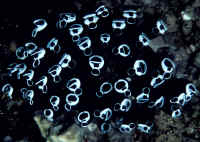
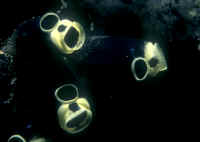
| Clavelina robusta Kott 1990. Western
Pacific; Australia, Indonesia. Philippines, Japan, Solomons. Dense
clusters of cylindrical zooids. Dark blue to gray in color with
yellow, green or white rings about both siphons. Here in
Bunaken/Sulawesi/Indo. |
|
Bigger PIX:
The images in this table are linked
to large (desktop size) copies. Click on "framed" images
to go to the larger size. |
|
%20MD.JPG)
|
| Clavelina cf. viola. Here in S. Leyte, P.I. |
%20MD.JPG)
|
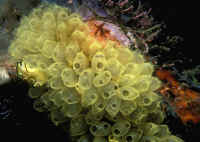
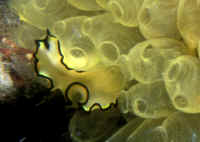
| Clavelina sp. and a "marauding"
flatworm, Pseudobiceros species that resembles the
nudibranch, Glossodoris atromarginata (Cuvier 1804)
feeding upon the colony. N. Sulawesi images. |
|
Bigger PIX:
The images in this table are linked
to large (desktop size) copies. Click on "framed" images
to go to the larger size. |
|
%20MD.JPG)
|
Genus Cystodytes:
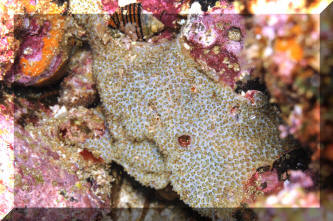
| Cystodytes lobatus. Lobed Tunicate. A young (flat)
colony here in Puerto Vallarta (2015). Color varies from grey, lavender,
pink to whitish. To about 10 inches across. |
 |
Genus Diazona:
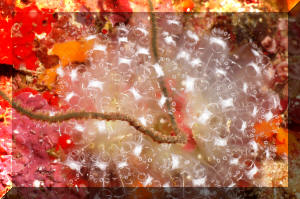
| Diazona sp. Clear, tubular tunicates, of 1
or 2 cm. height with six with spade-shaped dots around their
cloacal siphons. Raja Ampat photo. |
|
Bigger PIX:
The images in this table are linked
to large (desktop size) copies. Click on "framed" images
to go to the larger size. |
|
|
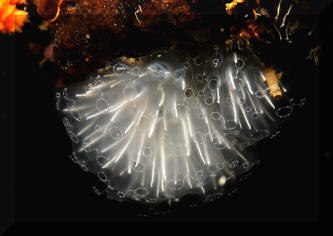
| Didemnum sp. Common on reefs in the tropical W.
Atlantic. Membraneous,
spreading colonies that are pink to magenta in color, sometimes
with light to white areas around their cloacal siphons. |
%20MD.JPG)
|
Didemnum conchyliatum (Sluiter
1898). Typically orangish with white speckling.
Cozumel (Mexico) 2011 |
%20MD.JPG)
|
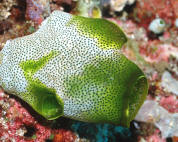
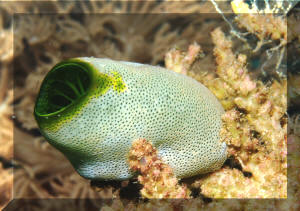
| Didemnum molle Herdman 1886.
Barrel-shaped to encrusting
zooids, Larger cloacal siphons, w/ more smaller oral siphons.
Very common in its range. Tropical
Indo-Pacific; South Africa to PNG.
Queensland/GBR and N. Sulawesi images. |
|
Bigger PIX:
The images in this table are linked to large
(desktop size) copies. Click on "framed" images to go to
the larger size. |
|
%20MD.JPG)
|
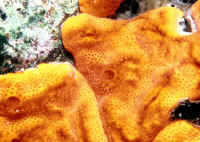
| Didemnum moseleyi Herdman 1886,
Moseley's Sea Squirt. Tropical Indo-West Pacific, including the
Red Sea. Encrusts rocks in brightly lit areas to 25 meters depth.
Not easily kept. Must be collected with substrate attached. Red Sea
image. |
|
Bigger PIX:
The images in this table are
linked to large (desktop size) copies. Click on "framed"
images to go to the larger size. |
%20MD.JPG)
 |
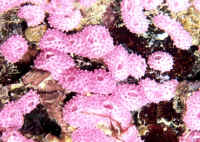
| Didemnum sp. Common on reef flats and slopes
in the Philippines, New Guinea and here in Fiji. Membraneous,
spreading colonies that are pink to magenta in color, sometimes
with light to white areas around their cloacal siphons. |
|
%20MD.JPG)
2MD.JPG)
MD.JPG)
%20MD.JPG)
%20MD.JPG)
%20MD.JPG)
%20MD.JPG)
%20MD.JPG)
To: Part
1, Part
3, Part
4, Part 5,
|
|


%20MD.JPG)
%20MD.JPG)
%20MD.JPG)
.JPG)
%20MD.JPG)
%20MD.JPG)
%20MD.JPG)

%20MD.JPG)
.JPG)