|
Related FAQs: Astrocoeniids, SPS Corals, Stony/True
Coral, Coral System Set-Up,
Coral System Lighting, Stony Coral Identification, Stony Coral Selection, Coral Placement, Foods/Feeding/Nutrition, Disease/Health, Propagation, Growing Reef Corals, Stony Coral Behavior, SPS Identification, SPS Behavior, SPS
Compatibility, SPS Selection,
SPS Systems, SPS Feeding, SPS
Disease, SPS Reproduction,
Related Articles: True or
Stony Corals, Order Scleractinia, Family Pocilloporidae, Dyed Corals,
/The Best Livestock For Your Reef Aquarium:
Family
Astrocoeniidae
|
|
|
by Bob Fenner
|
|
Genus Madracis Edwards & Haine 1849, Finger, Pencil,
Cactus Corals. the only genus of the family found in the Atlantic (also
in the Pacific). This genus placed by Veron (2000) in the new family
Astrocoeniidae (formerly Pocilloporidae).
| Madracis carmabi (Vermeij et al 2003), Ten Ray Finger
Coral. Colonies light orange to tan in color. Branches of bilobed, rounded
tips. Small polyp mouths are greenish yellow. To five foot. Small colony
here in Roatan 2019. |
%20MD.JPG)
|
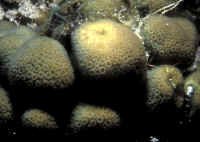
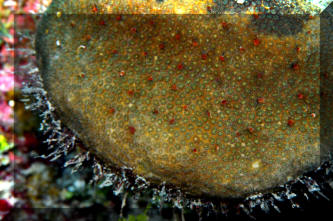
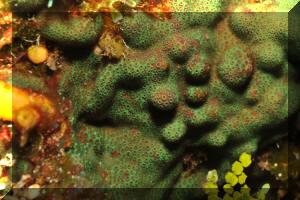
| Madracis dedactis (Lyman 1859), Ten-Ray Star
Coral. Tropical West and East Atlantic. Encrusting to bulbish knob colonies to six inches in
height. Yellowish to green. Ten rays/septa per corallite. Cozumel pic by
Di.F. |
|
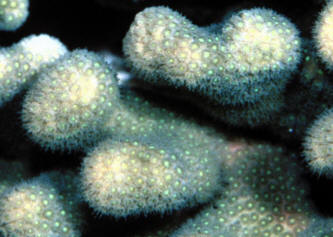
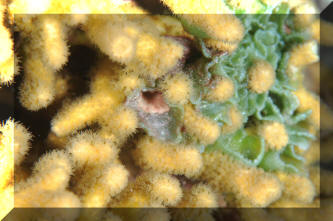
| Madracis formosa Wells 1973, Finger
or Cactus Coral. Colonies made up of densely packed small
thumb-like branches with blunt ends. Appear fuzzy when open. Dull
to Green with yellow central corallite color. Bahamas photo and
close-up. |
|
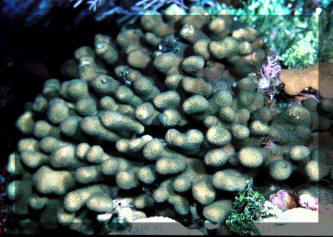
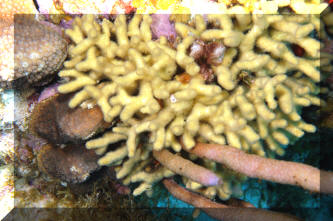
| Madracis mirabilis Colonies of dense pencil
thin blunt tipped branches. Appears fuzzy when polyps are open. Yellow to
creamy in color. Bonaire. |
%20MD.jpg)
|
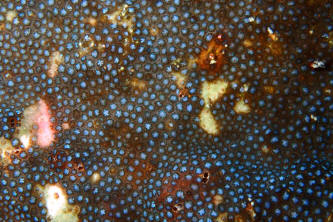
| Madracis pharensis (Heller 1868), Star
Coral. Mostly azooxanthellate (usually found inside caves).
Tropical West Atlantic. Compact, polygonal colonies. Corallite
septa in two, alternating series. Occur in red, pinkish, grey and
green colors. Di.F Bonaire pic. |
|
Genus Paulaustrea Yabe & Sagiyama 1941. One species,
P. ramosa. Pacific in shallow, sandy bottoms. A rarity in the
ornamental trade, with star-shaped corallites, blunt ending branches.
This genus has also been placed by Veron (2000) in the new family
Astrocoeniidae.
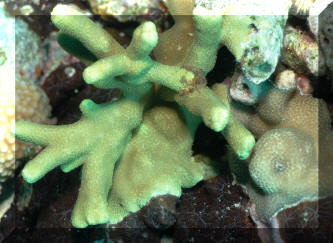
| Palauastrea ramosa Yabe & Sagiyama 1941.
Blunt, club-like branches. Cream to light brown in color. Similar
in appearance to Porites cylindrica.
Bunaken/Sulawesi/Indonesia photo. |
|
Genus Stephanocoenia:
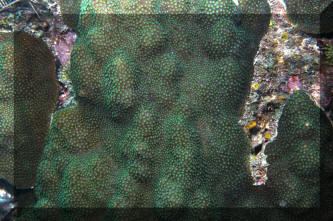
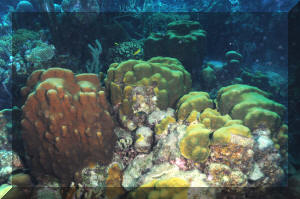
| Stephanocoenia mechelinii Blushing Star Coral.
Smooth domes and boulders. Calices raised, usually darker than surrounds.
Blushing comes from the reaction from being touched, the polyps retracting.
Curacao 2015, TiffB Pix. |
%20MD.JPG)
|
| Verticals (Full/Cover
Page Sizes Available) |
%20MD.JPG) |
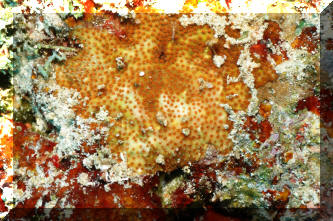
Genus Stylocoeniella Yabe & Sugiyama 1935: Small encrusting or columnar colonies
whose corallites show obvious coenostenum stiles (upright pillars next to
corallites). Easily confused w/ Montiporas.
Stylocoeniella armata (Ehrenberg 1834) /COTW:
Characters: Colonies
are encrusting. Corallites are widely spaced and form excavations in the
coenosteum. Septa are in two equal or subequal cycles. Each corallite has a
prominent coenosteum style.
Colour: Dark
or bright red, brown or green.
Similar Species: Stylocoeniella
guentheri, which has smaller corallites with less prominent coenosteum
styles. See also Madracis
kirbyi and Poritipora
paliformis.
Habitat: Shallow
reef environments.
Abundance: Rare,
cryptic. N. Sulawesi 2005 |
|
|
|


%20MD.JPG)
%20MD.jpg)
.jpg)
%20MD.jpg)
%20MD.JPG)
%20COZ%2023%20MD.JPG)
%20MD.JPG)