 |
|
| Home | Marine Aquariums |
Freshwater Aquariums |
Planted Aquariums |
Brackish Systems |
Ponds,
lakes & fountains |
Turtles & Amphibians |
Aquatic Business |
Aquatic Science |
Ask the WWM Crew a Question |
| Please visit our Sponsors | ||||
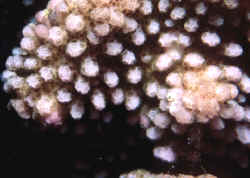
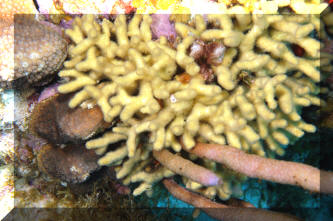
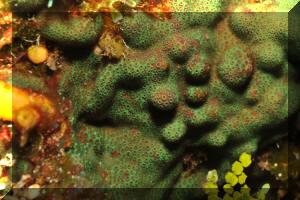
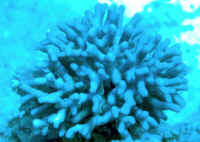
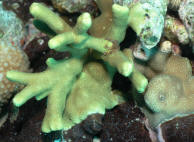
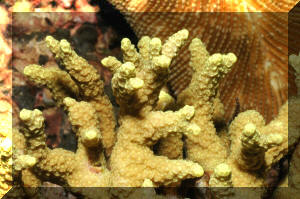
Family Pocilloporidae: Tend toward branching morphology, small corallites on a surface that appears bumpy (verrucae). Corallites occur on and between verrucae. This family, erected (made up) by Gray in 1842, is second only to the Acroporids in importance as contributors to reef formation. Pocilloporids reproduce sexually year round by way of planulae larvae, asexually by fragmentation. Most forms are finger-like (digitate) to branching (ramose). The family was made up of five genera until recently (Madracis and Paulaustrea are now part of the family Astrocoeniidae according to Veron, 2000). Aquarium Use: Pocilloporids are generally hardy and adaptable. They stay open in the wild twenty four hours a day and the few that mainly open only at night can be trained to be open during the day by feeding. Other pluses of this group is their often bright color and ease of propagation by fragmentation. They need clean water of good movement, bright lighting. A note re their growth and placement: Pocilloporids are not as fast growing as Acroporids and some other stony corals, and though they may add extension of a couple of inches per year, they need to be spaced far enough away from other life so as not to be overshadowed. Selection: If possible, seek out non-wild collected stocks. Ones from off the reef frequently don't adapt as well to captive conditions and are far more likely to harbor undesirable co-life... including shrimps and crabs that can go from commensal to predaceous. Another reason for searching for captive fragged colonies is the apparent short lifespan of wild stocks. Some Pocillopora have been determined to live only 7-8 years in the wild. The usual provisos of observing potential purchases for bleaching, tissue recession apply here. Their 1 mm or so living tissue depth is very easily damaged in collection, shipping, handling, and such trauma can precipitate into unsalvageable specimens. Pocilloporid Genera, Notes: Genus Madracis Edwards & Haine 1849, Finger, Pencil, Cactus Corals. Colonies are laminar, columnar or encrusting. Have tightly packed corallites with ten radiating septa fused w/ the columella. Fine spinules on their coenosteum. The only genus of the family found in the Atlantic (also in the Pacific). This genus placed by Veron (2000) in the new family Astrocoeniidae.
Genus Palauastrea Yabe & Sagiyama 1941. One species, P. ramosa. Pacific in shallow, sandy bottoms. A rarity in the ornamental trade, with star-shaped corallites, blunt ending branches. This genus has also been placed by Veron (2000) in the new family Astrocoeniidae.
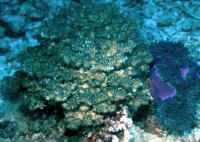
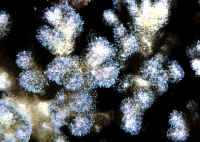
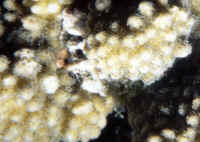
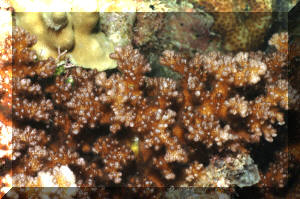
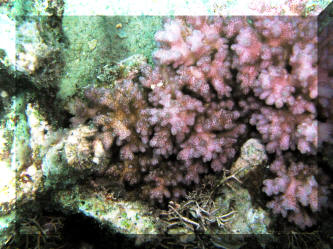
Genus Pocillopora Lamarck 1816, Cauliflower, Bird's Nest, Brush, Cluster Coral. Readily identified by their distinctive verrucae, fuzzy, warty appearing corallites. Skeletons have a good deal of the complex polysaccharide chitin in them (only Fungia shares this trait) Polyps are small, imbedded in the stony skeleton. In the wild they open only at night, but can be trained to open by day in captivity. A very widespread and adaptable genus, with members of the same species found in many different habitats. Occur in all colors of living corals.
|
|

|
Features: |
|
| Featured Sponsors: |
%20MD.jpg)
%20MD.jpg)
%20MD.JPG)
%20MD.JPG)