|
Related
FAQs: Condylactis Anemones, Condylactis 2, Condylactis Identification,
Condylactis Compatibility,
Condylactis Behavior, Condylactis Selection, Condylactis Systems, Condylactis Feeding, Condylactis Disease, Condylactis Reproduction, Caribbean
Anemones, Atlantic Anemones
2, Condylactis,
Anemones, Anemones 2,
Anemones & Clownfishes,
Aiptasia,
Anemone
Identification, Anemone
Selection, Anemone Behavior,
Anemone
Health, Anemone
Placement, Anemone
Reproduction, Anemone
Lighting, Anemone
Feeding,
Related Articles: Anemones of
the Tropical West Atlantic, Anemones,
Invertebrates, Stinging-Celled Animals, Clownfishes, Aiptasia/Glass
Anemones, Coldwater
Anemones, Colored/Dyed
Anemones,
/Diversity of Aquatic Life
Series
Condylactis
Anemones
|
|
| Bob Fenner |
Tableau de Condy! |
 |
New Print and
eBook on Amazon:
Anemone Success
Doing what it takes to keep Anemones healthy long-term
by Robert (Bob) Fenner
|
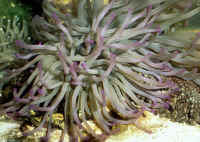
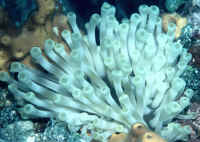
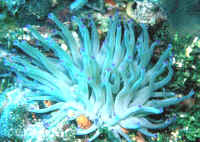
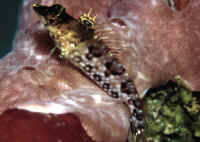
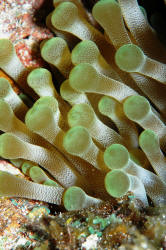
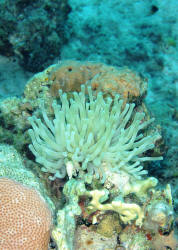
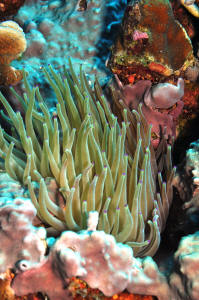
| Condylactis gigantea, the Giant Anemone.
Largest species in the range (6-12 inches in diameter when
extended). White body and tentacles. The latter bear enlarged tips
typically of a contrasting color, though they may be white. Right:
In an aquarium Below: Bahamas pix including one of this species
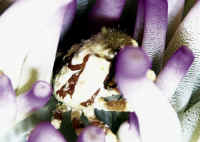
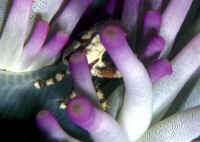
handful of symbionts (a Diamond Blenny, Malacoctenus bohlkei
bottom right), others include Pederson's, the Squat Anemone
Shrimp (below middle) and the Spotted Cleaner Shrimp, and Banded
Clinging Crab. |
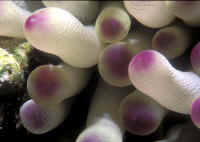
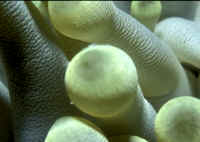
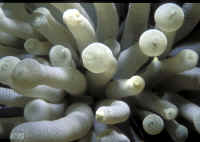
| Captive specimens tend to lose the
"bulbiness" of their tentacles ends. At right and below
Condylactis gigantea in an aquarium and in Cozumel... Wish
we were drifting northward on Santa Rosa Reef right now! |
|
|
| The Spotted Cleaner Shrimp, Periclimenes
yucantanicus in its host anemone, Condylactis gigantea off of
Cozumel. 3/4-1 in. overall. Also found in association with other
tropical West Atlantic anemones. |

|
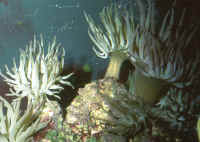
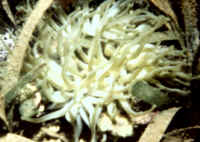
| Condylactis gigantea (nee passiflora), the (Florida)
Pink-Tipped Anemone. The most commonly (and inexpensively) offered
anemone species in the trade by far (in the West). For good
reasons... many colors, hardy. Captive and Belize
photos. |
 |
 |
Taxonomic info 12/11/12
Hi WWM crew,
I came across this page, http://65.36.157.188/condyanemones.htm, and
thought to send a few taxonomic corrections to you:
Condylactis passiflora is an unaccepted name; the accepted name
is Condylactis gigantea
(http://www.marinespecies.org/aphia.php?p=taxdetails&id=458658).
Mithrax cinctimanus was moved into the genus, Mithraculus
by H. P. Wagner, 1990, Zool. Verh. (Leiden) 264:48-53. Accepted name:
Mithraculus cinctimanus.
Although not on that web page, the Pederson's cleaner shrimp,
also a symbiont found with C. gigantea and Bartholomea annulata (ringed
or corkscrew anemone) has moved from the genus Periclimenes to
the genus Ancylomenes by Okuno and Bruce (2010) Designation of
Ancylomenes gen. nov., for 'Periclimenes aesopius species group'
(Crustacea: Decapoda: Palaemonidae), with the description of a new
species and a checklist of congeneric species. Zootaxa 2372: 85-105.
Accepted name: Ancylomenes pedersoni.
Sincerely,
Nancy Sheridan
Florida Fish and Wildlife Conservation Commission
Fish and Wildlife Research Institute
100 8th Ave SE
St. Petersburg, FL 33701
http://myfwc.com/research/
<Thank you for these updates. As principally a hobbyist site, we do tend
to "lag" (e.g. not recognizing the addition, movement of genera, species
in Veron's recent Scleractinia works), be more of lumpers than splitters
taxonomically... but it is important to provide current systematics.
Will post your input here re these species. Bob Fenner>
Re: Taxonomic info, Condylactis conservation
12/11/12
Thanks for the reply and you're welcome for the info. Also, in case you
haven't heard, a three-year prohibition on the recreational and
commercial harvest of Condys in Florida state and federal waters went
into effect Nov. 1, 2012. For more info, please see -
http://myfwc.com/news/news-releases/2012/october/24/marine-life/.
Nancy
<Ah, I thank you for this note as well. Have a long-standing disregard
for the use of Actinarians in the ornamental trade... not worth their
extraction in my view. Cheers, Bob Fenner>
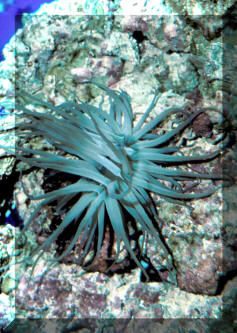
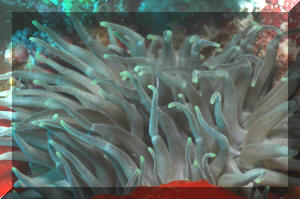
| Indo-Pacific Condylactis
species; poss. C. elatensis. Though most of these come to use from the tropical West
Atlantic as inexpensive "Condys", there are Indo-Pacific
species. This one in Fiji. |
|
|
|


/Thor/Thor_amboinensisCOZ2.jpg)
.jpg)
.jpg)
.JPG)
%20MD.JPG)
%20MD.jpg)
MD.JPG)
%20MD.JPG)
%20MD.JPG)
%20MD.JPG)
%20MD.JPG)
%20MD.JPG)
%20MD.JPG)
%20MD.JPG)
%20MD.JPG)
%20MD.JPG)
%20MD.JPG)