|
FAQs on Establishing Nutrient/Biological
Cycling in Marine Systems 10
Related FAQs: Establishing Cycling 1, Establishing Cycling 2, Establishing Cycling 3, Establishing Cycling 4, Establishing 5, Establishing Cycling 6, Establishing Cycling 7, Marine Cycling 8, Marine Cycling 9, Biological
Filtration,
Marine Cycling 10, & FAQs on
Biological Cycling: Science/Rationale, Techniques/Methods: Seeding Filter Media, Live Rock/Sand, Using Livestock, Cycling Products: By Manufacturers/Names:
Bio-Spira, Cycle... Chemical
Feeding, Anomalies/Fixing 1,
Trouble/Fixing 2, & Fluidized Beds, Undergravel
Filters/Filtration, Denitrification/Denitrifiers,
Ammonia, Nitrites, Nitrates, Phosphates, & Nutrient Export,
Related Articles: Establishing Cycling, Biofiltration,
|
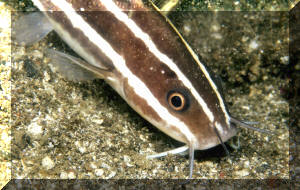 Purposeful
organisms that stir the substrate are of tremendous
use. Purposeful
organisms that stir the substrate are of tremendous
use.
|
“Stalled” cycle 5/6/20
Dear crew,
<Hi Jim>
Hope you are all well in these tough times.
<Mostly yes, thanks... hope you are well too.>
I have a new 112G Red Sea Reef XL 425 that I started cycling on
24-April.
<Neat!>
The tank has reef saver rock, live sand, and salt water. I used
MicroBacterStart XLM, Live Nitrifying Bacteria and their Anomia
product according to directions. By 1-May, my ammonia had decreased
to zero, nitrites were off the chart (API test kit), and I had
somewhere between 5-10 ppm of nitrates. None of these values have
changed since. The nitrites continue to test the same angry purple
color that isn’t actually on the color chart, and the nitrates are
similarly not moving.
<Nitrites spike never occurs before week three and nitrates will
rise thereafter, approximately on day 28 of the cycling process.>
I checked my nitrite kit on some RO/DI water, and it reads 0. I then
tried half tank water and half RO/DI, and the nitrites still tested
outside of the high range of the test kit.
<Patience, there’s nothing wrong with your reagents.>
With nitrates and nitrites not moving (colors on the test kits are
identical day-to-day) what, if anything, should I do? Some forums
are suggesting that the nitrites are too high, and I should do a
partial water change, but this seems counter intuitive to me. Also,
should I continue to add ammonia?
<I don’t recommend any water changes until nitrite levels drop to
zero and nitrates are high, neither I suggest adding more ammonia,
these readings are normal considering the time that the tank has
been running and will stabilize in approximately 4 total weeks
(counting from April-24).>
Salinity is 35ppt, temp 79-80F,
<Good>
Ph 7.7-7.83 (trying to solve a C02 problem in my basement),
<You need to address this issue.>
DkH 7. I used Tropic Marin Pro Reef salt, but I will switch to the
classic because its dkH is higher, which I hope will better support
my Ph.
<I suggest using a buffer here. SeaChem's “Marine Buffer” is a very
reliable product that will keep your ph at a constant 8.3.>
Thank you all for the information and expertise that you share every
day!
Jim
<You’re most welcome. Wil.>
Re: “Stalled” cycle 5/6/20
Thanks for the fast answer.
<Welcome>
Quick follow up question: What should I make of the fact that the
MicroBacterStart advertises a 7 day cycle and the nitrite spike did
happen very fast, consistent with their claims? Is it unusual for
the first phase to cycle super fast and the second not, when using
these types of products?
<Nitrites raise quite fast even without adding additives, it is
their normal course, second phase is much slower and there is no way
to accelerate it... please do take a look at the following link and
related for more detailed info re. biological cycling.
http://www.wetwebmedia.com/estbiofiltmar.htm >
Thanks, again,
Jim
<Cheers. Wil.>
Restart aquarium 11/18/18
I had a FOWLR aquarium running for years until Hurricane Sandy knocked out power
for 2 weeks and everything died. Tank has been laying idle ever since, still
filled with water, sand, and rock. Pumps, skimmer, lights, etc have not been
turned on in 6 years. I want to start her up again. Any advice?
<Rinse the submersible equipment in a 50/50 solution of water/vinegar for a day
or two; put the rock and sand for 24 hrs in water with 10% bleach, after doing
this, just rinse and add dechlorinator, then you can reinstall the
tank. Wil.>
Two Curiosities (Cycle and Skimmer/evaporation)
3/27/17
Hello WWM Crew,
<Eddie>
I am about a month into the set up of my new tank, and I have several
curiosities that I am puzzling over. As you all are always here for me
(and I REALLY appreciate that) I thought I would send them your way in
the hopes that not only can you answer my inquiries, but also that they
might perhaps help someone else as well.
<Ahh!>
First a little background. I have a 75 gallon tank with a 30 gallon
sump. I filled the tank in late February, and on March 8 got 42 lbs. of
really good live rock at a LFS that is about an hour and a half away.
This stuff was well cured, large but light (very pours), and full of all
kinds of life: sea stars, brittle stars, all kinds of pods and Mysis,
sponges, worms, snails, clams, feather dusters galore. I took it home
and stuck in the tank. The original plan was to put an additional 35
lbs. or so of (formerly) live rock (now dead) that I had in my tank four
years ago that has been sitting in my basement dry in a 5 gallon bucket
since. The plan was to let the old rock “feed” the new rock through the
cycle period, and the new rock to fill the old rock with bacteria.
However, I didn’t have time to put all the dead rock in and aquascape
that day, so I just stuck the new rock in the tank for a few days until
I was going to have time to do the rest. Having seen all the life on the
new rock, I’m glad that I didn’t have time. Especially since on one of
the rocks was a hitchhiking Kenya Tree Coral (it’s about an inch tall
closed up).I didn’t even notice it until I was home. I had hoped to
start the tank as a FOWLR, and eventually (maybe) move on to some soft
corals. But I ended up getting thrust into the world of corals already.
I didn’t want to go ahead with the original plan for fear that
it would kill the coral and a lot of the other cool life on the live
rock. So, on the advice of a friend (who owns the LFS store where I got
the rock) instead of going ahead and putting in all the dead rock, I am
adding instead one or two of the rocks per week so that the bacteria can
build slowly and handle all the dead stuff on the old rock. I have also
washed them off really well—spraying them with a hose and also immersing
them in water several times. All of the dead rocks except one are less
than 5lbs. each and a few are really small. I’ve added four this way
(less than 10 lbs. so far), and so far all is well.
<This is a good, workable plan; though I most often suggest and use
old/dead rock under the new>
So now for the first curiosity. When I put the new live rock in the tank
originally and left it for several days, I expected a brief cycle—it was
well cured, but out of the water for almost two hours on the way home.
But I never got one. For the few days that I left it in the tank by
itself, I did “feed” it a small pinch of fish food every other day. In
fact, I have had no evidence of a cycle at all—even putting in the four
dead rocks so far (over the last two weeks).I’m not getting any ammonia
or nitrite (which I didn’t expect to get), but I’m not getting any
Nitrate either (and I have a brand new Nitrate test, and an older one
too).It is just a standard Nitrate test (not a low level one), but it
keeps reading 0—certainly not 5ppm (the next step up on the color
chart).I would have thought that after having been in there three weeks
that I would be getting some kind of Nitrate reading.
<Mmm; nope. You have a classic "balanced" aerobic/anaerobic
setting currently>
I am getting some algae this week—some diatoms and a little bit of hair
algae. I’ve had to use my lights more because of the coral. I did set up
my skimmer (Aqua C EV-180) a few days after I put in the new rock. This
is the first time I’ve used a skimmer (I didn’t have one before), but it
was easy to follow the directions and install it. It didn’t skim
anything at first (during break-in).It just churned the water, but after
I put in the first of the old rocks it started skimming some dark gray
water. It will slow down after a day or so, but then when I put another
old rock in, it will produce some more.
<Par for the course>
So here are my theories on why I am not getting any Nitrates.1. The live
rock is substantial enough (and the waste is still small enough even
with the four old rocks) that the denitrifying bacteria in the live rock
is removing the Nitrates as they are being produced.2.The Nitrates are
being used up by the algae in the tank. In addition to the diatoms and
hair algae, there are lots of coralline algae that seem to be growing
before my eyes.3.The skimmer is removing a lot of the dead stuff from
the old rocks before it can go through the cycle.4.All of the above.
Thoughts?
<All three; but mostly 1)>
The other curiosity is mostly more of an observation. My skimmer, when
it is producing foam greatly increases the rate of evaporation in the
tank. In the period of time before I installed the skimmer, I thought I
had the rate of evaporation roughly figured. This remained fairly
constant while it was breaking in as well. But when it started producing
foam and skimming the evaporation really increased. I'm losing a little
over a half gallon a day. When I empty the cup and clean the tower, it
loses the head of foam and takes several hours to build it back
up. During this time the rate of evaporation slows way down. I'm not
losing that much liquid in the collection cup itself. It's evaporating
more rapidly. I guess I was curious as to why this is the case?
<More surface area; more rapid evaporation>
Is it normal? And is this something that is common with all skimmers or
just
the EV-180?
<Normal for all>
Again, thank you for always being there for me (and all of us).I have
learned so much from your site and from the inquiries that I have sent
in.
Eddie
<Cheers, Bob Fenner>
Re: Two Curiosities (Cycle and Skimmer/evaporation)
3/28/17
Hi Bob,
<Hello Eddie>
I had a follow up comment to your responses to my email yesterday. I actually
never got the email response, but I saw your comments in the daily FAQs.
<Bizarre... we respond directly to all. I don't like that you didn't get the
msg. directly>
This may be because I accidentally sent yesterday's email through one of my work
accounts. I'm sending this one through my personal email, which I have always
used with WWM before. For your convenience I copied/pasted the email and
response from the daily FAQs page below.
<Thank you>
Anyway, thank you for your response/endorsement of my plan. You said that you
often suggest putting the old/dead rock under the new. I wanted to clarify that
my plan is to do that very thing. Right now, as I add it a piece at a time, I'm
putting most of the old rock in the sump. I have space reserved in there for a
refugium that I haven't set up yet. I'm sticking most of the old rock in there.
Once I get most of it in the system, then I will do my final aquascaping. This
will involve (briefly) pulling the new rock out into a plastic tub containing
system water (syphoned out for this purpose and to help prevent water sloshing
out while I have my hands in there), pulling the old rock out of the sump and
arranging it in the tank (I've already practiced this on a cardboard cut out and
taken pictures of the way I want to arrange it),
<Neat; a very good practice>
and then arranging the new rock on top of it. I even have holes already drilled
in the old rock and zip ties already inserted so that I can attach the new to
the old.
<Fab>
Thanks again for all your help. I hope that your diving trip goes very well.
<Ah, thank you. BobF>
Eddie
cycling issue 7/4/16
Hi crew,
<Lane>
I'm in the process of setting up my 150 gallon marine tank with 40 gallon sump.
I'm familiar with the cycling process and understand its concept and how it
works. I have a few questions that I can't really seem to find the right answer
I'm looking for along with a few theories on why I'm not getting an ammonia
spike in my tank. Unfortunately i was unable to
rinse the 140 pounds of dry sand that I added to my tank. {I also added
40 lbs of the AragAlive live sand to help with the seeding process.}
<Oh! Well; some times, some systems don't actually "see" ammonia and/or
nitrite spikes; particularly if/when using items that contain nitrifying
bacteria; as you've done here>
After I realized how much fine sand was staying in the water column I decided to
buy a whole house filter with a 15 micron cartridge piped it into my sump then
ran it with a maxi-jet 1200 and began the process of stirring my sand over the
next two weeks to remove all of the sand that was to fine and stayed in the
water column. This approach worked very well and all extremely fine sand was
removed. Through this 2 week process various bug such as moths and what not made
their way into my tank. I left them in thinking they could possibly start the
cycling process for me. I know its not a shrimp or what not but don't see how it
would not.
<My chief concern is the possibility that such insects might have sprayed w/
insecticides... but likely not much trouble here>
My question is when i stirred the sand over these two weeks the tank water would
become cloudy as expected but as the sand was removed it began to look more like
a bacterial bloom then that of sand and i was wondering if the cycling
process had already begun.
<Likely so>
Did stirring the sand maybe increase the cycling process due to die off from
stirring the sand?
<No>
I did not test the parameters of my water during the 2 week process. The reason
I ask is because i put 2 decent size shrimp in my tank over 4 days ago and I am
still not having any ammonia or nitrite spikes.
<Do you get a measure for Nitrate accumulating here? Again, your system
may have cycled>
I tested both of these parameters twice a day for those 4 days. Could my tank
have already cycled in the 2 week sand stir period and cause the issue of not
getting spikes in ammonia from the shrimp?
<Yes; is possible. But I would hold off stocking till you see the NO3
gathering>
Having a hard time figuring this one out. Thanks for your help and happy
Independence weekend.
<Ah, thank you; and you as well. Bob Fenner>
Cycling a new set up
3/27/16
Would you advise to keep lights on when doing this and also put algae into the
refugium. From the start ?
<Yes; this and much more related is gone over (archived) on WWM. Bob Fenner>
Re: Cycling a new set up
3/27/16
Thank you for your time.
<A pleasure to share. Again; do avail yourself of the hundreds of thousands of
queries/responses; several hundred articles and book segments, tens of thousands
of images which are WWM. BobF>
cycling of saltwater aquarium; RO malfunction
4/7/15
Hi,
I’ve cycled many tanks over the years but have never dealt with this particular
issue before. I live in an agriculture state now ,but was a
recent move. I have an ro filter hook-up for drinking water which I used to fill
the tank after taking a sample to PetCo for them to test the water .I did not
have testing kits yet. I was told all was well ,
<Mmmm>
so I went ahead and filled the tank, and began a fishless cycle. I added
ammonium chloride to the tank, waited a few days to test with my new
SeaChem test kits. I did not initially get a free ammonia level, but did get a
total ammonia level of 0.5- 1.0. It’s hard to decipher the gradual color
changes. Even though I figured it was too early to get any reading from nitrite,
nitrate testing
<For browsers and you; I WOULD be adding some other "feeder stock"; likely at
least a proteinaceous food AND a bacteria culture of use>
I did that along with ph and alkalinity testing. I was surprised to find
the water testing positive for both nitrite and nitrate at 2 and 20ppm
respectively so soon.
<Mmmm; again... some other source>
Long story short there is both the same numbers in the ro filtered water
<?! Should NOT be coming through an operating RO device>
I had coming from the tap. Now I have to try to figure out is this tank cycled
once the total ammonia and nitrite levels go to zero?
<Should be>
It’s a 90 gallon tank and I’d hate to drain it and refill so I plan to use a
product called az-no3
<A real product. I.e.; it works>
to get rid of excess nitrate that’s in the tank after cycle and before any thing
living goes in and the get ro/di unit to do water changes from then forward.
<I'd look into adding at least an activated carbon contactor module to your
string... that is, another step in your Reverse Osmosis tool>
Right now I’m getting sporadic free ammonia readings (sometimes 0.2 or so ,
sometimes zero) and a consistent total ammonia reading of 0.5 every few days
when I test. Nitrite and nitrate still holding about the same at above mentioned
numbers and I’m about 1 1/2 weeks into the cycle (which is still way early, I
know and understand that). I just wondered if there is going to be a drop in the
nitrite since it’s not being converted but pre-existing in the water?
<A few things else may be going on here... the source, type of nitrogenous (and
other) compounds in your source water that are evidently getting past your RO...
I really just urge what has been stated above. The addition of flake or pelleted
food likely; AND a real aquarium-beneficial mix of microbes; ala Dr. Tim's,
Microbe-Lift, SeaChem...>
I’m sorry if this seems like a silly question ( I’m not the best with chemistry)
and wanted a second opinion on what to expect.
<Not silly; actually profound>
90 gal. corner bow
Aquamax cones protein skimmer HOB
Hydor 600 canister filter
2 Hydor powerheads for circulation
instant ocean reef crystals as salt mix
3 inch sand bed
no rock as of yet (plan to get life rock once cycled, has bacteria in it
from what I gather)
<Oh! The rock can sub for both the food and bacterial additions... just a few
lb.s>
Thanks Gail
<Welcome; Bob Fenner>
Re: cycling of saltwater aquarium
4/7/15
Hi Mr. Fenner,
Thank you for your quick reply and I have solved the mystery of the faulty
water!
<Oh?>
After receiving your email last night I decided to test the regular tap
(unfiltered) and there were no nitrites and maybe 1ppm nitrate in that water, so
I have to conclude that my filter was installed incorrectly or backwards!
<Ahh>
If I hadn't decided to start up a tank and had not contacted you it may have
been quite awhile till I noticed anything amiss. I will now contact the company
and find out how to fix this mess along with the handyman who installed it and
give him a piece of it. I may also have to drain tank after all if anything
worse that nitrite and nitrate got flushed into that water.
<I'd just wait at this point... the little bit in there presently is of little
consequence>
If they give me a breakdown of the chemical composition of the water and I'm not
sure if it should stay or go I
may call upon your expertise to say yea or nay, if that's ok with you.
<Sure>
For right now until I have the facts everything will be in stasis. Thank you for
possibly saving mine and my family's life, we are so very grateful you do what
you do!
Thank you, Gail
<Very glad to be of assistance. Bob Fenner>
Re: Cycling
5/13/14
Hello Bob Fenner,
<Steven>
Thanks for the reply.
<Welcome>
Updates:
I have setup the aquarium as per plan, however I took about 10kg of
existing live rocks from my nano tank and used a chiller (temperature is
now 27-27.5 degrees C).
On the 4th day after setup, I tested the water parameters. They are as
follows:
Ammonia = 0 (not detectable)
NO2 = 0 (not detectable)
NO3 = 5mg (I suppose the "borrowed" live rocks help seed the bacteria
and accelerated the cycling. I also did dose BioTim and Biodigest for
the Bio Pellets)
PH = 8.4
KH = 11dkh
ORP = 260 creeping up slowing until 312 (down later when I added 2nd
batch of bio-pellet)
Salinity = 1.024
Although the NO3 is 5mg, I am reluctant to add any fish. I feel I should
give more time for the tank to stabilize
first; although not sure how long.
<Mmm, I'd place a bit of food; perhaps a small, hardy organism>
Questions if I may:)
I would really like a mandarin fish down the road. Objective is how to
sustain a thriving pod population?
<There are a few approaches>
Colonizing:
I have researched and concluded that the area per square feet of sand
and rocks (rather than per pound per gallon) as a better guide to
increase the opportunities for more pods to grow. At the moment I have
about 30 kg (66 pounds) of live rocks (I prefer open spaces than packed
corals/rocks). I believe many would say double the amount would be
needed to sustain it. As such I plan to hammer away some new rocks and
epoxy them into small rock rumbles and scatter them around the tank. I
hope to add 10-20kg in total weight of these rock rumbles and 5-10kg in
the sump.
<Mmm; I'd much rather have a sump/refugium... space there sans predators
of any kind for culture>
Feeding it:
I read that copepods feed mainly on algae especially diatoms. I some
concerns not sure if it is valid;
<Many smaller Copepoda species do>
diatom is a phase most aquarist go through, after which diatom though
may be present isn't on a large scale. If I have not much algae in my
tank (possibility nutrients strip dry from usage of pellet), would there
be sufficient pods to sustain one mandarin?
<Can be done>
I have a less favored option: mini refugium either in the sump or
hang-on aqua clear 110 with macro-algae present.
<This is the route I would go... with a DSB, RDP lighting and some
macro-algal co-culture...>
Thanks once again
Steven.
<Welcome. Bob Fenner>
Cycling / Maturation 11/17/13
Hello Everyone!
<Ms. B>
My name is Holly. I am new to the Marine Aquarium hobby. I setup my
55 gal. FOWLR tank on 10/20/13 with a Marineland Pro
Series Emperor 400 Bio-Wheel Power Filter, and both a 550 & a 660
undergravel power filter with Aqua-Pure Phosphate filter pad in both and
activated carbon cartridges in the 400. I do not have a protein skimmer.
<I would save up; get/use one>
I'm using 2 18" Zoo Med Reef Sun 50/50 bulbs.
On 11/9/13, I added 2 Yellowtail Damsels, 2 Yellow Damsels & 3 pieces
(approx 10#) Live Rock. And a tiny little crab-like being
(Mr. Crabs) that snuck a ride home on one of the pieces of LR. Now I
understand that PATIENCE is a must here, however, everything I've read
suggest that by now I should be seeing a spike in the Ammonia at least.
<Mmm; maybe not... happens often enough that such set-ups are "instantly
cycled" via their bit of live rock>
I test the water daily at about 8 AM with an API Saltwater Master Kit. It
tests for pH, ammonia, nitrite & nitrate. I keep the temperature at
75-77°F. And my sg remains at 1.023-1.025. My pH is a steady 8.2 with
the exception of a drop to 7.8 on 11/13/13 that I corrected with a 10%
water change. Everything else is Zero and has not fluctuated at
all.
The fish are doing quite well. Bashful, a Yellowtail hid a lot the first
couple of days (hence the name) is out and about more now & Herbert his
tankmate is doing well. Brutus a Yellow (and he/she is a brute) hid a
bit the first day or so but now tends to pick on both yellowtails and a
little on his tankmate Flo. Nothing major, just chases them off his
"territory". No one except for Flo ventures to the right side of the
tank (my pro-series is on that side).
Flo is my greatest concern. She/He is a paler than her tankmate and has
been displaying some odd behavior. First she/he is a bit fatter than
Brutus. She has dug holes in 3 places under rocks and kind of quivers
and swims forward and backwards in & out of the holes. I'm thinking she
might be a he and "really likes" his tankmate and is trying to make an
impression on him/her, or she is filling up with eggs. The puffy belly
(no dark spot) has me thinking along those lines.
All that being said, here are my main questions :
1) Why haven't my ammonia, nitrite & nitrate levels changed?
<Nitrate is due to start showing... patience...>
2) Is there a way to kick start them without hurting my babies?
<Well; it is safe to add products, bacterial cultures...>
3) Could the water change have slowed it down?
<Yes; but doubtful>
4) What's going on with Flo?
<Just normal damsel behavior>
5) Should I be worried about adding more fish? Can I?
<I would wait another month re>
My dream tank is "Finding Nemo". I plan to add a couple Ocellaris
Clowns, a Blue Tang, a Yellow Tang,
<A 55 is too small for the tangs; sorry>
a Royal Gramma, a Four Striped Damsel, a Black & White Heniochus,
<And really too small for Butterflyfishes>
(which is a substitution to a Moorish Idol) a Pacific Cleaner Shrimp,
and a Puffer (not sure which one, I like Valentini, Blue Spotted,
Dogface & Porcupine)
<Only a Toby, sharpnose here... again; space>
thought about a starfish like in the movie (Pink), but I'm having
difficulty finding exactly what I want so may do without. Is there
something I should be looking at? Anyone I'm missing? I don't think I
have a lot of cleaners in there. I'm hoping to make it a Reef in the
next 3-5 years. Would love to get some anemones and fancy corals
eventually.
<... that word patience again... Enjoy the time for speculating,
investigating your possibilities here>
Thank you in advance for your time. I know I'm asking a lot of
questions.
Sincerely,
Holly
<Thank you for sharing. Your sharp, inquisitive mind will serve you
well. Bob Fenner>
Re: cycled WITHOUT a nitrate test?
6/13/13
Bob,..there are NO fish, as I'm cycling the tank.
Slight diatoms beginning to form. Would this indicate a
complete cycle?
<Yes; at least a completing one... I'd be adding a bit of protein daily
here. B>
Thanks again!
Pam
Re: cycled WITHOUT a nitrate test? 6/14/13
Sorry Bob,.. but what? Add some protein?
<Please read here:
http://www.wetwebmedia.com/marcycseedf.htm
Ahhhhhhhh
Are we talking about skimmers? Mine has been on since I set up.
PLEASE explain !
Thanks AGAIN!
Re: cycled WITHOUT a nitrate test? 6/14/13
Thanks for the link Bob,....unfortunately, I do not have another tank
running, except the quarantine tank that is home to 2 damsels, a brittle
star
AND one large rock that was in the ORIGINAL tank, that was
destroyed by RTA.
So, nothing in this tank is good enough for my new set up, as I don't
want any contaminates transferred.
Not the rock, not the filter media etc. Once the fish are out, all will
be trashed and I'll start a new QT.
I'll wait a bit longer to be sure that the new tank is totally cycled,
then transfer the above mentioned (oh so carefully).
Thanks for your time buddy!
<Welcome! B>
'what to do' at this point !! SW sys., cycle – 6/24/13
Hi Crew!
<Pam>
I am at a loss as to 'what to do' at this point in my tank.
Brand new set up as of May 15th 2013
DSB (160lbs sugar fine) 4 inches
80lbs LR
refugium with Miracle Mud and Chaetomorpha,
Remora skimmer with bio bale
hob Aquaclear w/ Chemipure Elite
48 inch Current USA 6x54W Nova Extreme Pro
T5HO 3-10k/3-460nm Actinics
3 very strong powerheads
RO/ DI water
The ammonia is at zero (as far as I can determine with this API test!)
I do not have a test for nitrates/nitrites because my local pet
shop only carries the 5 in 1 strips by API and I don't want that. And I
don't want to pay shipping for ONE item,..(on line)
<Do you have Amazon Prime?>
so for now, I'm waiting till I need something else to make it more
cost effective!
So, with all that out of the way,....... diatoms began to show about 10
days ago.
I have not done a water change nor topped off the tank since set up. I
was concerned that it may create another cycle?
<Not likely w/ all you have here... organism, mud, gear-wise>
I added 2 small Blue Chromis and a Brittle Star that have been waiting
patiently in quarantine!
This is my third attempt to get this reef "thing" right! I don't want to
make a move till I am certain it's the right one! And like I have said
before, you guys are the only ones I trust,...period! It's a jungle out
there, with such a cacophony of snake oils and opinions, doing something
wrong scares me to death!
Thank you to all of you!
Pam
<Mmm, well... IF I understand what you're looking for here; you're
likely fine cycle-wise... I'd commence w/ your stocking plan in earnest.
Bob Fenner>
Re: 'what to do' at this point !!– 6/24/13
Thanks Bob,...I didn't realize I hadn't actually asked a question!
My question was;
Should I start with water changes?
<Yes I would>
But I think you answered that!
Secondly, "Amazon Prime" is $79.00 per year. No can do,...now.
<But... you get free shipping on Amazon... and use of their "Prime"
video online... Even a cheapskate (family Rajidae) like myself has it!>
Thanks for your help.
See you!
Pam
<Cheers, BobF>
Re: 'what to do' at this point !!– 6/24/13
haha! I'll consider the Amazon Prime!
<Worthwhile... if you buy/ship much from them; will use the video... My
sis and I don't have cable... but have a laptop/net hook-up a cheesy
(but functional) aerial that brings in some hundred channels from LA,
Netflix (7.99/m) and Amazon Prime... The Green Day song re motivation
comes to mind.
B>
Help, SW cycling, stocking 7/15/12
Hi crew of wwm,
<Hi>
I want to thank you first for a great site!
<Thanks>
OK, here is my question/problem. I purchased a 35 gal tank
because I wanted to start a saltwater aquarium. I got some books and
read through every one of them. This January I started got it running
and got all the necessary things like filter, heater, water, etc.
I have a Rena Filstar XP canister filter for it and seems to be doing
well. Now here is where I wonder whats wrong. About 2 months after it
started up I thought I would put a fish (blue Chromis) in to help the
nitrogen cycle because it hadn't worked yet (I also have 21 lbs. of live
rock).
<How do you know it hadn't cycled, did you test for ammonia, nitrite,
nitrate?>
The next day the fish died and I don’t know why all of my tests
conducted by API saltwater testing kit said everything was perfect. Now
four months into it I tried putting another Chromis into it and it also
died the next day.
<A Chromis is a poor choice here, they need large (at least 6) groups to
do well and even then can be fragile at times. Still without
ammonia, nitrite, nitrate test results it's hard to say what is
happening. What did you do to start the cycle?>
It still says everything is perfect and I guess it still hasn’t cycled.
Another thing is for about the lest month-2 months there has been a
diatom outburst that hasn’t gone away, I also change my water weekly.
<Normal in a new tank, siphon it out with your water changes, with time
more desirable life forms will out compete it.>
Any help would be appreciated.
Thanks,
Harry
<Welcome>
<Chris>
Newly revived tank questions 7/10/12
Hello Crew,
<Patrick>
I am restarting my 120 Gallon "Reef Ready" tank that has been down for a
few years. I have my Live rock, that has sat outside in the MN sun
and snow for about two years that I am reutilizing. I have rinsed
it off, soaked in a light chlorine solution, about 5% or so, for three
to four days, rinsed and soaked it in tap water for about a week, and
changed the water on a daily basis, sometimes twice a day. I left
it in the sun on my driveway for about 8 hours to dry out a little,
turning them over once or twice. All looks good from what I can
tell and smell.
<Should be fine to use now>
I have purchased about 60 pounds of live sand from the LFS. Was
told there is nothing live in the sand, but it is easier then getting
the dry type and rinsing it off. I also had about 30 pounds of
sand from my previous tank
and spent about an hour rinsing this off as well. I now have all
the sand and my rock in the tank. The salinity/SG is a little low
according to my hydrometer. Just below the outside "ideal" area on
the scale. I am working on bringing it up to a "good" level.
All in all, I think things are going pretty well with a "Dead" tank.
While working on doing this, I have also installed my power heads and
heaters, the Protein Skimmer and return pump are going in the 30 Gallon
sump I have.
Yesterday while I was looking at a few things, I have noticed some brown
patches on my sand, some of the rock and front and sides of the tank.
I am thinking this is just patches of Diatoms and part of the cycling
procedure, but my main thought is that if I haven't introduced any
bacteria into the tank, no fish or food, where are these coming from.
<The air believe it or not; your old gravel... only takes one>
If the live sand is not supposed to have anything actually alive in it,
could it still be filled with some bacteria that could start the cycling
process?
<Yes; this too is airborne>
I have also purchased some Prodibio vials from the LFS to help in the
cycling procedure, but have not introduced them to the tank yet.
Not sure if they are needed, especially with the bloom I am already
seeing. Was also thinking about the DR Tim's One and Only to aid
in cycling, but see about as many cons as I do pros for this product.
<Worth using just the same. I would; either>
Do you think the bloom I am having is the cycling process starting
without me?
<Assuredly so; yes>
What are your thoughts on the additive bacteria's mentioned?
<Noted>
Thanks and take care,
Patrick
<And you, Bob Fenner>
MY TANK... ongoing, re reef set-up,
Siporax use 2/10/12
Bob,
The story so far sps dominant reef
This is what I have ordered.
6'x2'x2' DT rimless euro-braced 70g sump
DaStaCo calcium reactor
Deltec 30/70s ext skimmer +self-cleaning head
4x Ai Sol 40/70 LED
2x Deltec E-flow 10 [32mm outlet]
4x Vortech MP40s
2x Return bulkheads 32mm
4x Overflow to sump 40mm
1x Fail safe overflow to drain
RD/DI unit SpectraPure 90
LiterMeter set up as Scott at SpectraPure advises for auto top off and
water exchange.
Live Rock
<Ok>
This is what I am undecided about: Siporax in tower or canister
bio-filter at high rate ?
<Not at a "high rate"... Likely there is no further
benefit to be gotten by having more than 10-20 volumes of flow through
this medium per hour... in fact, less is better in terms of
denitrification>
how high for aerobic activity and combined with very slow
flow 1 or 2 litres per hour passive bypass for anaerobes
<Oh! You're ahead of me as usual...>
DSB floor o DT
DSB the entire sump
<More the merrier>
Remote DSB
<Better for maintenance>
Refugium
<A real plus>
Are you in general in favour of multiple filtration methods and
sometimes more than one of a particular type e.g. DSB and Siporax [when
set up as low flow]
<Oh yes>
Robert.
<Bobert>
re: MY TANK, Siporax ap. 2/11/12
Bob,
Dr. Bodo Schnell of Sera GmBh who manufacture Siporax states:
"The setup is pretty simple: The first step is mechanical
filtration, e.g. sera biopur (clay tubes) or sera biofibres. The amount
depends on the waste amount, practical values range from 0.5 liters - 1
liter. The main step is biological filtration with sera Siporax, and in
this case I recommend about 4 liters plus a relatively slow flow rate
(200 - 400 liters per hour).
After a few weeks (activation period) this will take nitrate values
down considerably.
There is, however, another way: A separate slow flux filter in addition
to the normal biofilter. This filter (a passive bypass system is OK)
should then hold 2 liters sera Siporax, with a water flow rate of only
1 - 2 liters (no typing error!) per hour. This setup will produce
virtually nitrate-free water."
There you have it. So its similar in function to the deeper layer of
DSB..
The LFS suggests using a tower rather than canisters and as the
tank is not yet built that would be possible. None the wiser? Me
neither
<Have added the quotation marks above... Yes to more Siporax (or
other media for the purposes... aerobic and anaerobic digestion of
nitrogenous et al. metabolites... And yes to slower flow rates,
confining the media to a reaction chamber or not... but, as I've
mentioned before, there is a need for alkaline reserve (carbonate,
bicarbonate principally) and alkaline earth materials (principally Ca
and Mg), and other rate-limiting materials (celebratedly Carbon)... to
make all this work efficiently. Hence the suggestion of a fine DSBed of
suitable material alone or in addition>
My thinking on it was that a Siporax system like this is accessible,
simple to remove, and easy to maintain. The product was born and
died and has now been revived, so always looking for lost causes
I would give it a try if I could set it up right.
Robert
<I gather you're a "high tech" sort of guy;
subject/susceptible to the influences of others to degrees, products
that "flash"... I urge you to consider a more
"biology", less technology approach, approaches... there are
"many roads to Rome", but some cost a good deal more w/o
granting a nice view, transit enroute. B>
Tank Fallow For Two Years/Nitrification Cycle
12/1/11
Good afternoon everyone!
<Hello Heather>
It's been some time since I've written in with a question, and
I wouldn't be but I can't seem to find anyone that had had a
case quite like mine on your site. I have a 55 ga. bow front, corner
tank (marine). My last fish passed over two years ago and due to life
happening as it does, I haven't kept up with any maintenance of the
tank besides adding fresh water when it was getting low.
<Yikes!>
I have 50lbs of live rock (this is the reason I didn't tear it
down, I paid too much for that rock, lol), and am running an Eheim 2215
canister (with a new bag of ChemiPure), two MaxiJet 500 power heads,
and a newly installed Aqua C Remora.
I would like to get some critters back in there as I now have the
proper time to put into it. :)
I did a 50/50 water change yesterday, and cleaned the Eheim as well as
installed the new skimmer. What else can/should I do before it's
ready for fish?
<Should be good to go.>
I'm sure it'll cycle again, so what's the best way to
initiate this in my particular situation?
<Add one or two hardy fish such as a Yellow Tail Damsel.>
I'm still showing trace amounts of nitrates so should I do another
water change, and if yes should I do it before or after the new
cycle?
<Trace amounts are not a problem, and I would do another 50% water
change in about a month and then continue on with regular maintenance
and monitor nitrates as well as other parameters as the tank
progresses.>
Thanks much!!
<You're welcome. James (Salty Dog)>
Regards,
Heather
Re Tank Fallow For Two Years/Nitrification Cycle 12/5/11
Thanks James!
<You're welcome, Heather.>
As an update, I went to one of my LFS over the weekend to get my water
tested as I found out that test strips actually have an expiration date
(oops). They told me my nitrates were zero, pH 8.4, ammonia and
nitrites zero, but my alkalinity was off the chart. So I bought some
new test strips and a full testing kit by API.
I decided to test everything to keep a record of parameters and to try
out the new kit, and it turns out the LFS did the test wrong, and my
nitrates are off the chart as well (well over 140ppm).
<Mmm, is your kit measuring total nitrogen (N) or NO3?>
I've already done two water changes, a 50% and a 25%, and I know
the alkalinity is my own fault as I was adding buffer to raise the pH
using the old test strips as a guide. I have 20ga. of water at home
cooking right now for another 50% water change to help the alkalinity,
but I don't know what else to do to get the nitrates to come down
before I add animals. Is my biological filter dead?
<Obviously not, nitrates are the end product of the nitrification
cycle.>
I have the canister filter running with de-nitrate (added three nights
ago) bio-media, and a new bag of Chemi-pure.
<Don't expect overnight results with De-nitrate or the AquaC
skimmer. It will take quite some time. Personally, I find
(newer product) Bio Actif from Tropic Marin to work quite well in
lowering nitrate in tandem with a protein skimmer. May want to
have a read here.
http://www.tropic-marin.com/web/english/homepage.html
This product works much the same as the nitrate reducing bio-pellets
but in a more natural way and without the use of a chemical
reactor. They don't spell this out in their product
description but a personal conversation
with Tropic Marin proved this to be correct.>
I also have my Red Sea Prizm skimmer running while the Aqua C is
going through it's break in.
What else can I do to get the nitrates to an acceptable level?
<I would continue with a 25% weekly water change and preferably use
a gravel cleaner type siphoning device where you will be able to siphon
out debris in the substrate which directly leads to high nitrate
levels. I believe you will find this to be quite nasty in
appearance. If your kit is indeed measuring NO3, I would not add
any fish until this gets down to at least 40ppm, and then only hardy
fish.>
What about the alkalinity?
<Mmm, never told me what your dKH was. In any case, water
changes will gradually lower dKH unless your makeup water is highly
buffered.>
Oh, and I use Instant Ocean sea salt mix. Thanks again!!
<You're welcome. James (Salty Dog)>
Regards,
Heather Spacek
Re Tank Fallow For Two Years/Nitrification Cycle 12/7/11
Hello again James, and once again thanks for you expertise and
insight!
<Hi Heather>
I did another 50% water change last night and retested everything five
hours later.
<Too soon for some tests, wait at least 24 hours.>
The test kit I'm using (API) is showing my NO3 at well over
140 ppm STILL, and my KH at well over 214 (off the chart as I
had to add 15 drops to turn the test water yellow, and the conversion
chart only goes up to 12 drops).
I'm lost as to what else I can do. Nothing seems to be helping my
water comeback to acceptable levels.
<There is nothing wrong with your dKH, you're not doing the
math. You need to divide the ppm (214) of your reading by
17 and that will give you the dKH which in your case is a little over
11dKH and very acceptable. The dKH conversion is what we are
interested in. When you perform the nitrate test, do you shake the
bottle of reagent 2 vigorously and promptly dispense the drops into the
test vial? Is very important to do this for an accurate
reading.>
I've been toying with the idea of replacing all my substrate
(crushed shell mix that I've been using for over five years) with a
shallow sand bed possibly made up of live aragonite. What would be your
thoughts on this?
<No need to buy "live", the sand bed will soon be live in
this system. And yes, I would do this.>
Would it help my KH and NO3 drop?
<It will likely lower your NO3 since you will be siphoning out all
the accumulated detritus.>
Any other possible ideas?
Oh, and I've been running the Aqua C for a week now and have no
foam as of yet, and the Red Sea skimmer is barely producing white
foam..?
<The AquaC should be producing foam by now. What brand/model
pump are you using with it? Also, if you have a foam filter on
the feed pump, remove it as it will lower gph to your skimmer. I
would remove the injector access cap and clean as per the
instructions. It may be partially clogged with debris. As
to nitrate control, read here and related articles found in the
header.
http://www.wetwebmedia.com/nitratesmar.htm>
As always thanks much!!
<You're welcome my dear. James (Salty Dog)>
Regards,
Heather
Question About Marine Tank Cycling (and a note that
the site's search engine is acting wonky?) -- 06/19/11
Hey Crew!
<<Hiya Michelle!>>
Hope all is well and Happy Father's Day to all you dads.
<<Yes and thank you>>
I'm currently having a bit of an issue with trying to navigate
through your site as there appears to be a search engine issue.
<<I'll make a note for Bob>><Have just checked...
new one by Darrel seems to be working fine. B>
I had set up a 30 gallon half moon aquarium back on May 28, 2011.
It's going to be a new tank for my mated pair of Hippocampus
erectus seahorses.
<<Very nice>>
They are now being currently housed in a fully cycled 10 gallon QT
because their old 20 gallon high tank has sustained a crack in the
glass. I removed 8 lbs of fully established Florida LR and added 2 lbs
of fully cured Fiji Pukani LR and 12 lbs of dry rock.
<<Do leave some room for the horses [grin]>>
I removed the aragonite sand which was around 10 lbs and added it to 50
lbs of dry aragonite sand. I experienced an ammonia spike of 1 ppm 3
days after setup. I continued to monitor the cycle and never saw a rise
in nitrites or nitrates.
<<Likely due to the abundance of cycled/cured material added to
the system>>
They stayed 0 since set up.
<<Ok>>
The ammonia took around 2 days to go to 0. I have been feeding a pinch
of fish food everyday to see if there was any change in the stats and I
have not seen any. Is there a possibility that this tank cycled quicker
due to having established sand and rock?
<<Almost assuredly this is the case here>>
I'm so used to seeing the ammonia, nitrite and nitrate cycle and
I'm a little confused as to why I'm not seeing in this set
up.
<<For the very reasons you outline in your setup'¦ Do
make sure your test kits are fresh and if so'¦considering your
readings, how you set up the tank, and the time that has passed
since'¦I think you can proceed. But if you're uneasy re
and the Seahorses are comfortable/doing well'¦there's no
harm in monitoring things another week. Up to
you'¦>>
Thanks again for such an awesome site and all the help you give us.
Michelle
<<It is our pleasure to share'¦ EricR>>
Re: Question About Marine Tank Cycling - 06/21/11
Thanks for the very speedy reply :).
<<Ulp'¦ Not so speedy this
time'¦sorry>>
I have new API kits and I even brought samples to my LFS who uses
Salifert and they match what I've been seeing.
<<Ah'¦excellent>>
I don't want to see my poor horses suffer in a tank that might have
been not truly cycled, but I don't enjoy seeing them being crammed
in a 10 gallon either.
<<It does sound like they will be okay to introduce to the larger
system>>
Do you think as a pre-cautionary note to have some Bio-Spira on hand
just in the off chance of another spike?
<<Can't hurt, though I'm doubting it will be
needed>>
To let you know that I had been keeping marine tanks for 6 years now
before I took the plunge with seahorses.
<<I see>>
More experience in keeping marine life the better before going into
such delicate creatures.
<<Much agreed>>
I've been told by a few other folks that keep seahorses that I was
on the scant side of LR.
<<Hmm'¦>>
I like to have swimming room for them
<<Even though not particularly active versus many of the other
'swimming' critters we tend to keep, I still like to have more
open water than rock'¦and this applies to any system/biotope I
might keep>>
and also getting ready to add some sea grass and macro-algae to this
tank.
<<I would go with one or the other as these too will fight (like
any marine organism) for dominance/space'¦and preferably the
sea grass if you are able to keep it alive as it will give a more
natural appearance for a Seahorse system'¦in my humble opinion
>>
Thanks again for your valuable help.
<<Always a pleasure'¦ EricR>>
Cycling up new tank/Ammonia
1/31/11
Hi again WWM crew,
<Hello John.>
I'm starting up a new 28 gallon tank. Specs thus
far:
JBJ 28g HQI
150w MH lighting
M-J 1200/Accela stock power head, on Wavemaker
25 lbs. aragonite sand
45 lbs. Fiji live rock
3-part Filtration chamber - filter floss, carbon (to be replaced by
Chemi-pure elite after cycle), Chaeto ball under lighting (after cycle)
I wanted to preserve as much diversity on the rock as possible; I
ordered it
'cured' from LA, two-day shipping. The plan was to use this
rock to cycle the tank. In the face of two different schools of opinion
on the issue of how best to preserve as many of the hitchhikers as
possible, I elected not to scrub the rock; only to remove and large,
clearly dead organisms.
<Pretty much what I do too.>
I expected a healthy ammonia spike but for the last four days the rock
has been in the tank the ammonia has been steadily off the charts of my
API test, over 8ppm. After a little under 24 hours the nitrite
started
showing up and is now around 1.5 ppm. So we're cycling, but the
nitrite is climbing very slowly. Not sure if there's a 1:1 linear
relationship in converted ammonia / nitrite. I'm concerned that in
trying to preserve the life on the rock by not scrubbing I'm
actually causing more of a problem by nuking the rock with way, way too
much ammonia.
<You are...in the territory distinguishing between normal curing and
the ammonia killing off more than needed. The latter is happening at
these levels.>
I've done two 10% water changes two days apart, and even after
these changes I'm still enough above 8ppm that I can't detect
the true value.
<You need to change much more, even 100% a day if need be for a few
days.>
I'm trying to decide a course of action - time and effort not
factors, just hoping to keep as much life as possible;
1. Remove/Scrub all the rock, flush the water, try again.
<Would help, but I prefer not to personally. You do lose more than
needed doing this.>
2. Ride it out with 10% water changes every other day as I've been
doing.
<You need more here.>
3. Ignore it and let the cycle do its thing.
<Well, what you will end up with is "cured" rock that is
all too common.
So many LFS sell cured rock that show no life. They simply get live
rock and throw it in a holding tank until it is bought. So much life on
the rock is lost. We have all seen the bare white "live
rock". It is live to
a point, but not the live rock we all wish to start out with.>
4. Increase the size and frequency of the water changes, trying to keep
the ammonia within my testable levels.
<Yep, tis the route. As low as possible. A scale going up to 8 is
ridiculous. There is no reason to be anywhere near that high!>
It would also be possible to start running the Chemi-pure and Chaeto
now, though I have heard this isn't the best idea.
<You could, but it would just be a waste. You will need significant
water changes anyhow. Do be sure to clean the filter floss at least
daily.>
There's a ton of advice on WWM in this regard, but it seems there
are differences in opinion as to the best course of action to take. All
ears!
<Live rock curing is where many reefers diverge in opinion. Oh, do
you have a skimmer you can add? Would be very beneficial here.>
Thanks folks,
John
<Welcome, Scott V.>
Re: Cycling up new tank/Ammonia 1/31/11
Thanks Scott V.,
<Happy to help out!>
I did some testing mixing a new batch of saltwater with tank water;
looks like an 80% water change will get me to at or near 2 ppm or so -
assuming that it's a linear thing the tank has been at or near 10
ppm for a two to three days. Any odds that there's a chance of
saving some life, or at that level am I pretty sure to be fighting for
dead (albeit cycled and bacterially stocked) rock?
<Oh, there is assuredly some to save. Once all that is going to die
is dead your levels would drop quite quickly. Just to confuse you even
more I will throw out another method! Some I do know prefer to throw
80% of the rock in and let the die-off happen without any intervention.
Then once the tank stabilizes add the remaining 20 to add what may have
died off in the first addition. Pros and cons though. Keeping all that
you can in all will inevitably lead to more biodiversity. In addition
it will take time for the initial 80% to repopulate with anything that
was killed off. But it is easier to add "pre-cured" (yours
does not appear to be truly so), kill it to the point of much
"pre-cured" or dead rock with some live rock. Because of the
poor pre-cured rock in my and many areas I do advocate for uncured
rock, which with levels this high I do suspect is what you actually
received, to maintain all the biodiversity you can.>
John
Re: Cycling up new tank/Ammonia
1/31/11
Thanks again Scott V.,
<Welcome, again!>
Excellent. Have the ammonia down between 2-4ppm tonight, another 90%
change tomorrow to keep it low and will keep up with it at that level.
I ordered an Eshopps HOB to skim it out which should be here by the end
of the week.
<All towards the right track. A skimmer will be a great addition.
Both for now and later!>
The possibly pre-cured rock is probably my fault. LA is very good with
giving you what you ask for,
<and not, especially with LR.>
and I asked for a lot of life and diversity - they probably sent very
nice pieces that had a lot of die off in 48 hours out of the water.
<With true cured rock you will still see some die off. With your
ammonia levels I'll bet it was raw rock. Not a bad thing. With your
work now you may end up with better rock than much of the cured (read:
mostly dead) rock that is slopped out there.>
I'll let ya know how it turns out when the cycle wraps up.
John
<Please do. I hate "cured" rock. There is no definition of
the term that is followed. Heck, a guy can put dry rock in a tank for a
few days and call it cured live rock! Caveat emptor!>
Water Tests: New tank setup and interpreting results
Establishing biological filtration 1/9/2010
Hello again Crew,
<Hi Gary>
Just another quick question. I have just set up a 40 Gallon FOWLR
system, with the equipment listed.
JuweL Vision 180 with internal filter removed.
24 Pounds of Live Rock.
20 Pounds Coral Reef Live Sand.
Lifeguard FB 300 Fluidized bed filter. <Will become a nitrate
factory in time>
Protein Skimmer with a needle wheel venturi pump flow rate: 1850
L/H.
Wave Maker 6000L/H Powerhead.
Wave Maker 3000L/H Powerhead.
MaxiJet 600L/H Powerhead
Now for my question, I started everything up on Thursday 7 Jan 2010 and
I have just done my first full water tests.
Ammonia 0.0
Nitrite 0.0
Nitrite 0.0
PH 7.2
Now I know my PH is low but I did think my other results would be a lot
higher, is there any reason for this or will all of a sudden they
rocket?
<Well, if there is nothing in the tank to produce ammonia, the cycle
will not start. The easiest way is to add a pinch of fish food every
couple of days until you start getting test results: Do read here:
http://www.wetwebmedia.com/estbiofiltmar.htm >
Also with the equipment I have I was wondering how all the detritus is
removed with no Canister filter set up. I do have one but I wanted a
minimal set up and didn't also want anything that could cause high
nitrates as these have been called nitrate farms before, or is it the
job of the clean up crew when added and my maintenance regime.
<I would use the basic filtration pads that came with the tank to
strain any solids out of the water The clean up crew and the live rock
should take care of the rest.>
Thanks In Advance
<My pleasure, welcome to the hobby.>
Gary
<MikeV>
Cycle Start -- 1/8/10
Hi. <Hello, Paul! I'm Matthew.> After a 20 year break I have
decided to get back into the hobby and am setting up a new 29g
Nano-cube. After setting up and running the system with fresh water to
test for leaks, etc, I added
1.5" of live sand and filled the tank with salt water. I used
dechlorinated tap water on the recommendation of the LFS.
<Could be good or bad. Where do you live and what is your water
quality like? My local water is high in nitrate, phosphate, and
sulfate, and off the charts in Total Dissolved Solids. I prefer
RO/DI.>
The tank ran like this for about 1 week at which time I checked for
ammonia, nitrite, and nitrate. As expected, all readings were zero. I
then visited the LFS to pick up some live rock and discuss how to kick
off my cycle. I bought a small amount (6 lbs) of rock <Was it live
rock? Was it cured?> and placed it in the tank. I wanted to start
with a small amount since I've never dealt with live rock before
and wanted to get an idea of how to work with it. The LFS recommended I
buy some flake food to add to the tank in order to help start the
cycle, which I did. <How much, how often?> The tank has been
running for 6 days since adding the rock and food. I've checked
ammonia and nitrite a few times, but everything still reads zero.
<Are your test kits new and not expired?>
Is this too little bio-load to start a cycle?
<I wouldn't think so. Might take a bit longer. You could always
speed it up by adding a raw grocery-store shrimp. That ought to give
you a pretty decent ammonia spike.>
How should I proceed?
<Keep checking regularly. Be patient. Cycles can take up to 4-6
weeks. Don't rush the addition of livestock.> Should I add more
live rock?
<This depends on what you want to keep, as well as your personal
preference. Your live rock is your main
source of biological filtration, so more would probably be better. A
decent suggestion is somewhere in the neighborhood of 1 pound of live
rock per gallon of tank water.>
The only other development of note is a brown algae bloom
<Most likely brown diatom algae. See
http://www.wetwebmedia.com/brownalgcontfaqs.htm for more
information.>
which appeared 2 days ago. The only other data I have is my pH is
reading low at 7.8 <A bit low. I would raise to 8.1-8.4>, and my
specific gravity is a bit high at 1.025
<Not really too high at all, in my experience. My LFS sells their
salt water at 1.025 specific gravity regularly.>. Thanks for your
help, and sorry if this has been asked before.
<You're quite welcome. Always glad to help. Ya'll come back
now, ya hear?>
Cycle Start 1-17-10
Hi. <Hi.> I just wanted to do a follow-up to my e-mail from last
week concerning my cycle. Regarding my local water quality, the only
information I could find reported total nitrite/nitrate of 0.1 ppm and
TDS of 72. I live in Colorado and most of our water is from snow melt
collected in reservoirs. <Lucky you!> The rock I added was cured
live rock, and I have since added more bringing my total to 12 lbs.
Regarding the flake food, I added roughly 1 tablespoon the day I added
the live rock, and followed it with another tablespoon 2 days later.
Per your suggestion, I also added a raw shrimp about a week ago which
was devoured by something overnight, probably the bristle worms I have
seen occasionally. <You're probably right. Must be of fair size
to consume a full shrimp in an evening.> I checked the date codes on
my test kit and everything is from mid-2009. <Good.> I also had
the LFS check my chemistry and they confirmed my zero readings.
<Also good.> One thing of note is a crop of long, hair-like,
brownish algae appeared last week on one piece of rock and quickly
began to spread to all parts of the tank. <Algae at least indicates
the water is habitable. Algae won't grow if there are no nitrates
and/or phosphates in the water. It COULD be that your algae is
utilizing all of the available nutrients, hence the zero readings
across the board. Its possible, but not very likely with this young of
a tank.>
I scrubbed the walls and turned the lights out for 3 days and it has
receded. <I might let it grow for a while, it is a great nutrient
export.
Snails and hermits could make a feast of it, if you're planning on
adding clean-up crew.> This is in addition to the brown diatom
outbreak which has also receded. <A sign of progress.> In spite
of all this I am still reading zeros across the board for ammonia,
nitrite, and nitrate. <Sounds like you might have had REALLY good,
fresh, cured liverock, so you had no noticeable cycle.> I've
been able to boost my pH to 8.0 through treating some Aiptasia with
Kalkwasser, and my water temp is 79 degrees. <Both sound pretty good
to me.> I intend to build up my live rock to about 24 lbs, and
concurrently add a few small fish once I cycle. Candidates include
clowns, cardinals, gobies, etc. I'm still not sure why I am not
seeing any signs of a cycle three weeks after first adding live
sand.
<Could have been a mini-cycle that you missed in the first week.>
My LFS suggests adding a damsel which I could return if ammonia spikes.
They wonder if I have already cycled and if the algae is masking
nitrates. Do you have any suggestions on how to proceed? <Yes. I do.
I'm not a fan of adding fish to a tank before it has cycled
completely. It's rather cruel to the fish to make them live in a
tank that you know will get worse before it gets better. The fish also
stand a greater chance of meeting death, which is both unfortunate and
costly. I personally would wait. Give it a few more weeks, make sure
everything stays at zero, do a few water changes, and then start
thinking fish.> Right now I'm inclined to wait. Thanks again for
your help. <You're quite welcome. Matthew.>
Hi. <Hello, Paul! I'm Matthew.> After a 20 year break I have
decided to get back into the hobby and am setting up a new 29g
Nano-cube. After setting up and running the system with fresh water to
test for leaks, etc, I added 1.5" of live sand and filled the tank
with salt water. I used dechlorinated tap water on the recommendation
of the LFS. <Could be good or bad. Where do you live and what is
your water quality like? My local water is high in nitrate, phosphate,
and sulfate, and off the charts in Total Dissolved Solids. I prefer
RO/DI.> The tank ran like this for about 1 week at which time I
checked for ammonia, nitrite, and nitrate. As expected, all readings
were zero. I then visited the LFS to pick up some live rock and discuss
how to kick off my cycle. I bought a small amount (6 lbs) of rock
<Was it live rock? Was it cured?> and placed it in the tank. I
wanted to start with a small amount since I've never dealt with
live rock before and wanted to get an idea of how to work with it. The
LFS recommended I buy some flake food to add to the tank in order to
help start the cycle, which I did. <How much, how often?> The
tank has been running for 6 days since adding the rock and food.
I've checked ammonia and nitrite a few times, but everything still
reads zero. <Are your test kits new and not expired?> Is this too
little bio-load to start a cycle? <I wouldn't think so. Might
take a bit longer. You could always speed it up
by adding a raw grocery-store shrimp. That ought to give you a pretty
decent ammonia spike.> How should I proceed? <Keep checking
regularly. Be patient. Cycles can take up to 4-6 weeks. Don't rush
the addition of livestock.> Should I add more live rock? <This
depends on what you want to keep, as well as your personal preference.
Your live rock is your main source of biological filtration, so more
would probably be better. A decent suggestion is somewhere in the
neighborhood of 1 pound of live rock per gallon of tank water.> The
only other development of note is a brown algae bloom <Most likely
brown diatom algae. See
http://www.wetwebmedia.com/brownalgcontfaqs.htm for more
information.>
which appeared 2 days ago. The only other data I have is my pH is
reading low at 7.8 <A bit low. I would raise to 8.1-8.4>, and my
specific gravity is a bit high at 1.025 <Not really too high at all,
in my experience. My LFS sells their salt water at 1.025 specific
gravity regularly.>. Thanks for your help, and sorry if this has
been asked before. <You're quite welcome. Always glad to help.
Ya'll come back now, ya hear?>
Re: Maybe mistake...
How would I establishing cycling asap??? 10/2/2009
<? What? Use WWM: http://wetwebmedia.com/marsetupindex2.htm
scroll down to bio-filt. and read. B>
Re: Predatory tank, cycling...
10/2/2009
Ok. I have abandoned the whole oak n brass shipwreck theme. I just
built a series of caves and shelves out of rock, granite and sea
shells. Over a week ago I made the switch over and did a 50% water
change. Now I am battling ammonia levels. The only "live"
things in the tank is the LS, LR (in the sump and overflow), and some
vegetation (do not know the name. Got it from one of our LFS who had it
in their refugium) what could I be over looking, to cause such high
ammonia levels?
<...? Same as last querior:
http://wetwebmedia.com/marsetupindex2.htm
scroll down to bio-filt and read>
Thanks Cooper
P.S. Tank is 120g I upped my sump to 65g. Water started cycling about 7
weeks ago.
<Don't write Coop. Read. BobF>
How to kick start the new setup? Bio. filt., &
through-put/hole options 6/11/09
Hello there - This is Sunny from NJ
<Hello, Sunny CA here.>
I am setting my first marine tank (have kept FW Cichlids for 4 years
now).
After about 3 months of reading (This is a great site and lots of
wealth !!) here is what I narrowed down to for equipment.
<Ah, good first step, research!>
150 Gallon RR TANK.
<Do have a good look here first:
http://wetwebmedia.com/SystemPIX/PlumbingPix/Oneinchart.htm
These "reef ready" tanks generally use 1" bulkheads and
are hard to consider truly RR!>
Pro clear 400 refugium/sump (42X16X16)
ASM G4 plus skimmer.
External Pump - Blueline BlueLine 70 HD rated at 1750 GPH
I will start with FOWLR and then add coral slowly.
Everything goes under the tank.
What I am confused about is how to start this setup initially. I mean,
should I load the refugium with MUD ( 5 - 6 inches I guess?) and put
the micro algae (Chaeto) in the fuge and then fill water and cycle
everything with live rock?
<The Chaeto is not particularly delicate, but I would not add it
until the rock is cured.>
I am not using bio balls. I plan to start with 75lb rock in tank and
25lb in fuge. Can I cycle everything together?
<You can, desirable IMO.>
I was planning to use BIO Spira (have used in FW with great success)
for speeding cycling. If I use BIO Spira will that harm the micro alga
in fuge?
<No, but it is completely unnecessary with the addition of the live
rock.>
How do I start placing rocks in tank? I have read different things
about this. Should live rock go on bare bottom of the tank and live
sand around it or should I lay down live sand and then add rock on top
of it?
<Either can work, but if you are going to have a deep sand bed it is
good to support it some how, critters can and will dig causing the rock
to shift and tumble. In this case you will want to place some of the
rock in contact with the bottom. Some even just build little PVC feet
to hold the rock.>
How deep should the sand be? I have read about gas pockets in sand if
too deep?
<1" or less or 3" or more. DSBs get a bad rap, don't
be afraid of them.
See: http://www.wetwebmedia.com/deepsandbeds.htm and the linked files
above.>
I will upload the plumbing design in my next post.
<Okay.>
Sorry for the long email, but I don't want to screw this up :-)
<No problem, better to do it right the first time!>
Love the site and love the fishes ....
<Thank you, Scott V.>
Re: How to kick start the new setup?
6/12/09
I actually got the tank already. AGA 150 gallon drilled tank with 2
overflows. What are my options now?
<Well this is likely 1" overflow drains, so your first option
is 600 gph total or less, but this leaves no
redundancy. The other option is 300 gph or less, which would leave
redundancy. Another option is to
drill for larger throughputs within the box, on the back wall. See:
http://reefercentral.com/Videos.html
Scott V.>
Tank cycle, SW 4/2/09
<Hi, Jessy here>
Hey guys. I just started up a 40 gallon salt water tank about 10 days
ago with about 2 inches of live sand and about 20 lbs of cured live
rock, and 3 blue damsels. I also added some sort of bottled product
that is suppose to enhance and speed up the process (I forget the name
of the stuff, got it at a local fish store) I just did my 1st tests of
the water today and the ammonia and nitrites are next to 0, and there
are a little bit of nitrates.
Also, algae is growing on the glass, sand and rocks. Is it possible my
tank has cycled already?? I thought it took like 2-3 weeks? Thanks,
Jeff.
<Yes, if you started your tank with live sand and cured live rock,
you may have completed the cycle already. But, that does not mean your
tank is ready to stuff with livestock. Leave your tank mature a bit and
gather "good" bacteria so it can handle a larger bio load.
Keep testing, don't add anything to the tank until the nitrates are
gone, and then begin slowly.
Regards, Jessy>
Re: Tank Cycle 4/25/09
So it would be ok to add a few hermits and a few snails, just to help
with the algae, but don't load it up with fish yet?
<Sure, a few will be fine, but be wary of adding the insane amount
of hermits many advocate. They are and will be predatory to the extent
that their size allows. Scott V.>
|
Aerobic bacteria 3/25/09
Crew,
<Mark>
I have a question about my current set-up and where I like to go
with it. I currently have a 75g reef set-up to include SPS,
LPS and clams, and of course fish. The tank has been running for
4 years. I currently use a tide pool 2 overflowing into a 40
gallon trashcan, and a Eheim 2 canister. My trashcan has
oversized Lego's for the anaerobic bacteria, and the tide
pool has the aerobic bacteria.
<The wheel?>
I would like to switch everything into a 55g drum
<Sounds like you will be increasing your head loss here,
pumping out of the bottom of the drum??>
without the aerobic wheel. Question is how detrimental will this
be, and is there anything I can use to help the process. I have a
plan in place to include the wheel in the drum, but it is going
to be a pain in the dairy air.
<Not quite sure I'm understanding your system, "tide
pool 2 overflowing into a 40 gallon trashcan, and a Eheim 2
canister", where is the water being pumped back into the
tank from? Then you say "without the aerobic
wheel", and then "include the wheel in the
drum". Need to know which way you are going for sure,
may be confusing to readers. A little better explanation
please.>
Thanks, I appreciate any help.
<You're welcome. James (Salty Dog)>
Mark
Re: Aerobic bacteria 3/25/09
James, I'm currently traveling, and I will send a picture of
the setup.
<Just seeing the tank will help me in answering.>
I guess the bottom line is can I remove the aerobic wheel from
the system without causing a major problem with my system since I
have both a aerobic source and a anaerobic source independent
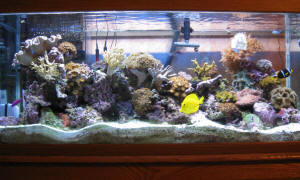
from one another. I do have a picture I included of my tank, of
course for your viewing pleasure. Sorry for the confusion.
<With your live rock present, removal of the wheel
shouldn't cause any problems with regards to denitrification.
Nice looking tank by the way.>
Thanks,
<You're welcome. James (Salty Dog)>
Mark
|
 |
|
Re: Re: Aerobic bacteria
3/26/09
Thanks for the compliment.
<You're welcome.>
I worked very hard to get the tank to where it is. And so you
know, all the corals and polyps in the tank where all
aquacultured frags, except the clams (wife's obsession).
<Nice.>
I will get you the picture of the filtration later tomorrow. Have
a good day!
<Not necessary now, but you can send if you like. James (Salty
Dog)>
Mark
|
Cycling / Filtration
180 Gal System Setup\Cycling\Stocking FOWLR
3/17/2009
Hi Marine type Guru's
<Hello Jon>
I'm very new to the Marine hobby, so please bear with me if I'm
asking silly questions.
<No such thing as a silly question.>
I did do some searching but could not find exactly what I was looking
for, so I apologize if these questions have been asked many times
before!!
I am in the process of setting up my first attempt at a Marine FOWLR
aquarium.
<Welcome to the hobby\insanity!>
I have a 180g tank with a 40g homemade sump; I have a mag 12 main
circulation pump and a mag 9.5 running an AquaC EV150 skimmer. I have 2
Hydor Koralia 4 powerheads. Lighting is Current USA SunPaq 36 inch 96
watt X 2.
<Sounds like a nice setup, though you may find that you need more
light down the road.>
When I get the tank stable and ready for livestock I was hoping to have
the stock list below.
2 Volitans Lions
1 Dwarf Fuzzy Lion
2 Moray Eels (Snowflake and Zebra or similar)
1 Porcupine Puffer <I am not wild about the idea of mixing puffers
with Lionfish, as the Lions usually get beaten up. Please read
here:
http://www.wetwebmedia.com/puffercompfaqs.htm >
1 Cow fish <Not a fan of these, have been known to take out entire
tanks..
Please read here: http://www.wetwebmedia.com/boxfishes.htm >
1 Cherry Grouper <Variola sp.? >
In late Feb this year I filled the tank with water to check out the
plumbing was watertight, then added salt and left it running. On March
2nd I put in 60lbs of live rock, and then about a week later added 3
salt waterized Mollies, then on the 14th I added another 80lbs of live
rock. I've ordered another 50lbs of GARF Aragocrete, so as soon as
that shows up I'll add it to my tank, so I should end up with a
little less than 200lbs of Live Rock.
I've been checking my Ammonia, Nitrite, Nitrate and PH levels since
the 7th Mar. All the levels other than PH appear to be reading 0 (PH is
at 8.4)....My questions are, is this normal for the cycling to take
this long to start detecting some Ammonia?
<With all of the live rock, it is likely that the tank is cycled
already>
Does the set up as I have it seem OK for my intended stock levels or
would you recommend more filtration? If so what would you
recommend??
<Setup sounds fine. Although with such large fish, more water
movement couldn't hurt. I do encourage you to re-examine your
stocking plan.>
Thanks in advance
WWM seems like a great source of advice
<On behalf of Bob and the rest of us, Thank You.>
Thanks again
<My Pleasure.>
Regards
Jon
<Mike>
Re: 180 Gal System Setup\Cycling\Stocking
3/17/2009
Thanks for the input Mike
<Hi Jon, my pleasure.>
Bit of a bummer about the computability issues with Puffers and
Lions!.
My home made live rock from GARF came yesterday, so I added that to my
tank, I now have just a little over 180lbs in there, about 135lbs of it
was ready cured from mature setups. Strangely enough the tank still
looks like it could use another 30 - 40 lbs!
< I know the feeling, but do remember that the fish will still need
some swimming room.>
The reason for my note is, I checked my levels last night just after
adding the GARF rock, and I have a 0.25 Ammonia reading!!
<So it did take a little while. It will be interesting to see what
it is later this evening.>
Nitrite and Nitrate still at zero but PH is now gone from 8.4 to 8.2,
is this the beginning of my ammonia spike?
<Indeed it is, the pH drop is a little extreme. What is your
alkalinity reading?>
Or do you think, as you said in your reply, that as I have used
established Live Rock that the tank has all ready cycled?
<With cured rock, it should take no time at all to cycle; but since
you are getting an ammonia spike, it is not completely cycled
yet.>
What should my PH levels be doing? With Ammonia present should they be
going up, down or staying static?
<The general trend is gradually decreasing pH, but with enough
alkalinity, it should remain very stable.>
When my tank is completely cycled and stable, what are acceptable
levels?
<Ph 8.2 - 8.4, Ammonia: 0, Nitrite: 0, Nitrate < 20ppm, Alk: 6 -
8 deg dKH.>
At what test readings should I do water changes at?
<Ahh, Once everything is nice and stable, 10 - 15% water changes
every week. Lots to read here:
http://www.wetwebmedia.com/marine/maintenance/maintindex.htm >
Thanks in advance.
<You're welcome>
Regards
Jon
<Mike>
Re: 180 Gal System Setup\Cycling\Stocking: Cycling
Starts, Diatoms, and Aiptasia. 3/18/2009
Hi and thanks again Mike
<Hi Jon>
I took my readings again last night - still the same @ Ammonia - 0.25
Nitrite - 0 Nitrate - 0 PH - 8.2
<The system is still cycling>
What is, and how do I check alkalinity?
<Grossly oversimplified, it is the ability of the water to resist a
pH shift to the acidic range. Do read here:
http://www.wetwebmedia.com/alkalinity.htm >
Is that the reading I get off my hydrometer? <No> I checked that
and it was reading 1.018, but I have no idea what that means!!
<Your hydrometer measures the amount of salinity in the system. You
will
want this around 1.023 - 1.026 More information here:
http://www.wetwebmedia.com/spg_salinity.htm >
Also, noticed another development last night, I'm getting a lot of
brown colored algae and I'm suddenly noticing a lot of Aiptasia
anemones, I had noticed about 4 or 5 on the first lot of LR I put in,
but I notice last
night, I now have loads of them! Are the algae and Aiptasia anemones a
normal problem with a new setup? And how do I control it??
<Diatom algae (The Brown Scum) is very common in new setups. More
information here: http://www.wetwebmedia.com/diatomfaqs.htm Aiptasia is
a very common pest. You are seeing a population explosion because there
is an abundance of nutrients in the tank there is a ton of information
on the site regarding the control of these. Start here:
http://www.wetwebmedia.com/marine/inverts/cnidaria/anthozoa/aiptasia/aiptasi
a.htm and follow the links on the top of the page.>
Thanks for your help!!
<My Pleasure>
Regards
Jon
<Mike>
New Tank/Live Rock/Cycling
3/12/2009
Hello.
<Howdy>
First I got to say that your website is great and has been very
informative.
<Glad you find it useful.>
But I do have a question about a few things. I must add that
I'm just getting started in the saltwater hobby and I am on
line a good part of everyday looking at different resources to
better educate myself.
<Excellent to hear.>
Any ways here is my story so far...
About three weeks ago I purchased a new 29 gallon tank along with a
bag of Carib-Sea (I think was the brand name) live sand and a large
8 to 9 pound live rock ( Fiji rock I believe) with an Eheim
canister filter and a small powerhead. I setup the tank with tap
water that I treated for chlorine and
added the salt to get the salinity right.
<Did you mix the salt water in advance, or did you mix it in the
tank and then add the rock? Salt water should be made at least 24
hours in advance. Adding live rock to freshly mixed salt water can
kill whatever life may be on the rock.>
I am pretty sure the live rock I bought was uncured (it was light
colored without any growth on it).
<Probably so.>
Well now I am reading that I should have pre-cured it before adding
to my tank.
<When adding to an existing system, yes. On a new system with no
"life" in it yet, it is useful for starting the nitrogen
cycle without having to add fish.>
About a week later I picked up another small piece of Caribbean
live rock maybe a pound or so that was covered in growth (tiny
little feather dusters as well as other things) and added it as
well as another small piece of Fiji rock that was covered with
coralline algae and added both to the tank with the other rock. I
picked up a few hitch hikers (a tiny white star fish and a tiny
little snail). Everything seems to be okay but the purple coralline
is turning white and the larger rock was getting covered with brown
algae so I have been leaving the lights off.
<Conditions are probably not the best for growing Coralline
Algae yet. Do read here:
http://www.wetwebmedia.com/corallinealg.htm and here:
http://www.wetwebmedia.com/diatomfaqs.htm>
Is the uncured rock going to hurt the other stuff in the tank? I
also added a friends blue Damsel fish for about two days and it did
fine as well and I noticed when I was taking the damsel out and had
to remove the large rock that it has a foul odor.
<The rock is still getting some die off. Put the rock back in
and let the tank cycle. The foul odor will disappear soon
enough.>
Up until a week ago I had been testing my water parameters with an
API saltwater kit and was getting good readings myself but I took a
sample to my LFS (about an 1 hour and 15 min drive) and they said
my nitrites and nitrate levels were still really high and to leave
my tank alone so I ordered one of their kits ( a Hagen master kit)
and returned the API kit because I thought it may not be any
good.
<Really? I've always had good luck with them, but ok, as
long as you are testing.>
I was getting ready to add my first fish and everything but until I
get the kit I ordered and can check my water again I will hold off.
Anyways I guess my main question is will the uncured rock mess up
anything during the curing process and should I wait any longer (if
my water tests are okay) to add any livestock?
Definitely do not add any livestock until the nitrogen cycle is
complete.
Ammonia and nitrites need to be at zero before it is safe to add
livestock>
Here are a few pics. Thanks for all the work you put into your web
page
<Mike> |
 |
Adding good life/bacteria, SW cycling gen.
09/27/2008 Hello All, <<Hello, Andrew today>> I
have a 55 gallon tank with a 15 gallon refugium. <<ok>> I
had a fight with red slime in my refugium so I decided to wipe down the
sides of it and didn't have a chance to change the water until a
week later so all the brittle stars, feather dusters and life on the
live rock had disappeared. <<oh....i would say this is all due to
the algae going into the water column>> I was wondering if I lost
all of the good life/bacteria that was in the live rock and sand?
<<I would not you have lost the life, no>> Also would like
to know if I would have to start all over by adding new sand or just
replacing it, the same goes for the live rock? <<I see no reason
why you would have to start over again, just clean up and water changes
should suffice>> At the time I took all my fish back to the LFS,
except for my cleaner shrimp which passed. So from then on I did a lot
of water changes to bring the system back. <<That was the best
course of action, in my opinion>> It stood running for 3 months
with out anything in it when I tried to put a frag of blue bottom
polyps. <<ok>> Most of it was impulse too see if my tank
was really ready according to my LFS but, it was not so I returned it
back to the store were it passed. <<Hmmmm....what exactly
happened to the frag? and what are your water readings for ammonia,
nitrite, nitrate and phosphates? >> I did add a six lined wrasse
and a royal gramma about two weeks ago and the six lined was acting
strange as if it ate a bristle worm that didn't agree with him so
he passed away, but the royal gramma is doing fine. <<I would
suggest a possible unstable system and advice not to anything else
until all water param.s are correct>> So I don't have an idea
of what my next step is, do I add or start over? <<Scrub all down
and clean, huge water change, monitor for mini-cycle, allow tank to
stabilize and then slowly start to add life back>> My levels are,
Ph 8.4 SG 1.024 Cal 320 N03: 0 N04: 0 I am also dosing with Kent Marine
part a & b every week, planning to switch too Purple up.
<<Stop dosing these, there is no need. Trace elements will be
replenished from water changes with a good quality salt mix>>
Thank You Ramon Tampa, FL <<Thanks for the questions, hope this
helps. A Nixon>>
Re: New Tank, Livestock Additions, 9/18/08
Thanks...crazy question..when will I know it has cycled? I have tested
my water and nitrate, trite, ammonia, ph are all normal. Thanks again
Mike <0 ammonia and nitrite, and some nitrate.>
<Chris>
Brown algae in cycling tank, 9/18/08 Hello,
and thank you for the great advice your website has provided to me so
far. <Hi> I have been cycling a 120 gallon tank for approximately
4 weeks. We have had live rock in the tank for about 2 1/2 weeks (73
pounds) within the past week we added some bleached white rock in the
tank as well (probably another 25 pounds or so). We are noticing a
brown film on some of the white rocks, and just tonight when we came in
I was shocked at the amount of algae on the walls of the tank.
<Probably diatoms, or perhaps Cyanobacteria. Simple organisms that
are first to colonize barren areas.> We remove the algae from the
glass every day with a Mag Float. The algae on the glass is brownish ,
and there is definitely a brownish color on the white rocks, as well as
on the aragonite bottom (in patches). <Can take over a tank quickly
if allowed to. Control through nutrient limitations.> The water is
reverse osmosis, and tests fine. We only noticed pH was 8.4. We have
not begun doing water changes on this tank as of yet. There are a dozen
blue damsels and one scooter blenny in the tank at this time, as well
as a couple of corals and feather dusters. <Too much life too fast,
and the blenny will likely starve in a new tank. This is also
contributing to your algae growth by supplying lots of what the diatoms
need to grow.> The fish have been present for a couple of weeks, the
corals about four days (probably a mistake for putting them in this
tank too soon). Calcium is about 400. The Skimmer we are using is an
ETSS Evolution 500 powered by a Mag 9.5 as recommended. The lighting is
two 150 W halides and four 54 water 460 T5 Actinics (Outer Orbit Pro).
We run the halides 10 hours per day, and the Actinics 12 hours per day.
We do not have any snails in the tank at present. Is it time to
introduce them, and can you please suggest species and how many of
each. <Depends on what you intend to keep in the tank. Turbos,
Ceriths, Nassarius, and Astraea snails are generally all ok for
aquariums.> I know that I have thrown a lot at you at once, but we
greatly appreciate and highly respect your advice. <No problem.>
Best regards, Jeffrey <See here
http://www.wetwebmedia.com/gastropo.htm and
http://www.wetwebmedia.com/diatomidfaqs.htm for more.>
<Chris>
Upgrading question, Cycling 8/21/08 Hello,
<Hi> Fantastic site. I have learned so much here, it is like
aquarium college. <Fortunately the entry requirements are quite low
and involve beer.> Quick question about my upgrade. I currently have
a 45g FOWLR tank with 10g sump/fuge. 50lbs live rock and 6" DSB.
Just 2 clown a Sixline wrasse and clean up crew for fish. I am
upgrading to a 150g. Is it possible to do a swap directly to this
bigger tank. I will be adding 100 lbs. more rock immediately and a
little more down the road. And of course more substrate. MY tank now is
very established, 6 years or so. But is the volume too much to switch
over? Will I just have to cycle the new tank and wait to move
everything to their new home? Thanks so much! <With this much new
rock cycle the tank first, you will almost certainly get an ammonia
spike which you obviously don't want to expose your livestock
to.> <Chris>
Cycling new tank 08/06/2008 Hi. <<Good Morning,
Andrew today>> I added 25lbs of cured Tonga rock to my startup 30
gal to cycle. After five days, ammonia readings were at 0, with a spike
in nitrates. Naturally diatoms bloomed. So, I performed water changes,
which eventually brought NO3 down, and then went out and bought a
cleaning crew (snails/hermits) packaged for my size tank. <<Just
be careful with these so called "packs" of cleanup crew. They
are usually vastly over estimated and some usually will die due to
starvation>> The tank is now immaculate, but I can't help
feeling things have moved too fast. Despite the seeming cycling of my
tank--in one weeks time--should I have added herbivores so soon? I much
appreciate your advice, thanks. <<Maybe, yes, adding all this
cleanup crew now maybe a little much as there is not really much of a
food source for all of them. Always best to add clean up crew slowly,
in small amounts, based on needs.. If you have used fully cured live
media, the Tonga rock, then its very possible that the tank cycled in
this short period of time. The same has happened to myself. Moving
forward with this tank, stock it VERY slowly, to ensure that it can
keep up with the bioload and adapt as needed>> <<Thanks for
the questions, hope this helps. A Nixon>>
Re: Setting up a new tank 05/31/2008 Many
thanks Andrew! <<Hello again Andrea>> Just one thing for my
peace of mind. You suggested: "<<Your best bet is to cycle
the tank by adding a small - medium sized raw (uncooked, no
preservatives) shrimp or prawn, wrapped up in fine mesh material, drop
this in the tank, and monitor the water. This will rot away and produce
the much needed ammonia. When the ammonia reaches 4ppm on the test kit,
remove the wrapped up carcass as its job is done. This is one of the
spikes which is commonly referred too in cycling. When the ammonia
spikes, nitrites starts to be generated which will convert the ammonia,
and cause the ammonia to drop back down to zero. Now, the nitrite will
spike and then nitrate will start to form, which will convert the
nitrite and take the nitrite level down to zero. Finally, nitrate will
spike, and eventually fall down to around 5 - 10ppm. At this point,
when its stayed this way for a week, your cycle is done, and you can do
a nice large 50% water change. That's the cycle in a small
nutshell>>" We followed your suggestion - added the raw
prawn (actually it was just the head because the prawns my hubby
brought home were huge!) and 12 hours later I almost had a nervous
breakdown when I got up and noticed the tank had gone hazy. I'm
hoping that's normal. It has a slight rotting smell to it too -
again I hope that's normal? <<He he he....Yes, its
normal>> Is there a rough guideline to how long this spike will
take? Like ... I would worry we may need to vacate the family room ...
:o) <<It will probably take about a week for the ammonia to get
up to 4ppm on the test kit.>> Regards Andrea (total novice) South
Australia Re: Setting up a new tank 06/02/2008 Thank you again
Andrew ... what a legend! The ammonia this morning was at ... well 2.0
or 4.0 depending on what the light is like. So we're getting there.
The pH has changed from 8.2 to 7.8 ... is this normal as the ammonia
rises? <<I would not worry too much at all about pH for the time
being. This will more than likely be rectified when a large water
change is carried out after the cycle. Even then, if that does not
rectify it, then there are plenty of methods to be used to sort the
problem out>> I've been prowling the site and there's
lots of info there but I'm loaded with questions I just don't
seem to get a clear answer on... so I'm coming back for more.
<<Ok>> WATER CHANGES Do I follow a routine water change
while I am waiting for my tank to finish cycling or is this something
you do when the cycle is done? <<Don't worry about water
changes till the cycle has finished, then do a nice 50% water
change>> TESTING I'm afraid I have a little trouble making a
clear decision on the 'colour' I am seeing. If it's
obvious, that's fine (say a blue versus a lilac colour) but in
determining some of the colour variations on the colour cards, I worry
that I may not be judging it accurately enough. I've been known to
drag my test tube and chart from room to room, light to light ... I
mean seriously, this may turn me into a nervous wreck yet. For example,
the ammonia reading from 2.0 to 4.0 is fairly similar ... How precise
do I need to be? What about people that are colour blind - is there an
alternative? <<Certainly not something to stress too much about.
What i do, when i test, is either use the brightest light in the house
and stand directly under it, and match liquid to card, or rest the card
and the vial on a white window area and let bright day light shine on
it.>> Ahhh...and another thing ... what's the general
preference - the test strips or test tube test? I've already broken
a test tube! <<Liquid test kits, certainly. The strips are very
very inaccurate>> And! Is there a digital device that can give a
numerical reading available? I know you can buy pH testers but wondered
if there was one that did all? (this would certainly help my stress
levels! :o) <<Not that i am aware of here in the UK, might be
different where you live. Check places like Bigalsonline.com ,
marinedepot.com or drsfosterandsmith.com >> PROTEIN SKIMMERS Okay
- I have one of these all in one tanks (25 gallon) and remembering I am
a complete novice, do I need a protein skimmer? What would be the best
type for my tank? <<It does depend on the hood / canopy. Is there
room for a hang on the side skimmer? Maybe look and see if they sell a
special one to fit your all in one perhaps?>> (My plan is 2 dwarf
or medium sized sea horses (dwarf would be my preference but I am told
they can be hard to get here in AU). I was also planning a Shrimp Goby
or two ... maybe a star fish. <<They are hard, full stop. I would
recommend you not get these until you have some good knowledge
foundation under your belt. No issues with the shrimp goby...star fish,
no..>> ADDITIVES Of the millions of additives, nutrients that
there are for sale, what are the basic essentials or must have
emergency 'potions' that I should have on hand to keep my sea
horses healthy / alive? <<None. All the trace elements you need
will get replenished when you carry out your 10% per week water change.
The only time this may change is if you add a lot of hard / stony
corals to the tank, and you will have to add calcium etc>> LOL I
think that was about it. I do apologise for all the questions.
<<Its no problem>> Regards Andrea - South Australia
<<Thanks for the follow-up. I hope this helps to clear a few
things up for you. Good day. A Nixon>>
Setting up a new tank, Cycling, SW
6/22/08 (Sorry to bother you but I sent this last week - thought I
would try again because I can't see where there's been a reply)
<Thank you for this. We reply directly to all... I don't recall
seeing this> - BTW, the test results are still the same as they were
when I sent the email below (14th June) ...I'm wond4ering if I may
have a bio-filter problem?) Regards Andrea - South Australia Many
thanks to the wonderful advise from of Mr Nixon in recent replies ---
Andrea from Australia here (once again) needing some reassurance from
you wonderful people. Just an update: I am cycling a 25G all-in-one
type aquarium with the hope that I may some day soon have a couple of
seahorses. The tank was in its 2nd week when Andrew was able to assist
me in getting the cycling process moving a little faster with the
addition of a raw prawn. The tank went hazy and a little on the nose -
Andrew reassured me that was normal. All seemed to move along from then
when the ammonia moved to what I thought looked like the 4.0 range
within about 6 days and that was when I removed the prawn (as
suggested). Tank is clear again and smells fine. All this was almost 2
weeks ago. What I am not sure about is that not much has happened since
then. I test every 2nd day. The ammonia result seems to be hovering at
that same 4.0 level. I guess it's *possible* that the result is
getting a tad less dark (green) but it just seems to be pretty much the
same. The nitrite and nitrate seem to be at a standstill too. I assume
these won't change until the ammonia does? <Mmm, yes. And there
may well be so/too much ammonia here for establishment of nitrification
to occur> Question - should I be seeing some changes to ammonia
levels by now? (note the tank has now been cycling 6 weeks) <Likely
so> The other thing I wondered was ...well it would help me if I
could compare the test from the one I did a couple of days ago ... just
to reassure myself that something is happening. How long can you keep
the test for reference - or is it really a case of the '5
minute' use-by time? <Should be dumped, the container rinsed,
let to air-dry> Another dumb novice question - is that 5 minute test
time fairly strict ... in other words, should I be using an alarm to
base my results on? LOL I'm so sorry ... but this colour testing
does my head in. <A general rule... gives time for reactants to
mix> I have also noticed these brown spots forming (have looked into
archives and think it is diatoms). They started as little spots on the
white pebble and they're growing daily and spreading to other items
in the tank quickly. Based on the WWM info, I see these are normal and
not really harmful right? <Correct. Actually a sign that
"things" are progressing> They are multiplying rapidly
though. Because the tank is cycling, I've been leaving the lights
on 1/2 overnight (for no real reason other than its a handy night light
when going for a glass of water at night - didn't think it would
matter). My confusion stems from - some comments suggest leaving lights
on and letting diatom grow itself out ?? Others say limit light. I
guess that depends on whether you have inhabitants does it? What's
my best plan of action? <To proceed as you have been. The lighting
is fine> I'm just a bit worried I could end up with a diatom
plaque. Given that they are still at a level where the glass isn't
covered yet, can I control this to a manageable level now or is it best
to let them go? <The latter> We have used plain tap water - and I
read WWM comments about the link between silicates and diatoms. I have
no idea if they exist in our Aussie water or not - I'll have to
look into that but the question now is, should we be running our water
through a filter system anyway ... this would be when I get to a point
of doing water changes? <I would not fret re for now> Gosh this
is really complex stuff. I'm glad I started basic. I'm so sorry
to bother you about these mundane questions ... I did try to find the
answers but it seems like I need some hand holding here. :o( Regards
Andrea South Australia <I'd allow the ammonia to drift down, try
to be patient for now. Bob Fenner>
A few questions..... SW cycling, stocking a
small SW sys., reading 5/17/08 Hi my name is Jackie and thank
you for taking your time to read my questions. <Welcome> About
three weeks ago I started my 38 gallon tank with 17 lbs of cured live
rock (will be getting more soon) and 20 pounds of live sand. I also
started a 18 gallon quarantine tank. I began to feed my tanks fish food
to get them cycling. My quarantine tank almost immediately started to
get ammonia with a set up of a sponge filter and one cured live rock
and the cycling process is now by the nitrite. However, my display
tank, refuses to cycle. I waited two weeks putting food every day I
only got a reading of .025 ammonia and after that nothing. <May have
been/become "ready cycled"... happens> The display tank
has a wet/dry filter with activated carbon (hang on the tank not sump),
400mph powerhead and heater (my protein skimmer is not working and
I'm going to get a new one). <May not be much to skim... I'd
hold off for now> I tried taking off the wet/dry filter thinking the
carbon had something to do with it and kept feeding the tank and still
nothing. The other day I plugged my wet/dry back in because the tank
was getting messy and I took out some of the food in the tank. Another
method I tried was getting some water from the quarantine tank into the
display, but still nothing. What am I doing wrong that my tank
isn't cycling? <I do believe this system IS cycled...> What
other methods can I try besides sticking a poor fish in there and
hoping for the best? Also, the bag that my live sand came in says that
it "instantly cycles tank" with beneficial bacteria. Could
that be the cause? <Much more likely the live rock...> Another
question that I have refers to livestock. I mainly got this tank
because I wanted to keep false Perculas in the tank (two of them to
start). They are my first fish I intend to get as soon as my quarantine
tank finishes its cycle. I started wanting to keep two , but I am
having a hard time on not getting more. I wanted to add two orange ones
and as soon as the tank gets used to the bio load of the fishes add one
or two black false Perculas or adding one or two true Perculas. I have
read that keeping more than a pair depends on your tank size. Would you
recommend this in a 38 gallon? <I would stick with just two> If
you don't recommend this what other fishes can I slowly add to my
tank over time? <Too many to list here... and not a good approach to
generating a stocking list... take your time, keep reading... enjoy the
process/hunt> I was thinking of two purple firefishes and a school
of chromis? <This system/volume is too small for these> Is there
enough space? <Ah, no> One thing I am worried about and this was
a stupid mistake on my part since I was in a hurry. I brought a water
conditioner for my water and by the time I added it to my water.... I
realized that it was Tetraponds...is this going to affect my livestock?
<No, not adversely> If so, what can I do to correct the problem?
Do I buy another water conditioner and put it in the water? <Pre-mix
and store your new water... no need, use for any such conditioner/s>
My final question is there anything that is vital to the tank that is
missing? <?!> I am getting a 65 gallon protein skimmer, 20 pounds
of live sand and about 28 pounds of live rock? My wet/dry filter is
just for a 40 gallon do I upgrade as soon as I get the money?
<I'd keep reading, save your money> Sorry to ask you so many
questions. I have no one else to ask these questions to. Thank you for
taking your time to read my questions and have a nice day. <Read on
my friend; you're doing fine. Bob Fenner>
Cycling and reading 4/26/08 I started my 75g salt tank
four days ago and tested it. I was following the directions and it said
to remove it. <What? A test strip?> So I did. Then I saw the next
day that there should be ammonia in the water for the cycling process.
<Yes.> Now I tested it (a day later) and of course the ammonia is
gone. Will it come back or do I have to add something to restart the
cycling process? <You will need something in the tank to cycle it,
what depends on the type of tank. Live rock, food, a piece of shrimp,
or a small hardy fish all can get the process started. What to do based
on your system and filtration is posted throughout WWM. A little
research and reading is needed. Good luck, Scott V.>
Strange spike in my water quality 2-25-08
Hello Again WWM Crew! I hope your day is going well. <No
biostatistics today! Yay!> I have a question about a strange spike
in my water quality numbers. <Alrighty then> I have a 125g FOWLR
tank (about 50lbs of LR and 100lbs of LS). My numbers were all within
range (ammonia 0, nitrites 0, nitrates 5-10, ph 8.2-8.4) for a couple
weeks, then I added my livestock about two weeks ago. <What, pray
tell, does "Livestock" entail?> The numbers since then
have been the same, but Friday night when I tested, I did not expect
the results I received: (Ammonia .50, Nitrates 3.0, Nitrates 20, ph
8.2). I quickly did a 20% water change, and let the tank
"settle" overnight. Saturday morning, I tested again, and
even with the water change, I had identical numbers: (Ammonia .50,
Nitrates 3.0, Nitrates 20, pH 8.2). I did another 20% water change
Saturday afternoon, and checked again Sunday morning...almost Identical
numbers again: (Ammonia .25 [slight drop], Nitrites 3.0, Nitrates 20,
ph 8.2). I did yet another 20% change Sunday night, and just checked
again this morning, and the numbers are the same as yesterday: (Ammonia
.25, Nitrates 3.0, Nitrates 20, ph 8.2). The other thing I have noticed
is that there seems to be some growth in the tank. Not much at all, but
there are a few resin ornaments we have in the tank and there seems to
be a brownish algae growing on the tops of them. <Not at all
unusual, especially during a cycle> My question is, is it possible
my tank is re-cycling for some reason? <Most likely> Also, what
course of action should I take? Am I not changing enough water (20%) to
make an impact on the numbers, or are the nitrites and nitrates holding
steady because the tank is cycling (again?). <Sounds like you simply
added too much biomass too quickly, with a possible of lack of adequate
biological filtration. Water changes are going to interrupt this second
cycle, so I would cease the water changes, add Amquel+ or Prime daily
to neutralize the ammonia/nitrites, and add a 'cycle booster'
type product (I like SeaChem's' Stability) to 'jump
start' your biofilter. Next time, don't add animals as
quickly!> I appreciate any thoughts and suggestions. As always,
thank you for your time and your help. <Anytime> Mike P. <M.
Maddox>
Question about nitrites during fishless cycling,
BioSpira f' 1/25/08 Hello all, <Hi Allison,
Jeni/Pufferpunk here> A hopefully quick question for you. I have a
new 30 gallon freshwater tank which I set up about 2.5 weeks ago (no
fish), when I added about 1.5 ml of some ammonia I bought at the
grocery store. It didn't tell me what concentration it was, but I
read that "Household ammonia is a dilute mixture of 5 to 10
percent ammonia gas in water." My water indicated about 2.0 ppm
ammonia. <Should raise it to 5ppm.> It took about a week before
my ammonia went down to zero, and since then I've been adding a
little bit each day (about .5 ml) and it's always at zero when I
test it again the next day (and then add more). I haven't tested my
nitrite until tonight and it's reading around 2.0 ppm, though I
can't be sure because it's a color test. I would have thought
the nitrite would be at zero by now, since it's been a week and a
half since the ammonia first went down to zero. Could it be that the
ammonia I'm adding daily is killing off the bacteria that does the
second part of the cycle (the nitrite-to-nitrate part)? <No, that
bacteria feeds off ammonia.> I was hoping to be able to get my first
two fish (two Cory cats) in a couple days but I want the nitrite to be
at zero, of course. Should I continue adding my .5ml of ammonia each
night and wait for the nitrite to get down to zero? <You need to
start out with enough ammonia to test 5pp, ammonia. When you start
seeing nitrite, you cut that amount in half, until ammonia &
nitrite are 0 & the nitrate spikes. Then do an 80% water change
& you're ready to add fish (you can fully stock your tank at
this point).> If you advise to NOT add ammonia, how then can I keep
the bacteria multiplying? <All the bacteria will die without
"food'"> I don't know of anywhere to get Bio-Spira
locally, otherwise I'd just get that and the fish all at once!
<Unfortunately, I have seen way too many instances of folks counting
on Bio-Spira to cycle their tank, only to find out it wasn't kept
refrigerated from Marineland, to the supplier, to the wholesaler, to
the LFS, to the tank. I have a friend who is a wholesaler. He went to a
supplier's warehouse & there were huge skids with cases of
Bio-Spira, sitting out in their very warm warehouse. They had been
there for quite some time. I was at a LFS one time, where they had some
Bio-Spira out on their counter. I insisted it was to be refrigerated
& they should read the directions on the back of the package. They
read it & put it in the refrigerator for sale. It had been on their
counter for months! I am getting a lot of reports of folks depending on
their tank being cycled with Bio-Spira & after putting precious,
sensitive fish (like puffers) into their supposedly cycled tank, losing
these fish to ammonia/nitrite poisoning. I'm sorry I for being so
long-winded in your particular email but I wanted people to know about
this growing problem with Bio-Spira. If it isn't kept refrigerated
the entire time, before getting to your tank, bets are, it's not
going to work. One way to prevent this problem is to buy online from a
place like Drs Foster & Smith. They guarantee cold delivery. Good
luck with your fishless cycle. Here is an excellent article:
http://www.thepufferforum.com/forum/library/water-filtration/fishless-cycling/
~PP> Thanks for the help! I really appreciate it! Allison
What to do with a sick damselfish in a small
tank that's cycling 01/11/2008 Hi, <<Hello, Andrew
here>> My new 65l tank is in the third week of its cycle
(unfortunately, not having researched this hobby adequately, I was
persuaded that the damselfish method would be ok -reading your site I
realize this is not really the case). <<Glad to see this is
realised>> I have 2 blue damsels and 1 blue/yellow damsel. The
blue/yellow was never the most vigorous but for a week or so he has
been floating around at the surface and not really eating, his eyes are
cloudy and quite suddenly white areas have developed around his gills
and head. I'm pretty concerned and wonder how to treat him at this
stage of tank cycling - the other 2 fish are very strong and eat well.
If I was to hospitalize this fish in a separate tank what water should
I use? Can I buy special ready prepared water? <<Its not just
water you need, you will need a cycled tank to move the poorly fish
too. You best course of action is to catch the fish, and take them back
to where you brought them from. Then add a raw (uncooked) shrimp or
prawn as your ammonia source, instead of the fish, and cycle correctly.
This way you don't harm the fish any more than they have been, and
you wont be stuck with semi aggressive fish after the cycle>>
What would I do with the other fish if this is a parasitic infestation
- would I need to stick them in yet another tank? <<As above, you
need a cycled aquarium to move them too, which you don't have. Take
note from my comment above regarding taking the fish back to a store
and get some store credit for them>> Any help would be
appreciated, thanks, Sean. <<Thanks for the questions, A
Nixon>>
Species of Nitrifiers in SW and Fresh
11/25/2007 Dear Crew, Just wondering whether the good bacteria in
freshwater systems is the same bacteria in saltwater systems.
<That's a far more complicated question that you might think. In
one sense, yes, they're the same bacteria. However, they have
different relative roles/importance in different environments.
There's really no "light reading" on this, but you can
try this if you're feeling ambitious:
http://www.pubmedcentral.nih.gov/articlerender.fcgi?artid=168074>
Cheers, Andrew <Best, Sara M.>
CALL FOR PAPERS International Conference on
Nutrient Recovery from Wastewater Streams - 11/20/07 May 10-13,
2009 - Vancouver, British Columbia, Canada Closing the loop for
nutrients in wastewaters (municipal sewage, animal wastes, food
industry, commercial and other liquid waste streams) is a necessary,
sustainable development objective, to reduce resource consumption and
greenhouse gas emissions. Chemistry, engineering and process
integration understanding are all developing quickly and new processes
are already coming online. A new "paradigm" is emerging,
globally. Commercial marketing of recovered nutrients as
"green" fertilizers, or recycling of nutrients through
biomass production to new outlets such as bio-fuels, is starting to
happen. This conference will bring together the various waste stream
industries, regulators, researchers, R/D and process engineers and
commercial managers, to develop intersectorial understanding and joint
projects for phosphorus and nitrogen recovery and reuse from waste
waters. Abstracts are solicited in particular in the following areas:
§ Phosphorus and nitrogen recovery from different wastewater
sources § Process design and plant integration §
Marketing and use of recovered nutrient products § Struvite,
K- Struvite and calcium phosphate precipitation § Ion
exchange nutrient recovery processes § P-recovery from
biosolids incineration ashes § Leading-edge research and
innovative technology In addition, there will be an Open Session,
devoted to "new thinking" for this emerging paradigm, in
concert with an expert panel discussion. Dr. James L. Barnard (2007
Clarke Prize) will be the Keynote Speaker and will address the audience
during the Plenary Session, on the opening day of the conference. The
Conference Programme will also offer visits to phosphorus recovery
installations (Ostara/UBC struvite recovery process) recently
commissioned in municipal sewage works in Edmonton, Alberta. ABSTRACT
DEADLINE: March 28th, 2008. Please send abstract submissions to (2-page
single-spaced maximum, with additional 2 pages of tables or figures):
Venue West Conference Services Ltd. Conference Secretariat - Nutrient
Recovery, 2009 #100-873 Beatty Street - Vancouver, B.C. - V6B 2M6 -
Canada Fax: 604 681-2503 - E-mail: mmori@venuewest.com This conference
is hosted by the Department of Civil Engineering of the University of
British Columbia (UBC) and chaired by Dr. D.S. Mavinic, Professor of
Civil and Environmental Engineering, UBC. Sponsors include: a.. The
University of British Columbia (UBC) http://www.civil.ubc.ca/pcwm/ b..
Global Phosphate Forum www.phosphate-forum.org c.. The Chartered
Institution of Water and Environmental Management (CIWEM) www.ciwem.org
d.. Ostara Research Foundation (ORF) www.ostara.com
Mini cycle after aquarium upgrade
11/15/07 <Hello Dan> First and foremost I'd like to thank
you and your team for your hard work and dedication. I am amazed and
inspired by the level of knowledge and expertise you share with the
community. <Thank you from the whole crew!!!> I've recently
upgraded my established, healthy FOWLR 40gallon breeder to a 90 gallon
oceanic setup. My plan is to do fish and some corals. I staged the move
from one tank to the next over a 2 week period, beginning with
introducing about 30lbs of live sand along with 40lbs of cured LR. I
filled about 75% of the tank with new RODI filtered water and mixed
salt with no livestock. Water circulated (about 500-600 gph) for 4-5
days at 77 degrees. I did not do any water testing during that time. On
day 5 I did water tests - ammonia was less than .20 , nitrite and
nitrate were 0. Salinity was 1.023, temp 78, ph 8.2. KH was 125.
Calcium was a little higher than normal (I had buffered the day
before). I began transferring the remaining LR and about 40% of my
existing sand from the old tank. Fish were in a holding tank with water
from the old tank. This past Sunday I did the final transfer of live
stock - 4 fish and a few inverts. Monday am- Ammonia was .25 -- late
Monday pm it was .30 - nitrites and nitrates were both 0. Tuesday
Ammonia was just about the same, maybe .35-.40 other parameters were
fine. (ph, salinity, temp, KH, ca, etc) I mixed 50 gallons of salt
water and began to prepare for the inevitable 50% water change if the
ammonia didn't level out...However to my surprise - Tuesday -
Ammonia stayed the same, along with all other parameters. Late Tuesday
PM, Ammonia began to drop back to .25 Today (Wed) Ammonia is almost 0
again. Funny thing is Nitrate and Nitrites are at 0 as well. Question -
can a "partial" cycle take place without a true spike in
ammonia and rise in nitrites before leveling out? <ANSWER- YES.
Basically, you already had sufficient numbers of nitrifying bacteria
present. Your transfer included new sand, new rock, and your
"bio-load" changed. The bacteria needed to catch up to the
new demand of your new system by colonizing new surfaces. There is a
"mini cycle" that lasts between 72 hours and a week for these
bacteria to colonize. After this time frame you should begin to have
zero readings on your test kits. (This is normal) However, the system
is still maturing and bacteria are still adjusting to your maintenance
schedules and so forth.> I have 2 test kits and tested everything
except ammonia with both measures. Am I in the safe zone? I was
anticipating much more of a cycle <You are in the "safe"
zone. I recommend that you wait another 30 days before you begin to
purchase new stock or add more corals as the new system stabilizes.
Continue testing and make water changes as necessary. On another note,
when hobbyist switch from FOWLR to reef tanks or corals they are
unaware of how important the control of phosphates are. Please purchase
a good phosphate test kit and keep this level as low as possible with
water changes and the use of an Iron Oxide resin. Enjoy your new
tank-Rich...aka...Mr. Firemouth>
Tank Breakdown... re-establishing SW cycling
with dead live sand 11/11/07 Hi there,
<David> I recently broke down a 72 gallon tank and stored the
live sand in buckets. After s few weeks, <... stinky...> I set up
a tank solely for the purpose of preparing replacement water for my
water changes on a smaller tank that I have. I put in this sand after I
washed it many times. <Oh, good> As expected, the readings were
off the charts. I know all the fauna perished - however, I want to - at
some point - reuse the sand. I am weekly changing 50% of the water in
this tank - yet the readings have not dropped - am I not being
realistic here? What should I expect? Should I just start fresh and
throw this out? <Mmm, I would just add a bit... a few pounds, of
live rock... and let this re-seed the sand> I am confused. <Mmm,
more impatient...> Your advice is valued....and as always - many
thanks for maintaining this invaluable source of info for a hobby that
I love. Cheers, David <It is for you we endeavour to share. Ten deep
breaths, long walks... let time go by here... with some LR added. Bob
Fenner> Question on cycling 11/5/07 Hi there again!
<Hello, Scott V. here.> As so many people comment, I am overawed
at the experience of everyone on this website - and I greatly
appreciate the efforts you put into answering everyone's questions.
So with that in mind, I have some questions that may be variations on a
theme - but I haven't found the other variations. So, ye of the
great font of knowledge, please don't despair with me...I feel I
can learn, sometimes in this field I just feel like there's an
amazingly steep learning curve and get overwhelmed...at which point
ya'll usually help me feel better about it. <Sometimes its easy
to feel overwhelmed, we're always here to help.> I know I just
wrote earlier tonight on a friend's tank, but I have also been
busily reading your various FAQs on cycling. I am working on upgrading
my 29-gallon tank (established for just over 3 years, many corals and a
few fish and other livestock, generally doing well) <Good to
hear.> to a 92-gallon tank, and was wondering you could help with
several things, both that I think I figured out (hopefully properly)
and that my LFS told me. For what it's worth, I will be selling my
29 afterwards as an "already set-up and cycled" tank
(hopefully just in time for Christmas), so I am also trying to time all
this with the holidays (I know, shouldn't be a consideration, but
it would be nice to sell the old tank before Christmas...lets me get
new things for the new tank:-) ). About 2 feet from my 29-gallon I have
set up a 92-gallon corner tank (no sump or refugium yet; I am hopeful
for a lovely Christmas). After filling it with about 60 gallons of
RO/DI water and SeaChem salt (spec. gravity 1.024), I added a total of
160 lbs. sand to it over the course of a week (trying for a DSB, 40 of
these pounds were packaged Live Sand). That last day (the day I added
the LS) I added a 25 lb. cured LR (a lovely calcified piece of dead
Elkhorn that has become a LR). I also cut up a big raw shrimp (sorry,
didn't have any cocktail shrimp), and have been using 2 MaxiJet
1200's (tank is only about 3/4 full, giving it room for everything
else to be added) for water circulation. I am hoping to hang the light
this coming weekend (will involve my husband, and free time in my
schedule), but I have had my heaters running. The temp is averaging 78
(dipped down to 70 today when my heater went on the blink), ammonia is
around .25 (has been the same for 3 days - but the shrimp pieces have
not complete disintegrated yet), nitrates and nitrites are 0, specific
gravity is 1.026, pH is 7.8 (no light), and alkalinity and calcium are
running high (off the Salifert test kit's scale). I have a Tunze
9010 skimmer, but have not installed it yet - makes no sense to do so
yet, right? <I would pull out the shrimp pieces and start to run the
skimmer. The live rock (you will need more for a tank this size) will
provide the biological filtration. It is more of a question of curing
the rock rather than cycling the tank. The shrimp will just increase
ammonia levels and kill beneficials on the rock you wish to keep.>
My question is: My LFS seems to feel that if I move everything from my
current tank at the same time , I should be able to do so without the
new tank necessarily needing to cycle before I put it in.
<Depends.> This would include moving some of the current
tank's sand. However, everything I have read makes me think that I
do need to cycle the new tank first because of the amounts of new sand
involved. Or do I have this wrong, since I am actually transferring the
entire contents of an existing tank (minus most of the DSB) to the new
tank? Personally (based on what I have read), I am thinking I need to
continue cycling and see if I can get the tank to actually do a
complete cycle. <If you take the contents of your existing tank and
put it in your new tank the only thing that would change is the
container in which you keep the rock and livestock. The thing that you
may have to wait on is the curing of the rock. If the rock has some die
off you will need to wait until ammonia and nitrites are undetectable
to transfer everything over.> Would it make sense to add the water I
pull out of my 29-gallon tank to the 92-gallon tank when I do my next
water change? <I would use freshly mixed water here. > I have an
extremely full 29-gallon, so I have problems getting at much of the
sand (I would like to use it to seed the new tank further) unless I
siphon it out at the water change...the best I can do is move one piece
of LR right now (has no corals on it). <I would use some of the sand
to seed your new tank and wait to transfer everything else all at once.
The rock in your 29 is providing your filtration.> As long as I move
all my LR and my livestock at the same time when I do move it, should
it cause the bacteria imbalance I keep reading about that comes with
too quick stocking? <No, your filtration (rock) is moving with
you.> I ask because the LR already supports all the current
livestock, so the bacteria load there shouldn't be any different
<Exactly!>- or is my comprehension wrong after all? Also, can I
pick my LR up out of the water if it goes traveling all of 2 feet
before going back in...I sometimes get the impression from the
FAQ's on this site that LR should never be exposed to air (I know
it's the case with sponges...will other items on the LR really die
off that quickly?). <It will be fine for the transfer from tank to
tank.> As usual, I can't decide if I am overanalyzing this
matter or just worrying needlessly. However, I like my tank and fish,
and don't want any of them to suffer - no matter how much my tang
is eyeing the new tank and begging to move :-) . <Yes, he will
appreciate more space.> Thanks again in advance for all your inputs
- I really enjoy reading your website, and am impressed with the vast
amounts of knowledge revealed in all the answers. I must also admit
it's interesting to see sometimes how opinions have changed on
things just in the past 2-3 years, as techniques and equipment continue
to change. Thanks again for your help, Kerstin:-) <Things do change
fast with new discoveries and techniques. Please read
http://www.wetwebmedia.com/ca/volume_2/cav2i3/Live_Rock/live_rock.htm
and live rock FAQ's for more information on curing your new rock.
Congratulations on the new tank and good luck, Scott V.>
|
Cycling question -- 10/20/07 Hi, <Heya
Jon!> I'd be most grateful for your help. I have a
40-gallon marine system that has been cycling for 2 and a half
weeks. The tank contains 15kg good quality cured live rock, live
sand and a filter that was previously cycled for 6 weeks
elsewhere. After week and a half I was advised to add 2 zebra
hermits to aid cycling. <Awwwww!! One of my pet peeves, NEVER
EVER add livestock to a tank to speed up the process! It puts the
animals through a lot of stress and possible death. It's not
required, especially in your case with already cured live rock,
live sand and filter.> Here's my question: ammonia remains
at 0.5ppm, nitrite 0 and nitrate trace. pH 8.2. Does this suggest
that the tank has cycled and I should do water changes to reduce
ammonia? Or should I just leave alone? <Based on what you
started with, I would consider it almost complete, I'd wait a
bit longer and see if there are any changes in the levels, if
not, do a water change and call it done. Take a look at this
article for a good explanation on tank cycling,
http://www.wetwebmedia.com/marine/setup/filtration/biological/biofiltr.htm.
Good Luck - Brian Griffin>
Re: cycling question -- 10/24/07 Hi,
<Hello again, Jon!> thanks for your reply, really helpful
(I know nothing!). <You're very welcome; I think you
probably know more than you think you do.> I'm still in
the same situation, test readings the same. I've done a 20%
water change and ammonia remains where it is. <When you say
the readings are the same, exactly what is the nitrate reading?
Did it increase or stay the same?> The tank has a 3-stage
filter (one unit for heater, one for filter media, one for return
powerhead/pump). <What type of filter is this, there is a
chance that it is too small for your aquarium?> Could this be
the problem (should I be cleaning the filter media), or should I
do continual water changes to try and resolve the problem.
<Actually for a 40 gallon aquarium, 15 kilos of live rock is
sufficient as a filter all by itself, provided you have ample
flow with the use of powerheads.> Also, if its relevant, I
have got brown algae growth and what I think is hair algae, many
thanks for your time! <What type of water did you use to fill
your aquarium? Tap water or RO/DI? Type of lighting? Photoperiod?
Your algae bloom is typical for a start-up aquarium, but I need
more details to get more specific. Get back with me with answers
for my questions and we'll go from there, until then just
hold tight. -- Brian Griffin>
Re: cycling question 10/25/07 Hello again, I
have an update. I've just found 2 small crab claws in the
tank and have a vague recollection of a small crab when a piece
of live rock went in. could this be the source? <That would
make sense, although your filter should take care of any ammonia
in your tank. I would highly suggest that you add a couple of
powerheads (Maxi-Jet 1200 should work) to your tank. Place them
in opposite corners, pointed towards each other. Good flow over
your live rock will allow you to remove your mechanical filter,
which will always be a source of nitrates. Keep me posted --
Brian Griffin>
|
Bacteria In a Bottle (Addition of Bacterial Cultures) --
09/19/07 Dear Crew, <Hi there! Scott F. in today.> Further to
my queries, do I need to dose beneficial bacteria on a weekly basis (as
stated on the bottle) or it'll multiply on it's own according
to the nutrient load? <That's correct. The bacteria population
will generally grow in proportion with the increasing bioload. However,
the "bacteria in a bottle" products are helpful for
"jump starting" your system, or for the occasional "kick
in the pants" when you add more animals. On the whole, I'm
generally not in the habit of adding these cultures on a regular basis,
although it would be interesting to see if there would be any
additional benefits derived from such regular additions.> Lastly,
I'm using crushed corals to buffer my pH but how long can CCs stay
effective? Thks. in advance. <Hmm...good question. You really simply
have to measure your alkalinity and pH regularly to determine any
trends in this area. Substrate can certainly dissolve over time, but I
think that the best way to buffer an aquarium is through regular
additions of buffer preparations, Kalkwasser, or even a calcium
reactor. Lots of information is available on these items on the WWM
site.> Regards. Alan <Glad to be of assistance! Regards, Scott
F.>
Medication /bacterial supplement
recommendations, Bactinettes/Nitrification, successful use of Cuprazin
for Crypt and Velvet 7/25/07 Hello all. Apologies
in advance for the stupidly long email. <No worries> I have
written to offer my recommendations on a few products I have used
recently whilst treating for ich/whitespot and velvet in my saltwater
setup, and also a European bacterial supplement I have used and found
to be very effective. <Ah! Thank you> I recently caused a
near-wipeout of the nitrifying bacteria in my reef tank by medicating
(for whitespot AND velvet) with the so-called reef-friendly Octozin by
Waterlife. I have learned my lesson the hard way, and will never
medicate in my display tank again. <Alleleujah!> Luckily, I did
not lose any fish, although my torch coral and a few shrooms are still
recovering, fingers crossed. My main concern was the loss of bacteria;
ammonia spiked at about 2 mg/L and I didn't see much conversion to
nitrites/nitrates, for obvious reasons. An avid reader of your site, I
was desperate to get my hands on some Bio-Spira or similar, as
Hagen's Cycle was having little effect. However, we in Europe
cannot buy Bio-Spira, or certainly not by conventional means. I had
seen some mention on UK websites of a product called
"Bactinettes" made by the German company Soll (or Soell).
These are small, 3 mm diameter gelatinous spheres, which apparently
house nitrifying bacteria. They are suspended in a fluid containing
ammonia, amongst other nutrients, to keep the bacteria happy!
Bactinettes can be used in both freshwater and saltwater setups,
although more and bigger 'doses' are required for saltwater.
They must be stored at 4ºC for greatest efficacy. In some
reviews I have read, when these bacteria are not kept chilled, they
quickly become ineffective, so make sure your retailer is
storing/shipping them correctly! <Noted> Upon receipt, you are
advised to drain the surrounding fluid from the spheres (very important
step, because as I mentioned the fluid is nutrient-rich), place spheres
into a media bag, and place bag directly into the filter. In my case, I
didn't have any type of filter that would be suitable, so I wedged
the bag into my live rock, and aimed a powerhead obliquely at it in
order to create some circulation. The idea is that the spheres
'dissolve' over a few days, releasing bacteria which then
colonise your filter/live rock, and begin their metabolising miracles!
To give you an idea of how many packs are required: my tank is 200
litres. I bought 6 'portions' of Bactinettes: 2 portions were
inserted on each of days 1, 3, and 9. I must add at this juncture that
I am in no way connected with this company - I just wanted to pass on
my experience to other Europeans who may be looking for a bacterial
supplement product which works. I should also say that I think there is
no substitute for patient and natural cycling; however in my case I did
not have the time (clock was a-ticking!) or capacity to do this, and I
was terribly worried about my livestock. My water, within one week,
during which I also saw a heavy nitrite spike, is now down to
undetectable levels of ammonia and 0.1 mg/L nitrite, and counting. The
nitrate load is being taken care of with a Deltec MCE 300 skimmer -
also a wonderful product! The Bactinettes have been a lifesaver for my
fish. I'm not going to say where I bought them from, as I'm
sure everyone has the capacity to Google search, and they are available
from at least one online retailer in the UK, and elsewhere across
Europe. I'm not expecting you to endorse the product without having
used it yourselves, and it is no substitute for less desperate and more
'natural' measures! As I said, I just wanted to share my
experience - this worked for me. I am going to recommend that my LFS
gets some in, although I will hopefully never need to use them again!
By the way, I can also recommend Cuprazin (Waterlife) as a
hospital-tank only treatment for whitespot and velvet. It brought my
clowns back from the brink. I have spoken with the chemist who devised
this medication, and he claimed that as well as the ubiquitous Copper
Sulphate, Cuprazin also contains Malachite Green and Formalin (in what
levels I do not know, but they seemed to be effective without causing
any nasty side effects), and it could therefore be used as a broader
spectrum treatment than CuSO4 alone. In my case, it solved a medium
case of whitespot within 3 days, and a severe case of velvet within a
week. I continued treatment for 15 days, at a copper concentration of
approx 0.5 mg/L, in a bare-bottomed 10G hospital tank with a few pieces
of PVA guttering for cover, and an bubbly airstone, heater and pump.
Every day after feeding I removed 10L water by siphoning from the
bottom to collect any parasites/waste, and replaced with a
'new' 10L water, to keep the ammonia levels down. On
replacement of the 10L water, I added 10 more drops of Cuprazin to
compensate for that which had been removed in the 'old' water.
The idea is that 1 drop Cuprazin 'treats' 1 litre of water.
Cuprazin is chelated, and I was worried that adding this amount every
time I did a water change would mean a build-up of copper to toxic
levels, but it seemed to keep my 0.5 mg copper/L constant and steady. I
would definitely recommend the use of a Salifert or similar test to
keep an eye on this, however. I also carried out two sets of freshwater
dips, well aerated and pH and temperature adjusted (days 2 and 3),
which resulted in huge amounts of mucus being expelled from the gills
of both fish, and many of the whitespot parasites dropping straight off
the skin of one of the fish. I managed to keep my clowns happy and calm
in these dips for 17 minutes on the first try, and 10 minutes on the
second attempt. I did not add Methylene blue to the freshwater dip as I
was worried that this would be one chemical too far! I cannot stress
the importance of good aeration, temp and pH matching in freshwater
dips heavily enough. These factors, in my humble opinion, are what
makes or breaks the dip, and the fish! The velvet parasite was more
resilient to these dips, but was soon taken care of by the Cuprazin. I
tried to keep the temperature in the hospital tank fairly high
(27/28ºC) and the specific gravity fairly low (1.020) during
treatment. After 15 days, I continued the water changes for a couple of
weeks, just without adding any more Cuprazin. Bingo! Happy, healthy
clowns! Many thanks for listening. I hope I've managed to give
someone some handy advice! Lisa, UK. <Thank you for writing... so
completely and clearly! Bob Fenner>
Cycled?? SW 7/28/07 Thank you all for your
site. It has taught me a lot. <Good> I am curious about the
possibility of my tank being cycled. For a little background: I have a
29g FOWLR (only about 3lbs of LR then, lots of base rock), I completely
restarted the whole tank over again due to an ich problem. <Seems a
bit drastic but ok.> The ONLY thing I kept from the first go around
was my LR. I also added a few more pounds of LR for a total of about
8lbs. The tank has been running again for 22 days. With a pH of 8.2, my
Ammonia and Nitrites have been 0ppm the WHOLE time. My Nitrates were at
0 the first two weeks and at 5-10ppm the last week. (My 2 fish are in
my QT tank, so there are no fish in the display to supply ammonia).
<The LR will provide some.> I have added bacteria culture, fish
flakes and even fish waste to try to get the ammonia to spike. Nothing.
I was really thinking I would see my ammonia start to climb by now to
start the cycling. Is it possible that the tank is cycled? <Seems
like it has.> I really was not expecting that for weeks to come. I
am starting to see brown algae growth on the sandbed also. I am seeking
your professional opinion, because after hours of reading on your site
I just can't come to my own conclusion on what's going on
(cycled or not?). <The nitrates would seem to indicate it has
cycled.> I would hate to keep my fish in a tank fighting ammonia if
I have a cycled tank they could be moved to! <Need to let the old LR
be fallow at least another couple of weeks to be sure the ich is
gone.> Thank you so much in advance for any advice!!
|
|

