|
More FAQs about Plumbing Marine
Systems 22
Related Articles: Plumbing Marine Systems, Myth of the
One Inch Beast (Why Relying on One Inch Overflows... or Overflow!
Is foolhardy) by Scott Vallembois, Plumbing Return
Manifolds, Refugiums,
Related FAQs: Marine
Plumbing 1, Marine Plumbing 2,
Marine Plumbing 3, Marine Plumbing 4, Marine Plumbing 5, Marine Plumbing 6, Plumbing 7, Plumbing
8, Plumbing 9, Plumbing 10, Plumbing 11, Plumbing 12, Plumbing 13, Plumbing 14, Plumbing 15, Plumbing 16, Plumbing 17, Plumbing 18, Plumbing
19, Plumbing 21, Circulation Plumbing, & FAQs on: Plans/Designs, Parts: Pipe, Valves, Back-Siphon/Check-Valves, Unions, Tools, Solvents, Use of Flexible Tubing, Leaks/Repairs, &
Holes & Drilling, Durso Standpipes, Overflow Boxes, Bubble Trouble, Plumbing Noise, Make Up Water Systems,
Pumps, Plumbing, Circulation, Sumps, Refugiums, Marine
Circulation 2, Gear
Selection for Circulation, Pump Problems, Fish-Only Marine
Set-ups, Fish-Only Marine Systems 2, FOWLR/Fish and Invertebrate Systems,
Reef Systems, Coldwater Systems, Small Systems, Large
Systems, Water Changes,
Surge
Devices,
Am really liking these rubbery vibration dampeners
here twixt schedule 80 true unions and.... a sch 80 union ball valve! At
the Leafy Sea Dragon exhibit (mechanicals back room) SIO/Birch Aq. 2015
|
%20MD.JPG)
|
|
Sump return pump and plumbing questions
2/15/15
HELP, I can't make up my mind. I have information overload. I'm trying
to decide what would be the best return pump for my under cabinet sump
system.
And how best to plumb it. I have a 110 gallon Oceanic Reef Ready Tank
with a 30 gallon Oceanic Reef Ready sump. (probably not quite big
enough, but it was a good deal) & I have a MTC HSA-250 Protein Skimmer.
<Which will run on its own pump>
The Display Tank has two compartments, one for the overflow (that I'm
planning on installing a Dursos Stand Pipe)
<Use two>
& the other for the return. Both are pre-drilled with two holes. One 2"
(outer most) One 1 1/2" - 1 3/4" (inner most, can't reach great to
measure but close to that).
<Use them both for the overflow... run the return/s over the top>
Any who...my questions are: I'm wanting to get at least 1100 GPH return,
however there will be at least a 3' lift from the under cabinet sump (my
holes are in the bottom of the display tank) then add the 18"+ stand
pipe(s) inside the tank. Should I have two drain pipes, both Dursos' &
two returns?
<At least the two drain pipes... most of the water movement I would do
in-tank... not in/out of a/the sump>
Will one pump be sufficient?
<For the sump recirculation, yes. Again... Read here:
http://wetwebmedia.com/marsetupindex2.htm
scroll down... for sumps, refugiums... plumbing, pump selection...
Further down, Circulation...>
If I have two returns and drains, what would be the best way to plumb
that?
<All posted>
Would two pumps be required? (Again, how would I plumb that?) Can my
Skimmer handle that many GPH?
<Have to research the requirements yourself.. of pressure AND flow
rate.... from the manufacturer and tweak per your application>
My research sounds like 900 GPH is the maximum for my Skimmer, but
that's not confirmed by the manufacturer.
<Do so>
Just a deduction from discussions regarding the best pump for the
Skimmer from your and other websites.
Now, here comes the dumb girl questions. Explain to me the "flow" of the
plumbing. (I'll attach pictures of the sump)..
<Nothing attached>
H2O comes out of the tank into the 1st sump chamber, fills that until it
reaches the narrow chamber that the previous owner had some foam like
media in. Fills that until it overflows into the largest, final chamber
where I plan to put the Skimmer. Then attach the pump(s)
<One; dedicated>
to the Skimmer, pump(s)
<One>
to the return pipe(s) up to the display tank and then back again.
Right???
<Mmm; yes; you ask good questions... but I strongly suggest you have
some petfish friends come over and look at your design in place. Again,
I'd run most of the circulation WITHIN the tank itself... much quieter,
safer, cheaper...>
I've been doing a ton of research on what would be the best pump and
I've narrowed it down to four.
1) The Reef Octopus Water Blaster 5k, 7k or 10k.
http://www.aquacorals.com/ShopPumps.htm
Is bigger really better?
<Mmm; not really. Best to have "just about right" and use it full-out...
i.e. not over-sized and throttled back>
These are not cheap and come highly recommended by the website (LFS
owner)
they're sold on.
2) Jecod/Jebao DCT Marine Controllable Water Pump DTC-12000
http://www.amazon.com/gp/product/B00...=A7SIQ2Y2T11UM
this pump is way cheaper, but way bigger GPH. Do you really get
what you pay for?
<Not always, and sometimes...>
3)Aqueon Quietflow Submersible Aquarium Utility Pump
8000.http://www.amazon.com/gp/product/B00...=ATVPDKIKX0DER
Again less expensive than some of the others, decent GPH, but quality??
<Middle of the road; like most all their copy-cat, relabeled mostly
imported products>
4) Danner Supreme HY-Drive Water Pump 3200 GPH.
http://t.petco.com/product/114742/Da...ed-_-Product_3 Now
we're getting pricey again, but super GPH.
<Good units... Not to throw you a loop, but do look into the Eheim line
as well>
See what I mean! I can't decide. Don't know what the better quality
would be. Is my sump tank big enough to handle the size of pump I'm
considering?
<Not really an issue... the transit volume (water in play) is about the
same w/ any pump used... you'll need to experiment and mark the sump
water level at max. with the recirc. pump off... to avoid flooding in
the event of power, pump failure>
And the skimmer as well?
<... the manufacturer... will have this data>
ARGHHHHH! Not to mention the plumbing itself. I've read dozens of
articles and I just get more confused.
<Do NOTHING until you feel comfortable. DO PLEASE READ what we have
here...
it is largely complete and internally compatible. AND THEN ASK specific
questions. You have a good mind obviously... as you're aware of the
basic questions and differences... >
Any and all suggestions would be greatly appreciated.
<The reading>
Thanks in advance.
Holly
<Welcome. Bob Fenner>
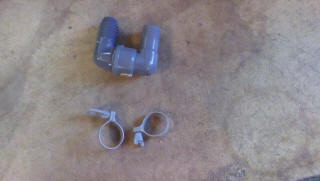
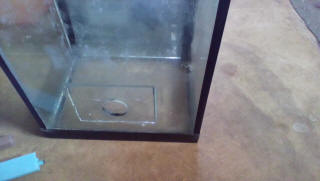
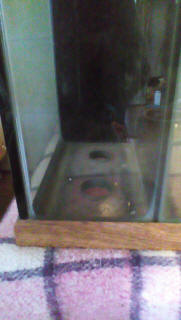
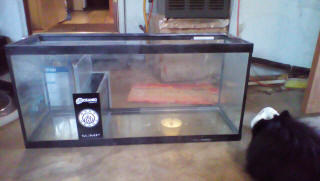
Oops forgot pictures
Here they are...
<14 Megs...> |
 |
Difficulty planning for new build's pump/plumbing sizes
4/25/13
Hi WWM crew...My name is Kris.
<Hiya Kris>
I've never posted a question here before but have found this site quite
valuable. After years of running all-in-one reef tanks (currently
a 39 gallon) I am taking the plunge to a tank with a sump, the sump
being plumbed down in the basement of my home. I am having
the tank custom built to fit a certain area of my house, but I can't
order it until I know how big I want the holes drilled, and I can't know
that until I know what size my plumbing will be, and I can't really plan
that until I choose my pump. Which is where I am stuck. Here
is my plan:
<I'm excited haha let's do this!>
60 gallon mixed reef with drilled internal overflow
(corner), 30 x 22 x 23.5 tall. Planning on a Herbie style drain.
<I too have a 60 with a Herbie. LOVE.>
Single return which comes out through the overflow box and splits into
2.
<Same. I made a spray bar with loc line circle flow. Part of it comes in
front of the overflow box and the other goes along the back wall. Very
discrete and effective. But a bit pricey>
Sump is a 40 breeder. Simple sump plan, from left to right:
Refugium-bubble trap-return-bubble trap-skimmer-mechanical filtration.
Refugium will have its own supply T-ed off the main drain with a valve
to control flow. So water will flow into the sump in the refugium
section (slower flow) and into the mechanical filtration section, all
moving toward the center return section.
<Ok this will be tricky with the Herbie. I use the center return concept
like yours quite often on 4-6ft tanks seeing as there are 2 drains. But
i would advise against this with your single drain 60. Have your 2 drain
lines go right into your mech/skimmer chamber, then fuge, then return.
If you really wanted to split your drain line into 2 different sections
you will obviously need two gate valves. I would advise using a "True
Wye" fitting for this application rather than a T. They are about 4
times the cost and hard to find but worth every penny.>
I initially planned for a external pump, and may still go that route,
but thought with the return section on the sump being in the center it
might be easier to go submersible if I could find a pump that will push
the kind of head I need. I have measured about 10 ft of vertical,
7 foot horizontal, and with added elbows valves and such, online
calculators were varying between 14 and 16 ft head loss.
<This will vary greatly on the size of your plumbing. 1" will do though>
I am open to either internal or external pumps at this point, but I need
to pick one. I was trying to look at the flow curves on pumps
online to see what would still have good flow at that head pressure.
I was looking at the Iwaki 40RT and 55 RT, Blueline 70HD, PanWorld
W70HD, and the Danner Mag drive 24 (submersible). Are any of these
a proper size for my tank and sump? I am open to any suggestions.
< Blueline 70HD=PanWorld 200PS. Both are made by PanWorld and way too
big.
Based upon the 14-16 ft of head, turning 85 gallons of water over 5
times an hour, the BlueLine 40hd would do. If you want a bit more
turnover or to have the option of powering a reactor then the BlueLine
hd55. That's for external which will need 2x 1" true union ball
valves-there is about $50 on the cheap end. I would look into a DC
internal return. Look into the Waveline/SpeedWave 10000 or Reef Octopus
Diablo DC 10500. Pricey but 50+ less in plumbing and much less
electricity. Oh and you can control the flow with a push of a button.
I've got the Diablo 5500 with the Herbie-pretty awesome. You could have
a very narrow section for the pump if you run an auto top off. Which i
would absolutely do if you have the room for it. >
The other thing I am having problems with is the size of drains and
return.
I am planning on using regular old PVC piping. Should the return be the
same size as the outlet of the pump? How do I size the drains
properly?
Drains need to be larger than returns right? How much larger?
Can your plumbing be TOO big for your tank?
<Plumbing can certainly be too big. Question for you-how many gph are
you trying to be putting through this system? You can put a LOT of water
through a 1" siphon. I don't think you would want to turn your system
over more than a 1" siphon could handle. Go with 1" bulkheads for drain
and 1" for return. Are you planning on putting all 3 bulkheads in the
overflow box? Will be tight. For what its worth, I use my 3/4" bottom
bulkhead for siphon, 1" bottom bulkhead for safety drain, and i have a
1" bulkhead drilled in the back of the tank/overflow chamber. 90 into
that back bulkhead and 90 out of it to my loc line. Pretty tight
quarters but clean>
One of the problems I'm having is in asking for advice on various
forums, is when I ask for pump advice people say the pumps I am looking
at are way too big. But most of the pumps with higher head ratings
ARE bigger pumps, and the high head then takes the GPH down to a more
reasonable flow. I can always tee off the return line as well to
reduce flow in he tank.
<Look at a flow chart for these pumps. You will then agree with the
advise you have already been offered>
Please help me with a pump size and plumbing size. I am so lost.
I have been planning this tank for a long time but just decided to put
the sump in the basement a couple of months ago, and have been confused
ever since.
<It is indeed a complicated system with a lot of variables. -NateG>
Kris
Re: difficulty planning for new build's pump/plumbing sizes
4/26/13
Thank you so much Nate! That was fast!
<The internet is quick haha>
I had planned this center return configuration to try and keep a truly
separate refugium, where the fuge water is not getting skimmed or
anything.
Is this concept kind of over-rated? I also wanted to keep the flow slower
through the fuge. I see your point in both drains going to the
same place though. I'm going to rethink my sump plans...
<Try thinking about how many gph you want going to your tank. Then
decide if you want less than that to go through your fuge. Keep in mind
that with pretty standard baffles, the speed will be faster at the
surface than at the substrate. I really don't see the benefit to that
concept unless you have 2 overflow boxes going into a fuge i.e. high
gph.>
I am planning on using my PhosBan reactor and pellet reactor (see how
I've outgrown the AIO?), but left them out of this discussion because I
was planning on them running off a separate small pump like I have them
now, for ease of controlling flow, and having them return right back
into the sump. Does this sound ok? It's pretty much how they
are configured now.
<Bio pellet reactor? Sounds fine, i would have them in sump if you can
make the space. What are you running for a skimmer?>
So I should be ok with a submersible pump of some sort, 1" plumbing on
return and 1" on both drains? Or am i better off with 3/4 on the
main drain? And if I am, why?
<Submersible should be fine but you should consider the total wattage of
your pumps. Then find out how much they are costing to run in a month.
Danner Mag drives work but they are just so damn inefficient on top of
being loud. A Mag 18 would work at 145 watts. @ $0.10/kwh that's $126.67
a year for a pump that costs about $180. The Diablo DC 10500 with spa
flex to the tank to get rid of some head pressure will do the job and
@85 watts.
Cost upfront is about $270 but costs $74.26 a year. Money will start
going back into your pocket long a little after a year. Long before its
warranty is up.>
<Nah, go with 1" on all lines. More gentle flow around turns for that
siphon line.>
Thank you thank you thank you! I am feeling much better about all
this.
<Oh good. Happy to help. Any plans for an auto top off? They are simple
and wonderful! -NateG>
Kris
Re: difficulty planning for new build's pump/plumbing sizes
4/26/13
I do have an auto top off, a Tunze Osmolator. I have a thing for
topless rimless tanks so that has always been a necessity. I plan
to have that holding tank in the stand under the sump, topping off into
the sump.
<Excellent choice. Happy tank>
Skimmer, well, I got a deal on a ASM g4 off a local reefer site.
Thing is HUGE, I had no idea until I met the guy to buy it how big it
was. Figured I would bring it home anyway because I should be able
to sell it for a profit on e-bay. I assume this is too big...and
it takes up so much sump space. Not sure what to buy though...any
advice is appreciated.
<Yeah that's a monster for your set up. Imagine that you have 3
different skimmers, all 3 have different body and drain styles but all 3
have the same pump. They will likely perform very similarly to one
another. Skimmers have come a very long way and the pump is its heart in
soul. You can absolutely not go wrong with a skimmer that has a Sicce
pump on it. I would start there>
So I have always ran reactors outside the sump. I have this 40
breeder sump on a big stand, so I have space outside the sump. I
like the idea of having then in there though in case of leakage. :). Do
you just...set them in there?? And yes bio pellet reactor.
<If you have the room i would absolutely put them in them in sump.
Better to have them sitting on sump flood vs. hang on the inside>
I was looking at the dc pumps and like that idea a lot. Way more
energy efficient...like that they are adjustable flow. So flex line will
help with head loss? I assume because no sharp angles?
<Yeah this last wave of more affordable dc pumps has been pretty legit.
Love mine. Flex pvc is very handle stuff. Pricey but great. Any chance
you will be having all 3 bulkheads drilled into the bottom? -NateG>
Kris
Re: difficulty planning for new build's pump/plumbing sizes
4/29/13
All three bulkheads will be drilled into the bottom of the tank, yes.
<Good. This will remove about 3 ft of head by not having the tank
drilled in rear>
I am looking for a very clean look with this tank so I don't want any
pluming showing behind the tank, etc. I plan on the plumbing
coming up through the floor behind the wall then through the wall behind
the tank and directly into the stand and up. The return will come
through the overflow box up high then split into 2...I assume I will
need to put a siphon break
on that somehow.
<Only if you are not planning on having the outputs by the surface of
the water>
This is so incredibly helpful, I can hardly thank you enough.
Any other insightful tidbits you want to pass along? :D
<Most welcome. Have fun! -NateG>
Upgrading tank and corals losing color
11/23/12
Hi crew! I've got a hodge podge of questions. I'm upgrading
from a 55 gallon (non drilled) with a 30 gal refugium to a 80 gallon
drilled frag tank. Since I'm going to need new substrate I've been
reading the recommendations on WWM for reef tanks and believe Aragamax
oolithic is recommended at a depth of 4". I do have a 4" DSB (oolithic)
in the refugium and will use this refugium with the new tank. My
main goal for the substrate is for pH and alkalinity stability 1. Will
it be beneficial to use the oolithic DSB in the DT?
<Yes; highly>
2. How many pounds of sand will I need?
<Mmm, likely 150, perhaps a bit more... I'd look to buy in bulk>
The new tank's footprint is 48 x 24. I will be keeping my existing
sand to seed the new sand.
<Ah good. Then perhaps a bit less to buy>
Plumbing: Since I don't have experience with drilled tanks I've been
researching hooking it up to plumbing. The new tank has 2 drilled holes
in the corner. I've read on WWM to have a back up drain in the
event the first one fails (blocked, etc). I was thinking of doing this
with the 2 existing drilled holes, even though the one is for the
return, and hanging the existing return on the back of the tank. Any
advice?
<Mmm, yes; to continue reading... for now... there are a few options,
and you should be satisfied that you've personally investigated... Most
all is gone over (and over) in WWM's archives/FAQs>
Also, I've read on forums that the bulkheads that came with this tank
(Deep Blue) are junk and need to be replaced. Have you heard
anything of the like?
<Mmm, a bit; they're a bit more flimsy... I'd rather use schedule 40 PVC
than ABS... and two gaskets (one for in, out) and a smear of aquarium
Silastic... again, gone over on WWM if you'd like more detail>
Lastly, I've had problems with my corals losing color, even mushrooms.
In trying to rule out culprits I've tested the water for everything,
except for elements like potassium,
<An upcoming topic in our interest>
etc, changed out bulbs (T5), use Rod's for feeding, and use Tropic Marin
Reef Salt all to no avail. However, I was reading on WWM FAQs that it
could be allelopathy.
<Yes; quite common>
Could this be a reason for color fading? I have Sarcophytons,
Cnidarians,
<These are all Cnidarians; the phylum>
Sinularias, Xenias and Zoanthids. All are fully extended and seem
pretty happy except for the color. I've written before about this and
Mr. Fenner replied it could be the phosphates and nitrates being too
low.
<Also prevalent in these days of (over) use of chemical filtrants. Chemo
and Photo-synthates absolutely need some (measurable concentration) of
both>
Any advice will be greatly appreciated.
Thank you crew!! Jennifer
<Welcome Jen! Bob Fenner>
Flow rates with multiple return lines
11/16/12
Hi crew,
<Dan>
I've been searching for info on flow rates with multiple return lines
for over 14 hours now and I'm still not sure that I understand exactly
how to calculate it.
I want the flow rate from each return to match each other and I hope
that you can explain it to me.
<Will try>
I have a Marineland 125 gallon tank with an 1.25" overflow and 1" return
in both back corners rated @ 600 GPH overflow each.
<Mmm, well, the 1.25" ID drain won't supply said 1,200 gallons... See
here:
http://www.wetwebmedia.com/BulkheadFloRateArt.htm
... there's a bunch that could be related... that's err, related. No big
deal re the small/ish overflow, nor the rate in/out of the sump... I'd
provide (if desired to necessary) more flow via internal
pumping/pumps...>
I have an Aqueon Model 4 29.25 gallon sump.
<Am familiar>
I'll be using this as a freshwater fish/planted aquarium
<Oh, then not much more flow required, desirable really>
with approximately 2.5" of substrate.
The water volume in my tank and sump total approximately 130 gallons.
If I'm thinking correctly, I only need approximately 390 GPH flow rate
for fish and plants which would be a turn over rate of 3.
<Yes>
My plan was to use one return water pump and tee off to each return
line.
<Sensible>
I understand that I need to calculate 1.5' per 90 degree elbow and add
that to the height of the pipe.
<About this>
What I don't understand is:
1. Do I add the height of both returns or just one?
<Both>
2. Do I also need to add the horizontal (flat) length of pipe to the
height measurement also?
<There is some induced drag... but I wouldn't obsess re... Short answer:
"not really">
3. And how important is it to have the horizontal (flat) length of pipe
be the same length for both returns in order to match the flow rate for
each return?
<IF this were critically important (the matched flow/capacity) then
important to have the same length... but it's not important... IF you
absolutely had to have equal/ish flow rates, using valves, other
measures could be employed to meter and measure flow (rate and volume)>
Right now I have 1" pvc drain pipe coming from the overflows to the sump
and .75" pvc return pipes back to the tank.
I allowed for 12" of rise from the pump to a pvc tee.
The left horizontal (flat) pvc return pipe is 58" in length and uses two
90 degree elbows.
The right horizontal (flat) pvc return pipe is 12" in length and uses
two 90 degree elbows.
And the height measurement for each return is 45".
<Fine>
4. Do you think I should move the position of my sump so that I can
center the return pump in the stand in order to match the measurements
of both the left and right return lines?
<Nope. I would not>
I have not purchased a return water pump yet and the tank is still dry,
so I can re-plumb everything if I need to.
Thank you, Dan Brouwers Sr
<You and your system will do just fine w/ unequal circulation through
these lines. MUCH more important is the positioning of the discharges...
setting them up to "spin", turn the water in a gyre... side to side or
over and under... w/ the discharges placed near the surface (much more
efficient...). Again, not really a big deal in any/all cases here. Bob
Fenner>
Re: Flow rates with multiple return lines 11/16/12
Hi Bob,
<Hey Dan>
Whewwwwwww... I am so glad to hear that!
I have the discharge on the left aimed toward the center of the front
glass
<Mmm, best to have it go along the long edge, the other on the other
side in the opposite direction>
and I have the discharge on the right aimed toward the center of the
back glass.
And I'll adjust the height of each discharge to be approximately 3/4"
below the water surface and turned slightly downward.
<Right at the surface is ideal>
I will also use a check valve above the pump to prevent any flooding
when the power goes out.
<See WWM re... these are unreliable in practice... of any make/model
(spring, flap, clip...). And can/do significantly reduce flow... you
want to get the most for your money. I wouldn't use; and definitely NOT
rely on>
Thanks for all of your help!
Dan Brouwers Sr
<Welcome. BobF>
Tank Setup, acrylic manuf. sel.,
plumbing, circ. 4/13/12
Hi Bob and crew,
<Hello Kevin>
First off I'd like to say the site you have is just awesome, so
much information.
<Glad you enjoy and thank you.>
I am getting ready to finish part of my basement and I am going to be
putting in a new setup down there. Part of the wall will be bumped out
and the tank will be viewable from the front and right side and I will
have a small fish room to the left. Also, this will be my first attempt
at a reef tank. I wanted to run the setup by you to get your opinion. I
currently have a glass 150 gallon FOWLR and I am looking to purchase an
acrylic 75 x 24 x 28 tank from Envision Acrylics. Have you heard
anything on this company or recommend anyone else?
<Mmm, they do have a notable list of clients. I would be happy with
them.>
Since I am able to customize it I was wondering what would be the best
configuration for the two overflows. Should I put two boxes in the back
corners, a trapezoid in the middle with two drains or I've seen
coast to coast external overflows. Is one better than the other? I was
leaning towards the trapezoid in the middle
with two drains in it.
<I would lean your way as well.>
As far as the drain size, would two 1 1/2 in pipes with Durso's be
enough?
<Yes.>
Looking on your site a 1 1/2 in pipe should handle about 750gph, and if
I'm correct I want the tank to turn over 3-5 times.
<Actual flow rate will depend on your plumbing, avoid elbows if
possible or other restrictive fittings. You should easily get 800gph
through each drain. See here.
http://www.wetwebmedia.com/BulkheadFloRateArt.htm>
The tank is about 220 gallons plus about a 50 gallon sump, so I was
thinking about 900-1000 gallons per hour? The two 1 1/2 in pipes will
give me 1500 gph so I would have a little bit of cushion.
<Do you plan on supplementing the actual flow in the tank with
powerheads?
I would shoot for a total flow rate, including powerheads of at least
2000gph.>
This leads me to my next question. For the return pump I would like to
do an external pump, I was looking at the Iwaki's or the
Reeflo's. Should my return run over the top or should I run the
return to the top of the tank through the back and use loc line? Should
I use 1 inch or 3/4 inch piping for the return?
<I would incorporate the returns in the overflow box and would go
with the output size of the pump.>
I was thinking of coming up from the pump to the top of the tank and
branching off a T fitting to the right and left side. Based on this,
which pump would work the best? I was looking at Iwaki MD40RLXT,
(don't know if this is strong enough).
<I would opt for a pump that would put out at least 2000gph. You
should put a ball valve on the pump return for controlling the flow
rate.>
I also plan on using a Vortech for additional flow so it would not
totally rely on the return for flow.
<Great, you have answered my question above.>
My last question, I promise, is it safe to use the sand and live rock
that I have currently in my FOWLR setup for the new tank. It has been
up and running now for about 3 years.
<Mmm, depends on how nasty it is. Likely full of detritus/waste. In
my opinion it's not worth the trouble and time to clean the old
sand. Better to just replace and start anew.>
Sorry for being so long, I just want to make sure I do it right the
first time.
<Do plan carefully.>
Thanks
<You're welcome. James (Salty Dog)>
Kevin
Re Tank Setup, through-put size, Pb....
4/13/12
James,
<Kevin>
Thanks for the reply. I have a couple more questions now after reading
your response. Based on your response and checking on pumps of 2000gph,
the piping for the return would have to be 1 inch. Should I have one or
two returns?
<A one inch line coming up and teed off and reduced to two 3/4"
lines.>
You said to run the return through the overflow box. Would I want to
run it over the top or would going up half way and putting a bulkhead
be better?
<Bulkhead fittings through the overflow. Envision Acrylics should be
able to do this for you. They will place the returns in the proper
position.
Just tell them or whoever what you want to accomplish.>
Do they make any type of loc-line type returns for 1 inch piping?
Everything I see is either 1/2 or 3/4 inch, so what would my options be
with a 1 inch return pipe?
<You will be teeing off into two 3/4" lines so there will be no
problem.>
Also, I will not reuse my sand from my current tank and I assume the
same would be said for the live rock?
<The rock could be bleached and put through several rinsings and be
seeded with a few pieces of fresh live rock. You can use the old rock
as base rock to build up bommies or whatever plan you have.>
Last question, are there any other acrylic company's you would
suggest looking into?
<The Aquarium Company does nice work at reasonable prices. Might
want to give them a call at (888)989-8988. Bob may input here with
other suggestions.>
Thanks for all your help!
<You're welcome. James (Salty Dog)>
Kevin
Re Tank Setup, Pb, sizing 4/13/12
James,
<Kevin>
One last question. When reducing the 1 inch return to 3/4 inch can I do
that below the tank and run 3/4 inch up through the overflow and T it
off or should I run 1 inch all the way up the overflow box and just
reduce to 3/4 inch off of the T? Will it make a difference?
<If it were mine, I have the manufacturer use 3/4" PVC in the
overflow and connect them to 3/4" bulkheads at the bottom.
Tell them you want threaded bulkheads where you will be connecting on
the bottom of the tank. You can then install PVC unions and pipe
them to a 1" tee with reducers or use hose barbs to make your
connections. You can install the tee right at the pump
outlet. Depending on where you live, it might be difficult to
come by some of these fittings so I will link you to a company that
sells just about any PVC fitting you would need.
http://www.pvcfittingsdirect.com/_e/page/1000/Shipping_Policy.htm
James (Salty Dog)>
Kevin
Re: New 5x2x2 Braceless
Reef Tank Plumbing 1/12/12
Ok I have read more and learnt the following:
As complex, nuanced, and hard to understand as the life forms
themselves is the marine reef . Most will be defeated. Part art part
science it's not easy or simple and fewer certainties Your tank is
an entire ecosystem and all living within are dependent upon your care
.
<Heeee! And I'd add, "a whole lot of fun and
self-discovery!" Cheers, B>
Re: New 5x2x2 Braceless Reef Tank Plumbing 1/14/12
Have I have learnt anything so far about the basic plumbing set-up of a
marine reef? Well yes and no.
Principles of Plumbing
Keep it as simple as possible.
<Appreciated>
Build in redundancy.
Larger diameters are generally better.
True unions everywhere.
Gate valves on pump outlet.
Swing check valves on pump outlet.
<Nah>
Ball check valves everywhere else.
<Also. Check valves in such applications only serve to slow down
flow; almost all fail w/in short whiles>
Draw a diagram
Holes
Larger, say 2", heavy duty double-threaded Schedule 80 bulkhead
fittings but drilling as few as is absolutely necessary so four. Three
overflows 2" with Durso [do you just drop in?]
<Drop in? As into the sump/reservoir below? Better to utilize
mechanical filter bags, T-off the bottom... to dissipate
energy...>
and a one and a half inch return.
No manifolds, no power heads, no closed loop. The tank builder awaits
my instructions regarding hole size, number and where to put them.
<See WWM re... it's all there>
To start I must decide on the tank drilling . Please advise.
<Ok: http://www.wetwebmedia.com/thrhullsiz6f.htm
and the linked files above... B>
Regards
Robert
Re: New 5x2x2 Braceless Reef Tank Plumbing 1/14/12
Bob, '
<Rob>
When talking sizes in particular that of bulkheads are all sizes
nominal, specifically I intend to fit Schedule 80 2" through puts.
Now when you say 2" holes drains are you referring to the actual
hole size or the nominal pipe size?
<For schedule? Forty... likely 2.5", for eighty,
2.75">
I am confused about placement as the Durso goes through the base while
an overflow can be drilled in the back near the top. So are these two
separate ideas?
<No, not necessarily.... id est, Durso's can be fitted for both
in-tank and back of tank through-puts>
I am planning to put two holes for drainage fitted to DIY 2"
Dursos made with 2" pipe (nominal) and one or two returns. The
diameter of the returns, according to my understanding, are to match
that of the chosen pumps outlet.
<Yes>
The Durso drains through a bulkhead. I have no idea what I meant by
"drop in".
<...? You have no idea? Okay; neither do I>
You say "nah" to swing check valves yet in "I wish I had
all the money in burnt out and flooded pumps..." you extol their
virtue. What have I missed: the application?
<This is for other applications... out of system, above grade...
your install is undoubtedly not above grade... that is, it's below
the system>
Bed time
Regards
<About mine as well. Cheers, B>
Re: New 5x2x2 Braceless Reef Tank Plumbing 1/15/12
The pump outlet is 36mm which is 1.4 inch, so the appropriate pipe size
is 1.5 inch is it not?
<Whatever fits the MIP/s, FIP/s on the volute... the cover part of
the pump over the impeller... Use a bit of Silastic on the threads...
Not pipe dope, Teflon tape...>
You do not advise use of a manifold nor it seems are you keen on
splitting the return more than twice.
<Manifolds have their place, uses... I have never advised
otherwise>
As my tank is rimless
<...? B>
Re: New 5x2x2 Braceless Reef Tank Plumbing 1/15/12
As my tank is rimless I would have thought that a bulkhead in the back
would potentially
<Key word; no>
compromise the tank and if that is true then an up and over the top
return pipe or a bulkhead through the base are the two remaining
options are they not?
<... not... for instance, overflow "boxes"... see WWM
re>
Is that then an extra and strictly unnecessary hole In the tank ? An up
and over the back is less than ideal for a minimalist rimless tank I
think so what would you advise?
<That you continue reading. B>
Re: New 5x2x2 Braceless Reef Tank Plumbing 1/16/12
"Keyword no" Are you saying no to a bulkhead fitting for the
return high on the back of the tank?
<Sorry for the confusion; "no" to it being dangerous to
drill round holes to fit through-puts (rim-less tanks or not)... Which
does bring up a question I have, must ask. What type of glass and
thickness is this tank made of? Do you intend to fit a Euro-brace along
the long runs inside? I would>
A straight up return from pump to tank through its base is simple in
plumbing terms is it not?
<Mmm, yes... but unattractive to me>
Or am i missing something again? Or are you of the opinion that where a
simple alternative is available it is generally preferable to avoid
drilling a hole?
<Might I introduce you to two friends who are in the aquarium hole
and plumbing biz? Please meet Mike and Scott of Glass Holes: http://www.glass-holes.com/main.sc
Do feel free to ask them for their input as well...>
I think two 2" Schedule 80 bulkheads for the drains
<Mmm, again, I hope I'm not bugging you overly, but what is the
flow rate (calculated) for the pump you have in mind? I would only rely
on one of the two overflows capacity...>
and one and a half inch for the return all drilled through base and set
at the back: the perimeter of each at least 6" from the tank
walls. Am I way off the mark?
<No... but I would run all through puts from the back glass, near
the top... Bob Fenner>
Re: New 5x2x2 Braceless Reef Tank Plumbing 1/16/12
Bob,
I have seen the light - the gyre the gyre! Adams article in Adv
Aquarist is fantastic.
<Yay!>
Meanwhile the tank is 15mm Opti-Glas which is a low iron type . I am
debating going to 6x2x2 rather than 5x2x2. I will tell the guy about
the Euro-Braces.
<Six by for sure if there's room... and def. the bracing>
So all throughputs in back high up, and each drain capable of drinking
the un-throttled return pumps maximum output, so that if one fails the
other copes?
<Yes>
That sounds good in that the tank is free of the clutter but how does
the Durso design work in this case, and does it involve an
overflow?
<Does and does. Read/see here: http://www.wetwebmedia.com/diy_durso_pipes_jg.html
and here: http://www.wetwebmedia.com/dursopipefaqs.htm
The pump I have in mind is a red dragon 10 or 12000 litres for the
5x2x2 (5600litres or 150 US gallons, excluding sump), given that with
head etc.
it'll be somewhat lower than the maximum output this size seems ok
but I do not know, just guessing.
<Again... I would provide most circulation from internal pumps...
You read like a high-roller; check out Eco-Tech's line... the
external pump should be just enough for filtration>
Bugging? No! I welcome your comments
<Ok! B>
Re: New 5x2x2 Braceless Reef Tank Plumbing 1/16/12
Bob,
<Rob>
Does these pictures
<Nada attached>
show the kind of plumbing arrangement to which you refer? The left one
I think shows through the back Durso x2 plus one return with the
bulkheads near the top? Furthermore do you recommend an internal
overflow, as in the picture on the right, to go with it or can that be
dispensed with? Lastly would you advise that the bulkheads ought not be
drilled until and unless the tank builder has the very same bulkheads
to hand to ensure the snug fit? I say this because there are differing
statements regarding actual hole diameter, specifically Schedule 80
2" for example 3.1 3.0 2.75 inches, depending on where you look
and who you ask.
<Mmm, yes. Smaller/tighter is better. B>
More or Less 1/16/12
Bob, This discussion is mostly about the tank its drilling, bracing,
overflow, plumbing and a little on circulation. There is a shed load
more to do. Although I have qualifications in chemistry,
zoology, botany and medicine I find the task ahead daunting to say the
least. Sp to all novice would be aquarists I say if it were easy we
wouldn't want to do it.
<Rob... I don't change my vehicle's oil, neither would I
attempt a self-appendectomy... I salute your efforts to understand and
direct or do most all, but maybe it'd be worthwhile to hire an
established company to do this install>
I remember a Dwarf Gourami building a bubble nest for his offspring- a
marvelous event to witness in your living room. He died soon after. My
partner at the time rang me at work in tears to tell me that he was
dead.
Inconsolable as she was she still managed to pull the chain and flush
him down the toilet. From the sublime to the ridiculous!
<As life itself (or should I more accurately state, our
appreciation) my friend. B>
Re: More or Less, reef Pb 1/16/12
Bob.
<R>
An established company to do the install would be fine if they:
* cut the price by about a half
* knew exactly what they were doing
* could be trusted
* cared enough to do it right
I doubt that any can do all that. Besides its the journey I'd miss
out on.
<Ahh, understood, appreciated>
The glass site is fantastic. The overflow and through the back method
is the one I will use. It is exactly what I want. As I am in UK they
say that they wont ship the overflow kit.
<Mmm, Glass-Holes.com? Am Bcc'ing my "son" ScottV
(part owner) re. Perhaps there's some other way>
I don't know if there is a way round that. English docs don't
earn anything like American docs!
I am grateful for your advice and guidance. A couple more queries on
the bulkhead drilling before I move on:
* are you saying that rimless a tank is no different to a regular tank
concerning drilling, and therefore they are equally at risk of breaking
while being drilled?
<Yes>
* how far below the lip do you drill a 2" bulkhead for a schedule
80 fitting?
<Mmm, 2-3 inches/5-8 cm.... The actual overflow part can be an elbow
tilted up...>
* you asked about the return pumps calculated output. By that I think
you mean, adding the head loss, elbows, pipe lengths, etc to come up
with a predicted performance figure.
<Yes>
If so I will work it out and get back to you.
Regards
Robert
<And you. B>
Re: More or Less 1/17/12
Bob
* Pump head loss of a Red Dragon 12000 litres calculation
* Tank 6x2x2 is 190 US gallons 720 litres
* Target 5 or 6 times volume per hour say 1000gph[us] or roughly
4000litre
* Pump is rated three times more than I need it seems
<Much more... hopefully one last time: I'd use the external
water flow for filtration, providing water to other mechanicals; e.g.
skimmer, contactors, reactors... and provide circulation w/ internal
pumps... propeller types... for your fab gyre>
* Pump performance chart shows dramatic fall in pressure with feet or
equivalent feet of head loss.
* [ http://english.royal-exclusiv.de/Meerwasser_Aquarium/lkurve12.gif]
<Ah yes>
* Overflow redundancy built in with GH 3000 kit
* According to the actual figures from your tests a 2" bulkhead
drains 1350gph so if one blocks the other can handle the flow.
<About this, yes>
* There are lots of calculators for this so I am using the higher
estimates of equivalent feet of head loss
* Pump head loss factors 90 elbow 7 gate valve 1.0 adaptor 3.5 union
.2
* Three 90 elbows, gate vale, true union, single outlet schedule 80
1.5" pipe size, horizontal feet 4, vertical feet 5...Now the
Hazen-Williams formula is just too much homework...and there are too
many differing answers
* My guess is that roughly 50% of the pressure will be lost.
<Again; yes>
So leaving 6000lph which exceeds my 4000litre target but I note to drop
from around 6000 to 4000 takes only another 3 feet or equivalent feet.
If its too much flow then I can throttle back with the gate valve. If
its not enough then I am stuffed so maybe a bigger one is more
appropriate.
<I wouldn't>
* Many comments refer to inflated claims regarding the output of
pumps.
* Is there a reasonably accurate and simple cook book, recipe, rule of
thumb?
<You're upon it>
* Sorry Bob but I have read about it and there seem to be a myriad of
calculations, all different.
<Not to over-worry. You'll be fine here. BobF>
Re: Tank Volume Pump Output Overflow Capacity 1/22/12
Bob, thanks . When you say "about "- as in yes or not quite
there yet or is clueless??
<Closer; successive approximation>
I started with an idea that I wanted a reef 5x2x2 rimless but was
clueless about how to proceed until I discovered your site. I know now
that it is going to take a long time to set this up.
Decided:
* tank size up to 6x2x2
* two 2" bulkheads through the back with capacity 1350gph [Scotts
number]
each
* rimless but euro-braced built by UK top glass man.
* calculated pump output to be less than 1350gph i.e. fail-safe if one
drain blocked
* internal pumps for flow, set surface gyre.
* plumbing simplest routes, rigid pipe, true unions gate valves etc
That's all folks!
Debating:
* split return to each rear corner size- as pimp outlet
* big sump 80g ? if it'll fit
<As large as possible>
* big refugium Chaeto reverse lighting
* big skimmer
* live rock
<Can you fit/add a DSB?>
* so a modified Berlin method.
Don't know
* Kalkwasser
* calcium
* water changes.
After plumbing the water change regime is the next area that I
don't understand is water changes. The spectrum of opinion varies
from bi-weekly 5 % [Scott Fellman], to 10% once a month but mostly to
clean up[Troy Brightbill, coral science reefs.org] to hardly ever
[coral-shop] and loads more in between.
<Not to worry re at this juncture>
Generally speaking where there are many opinions there is no
"proof" as if there were unequivocal proof there would be no
argument, at least not a rational one. So how does a novice like me
decide?
<Study, experience. Nothing is decided until it's done (a fave,
though not likely original perspective)>
Particulate matter, mulm, substrate hoovering, cleaning skimmer etc is
worth doing and effectively involves changing some water, say 10%
monthly.
This I think Brightbill is saying, and a 10% monthly change is less
onerous than 5% bi-weekly Do you think Brightbill is incorrect about
the chemistry or that he is missing something? This you wrote on ponds
some time ago.
<Larger volumes are far more "forgiving" than smaller...
I'd likely change 5-10% a week. BobF, who didn't see the bit
below and am responding now>
In the happiest of circumstances you have a sump area with a slope over
the surface of the basin leading to it.
<Such slopes don't last, work...>
You open a valve or drop in a submersible pump and voila! the
"bad" water and solids are whisked away What exactly do you
do to get this slope and valve idea in you sump or the basin leading to
it ? A 45% angled piece of glass as ? After or before skimmer and
refugium? A diagram ? What kind of valve ? Gate or shut off?
<None of the above, like so many of our public election
choices>
My take on it is that frequent small changes are probably a good idea
and that a low tech approach is the original fail-safe option as there
are no mechanisms to fail.
<We have a Winnah!>
However an automated water change system, for instance Genesis Renew,
would mean you could programme say one or two gallons a day which would
be even better. What do you say?
<Simple, manual, redundancy in controls, contingent plans for all
potential to probable sources of trouble...>
Thanks
<Welcome. B>
Re: Tank Volume Pump Output Overflow Capacity
01/22/12
Bob,
DSB, RDSB BB, Gyre
You ask whether I could fit/add a deep sand bed.
<You say you want a revolution?>
A remote deep sand bed allows for a bare bottom tank and if the bed is
also separate from the refugium then different and most appropriate
flow rates can be achieved for each.
<Mmm, I'd have appreciable substrate in both>
For instance display x20+ (Gyre fashion), bed x5, refugium x10 volume
per hour vpr
<Less in the last>
More options are available, finer control, removal, repair, and
replacement - all easier.
A large remote deep sand bed using sugar aragonite sand or similar 0.5
to 1.0mm grade. to a depth of not less than 6" will be
required.
<Deeper the bettah>
How I plumb it in and what pump and where to put the pump and the tank
for it and how it all fits together- well I haven't a clue. So, can
you tell me how ?
<All posted on WWM, in articles and books I've penned...
searchable>
The number of pumps is escalating ; one each for return, skimmer,
refugium, and remote deep sand bed, not to mention in tank pumps. Am I
missing something here that I skipped past?
<The last... a few, like two in the tank, two outside; one for
recirculation, t'other for the skimmer>
Did you deliberately not comment on the latter half of my last missive?
I include it here:
<See a later resp. or the same now posted to the Dailies on
WWM>
In the happiest of circumstances you have a sump area with a slope over
the surface of the basin leading to it. You open a valve or drop in a
submersible pump and voila! the "bad" water and solids are
whisked away
<Nah>
What exactly do you do to get this slope and valve idea in you sump or
the basin leading to it ? A 45% angled piece of glass as ? After or
before skimmer and refugium? A diagram ? What kind of valve ?Gate or
shut off?
<Again, none of the above>
My take on it is that frequent small changes are probably a good idea
and that a low tech approach is the original fail-safe option as there
are no mechanisms to fail. However an automated water change system,
for instance Genesis Renew, would mean you could programme say one or
two gallons a day which would be even better. What do you say?
<And, we'll be chatting. B>
Re: Tank Volume Pump Output Overflow Capacity 01/22/12
Bob,
I bought NMS Reef Keeping Invertebrates mainly for the refugium related
content.
<Mmm, is this the work by Antoine and I? >
I see you saw the bit you didn't see before.
<Ah yes>
Simple, manual redundancy -led thinking anticipating all contingencies,
so buckets, ladders etc are out because there is no safe method of
hauling 5 gallon drums around the house period.
Two big rectangular water butts under the sink in my case probably the
garage in yours hard plumbed to an RO unit.
One butt contains RO water and the other salt mixed, aerated,
refractometer tested, heated, stood display tank-ready water delivered
via sump through a flexible removable pipe, preferably gravity fed, if
not then pumped.
Both the butts fitted with float valves and overflow waste in the event
of failure of the float valve.
The salted RO water, buffered butt would need to be thoroughly mixed by
another pump. Removal of say 5% of tank volume via siphon to waste run
would precede the introduction of the "new" water.
Or something akin to this method. Making that happen does not fill me
with joy.
Is there a better, simpler way ?
<You'll very soon know my friend.>
You should get paid for your time and expertise.
<There are many forms of such payment, and far more satisfying,
besides remuneration>
Regards
Robert
Re: Tank Volume Pump Output Overflow Capacity 01/23/12
Bob if you only have the return and one for the skimmer and two in tank
how do you regulate the differing flow rates to refugium and DSB ? Gate
valve?
<Mmm, IF you need to feed the refugium/DSB area separate (just a
portion) of the total outside flow, gate valve/s and a tee are
fine>
If you have deep sand in tank then why have a RDSB
<Mmm, am not such a fan of reverse sand beds in large reef tanks...
too hard to control, limit nutrients. I encourage your further study
and use of a regular gravity fed DSB>
as well or do you use a different or larger size substrate?
<Mmm, no, not necessarily>
I do want a revolution. Society is class ridden, access to education
and health depends largely on income and class, the US is no exception.
Weapons oil gas is the mantra of the elite . if we all had reef tanks
we'd have no time for war. Hail the reef tank
<Won't disagree. Cheers, B>
Re: Tank Volume Pump Output Overflow Capacity 01/23/12
Bob. Also I thought bare bottom was a good idea as removal of the crud
is more efficient and easier.
<Nah... less attractive and functional... Read:
http://www.wetwebmedia.com/SWSubstYesNoF.htm
Also if the substrate is deeper than 6" it would occupy a
substantial area of glass and the question then is would a 30"
depth be appropriate rather than 24"
<Keep reading. B>
Re: Tank Volume Pump Output Overflow Capacity 01/23/12
Bob,
I just re-read your text and you say two pumps outside (the tank) for
circulation .
<Mmm, no: one for the skimmer and t'other for circulation.
B>
Do you mean in series or in parallel ? Second pump off and manually
started or auto start if first fails ? Surely you don't mean both
pumps on at any time, do you?
Equalizing aquarium, basic SW plumbing,
using WWM 1/8/12
I'm new to saltwater aquarium. Although I have not actually started
the tank up. I still have a couple of ?. I've been doing a lot of
research over about a 3 month span. I'm going to have a 20 gal
fowlr tank, and a 20 gal sump/refugium. Now I want to get a Mag 2 pump
for my return from the sump to the main tank because I know that the
smaller the tank the more cleaning a care it will need. So I want to
minimize me putting my hands in the tank.
So I hope to create enough circulation to prevent the tank getting
dirty, with the assistance of a nano protein skimmer. My ? Is how big
should my overflow be,
<Read here: http://www.wetwebmedia.com/thrhullsiz6f.htm
and as much of the linked files above as makes you feel
comfortable>
and how strong of current should I use.
<Also linked above>
And how can I modify the power head to the return pump below to create
flow in the main tank.
<Mmm, I wouldn't do this. Look instead to a smaller size
internal pump... Hydor on the cheap side... other brands gone over...
on WWM>
Everything else I under stand. I've even looked into purchasing a
diamond drill bit to cut the hole in the side of the tank for the
return, to maximize space in the tank. Any suggestions would be great.
Thank you for your time.
<Glad to share w/ the 30-40k folks who use the site everyday...
Please learn to/use the search tool and indices ahead of just writing
us. Bob Fenner>
multiple tank plumbing 1/16/11
Hi Crew hope everyone is well.
<I am, thank you>
Just a quick question. I have had a good browse through the many pages
of plumbing for aquariums on your site, but still haven't found
what I'm after.
<Okay>
I want to build a marine system with one large sump that will supply a
12ft tank segmented into 4 x 3ft (might even be 3 segmented 6ft tanks)
I know this is used in the trade in LFS but I'm not sure how
it's done and want to get something built. This will be housing
fish only. Any ideas on what the best and most reliable set up would be
for this, including valves and taps to prevent any floods if there is a
power cut etc.
<? There are a few general approaches... PVC pipe, schedule 40 ball
valves... Screens for the overflows. Now-a-years, buying parts, tools
can easily be done/ordered via the Net for better price,
availability>
Hope you can help or point me in the direction of some good and easy to
understand diagrams to overcome this, as I'm struggling to find
anything.
All the best
Si
<Unfortunately we/WWM does not have just one such set of
"instructions"...
But there are numerous examples, input from us, folks writing in:
http://wetwebmedia.com/marsetupindex2.htm
the third tray down... Oh, and including (the linked on the main
articles) pieces on commercial system plumbing. Specific questions,
concerns, please write back.
Bob Fenner>
plumbing questions for 240 g reef tank,
& aspirating overflow lines/Dursos 12/7/10
Hello, I've got a 240 g with 70g sump/fuge combo and would like to
know what the quietest(very important) external pump you would
recommend for the sump filtration. I've got an Iwaki 40 running now
but the noise is unbearable (a very loud hum).
<Good pumps, but typically noisy.>
I've got 2 corner overflows with 1.5 in. Dursos , each with 1.5 in.
bulkheads and piping (twin drain lines to the sump). I've got 1 in.
return lines going back up into the overflows. Also what would the
recommended
sump only flow be for such a setup. My LFS claims I should go with a
4000 gph pump just for the sump return!
<Ah, um, no way! These overflows will handle 1800 gph in the best of
scenarios. I would look towards an Eheim 1262 to fit the bill here.
Near dead silent, lasts forever and will give you 900 gph minus head
pressure, plenty of flow through the sump on this system. This will
leave you with a quiet pump and quiet overflows and true
redundancy.>
He may just be trying to sell me a pump.
<And/or just has no clue.>
I'm getting a constant siphon effect on my Dursos and I'm
experimenting with aspirating. Do I just insert a 1/8 " rigid
airline tube down through the 1/8 " hole in top of Durso cap?
<Yes, but for lines this size I would drill the hole out a bit
larger for a bigger line, 3/16"-1/4" I.D. or so.>
How far down should the end of airline tubing go?
<It will vary, but generally just a few inches. You can just slide
it up and down to find the spot that quiets the line, stops all
siphoning.>
And should the top of the tubing be several inches above the
aquarium?
<Just high enough to always be above the waterline.>
I just couldn't find a definitive answer. Thanks for your help.
Barry
<Welcome, Scott V.>
Questions About Plumbing Set Up/Marine
Plumbing 11/30/10
Hello WWM,
<Hello Barry>
I don't know what I would do without your website. I've got a
240g acrylic tank/canopy/stand that I bought from someone and then I
purchased a 70g sump/refuge/return section to go with it. My questions
are:
1. Tank has 2 corner internal overflows with 1.5 in bulkheads and 1 in.
return bulkheads. The previous owner has the 1.5 in drain lines meeting
underneath tank at a T junction and then he has a 1 in drain line
entering the sump.
Should I change this to twin drain lines and make it 1.5 in. all the
way into sump (then I would have 2 drain lines entering the filter
sock).
<Yes, the one inch T junction severely limits the required flow of
your system.>
I'm also getting a lot of large intermittent bubbles in the skimmer
chamber from the drain line. How can I eliminate this. Can I drill a
hole just above the water line to let air out?
<Move the drain line away from the skimmer intake. The socks should
eliminate any bubble problems, may have another problem somewhere
else.>
2. I have an Iwaki 40 as my return pump, but it doesn't seem to be
able to flow enough gph to make the water level in the DT rise high
enough to be midway between the teeth entering the overflows.
<Why is it necessary for the water to be at the mid teeth level,
doesn't make any sense.>
What gph pump would you recommend for this setup with the 2, 1.5 in.
bulkheads?
<At least 3000gph.>
<Ummm, warning! Please read here: http://wetwebmedia.com/BulkheadFloRateArt.htm
The two one and a half inch through hulls will NOT accommodate this
flow rate... and even lower rates may be problematical should one
become occluded. RMF>>
Pump is also quite loud, would you recommend another brand or maybe a
submersible pump?
<The 40RLT (822gph) or the 40RLXT (1344gph), whichever you have, is
not enough gph for your system.
I'd look at the Reef Flo and the Lifegard Sea Horse line of
pumps.>
3. What is the best way to feed the refugium, a tee off of the drain
line or return line?
<You stated the refugium is incorporated into the sump so why is it
necessary for a separate feed.>
Or should I just buy a dedicated internal pump for it.
4. I have a Ocean Clear canister filter that I'm thinking of
running carbon on. What would be the best way to plumb it into the
system?
<Be much better off using an inexpensive media reactor fed by a
powerhead.
Your sump is plenty large enough to incorporate this. If you must use
the Ocean Clear, I'd plumb it into the pump discharge line. With a
refugium, I personally would not use the Ocean Clear filter. The micron
filter will filter/trap many beneficial critters.>
Thank you so much for all of your help.
<You're welcome. James (Salty Dog)>
Barry
Re Plumbing query 12/1/10
Hi Bob,
<James>
"<Ummm, warning! Please read here:
http://wetwebmedia.com/BulkheadFloRateArt.htm"
Allowing for head loss and the possibility that he may also feed off
this pump for his Ocean Clear Canister Filter which would further
increase head loss by quite a bit.
<Agreed, but I would refer the querior to Scott's pc. in any
length AND point out the likely maximum capacity of each through-put,
AND the need for redundancy in capacity. B>
Cheers,
James
Re Questions About Plumbing Setup/Marine Plumbing 12/1/10
Hello,
<Hi Barry>
I think I just found out the problem with my lack of pump flow. The
return lines are 1 in. under the tank but then when it travels to the
top of tank it becomes 3/4 in. dia. then it leads to 3/4 in. loc line
flared nozzles.
Should I replace all the return line with 1 in. piping and keep the 3/4
in. loc line return nozzles, or would the 3/4 in. LocLine end pieces
still impede flow?
<It shouldn't impede the flow enough to matter as you are
feeding the "T" with a one inch line then dividing among two
3/4" lines which is a combined area greater than the one inch
feed. What will impede your flow significantly is head loss which is
far greater with circulation pumps than it is with pressure pumps. Five
feet of one inch pipe with no restrictions such as elbows, valves, etc,
reduces your 40-RLXT 1200gph pump down to about 1080gph. The addition
of a couple of 90 degree elbows will drop this flow well under 1000gph.
I may have mislead you in suggesting a minimum of a 3000gph pump. What
I should have mentioned is that this was providing you were going to
use a circulation pump rather than a pressure pump as head loss is much
higher with these types of pumps. It is recommended to use a gate/ball
valve on the pump outlet which will allow you to throttle down the pump
if necessary. May want to look here as to flow rates through twin 1
1/2" lines.
http://www.wetwebmedia.com/BulkheadFloRateArt.htm
>
Does LocLine have 1 in. diameter nozzles or should I upgrade to the 1
in. flow accelerator nozzles from Matuzzi? (forgot the name but it
sounds Italian:).
<Not familiar with that name if correct.>
Also in reference to feeding the refugium do you think that the water
coming into the skimmer compartment is enough flow for the refugium
(which is the next chamber) or should I tee from the drain line to
refuge also (its 20 gal fuge).
<If what you have is a combo sump/refugium, you should be fine with
what you have. Elaborate a little more or send a pic of the set
up.>
Thanks.
<You're welcome. James (Salty Dog)>
Barry
120 Gallon Plumbing --
11/01/10
Hi everybody!
<<Hi Brent!>>
Thanks for taking the time to read and answer my questions!!
<<Not a problem'¦>>
I am about to buy a 120 gallon (4'x2'x2') used aquarium.
The current owner of the tank told me that the aquarium only has one
overflow in the corner of the tank with only one 1.5" drain
<<Can be utilized -- and is at the least "much" better
than a single 1" drain, which is all too common>>
that is reduced to 1" because of the Durso standpipe.
<<Hmm, this is generally advised to be reversed (making the
diameter of Durso larger than the diameter of drain -- e.g. --
1.5" Durso on a 1" bulkhead), but still easily rectified by
making/purchasing a larger Durso standpipe>>
I would like to drill the tank to add another 2-3 drains on the back
wall but he is not sure if the glass is tempered.
<<And a real problem if you can't make that
determination>>
I plan to make this a soft coral reef with mostly Sarcophyton and Xenia
with 1 or 2 Colt and Cabbage corals.
<<Should make for an interesting display>>
I already have purchased 150lbs of dry rock
<<I want to urge you to not overfill the tank with rock, but
rather to leave room for corals to grow/fishes to swim/water to
flow'¦>>
and I have a Precision Marine Red Line 150 protein skimmer.
My questions are.... If I cannot drill the tank, would the current
1" drain be sufficient?
<<Can get by, yes (though I would certainly look to increasing
the diameter of the standpipe to at least match that of the drain
bulkhead) -- with additional water movement added via supplementary
powerheads>>
I have a 29 gallon sump and I do not really understand the flow through
the sump and all the calculations that go with it, so I was wondering
how many gallons an hour should the return pump be rated for?
<<No need to overcomplicate this'¦ Considering the small
size of the sump, I would not exceed more than a few hundred gph to
simplify plumbing and reduce/alleviate noise, splash, and bubble
issues. The reduced drain (1") will give you around 300 gph --
just about right for this size sump. You can increase that to about 750
gph by utilizing the full 1.5" available. I would still not push
more than about 300 gph through the sump, but the extra diameter of the
drain would give you some "wiggle room" as mulm/bio-film
builds within the plumbing>>
Any other comments would be greatly appreciated.
<<Purchase a pump that is a bit larger than you think you will
need and install it with a gate-valve plumbed in-line on the output
side of the pump. The valve will let you temper flow as needed to
maximize the drain capacity without overwhelming it, and conversely,
will also allow you to increase flow from the pump to allow for buildup
within those plumbing lines as well when the time comes>>
Once again, thanks for your time.
Brent
<<Happy to share'¦ EricR>>
Drilling/Plumbing an Oceanic
120'¦and a WWM Book on Such? -- 08/28/10 <oh
yeah!>
Hey Guys your site is awesome.
<<We (guys and gals) are happy you think so>>
I have read many emails and answers on this subject but still need some
specifics.
<<Okay>>
I am attempting to assemble a fairly high end 120 Gal after the
installer at the LFS quit right after most of my equipment was
delivered.
<<Mmm, bummer'¦ But if you are a little bit
'handy' and willing to do your research, this can be quite
rewarding for you>>
This will ultimately be a high end SPS tank and while money is always a
consideration I have already spent around 6K on this project so I want
to do it right the first time.
<<Indeed>>
I have a brand new Oceanic 120 (reef ready)
<<So 'they' say'¦ The 1' through puts are
lacking re their size--but you can make do>>
and large high flow sump 41"L x 24"W x 30"H. The return
pump is a Dart Gold.
<<This is way 'too much' pump (3800gph) for the existing
1' stock gravity drains (600gph-700gph--combined!)>>
After reading on your site about the dangers in undersized drain
bulkheads it sounds like I need to drill the drain holes from the
existing 1" to 2".
<<Yes'¦ And install a gate-valve on the output side of
the pump to temper flow even further as necessary. But, have you even
considered the 'noise' that flushing this much water through
your system/sump will make? '¦not to mention the
plumbing/bubble hassles? It's your system and certainly your
call--but I always recommend folks limit flow through their sump to
only a few hundred gallons, and utilize the many makes/models of
'prop-pumps' available today for generating water flow within
the system. You won't realize much if any initial money savings
versus purchasing one over the other (in fact, the prop-pumps will
likely cost more to start with), but the savings re reduced plumbing
hassles, reduced operating costs, much better water movement, and lower
'piecemeal' replacement costs more than make up the difference,
in my opinion>>
Of course this is a very heavy tank and I would prefer not taking it to
a glass guy to have it drilled if that can be avoided.
<<You can avoid drilling it altogether, re my previous
argument>>
Can I drill this myself?
<<I do think the Oceanic aquariums are 'non-tempered'
glass so yes, you can drill it yourself (do check with the manufacturer
to be sure before you begin)>>
I have a full shop
<<Hey! Me too!>>
and have been doing DIY stuff for years and am fairly competent.
<<Ah, okay--I feel better about this then. You should need little
more than to look up/review the process/steps involved>>
Can you suggest a source for the proper bit?
<<Well my friend, you can spend a whole lot or a whole little
here. If you are only going to drill a few holes then the cheap bits
suffice quite well in my experience. I find I can get 8-10 holes out of
one before it needs to be replaced. Simply do a search on the Net for
'diamond core drill bits,' and let your pocketbook be your
guide>>
Assuming I go to a 2 1/4" hole what do I replace the existing
plumbing pieces in the overflow with?
<<Not sure I am following you here'¦ If you mean you are
drilling the larger holes in 'new ' locations and need to plug
the existing drains, then I would silicone a glass 'patch' over
the existing drain holes (be sure to use glass of the same thickness as
the panel/bottom, and overlap all edges by 1-inch'¦2-inches if
there is room>>
Is there room for to enlarge the 1" hole to 2 1/4"?
<<You will have to determine whether the existing overflow boxes
are large enough for this (you may bell have to remove and enlarge
these), but be sure to keep the edges of any new holes at least
1.5' from the edge of any panel you drill through to reduce the
chances of 'cracking to the edge'>>
Should the 3/4 bulkhead return holes be left the same size?
<1' would be better if you stick with the pump you describe and
wish to maximize flow'¦but the ¾' returns can
'work'>>
Second question. This tank will eventually be installed in a different
location with a basement fish room containing the sump.
<<Ah--I see>>
For now (about a year) they will be installed side by side in the
basement.
<<Okay>>
The top of the sump is above the level of the bottom of the tank. As a
result, the drain lines will have to come out of the bottom and then
rise up over the sump top before going into the bottom of the sump
which is about 18" below the bottom of the tank. Would it be
better to drill the side of the sump and install (2) 2" bulkheads
to allow the drain lines to feed directly into the sump instead of up
and over utilizing the two existing bulkhead holes in the sump top?
<<That depends on your desired flow rate through the sump. The
first configuration will limit the flow from the gravity drains--if you
wish to 'maximize' capacity then yes, you will need to
configure the drain lines so the water will 'fall' the entire
route to the sump>>
What is the title and topic(s) of the book that one of you has written
on this and related subjects?
<<Uh-oh!--did Bob put you up to this? [grin] He has been after a
couple of us to do just that for several years
now'¦<<I'll say!>> which of
course, we haven't. Your best bet is likely to do Net
searches/search the aquarium DIY sites as I don't rightly recall a
good 'book' for what you wish, at the moment>>
Thanks in advance!
John C
<<Happy to share, mate--and do let me know if you wish to discuss
any of this further'¦ Eric Russell>>
Gyres, Bulkheads and Flow Rates/Marine
Set-Up/Marine Plumbing 8/28/10
Hi Guys,
<Hello David>
It is some time since I have been here having set up a 50g five years
ago.
We are now in the process of building a new house and I have the
opportunity to build a 5ft x 2ft x 2ft in wall tank. Ideally I would
like to design a tank that did not require any internal powerheads or
pipe work.
<Sounds nice.>
I have been researching the build on WWM and elsewhere and have come
upon the idea of gyre flow. However there is a limited amount of
information out there and wonder what your feelings are on this?
I am considering using a vertical gyre with a "spine"
arrangement of live rock down the midline of the tank. An inlet would
be positioned around 12" high and 4" in from the front and
back on each end corner of the tank allowing alternation of the gyre
direction. Is one inlet per "corner" sufficient?
<Yes, more to follow below.>
My specific questions relate to flow rate, overflow design and outlet
bulkhead sizing. Various calculators and sites provide different
estimates and figures, theoretical or practical, I don't know.
While the viewable tank length will be 5 ft I can extend it by up to
6" at one end and use the entire width of the tank, 24", as
the weir, or up to 4" at both ends and have two 24" weirs and
overflow boxes.
The volume of the tank is nominally 150 US gallons.
For my sump, to achieve a turnover of 3x-5x,or 450-750gph what size and
how many bulkheads should I use?
<For reef systems, the recommended flow rate should be at least 10X
the tank volume and I would size the pump for at least 20-30% more than
anticipated to allow for any head loss. If the sump and pump are to be
located in the basement, I'd size even higher and use a pressure
type pump rather than a circulation type pump. Ball/gate valves can be
used to
control the flow rate on each return. I would have the tank constructed
with built-in overflows at each rear corner of the tank using 1
1/2" drains, one per overflow box. A 3/4" return line in each
corner will provide the necessary flow rate and most tank manufacturers
will incorporate the return line inside the overflow box. Seeing as how
you want no internal plumbing, I would suggest the use of a rotating
return device such as Sea Swirls. Take a look here.
http://premiumaquatics.com/store/merchant.mvc?Screen=PROD&Store_Code=PA&Category_Code=&Product_Code=SEASWIRL
The use of a device like this will
provide flow to all areas of the tank.>
I have been looking at the Calfo overflow setup, any thoughts?
<If it were mine, I'd go with the corner overflows.>
Does the use of a comb significantly reduce the flow rate over the
weir?
<No, as long as the total square inch area of the gates in the weir
are greater than the inside area of a 1 1/2" PVC pipe.>
I know I should have a turnover rate of 10x+ through each pair of
inlets on the closed loop but what flow rate should I aim for at each
inlet? i.e. should I balance the flow between them or set one high and
the other as a booster to maintain the gyre?
<I'd shoot for equal flow from each return.>
Could I place the outlets for the closed loop in an overflow box? Will
I get enough water over the weir fast enough to feed the outlets?
<A closed loop system shouldn't be necessary with rotating
return devices and offers a little more peace of mind eliminating
possible sources of leaks.>
Should I just use bulkhead sizes to match the inlet size of the pump to
be used?
<No, as mentioned above.>
If not the above can you advise?
I apologise for the number of questions. I have researched but the more
I look the less consistent the information and would appreciate you
input.
<No problem on the questions, is what we are here for.>
Many thanks,
<You're welcome. James (Salty Dog)>
Re Gyres, Bulkheads and Flow Rates/Marine Set-Up/Marine
Plumbing 8/28/10 - 8/29/10
Hi James,
<David>
Thanks for the swift reply and the sound advice.
<You're welcome.>
Could you address the use of gyres in a reef tank, whether it is a
useful approach and the best way to implement it. I have seen Bob
advise it in a few posts but there is little information out there
describing its practical application in a tank.
<I have no experience whatsoever with gyres so I cannot comment.
There is some information on it in this article, scroll down a bit.
http://www.advancedaquarist.com/2007/1/aafeature>
Regards,
<Ditto. James (Salty Dog)>
David
First Time Go/Marine Plumbing
8/22/10
hello and thanks in advance for your help.
<Hello, and you're welcome.>
Now to the point, I have a 150 gallon AGA bowfront with dual 1 inch
Durso overflows and returns. It also has a glass holes.com 2000 gph
overflow between the Dursos, in the bottom of the tank there are two
1.5 inch bulkheads where the last owner had returns cross- plumbed via
dual 1inch SCWD's hooked to a Reeflo hammerhead feeding off a 75
gallon DSB/refugium/sump. my question is, is this all really too much
flow for a coral tank? the lighting setup I think is ok 3 250 hm 410k
pc. I just picked this up as a deal and everything was and is still
watertight. and want to make sure I'm not getting in over my head.
Thanks a ton
<Total flow rates in reef systems should be at least 10X the tank
volume, which in your case would be 1500+ gph. Flow rates can be easily
controlled by placing a gate valve at the pump outlet if one is not
present already. If this system worked
well for the previous owner, you may want to follow suit. It may be
helpful for you to read here and related articles found in the
header.
http://www.wetwebmedia.com/plumbingmarart.htm
James (Salty Dog)>
Re Lighting Question/Reef
Lighting/Selection/Now Plumbing 12/20/09
Two more quick questions. I hope I am not bothersome, I just really
respect your guys opinions and want to do this tank right.
<Not a problem.>
I was planning on using two 1 1/4 " dorso <Durso> standpipes
draining through 1" bulkheads to feed my sump and then I am going
to return the water with two Rio Hyper flow 32HF (I will use separate
small pumps to feed my skimmer, UV, two canister filters (for Rowa phos
and carbon) and refugium). I am going to split each pumps water into
four 3/4" bulkheads (8 total) that will feed the show tank with
loc line. I also plan on using two SCWD (one for each pump) to create a
wave environment. My questions are: Is this going to be enough flow in
the show tank (8'x 21"x19"deep) for SPS, LPs, Clams, and
Softies (assuming that I get about 1500 GPH from each pump at about 5
ft)?
<You will be lucky to get that at 4 feet and providing there are no
restrictions such as tees, elbows, etc.>
And, will I need another drain into the sump or will the two standpipes
be enough?
<The flow rate through two 1" bulkheads is about 700gph at
best, do the math here regarding your pumps. Two 1- 1/2" bulkheads
will give you close to 1950gph total flow to the sump, somewhere more
akin to your needs.
Splitting each pumps water flow into four port tee assemblies will also
lower your total gph. Time to read here.
http://www.wetwebmedia.com/plumbingmarart.htm
And here
http://www.wetwebmedia.com/pbh2oret.htm
Do read related FAQ's and articles in the headers. You will find
FAQ's very helpful.>
Thank You for Your Time,
<You're welcome. James (Salty Dog)>
Ryan Lundstrom
|
Water Movement/Plumbing 11/3/09
Good afternoon crew,
<Hello Chris>
I am in the planning process of upgrading my aquarium filtration
and have a question or two for you. I will be removing all my
hang on back filters and skimmer from my 29 gallon aquarium and
installing one hang on back style overflow in order to install a
sump where I can grow some macro algea <algae>. I have been
researching and am leaning toward the CPR brand of overflow which
has the C-style tube as opposed to the J-style. My question is
regarding what flow rate I should use. I would like to get the
over flow rated for 600 or 800 gph. The 600 is 20x the aquarium
volume but I really want the water to be moving and not let
anything settle which is a problem I have right now which is why
the 800 wouldn't be too bad. I'm planning on using the
return set up diagrammed by your very own Anthony Calfo
<No longer with the crew.>
with the returns bordering the top of the aquarium by piping. One
adjustment I would like to make is that I want to extend two
lines to the bottom of the tank to ensure that there is plenty of
movement along the bottom of the aquarium.
<It will not be necessary in your 29, you will have plenty of
movement, and doing this will require extra plumbing to prevent
siphoning of the tank should a power outage occur.>
I will try and attach a diagram of what I want to do to make sure
its understood. My main concern is regarding return flow and head
pressure. I read in one of the FAQs that every junction in the
return tubing is like adding 1' of head pressure. Does that
mean that for every bend or branch in my water return I need to
add that much more to how much my pump can handle? For example:
If I went with the 800 gph overflow, would the Mag Drive 9.5
which is rated a 800 gph at 4' head pressure be extremely
underpowered for my return designs when the top of my aquarium is
4' from the floor?
<Should be fine if you eliminate the unnecessary lines to the
bottom of the aquarium.>
Thanks for all your help and I hope this was understandable.
<These type overflows work best when the pumps actual flow
rate is closely matched to the rated gph of the overflow. In your
case I would go with the 600 overflow and use the Mag Drive 9.5.
This should be a real close match up. Is better to have a too
much pump as you can always throttle it down by incorporating a
gate/ball valve at the output of the pump. Using undersized pumps
with these type overflows can cause bubble build up much faster
in the top of the "C" tube.
James (Salty Dog)>
Chris
|
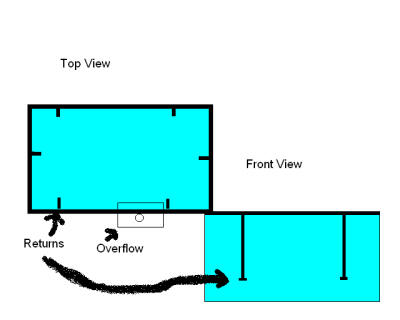 |
Oceanic Reef Ready Bow Front/Plumbing
9/20/09
Hello,
<Hi Julie>
I've had numerous salt & fresh water set ups over the past 2
decades and was recently given a 72 gallon Oceanic Set up that's
set with the over flow in the corner so it can be plumbed from the
bottom. This is the first tank we've had to be a bottom plumbed
tank and I was wondering what you'd suggest for a filtration
system.
<Most folks will use a wet/dry or sump for this application. It
offers excellent air/gas exchange and a convenient place for the heater
and filtration aids such as a protein skimmer.>
W/out looking at the tank I want to say one bulk head is a 2" and
the other 1 1/2". It will be a fish only system w/live rock only
for hiding places.
<Your system likely has a 1" bulkhead for the drain and a
1" for the return. PVC pipe sizes are dictated by the I.D.
Example, a 1/2" for the return 1/2" in diameter on the
inside, and about 7/8" on the outside. A 1" pipe will measure
1 3/8" on the O.D. Do read here and linked files above for
additional plumbing info.
http://www.wetwebmedia.com/plumbingmarart.htm>
Thanks!
<You're welcome. James (Salty Dog)>
Julie
Re Oceanic Reef Ready
Bowfront/Plumbing
Hi Bob,
I noticed a typo on my part...<Your system likely has a 1"
bulkhead for the drain and a 1" for the return. PVC pipe sizes are
dictated by the I.D.
Example, a 1/2" PVC pipe will measure...
Should have read 1/2" for the return.
Watching too damn many Tarzan movies lately, distracting.
James
<Will try to find, amend... B>
Coral Beauty Behavior/New Plumbing --
07/27/09
Hi Eric,
<<Hello Wayne>>
I wouldn't say this is a new behaviour. It was doing this before
the removal of the clowns; it started doing this a few days after it
was moved from quarantine to the display (about 3 weeks now) although I
think it has been getting more frequent in the last week.
<<Mmm, I see'¦ It's hard to say what may be the
issue. This fish often does not fare well from collection/travel
stresses'¦but can be quite hardy if/when a healthy specimen is
obtained, and once it is well acclimated. If the system is healthy
(e.g. -- good water quality, adequate water flow, adequate structure
for hiding/resting places) I don't think there's much to be
done. I suggest waiting to see how it behaves once more fishes are
introduced>>
My wife has generously allowed me a budget and some time to re-plumb
the system and fix everything up to make me happy so that I'll stop
tinkering with the plumbing and being a generally grumpy person on the
weekend because I feel like things aren't quite right.
<<Ah'¦but to be a reef hobbyists is to
tinker'¦isn't it?>>
I'll be moving the sump to the basement and passing the overflow
and return lines through the floor. This means I'll be able to add
a better protein skimmer and new pump to handle the extra head.
<<Okay>>
I'm looking at either a Danner Mag Drive 1800 Supreme or a Poseidon
PS4 for the pump and perhaps a Vertex IN-180, AquaC EV-120 or one of
the Pacific Coast Needle Wheel skimmers (the 350 I think it was).
<<I would be inclined to stick with one of the first two listed
here>>
I am a bit hesitant with the Pacific Coast skimmer as I am having a
hard time finding reviews for these.
<<Indeed>>
I would consider the MRC MR-1 but I cannot get one in my area and it
seems most of the online suppliers either will not ship to Canada or
the additional costs are unreasonable. The Danner pump seems a little
more favourable since it would mean a few less plumbing connections and
it sounds like the Poseidon may raise my water temperature a fair
bit.
<<Valid concerns'¦the Mag Drive/most any pump will add
some heat to the system>>
I'd hate to buy a $300 pump only to end up needing to buy a chiller
as well! Do you have any comments on the pumps or skimmers?
<<I prefer a submersible pump for most applications; where you
can get one big enough to do the job, for their ease of installation
and generally quieter operation. Eheim is my first choice for
quality/dependability, but sizes are very limited. The Mag Drive should
do fine'¦ And though maybe not the most reliable pump
(consider having a spare return pump on hand), they are usually
'good enough''¦and'¦do surprisingly well with
head --pressure. I have a Mag Drive 1200 (1200gph) that will outperform
at height the supposedly better made Ocean Runner 6500
(1700gph)>>
Besides the obvious check valves and ball valves, are there any
suggestions you would make for plumbing a basement sump?
<<The only real difference between this and one under your
cabinet is the length of the plumbing run (and easier access!). Primary
consideration will be sizing the pump correctly. Go a little bigger
than you think you need'¦and plumb a gate-vale on the output
side of the pump to temper flow as/if needed>>
I am considering using TigerFlex PVC hose for the overflow drain lines
to cut down on resistance from elbows etc and to make plumbing easier.
Standard PVC for the return line
<<I would use the flex-PVC going 'both' directions (to
and from)'¦for the reasons you state>>
and likely a 3 chamber sump for in/out/refugium although I have been
thinking about just using something like a stock tank as well.
<<Go for simplicity'¦and the largest volume you can
accommodate>>
Thanks for your continued input.
Wayne
<<Always welcome'¦ Eric Russell>>
|
Crazy Plumbing question: It could work, but I hope
nothing ever fails in the system. 7/15/2009
<Hi Mike.>
Alrighty, bare with me, as this may be a bit confusing to type,
probably even more so for those of you reading...lol.
<I will confess it took me a bit to visualize.>
I'm setting up a 200 gallon Marineland Deep dimension, dual
corner overflow, with Starphire front glass.
<Nice.>
In talking with the owner of the LFS where I purchased this tank,
and then another hobbyist who recently set up this same tank, we
came up with an idea, that seems crazy, at first...but more
feasible, the more I think about it.
The overflows come with Marineland Dursos and returns, 1 Durso
and 1 return for each overflow. The overflows also have a
removable "plate," at the front, that has a
"grill" cut into the bottom of it, and a grill cut into
the top. The top grill works as the overflow preskimmer. The
bottom grill has no purpose that I can see, as the are no holes
behind it......yet!!!
Oh boy, I can see this is going to require pictures.
Here's a picture of the overflow, front plate installed.
[img]http://farm4.static.flickr.com/3498/3721781538_13b370b44c_b.jpg[/img]
Front plate removed and plumbing setting in place.
[img]http://farm3.static.flickr.com/2567/3720968819_435220939f_b.jpg[/img]
Front plate.
[img]http://farm3.static.flickr.com/2431/3720969387_17ee1cac35_b.jpg[/img]
<Ahh.... that is to pull some of the water from the lower part
of the tank into the overflow.>
So, here's our thoughts, yes, Barbie's included in this
possibly insane idea!!!
One of the overflows will serve as a typical overflow, as
designed, draining to a sump/refugium and then returning.
<Ok.>
The other overflow will be modified and used as a closed loop
feed. Here's the plan:
<In the beginning, there was a plan....>
Remove the plate and drill 2X 1"-1 1/4" holes in the
overflow, in about the area of the lower "grills."
<3 to 4 inches from the bottom of the tank.>
The removable plate will be reinstalled over these holes. These
new holes will then be plumbed to the bulkheads, using spa flex.
PVC would be used from the bottom of the bulkheads onward... This
will give me 2X1" lines, draining out the bottom of that
overflow.
These 2X1" lines would be combined, using a Y, into a single
1 1/2" line, which would feed a large pump, like a Dolphin
3000/4000.
<Would use a 2" line>
The output of the pump would be 1 1/2" or 2". The
output would be split into either 2 or 4 return lines, which
would return over the back. My first thought, is 4 return lines,
2 feeding 3/4" SeaSwirls and 2 feeding 3/4" LocLine
with penductors. Each return line would be plumbed with a ball
valve, to fine tune flow.
<So you are talking about a true closed loop, nothing but
recirculating water.>
Ball valves would also be plumbed before and after the pump. I
wouldn't even need the spa-flex, if I just stubbed 1"
PVC a couple of inches out of each bulkhead and screened the ends
off. This would enable all of the water in that overflow to be
turned over quickly. It would also enable me to cut more, or
larger holes, behind that cover plate.
<Larger holes will not gain you anything. No matter how many
or how big the holes are, all the water still has to go through 2
x 1" I.D. holes.>
This would give me one overflow that's plumbed to the
sump/fuge and the second overflow being modified for the closed
loop.
My original concern was that the 2X1" lines would limit me
to only about 1200 GPH of flow. Then it was brought to my
attention that the 600GPH per hole, represents gravity flow, NOT
flow forced by the large pump.
<A common misconception. 300 gph is closer to reality for
gravity flow.
600GPH in a 1" is a best case, with all of the stars and
planets in their proper alignment and you have complete
siphon,
http://www.wetwebmedia.com/SystemPIX/PlumbingPix/Oneinchart.htm>
<That said, in this circumstance, with a pump
'pulling' and the weight of the water above the drains
'pushing' you should certainly get 600 GPH, perhaps more.
I certainly would not try this with anything less that schedule
80 PVC just from the standpoint of pure safety, in this type of
setup, a failure anywhere in the loop could cause a
disaster..>
Soooo, does any of this make any sense at all??
<It does,>
Sincerely,
A devoted reader and fan,
Michael
<MikeV>
|
 |
|
Re: Crazy Plumbing question:
7/17/2009
<Hi Michael.>
Thank you for such a quick response and your comments and
advice!! Now I'm back with a slight change....uh oh...
<Hehehe, no problem.>
I would still drill two 1" holes in the overflow, under the
removable cover. Instead of plumbing these holes to the
bulkheads, I would just leave them covered with the
"grill" of the removable cover. Inside the overflow, I
would stub 1" PVC pipe out of each bulkhead, just an inch or
so. This would allow water from the display AND from the overflow
to supply the pump.
<Fair enough, the flow rates will be about the same
though.>
If I'm reading your response correctly, no matter what I do,
short of drilling larger holes in the glass (which I will not be
doing), the most I'll be able to get out of the pump, no
matter what pump I use, will be approximately 1200 gph?
<Perhaps slightly more, due to pressure, but certainly no more
than 1500gph.>
If this is the case, I may scrap the idea and go with internal
powerheads, leaving both corner overflows for their intended
use.
<Whichever you decide, do let us know.>
Thanks again,
<My pleasure.>
Michael
<MikeV>
|
|
Marine plumbing, its a nightmare!!
6/17/09
Hi guys and gals, first I just want to say how great this site
is. I found this place when I first started out keeping fish,
it's been a great help:)
<Thank you, great to hear!>
I currently have 4 tanks, 2 tropical and 2 marine (I'm
attempting to merge the marine tanks into one). I'm having a
pig of a week what with the general crap going on in the world,
cut-backs at work and to top it off I was greeted home Monday by
Whitespot in my Reef setup.
<Uh oh.>
I'm taking your advice Bob after reading through many posts
on the site and going fallow (lots of fun... i don't think!).
Anyway, that's not what this is about, my real problem is the
plumbing on my new tank. This is the first time I've
attempted to build my own tank and even after reading your many
listings on the subject for months now I still get a headache
just thinking about it. I thought I'd done the hardest part
of the job just drilling the glass... was I wrong or what!?
<Drilling is intimidating, but fairly easy.>
Anyway, to the point, I've got one 1 1/2" drain pipe
which tee's under the main tank and goes to my holding tank
and sump (ball valves are fitted either side of the tee in order
to control the flow). My holding tank has two 3/4" pipes
that drop down into the sump where I have a Rio pump supposedly
pushing 3500Lph back to the tank (I plan on replacing this
shortly:)) also through 3/4" (the pump is recommended at a
maximum head of 3meters.) I'm having loads of trouble trying
to quiet down the drain pipe, I've tried just about
everything I can think of and all the fixes I can find both on
your site and the web in general (the only thing I haven't
tried is the Durso fix because of the lack of space in the weir
and I think it would just empty the weir quicker than new water
could fall back into its place).
If anyone could give me any info it'd be much appreciated,
have I simply got this completely wrong and it'll never work
in which case do I have to go back to the drawing board?
<Two things come to mind. First, if you have just a straight
pipe in the overflow you are going to have noise. You do need to
fabricate some sort of "standpipe", whether it be
Durso, Stockman or a creation of your own. With just an open pipe
you will keep getting gurgling and sucking noises. The other
thing to look at is the valves on the drain line. Any restriction
at all drastically reduces the flow capacity, even if you have
two outlets such as this you may not be getting what a 1.5"
line can actually flow.
This too can lead to quite a bit of noise.>
Cheers in advance, Dave (UK)
<Hope this helps you troubleshoot this, Scott V.>
Diagram included:
Main tank 72"x24"x24"
Sump 43"x15"(h)x12"(w)
Holding tank 12"x12"x24"
Weir 10"x20"x 21"/22" split in half (drain
and return)
|
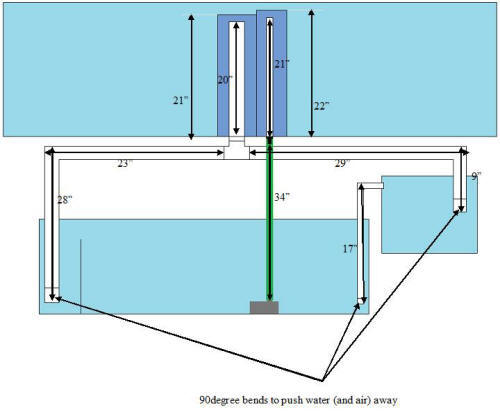 |
System Setup, Plumbing, Pumps
5/21/09
Hello, WWM Crew!
<Hello Dan.>
After bidding a sad farewell to my 50-gallon all-in-one system last
year (moved 1500 miles away), I'm returning to the hobby now.
<Great!>
I've just ordered a 135-gallon tank with a 38-gallon sump. The main
tank has two 1.5" overflow drains and two 1" returns drilled.
I'm planning a reef tank.
<Sounds good so far.>
So here's the question: do you recommend a single 1500 GPH return
pump that returns to both 1" holes, or two smaller units?
<One smaller unit.>
I can imagine some pros and cons of each: for the one pump: simpler
(except have to split the plumbing to go back to two holes), maybe
quieter (?). For the two pumps: don't need to split the plumbing,
and if one fails the other one keeps going so you don't have a
period of zero water flow.
<Tis an advantage.>
Your thoughts? Your recommendation for brand/model of pump(s)?
<For this setup I would look into either the Eheim 1262 or
OceanRunner 3500. Neither will provide 1500 gph, but you really do not
want this. Two 1.5" bulkheads can flow 1500, but it leaves no
redundancy. I would keep your flow to 700-750 or so, leaving a 100%
redundancy in overflow capacity should any clog occur. It will in
time.>
Thanks so much!
Dan
<Welcome, Scott V.>
Plumbing a 95 Gal FOWLR --
05/04/09
Greetings,
<<Hello>>
I am planning the setup of a 95 gallon FOWLR tank
(36"x24"x24").
<<Nice dimensions>>
I will order the tank with two vertical overflows, but I am not sure if
I should go with 1.5" holes at 750gph or 2" holes at
1200gph.
<<It depends on your plans/plumbing'¦ The 1.5' will
probably suffice, but having the extra capacity of the 2' available
when/if need is always nice>>
Is 2" overkill?
<<No'¦ Especially when it comes to easing plumbing noise
issues>>
Also, if I install a closed-loop manifold, does this change the
answer?
<<Not really'¦ More detail on your plumbing plans
(pumps, desired flow, etc.) would have helped here, but based on the
size of the tank I'm guessing a 1.5' drain will provide ample
feed to the pump you'll be using for the closed-loop. And the other
1.5' drain will process enough water (and likely more than you will
want to deal with noise-wise) through the sump. But like I said, going
with 2' drains will provide a bit more leeway in either
direction 'is up to you>>
Thanks, as usual.
<<Happy to share'¦ EricR>>
Re: Plumbing a 95 Gal FOWLR --
05/05/09
Thanks Eric and crew.
<<Quite welcome>>
Now more details on plumbing plans for your review:
* Main Display: The 95 gal. glass tank will have two sets of overflows,
each overflow drilled for a 2" drain to sump/fug and 1.5"
return to tank.
<<Excellent>>
* Sump & Refugium: I have a custom made acrylic sump/refugium that
is 30 gallons total (really 20 gallons with water and 10 gallons in
case of tank backflow).
<<Do test that this will be adequate 'it is not unusual
for the reverse (10g running capacity and 20g 'empty' volume to
catch all the transient water volume)>>
The sump is split down the middle (long ways) with one side for the
refugium and the other side with a skimmer section (AquaC Urchin with
Mag Drive 3),
<<A good skimmer, but marginal in size for the
system 'in my opinion (I would have gone a size larger). This
doesn't mean it won't work out fine 'time will
tell>>
baffle section and return area (using a Mag Drive 9.5). The refugium
section overflows in to the return area.
<<Sounds good>>
* Goal: My goal is to incorporate a closed-loop manifold and accomplish
a total turnover of about 1500 gph (15x), as well as capitalize on the
redundancy of the overflows which can handle 1200 gph each. So now the
big question: How to do it?
<<'¦? Here and among the associated links:
http://www.wetwebmedia.com/cllooppbfaqs.htm >>
* Drains: After reading a ton of strings on WWM, it seems I should
bring both 2" drains down to the sump and tee each of them off
with a ball or gate valve to adjust flow to the refugium to about
10x.
<<Mmm, no'¦ If you are planning a closed-loop, you will
need to plumb one of these drains directly to the pump used for the
closed-loop. Remember, as the name implies, there is no 'open'
portion of the loop such as the sump/refugium. Utilizing a 1500gph pump
to pull water from the sump and return it to the tank via a manifold is
simply just that 'a 'return manifold''¦and in
a 30g sump will present a whole host of problems re bubbles and noise,
I assure you>>
That way the 'fuge gets a dose of raw water from the display, with
the balance of the water going into the sump for skimming. What am I
missing?
<<As just explained>>
Is there a better way to accomplish this?
<<Indeed...if you really want a true closed-loop. The refugium
can be fed via a 'tee' off the one overflow that will be
servicing the Mag 9.5 return pump>>
* Returns: I am honestly confused by all the info I have read about
plumbing back to the display when you have dual overflows and what to
include an over the top closed-loop manifold. I ended up my reading
with the thought that I need two submersible pumps (maybe Eheim 1262s
based on 5' head pressure) going from the return section of the
sump - one used solely for the manifold system (which will have
3/4" PVC framing and five 1/2" outlets with loc-line)
<<Do consider that you need about 300-350 gph of flow after
head-loss and 'per ½' nozzle' to achieve good
flow>>
and the other to the 1.5" overflow return lines using a tee. This
would make a total of three pumps in my sump, which may get
crowded.
<<Yes'¦ Not to mention the noise such flow through a 30g
sump would cause. And again, what you propose is not a true
closed-loop'¦but a simple return manifold>>
I would then want to install dedicated GFCI outlets to power each pump.
I have read about using an external pump like the Reeflo Snapper or
Dart to power the returns, but I have never used external pumps and
would have to drill the acrylic sump (which I would like to avoid
unless it is the best way to go).
<<The external pump is the best way to go for the
'closed-loop''¦yes>>
I guess the plumbing with the external pump would be similar? What is
best option to accomplish the turnover I am looking for?
<<I prefer Tunze Stream pumps (or similar) for flow within the
tank'¦and I hear many folks like the Koralia pumps as a
cheaper solution>>
As always, thanks for your time and sharing of knowledge.
<<Quite welcome'¦ Do consider my
statements'¦and read up on the closed-loop to gain a better
understanding re'¦and then write back and let's chat about
all this further. Regards, Eric Russell>>
Plumbing and RDP [Bob F, Scott V]
4/13/09
Hey Bob, Scott V, crew! Happy Easter to all!
<Hello Jeremiah, happy day after to you! Scott V. today.>
I hope this finds everyone in "hoppy" spirits hehe!
<It does, thanks.>
I have two really quick questions... I am setting up a 75 gallon reef
that I have received tons of great info on thanks to Scott...thank you
Scott!
<Happy to help.>
I'm having 3 holes drilled in the back wall. Two to accommodate my
GlassHoles overflow box and the other to accommodate a possible CL. The
purported closed loop hole is not very deep in the tank, slightly under
the other 2. So that the tank won't have to be drained to the hole
level with future plumbing installation I have come up with an idea
I'd like your input on. I will be using flex pvc for all plumbing
but in this case I thought that out of the bulkhead I will plumb a hard
pvc line long enough to put a valve on. The end of this line would have
threads so that I could adhere some kind of threaded cap/plug on the
end with a little silicone until the rest of the plumbing is
intact.
<Sounds good.>
That way if the valve slowly seeped the cap would definitely stop all
else. Also, whenever I decided to finish the plumbing, ideally I would
keep the valve shut off, undo/unthread the cap, install the rest of the
flex pvc to wherever it is going, allow enough cure time, then open the
valve and let the flow proceed. If I works out, it'd allow me to
finish the plumbing without draining the tank at all. Do you see any
problems or hidden obstacles?
<Nope.>
My hopes are that this arrangement would be leak/drip free. It could be
a year or two before anymore action was taken on this hole. I
wasn't sure because it seems too easy! Will there be a trade off or
sacrifice installing this way?
<Just a bit extra work, but no issues.>
Ok, on to my next question. Other than my 75 gallon display, I will be
running a 55 gallon "display" refugium slightly lower and to
the side, and a 55 gallon sump underneath. The sump will house a
skimmer, return pump, heater, and a few stray pieces of live rock. It
will sectioned off in 2 sections, skimmer and return. Since the fuge
will be its own display, I'd like to have its lights on the same
time frame as the 75 reef. I was shooting for the benefits of RDP, and
was wondering if I could light the sump and use it for the reverse
photoperiod, still getting the same benefits as if I were to use the
fuge?!?
<Not without a macroalgae growing in the sump.>
Would there be something "alive" I would need to put in there
to reap the benefits?
<Yes.>
I didn't know if the reduction of PH fluctuations was just from lit
water...heeee!?
<It is not.>
Ok.. to change the subject for a sec, there was a disagreement, slight
difference of opinions so to speak, between Bob and James "salty
dog" back in January regarding ground fault devices.
<And again recently!>
I'd like to give my "2 cents" [I hear my wife saying
uh-oh], I am an Electrician by trade and I must side with Bob...[no not
kissing rear] they are called GFCI, Ground Fault Circuit Interrupter!
It was also said that any Elektrishun would use the term GFIC....uh
naw, down here in KY we call em' GFI's!
<Well, I do agree. The President could pass an executive decree that
they are to be called 'Elephant Outlets' from now on and it
would still be GFCI to me. But it is all a label here, still the same
essential safety item.>
If this is Scott, can you pass this along!
<For sure.>
Oh yea Scott, Mike was great, the tank company lost the first drill bit
and template he sent them so he mailed them another one no sweat. He
has indeed been as helpful as you!
<Hmmmm, lets not let him hear this! ;-P)
I am waiting on the tank to be finished now so I can get that overflow
box shipped out! Oh yeah, by the way, GOATS ARE COOL.
<Yep!>
Thanks for all you guys [gals] do and for the wonderful site!
Jeremiah
<Welcome and thank you, have fun with this new
system.>
Re: Plumbing and RDP [Bob F, Scott V]
4/14/09
Scott, thanks once again!
<Welcome Jeremiah.>
I was hoping my plan would be as cut and dry as it sounded, assuming
the valve wont reduce flow noticeably!
<Not that much with it completely open.>
I also agree with the elephant outlet comment, they are a
necessity.
<They are indeed.>
I'm figuring out all my wiring on them within the stand now while I
am waiting on the tank! A couple follow up questions if I may... If I
don't decide to grow any Chaeto, etc in the sump [which I guess
wouldn't be that difficult] and stick with the fuge for macro, how
long could I let the light cycle overlap [fuge lit longest] before
things start to go haywire?
<Quite a while. Chaeto is supposed to get a resting period, but I
have seen it illuminated 24/7 successfully too.>
For that matter I thought of 8am thru 10pm or 9am thru 11pm on the
display. Didn't know if 14 hour cycles would hurt.
<I would go for 12 here. With 14 you may notice your corals looking
tired and droopy towards the end of the day.>
Then for the fuge maybe 6pm to 9 or 10am. I have no clue to what is
"the norm" or even "do"able?!
<There is quite some variance, leeway here. But for the display I
personally would stick with 12.>
What are your thoughts on this? Worse case scenario I plan for a
vegetable filter in the sump.
<Not a bad idea, maybe an algal turf scrubber. See:
http://wetwebmedia.com/algaeFilt.htm>
Hey off subject, not sure if you recall our previous exchanges but I
had talked about going with the Tunze nanos for powerheads and you
"approved." My question is, do you feel there is a different
brand/model that would be more efficient/applicable for price, heat,
and performance? Any good swivel heads?
<Personally I like the AlgaeFree MaxiJet mod.s too, but the Tunzes
are always top notch.>
I'll be sure to send some pics by of the 3 sided Starphire beast
once things settle!
<Oh yes!>
I couldn't begin to explain how anxious I am!!!! It goes without
saying but, thanks man, for real! Until next time!
Jeremiah
<Welcome, talk soon, Scott V.>
Re: Plumbing and RDP 4/15/09
Thanks man! I'll play a little bit with the fuge lights to find a
sweet spot but the display will be on 12s!
<Welcome, sounds good.>
I'm the only one that's supposed to come home tired and droopy
; ]. I must apologize, I forgot to ask one question in conjunction with
CL plan, and one totally off topic and my OCD wont let me not ask them
haha!
<Okay.>
With knowing what will be on the outside of the tank with the
"CL" hole {dark tunnel that ends abruptly :]} what would you
do about the inside, a bulkhead strainer of some sort, plug, wide open,
etc?
<Generally just a bulkhead strainer.>
Maybe something I could get at GH's before Mike sends my box?
<I will CC him, if it has not he'll toss one in.>
Ok, for my fuge I plan on drilling myself, bulkhead size 1.5".
What would be an optimal way for pod transport? The drain [or both] is
going to be fed directly to the return section in the sump and I want
as many as those guys to go on the display tank vacation as possible.
Got to love road trips right hehe. Should I just leave the bulkhead
open?
<Yes, just leave it open to drain right in.>
Maybe some sort of pvc elbow, how bout a remote controlled vacuum robot
that follows my every command? Whoa sorry! Again maybe something on
your site? How would you do it Scott V?
<No fancy plumbing parts needed. Just have the refugium drain into
you return section in the sump.>
Thanks, Sorry! All in one! You guys still rock! ~Insert cheap
flattering chat here~ HAHA
<LOL. Welcome and thank you again!>
Jeremiah
Reef/ sump plumbing and Stocking question
12/2/08 Hello all, <Hello Randy.> I have a few plumbing
and stocking questions. First the plumbing questions. I am setting up a
72 bow reef with a 30 gallon (36") custom sump below. The sump
will contain a twin sump inlet assembly with 1-300 micron bag, 1 -ASM
G3 skimmer, 4 over/under baffles and then a 10x12x13 return pump area.
I will be drilling the tank and adding www.glass-holes.com's in
tank overflow kit. With the sump there should be aprox 90 gallons of
water(80 with rock added-guessing??). I will be adding a 3/4"SCWD
on the return for varied output flow. And there will be a Hydro Koralia
#3 in tank powerhead. Is the Mag return w/SCWD and 1 Koralia going to
be enough flow? Should I add a second Koralia #3? <I would, you will
not have too much through the return with the Mag and the SCWD
combined. You will have a more balanced flow with the extra
powerhead.> I know there is no such thing as too much flow (within
reason). <The application of the flow is just as important. Random,
not laminar.> With this said, should I go with 2- 1" lines into
my sump or 2- 1.5" lines into the sump? <Definitely the
1.5" lines, you do not want to restrict the overflow drains.>
If I go with the 2 1.5" lines and the 3/4 "Y" setup on
the SCWD which MAG pump do you recommend? The MAG7.5 or 9.5?? <The
larger will still leave you redundancy in the overflow once head and
plumbing are accounted for. I would go for the 9.5.> I would like to
get it matched as close as possible. I have heard that using a
partially closed valve on the return side (or any side) can cause
potential blockage over time as debris accumulates. <If you are
referring to the overflow, do not restrict at all! As for the pump, you
can restrict the output if need be, you will not need to here.> If I
use the 2- 1.5" feeds, should I step up to 1" returns from
the MAG to the SCWD(I believe that both devices have 3/4" male NPT
fittings), and then 3/4" from the SCWD to the tank. <Little to
nothing to gain over the ¾" for the run it will
have.> I am thinking about drilling the returns and using bulkheads,
what is your thoughts on this? Any issues, advise? <You can IF you
have sufficient transit volume in the sump, the amount of water that
will drain or siphon into the sump when the return pump is off.
Otherwise, just plumbing it over the top to a length of LocLine allows
you to place the return just below the water's surface, minimizing
this volume.> Also, is the ASM G3 skimmer to big for only the 80
gallons of water? <No, a fine size for this system.> Will it over
skim? <I'm not a believer within reason.> Should I put it on
a time, for how long? I had it on my 120 and loved it for skimmate
collection. <Just let it run and collect nasties.> Now for the
stocking. Can you tell me the best tang for a disease free reef tank? I
am leaning toward either a purple or a yellow eye/Kole?? Do you think
that these fish will work together? <I would stick with just the
Ctenochaetus strigosus in this size tank.> I know I'm at max.
Currently have-1 yellow watchman, 1 Ocelers. clown, 2 yellow tail
damsels---Would like to add, a ick resistant tang, 1 midas blenny (will
he work with the watchman?), <Chances are good they will clash.>
2 neon gobies, 1 royal gramma, 1 flasher or fairy wrasse, 1 six line
wrasse, <Be aware these can be bullies and put any shrimp in your
tank at risk.> and possibly a pair of Banggai cardinal fish. Do you
have a preferred flasher or fairy wrasse that is recommended for price,
availability, and beauty? <Cirrhilabrus rubriventralis in my book.
Do be sure to cover the tank for any of these wrasses, they are
jumpers.> Thanks for your time and devotion to our hobby, Randy
<Welcome and thank you, Scott V.>
Tank plumbing/ water flow 10/22/08
Good evening all at WetWebMedia, I'm writing to ask a few questions
before I under take a large tank re-plumbing job on my 75g. mixed reef
tank. <Okay, good evening to you too.> I have been experiencing a
fairly bad case of BGA and need to fix some flaws in my setup to
hopefully eliminate it or at least keep it under control. I'm
looking for some advice to avoid mistakes I have found that come quite
easily and frequently in the aquarium school of hard knocks. First some
background of my system, obviously I have a 75g. tank with a 20g. sump
and an Iwaki MD55RLT return pump that is piped to a manifold loop at
the top of the tank with 6 nozzles. I'm guessing flow is about
800gph with head loss @ 4 feet, draining through 2 1-1/2 drains drilled
at the top of the tank. <Realistic estimation.> The drains
consist of 90* fittings plumbed through bulkheads with tee's on the
outside of the tank. These are plumbed down to the sump where I have a
PM Bullet1 skimmer running off a Mag 9.5 in-sump pump. The water then
exits the skimmer and returns to the tank. This setup is noisy to say
the least and I find the TV getting turned up louder and louder because
of it. <Not fun!> This besides the BGA, is the main reason for
doing what I'm about to propose. Also the amount of water flowing
between the tank and sump means a huge amount of evaporation not to
mention high humidity in the house, which is not good here in the
northern climates in the winter. I probably have to top off 1-1/2 to 2
gallons a day. <This really will not change much with the changes
you are making.> Now for the advice, my plan is to eliminate 1 of
the drains and plumb it directly to the Iwaki pump as a dedicated
recirculation loop back up to the manifold for maximum flow in the tank
and avoiding 800 gph through the sump. I want to replace the return
pump with a Mag 5 piped external to the sump. This should return about
250 - 300gph to the tank and I assume should be quieter while having
tons of flow with the recirc. loop. Is this enough turnover through the
sump for the skimmer, or will I need more through the sump and skimmer.
<It will be fine.> I may replace the skimmer because I
haven't been satisfied with its performance poss. with an Aqua C
EV120 but I have heard they can be noisy. do you have any experience
with these ? <Hmm, yes. They do of course aspirate air, there is
some noise. I find the pump used to drive the skimmer being the larger
noise factor than the skimmer itself.> I know they are great
skimmers but back to the noise issue. This will probably be done at a
later time anyways. <Do also look at the EuroReef line, a bit
quieter IMO.> The tank is full of residents and they will all have
to be removed for this and I will be rearranging the live rock in the
tank at the same time. They consist of 1 each; Coral Beauty Royal
Gramma Tomato Clown Exquisite Wrasse a small Naso that will be finding
a new home when he gets much bigger a couple of Convict Blennies a
Toadstool Leather a Frogspawn a couple of Colt Corals and a small Xenia
These will be removed and segregated in buckets and plastic tubs while
this is re-piped and rearranged. Any advice would be greatly
appreciated. does my re-piping plan look sound? <Yes, though you
will lose the redundancy of two throughputs for your overflow. You
could keep both drains and just drill a new hole for the closed
loop.> Will 250 gph through the sump be enough turn over?
<Yes.> Is 2000gph through the recirc. loop overkill? <Not if
tweaked, properly implemented. A ball valve on the output of the pump
will allow you to throttle back a bit if needed.> How long should
the PVC cement cure before I refill the tank and put the livestock back
in? <Technically 24 hrs.> Also as a side note I am also looking
into some sort of refugium like a hang on for the tank for macro algae
production against my BGA problem, Is there any certain size you would
recommend for a 75g. tank? <No, just the bigger the better.>
Thank you so much in advance, you fine folks at WWM have helped me keep
many fine things alive a lot linger than they would have without you. I
really appreciate all you do for me, everyone else, and the hobby in
general, thank you! John P. <Thank you John. I do wonder, what in
particular is so noisy in your setup? What you propose should be
quieter, but what you currently have may just need a bit of tweaking to
quiet down. How is your overflow setup, do the drain lines go into the
water in the sump, are they aspirated? Is it a flushing noise you are
hearing? Write back with some details about what/where the noise is, we
may be able to save you quite a bit of work. Scott V.>
Re: Tank plumbing/ water flow
10/23/08 Hello Scott, here are some answerers to your
questions. The noise may or may not be able to be reduced. I do accept
that there is going to be a certain amount of noise with an aquarium no
matter what it consists of. <Of course.> The drains consist of
90* fittings piped as overflows through the back of the tank about
2" from the top. These are piped through bulkheads into tee's
on the vertical with a bushing and small piece (4") of 1" PVC
and a vented cap. The noise I'm talking about is just the gurgling
noise and the sound of the water falling the 2'-3' down to the
sump. One of the pipes goes right out the back of the tank straight
down to a 90* fitting into a bulkhead into the sump. Inside the sump I
have vertical tee's to allow some entrained air escape to help
prevent micro bubbles. The other drain is the same except that this
side drops down about 16" and 90's over towards the sump and
down another foot or so into the sump. I have done a decent job with
splashing in the sump with a micron bag to deaden the sound. The
problem noise is just the water draining, traveling and falling in the
pipes. I have tried to insulate the pipes with commercial thick
insulation like you would have on your air conditioning piping. It
didn't help much and looked terrible. <Been there, done that! A
losing battle.> I am not experiencing the sucking/ siphoning that
many have from trying to put too much water down the drain. <The
rundown of my previous questions.> As far as loosing the redundancy
I'm not too concerned about that because I would be going from
800gph down two 1-1/2" drains to 300gph down a single 1-1/2"
drain. My logic is that 1 gurgling overflow would be quieter than 2
slightly faster flowing overflows. <It can be, usually not in
reality. You should not have any gurgling. Are the elbows inside the
tank pointed up? If so lowering the flow will make little difference,
the opening needs to be submerged; the opening on the elbow facing
down.> As far as allowing the cement to cure for 24 hours that will
be difficult for I have a young child that loves disorder in the house
and a wife doesn't, at all. Is there a reasonable time period for
it to set up before the VOC's will harm livestock. If it's got
to be 24 hrs then that's what it has to be but it won't be fun.
if you are married then you know what I'm talking about. ha ha.
<I am, to a very understanding woman!! 24 hrs is playing it safe.
Many, including myself do put the plumbing into service much faster,
sometimes a matter of minutes. The educated choice is yours.> Aqua C
skimmer- noise from aspiration will not be a problem-I run tubing
outside for the skimmer air for the PM. no asp. noise none! Would you
recommend an EV_120 or 180 for the load I have listed plus the couple
shrimp, snails , hermits I forgot? <I almost always favor a larger
skimmer, room and funds permitting.> Any hang on refuges you would
recommend? <None in particular, all are basically just a hang on
box. If a pump is included this may guide your choice. Some of the
lower end pumps can be noisy.> Also the Iwaki pump has union ball
valves on either side and the outlet is closed off slightly slowing
flow and making the pump slightly noisier. Will this cause excess heat
to be transferred to the water? <No, this will not effect the heat
transfer in any significant way. It is fine to throttle the pump back
on the output side, never on the suction side.> My summer time temps
approach 84* when I keep the house temp at 76*. winter temps are around
79* in winter with the house at 72*. The only heat sources are the Mag
9.5 in the sump, the Iwaki return pump and a 260W PC light fixture. I
haven't used a heater since day one and would like to bring down
the summer temps without having to evaporate more water or invest in a
chiller. The tank has been set up like this for about a year and a
half. <These wet rotor pumps do account for quite a bit of heat. You
could possibly run the skimmer pump externally to eliminate a bit of
this. The wattage used by a pump will in the end become heat, consider
this while looking as skimmers. Also a thought, if you are not adverse
to the look of powerheads this may be your answer. Running the smaller
pump as your pump return and powerheads in lieu of the closed loop.
This eliminates the big, power hungry pump and the heat that comes
with. It will pay for itself in a short time, you will see an impact on
your power bill. One more note re the drain noise in the pipes. Running
the overflow drains at a slight angle, not completely vertical, can
lower the noise radiating from the pipe itself quite a bit. Also, using
flexible PVC (sold as SpaFlex at many hardware stores) will virtually
eliminate the noise radiating from the pipe itself.> I look forward
to you answers / more questions if needed, thank you once again, John P
<Welcome, Scott V.>
Flow Question'¦Pump vs. Plumbing
Configuration -- 10/19/08 Hey guys, <<Howdy
Blake>> With the aid of your site and Reef Central, I have
successfully plumbed my first reef. <<Neat!>> Thanks again.
<<On behalf of the crew'¦ Quite welcome>> I have a
quick question regarding flow for my tank. <Okay>> Here are
the details: It's a 150 gal. (48x30x24) with a 50 gal. tall sump.
For the sump loop, I have 2 1.5in drains and a 1.5in return. I am using
the Herbie method for the drain (controlling a siphon w/ a gate valve
and the second 1.5 is for safety. It is tested and accommodates easily
if the first were to fail.) <<I'm not a fan of utilizing
valves on gravity drain lines as I think there are better and safer
ways of managing the flow, and the second 'safety' drain line
will only help in the event of a clog as long as you keep the maximum
flow rate to no more than what a 1.5' gravity drain can safely
handle without a siphon event'¦which is about 700gph. And
ideally, this second 'safety drain' is installed slightly
higher than the main drain to allow you to adjust the sump return flow
rate to the main drain line only>> This is all run using a ReeFlo
Snapper that is fed using 1.5 pipe increased to the 2in. intake.
<<It is generally best not to reduce the intake line to a
diameter below that of the intake nozzle of the pump to preclude flow
loss'¦but in this case it's not an issue because this
pump's maximum volume rating (2500gph) is way too much for a single
1.5' drain (keeping in mind that the second drain you installed is
for safety/backup purposes should the first become restricted or
plugged completely). A gate-valve on the output side of this pump will
allow you to dial-it-back as necessary to achieve an optimum flow rate
for your plumbing configuration>> On the output, I have aprox. 2
90 deg. turns and a T at the top reduced down to 3/4 Loc-Line on either
side. <<Hmm, okay'¦so in terms of headloss, this will
add about 5-feet of head-height to the existing 'rise' of the
return line (figure 1-foot of head-loss for each bend/tee and one for
each Loc-Line fitting). So assuming about 3-feet of rise this gives
8-feet of head-height/head-loss/head-pressure to the pump. Considering
the specs for this pump (high flow w/low wattage and low maximum
head-height) I figure flow has already been reduced more than half by
the plumbing configuration alone>> 1st question. When I ran the
system without the Loc-Line it produced a much stronger flow;
<<Aside from reducing/restricting the output diameter of the pump
by half, the convoluted interior of the Loc-Line causes turbulence
which further restricts flow. Nothing unexpected here in my
opinion>> it has been reduced to the point that I am almost
concerned. I would say I have around 800-1200gph coming from it.
<<Mmm'¦I'm thinking probably lees than
this'¦especially if the flow is well handled by a
'single' 1.5' drain>> It concerned me because when I
added sand the pump had slight clicking sound that eventually went
away. <<Probably ingested some sand particles'¦not to
worry>> Could I have damaged the pump? <<If a large piece
of substrate were to 'wedge' in the volute there is a
possibility of damage to the impeller (breakage or 'grinding
away' of the impeller blades)'¦but fine grains of sand
(unless in VERY large volume) should not be a problem for the
pump>> Is this amount of flow sufficient for the sump? <<I
don't know what your actual flow rate is'¦but as little as
300gph would still be fine in my opinion'¦and much easier to
manage re noise/safety issues. So yes, whatever the flow rate the pump
is producing now is likely fine, as long as it is not overwhelming the
drain>> At its current state, the overflow is pretty silent and I
have no micro bubbles, <<Well there ya go>> but I thought I
would have a bit more flexibility in "horsepower."
<<Then I suggest you remove the valve from the one drain and
utilize both within capacity (about 1400-1500 gph
combined)'¦and get a bigger pump>> However, if the
overall flow is sufficient w/ the CL for the projected animals (SPS)
then no stress. For the closed-loop, I have a Dart with an OM 4-way.
<<Ah, okay'¦a bigger/more powerful pump'¦and
the 4-way is a nice little piece of gear too>> It is fed using 2
1.5' intakes and 4 1' outputs in each corner of the tank. They
are alternating from each corner of the tank. The flow from the CL is
incredible. <<Excellent>> Considering the flow schematic,
should this be, hypothetically speaking, sufficient to keep SPS?
<<Much more to it than this as you should be aware'¦but
yes, this flow should be sufficient>> The lighting question is
for another day. ;) <<Alrighty>> Thanks for all the input.
Blake <<A pleasure to share. EricR>>
Plumbing and Pump 9/22/08 Hi guys.
<Vince> I have read so much that my head is swimming with ideas.
I want to re-plumb my system from scratch to make it appropriate for
hard/soft corals and everything in between. My DT is a 220 gallon
(72" x 24" x 30") All-Glass aquarium which is to say
that the two glassed in boxes with the holes underneath accommodate
1.5" ID and 1" ID piping. In other words, my absolute maximum
drain capability will be two 1.5" and two 1" drains. I have
read that 1.5" does 600 gph and the 1" does 300 gph, but I
can't figure out if these numbers are for one or two drains. (Does
a single 1.5" drain do 600 gph or 1200 gph?) <A single 1.5'
is good for about 750 safely, while 300 is correct for the 1'.>
The 1" ones are currently plumbed for return lines, but I am
willing to use them as drains and just have my returns hanging over the
back, which actually increases my return line and wavemaking options
(Can we say "8 way Ocean Motion"?). My sump is a standard
glass aquarium that already has a hole drilled with a 1" ID
bulkhead from which the main pump can draw water. I do NOT want to
drill a new hole to accommodate a larger pipe. I intend to keep
approximately 30 gallons (half full) in the sump. So, for my intended
bio-load, I understand I ought to have 10 to 20 times my DT gallonage
turnover, which is to say 2,200 to 4,400 GPH flowing from DT to sump
back to DT. <You will want 10-20 times turnover for total flow, it
does not all need to transit the sump. > <Perfect.> I also
will have two Koralia 4 water fans just to create circulation in the
DT. (The 2nd one has yet to arrive, so I have not had an opportunity to
experiment.) I have read one suggestion that if I put one at mid-height
in a back corner and the other one mid-height at the center of the back
wall and aim them both at the dead center of the tank, that the
turbulence created by these positions will simulate gentle wave action.
<You'll just need to experiment with different placement of the
powerheads in relation to your sump return.> So, here are my
questions: 1. What GPH do I need going into and out of the DT? <I
would shoot for around 1000 gph or so on this tank. This will be a
manageable level through the sump and puts you around 3000 gph of flow
in the display with the powerheads.> 2. Are the two 1.5" drains
sufficient to accommodate that GPH? <Yes, although using the 1'
drains also just provides that much more redundancy.> 3. Will the
positioning of the two Koralia's actually create a turbulence to
simulate wave action? <With a little experimentation in placement it
definitely can. I would actually start with the two on opposite ends of
the tank, pointing at each other. Mix in your sump return flow and then
start tweaking it here and there until you are happy with the flow. A
bit of positioning info in this article
http://www.wetwebmedia.com/circmarart.htm> T.I.A. Vince.
<Welcome, have fun setting up, Scott V.>
Revised Tank Plan 8/31/08 Hello again
WWM crew, <Blake> As usual, you guys are an indispensable help in
this hobby and I thank you for that. <Thank you for the high
praise.> I have revised my tank plan and wanted to run the idea past
a professional. The LFS's in this area aren't quite
"pro's." I am ordering a 150 Lg. 60x24x24 from Glasscages
w/ Starphire, rimless. The plan is a centered overflow with 2x 1.5 in
drain (I will be implementing the Herbie Method; pros/cons), and a 1.5
in return. It will flow into a sump (40 gal)/refugium, and have an
external return pump (Dolphin 3800/4800 model). <Do use at least two
2' drains for the 3800, another if you use the 4800. The 1.5'
bulkheads will just not handle these pumps. More throughputs will be
needed to have any redundancy/safety factor'¦ and you should.
Do also consider that this is quite a lot of flow to manage through a
40 gal.> Here is the main question, the closed loop. I have planned
2x 1.5 in. drains to be drilled about 8in from the top of the tank on
either side of the overflow box. These will flow to a Sequence Dart
with a 2in. intake, and return out of a 1.5in outtake. From there I
will plumb it to an Oceans Motion 4way. I planned on having 4x (total)
1in. returns for closed loop in each corner of the tank bottom. There
are some interesting configurations I could use with the OM 4way and
haven't decided on one yet. <A product that offers many
configurations to you.> The tank will be rimless and the
"wave" action could be scary. <This too is a matter of
leaving some safety, with the water level down a bit more than actually
needed.> I thought a 1 and 2, 2 and 3, etc. would be great for
keeping solids suspended. The Dart is rated at approx. 3600 GPH. <It
sounds like a good configuration for 1' lines.> I plan on
keeping Acropora, Montipora, and some clams. Combined with the overflow
does seem like enough flow for the chosen animals. <Surely.> I
have chosen the Orbit USA 60in. 2x 250MH with 4x T5 50 watt. Is the
increased length from 48in to 60 in. purely cosmetic, or is there a
different in light positioning? <With each MH covering 3ft you will
likely have some dark spots/shadows. With proper
positioning/aquascaping this can work well and even look very
appealing. It just depends on the overall aesthetics you are going
for.> I couldn't find a description anywhere (sorry, that is a
random question). If there are any major flaws here please educate.
Hope your Labor day is treating you well. <It is, thank you.>
Thanks as always, Blake <Welcome, have fun, Scott V.>
Re: Plumbing Questions For New Marine Tank Setup -
4/04/08 Thanks Eric. <<Most welcome, John>> I will
certainly pick my fishes for reef compatibility. <<Great!>>
My reference to street 90s was the same point you made (about using
turnable ells in the tank in place of strainers). <<Ah,
okay'¦excellent>> However, snails, crabs or small fish
can still crawl or jump into an ell even if it is just below the
surface unless it is screened somehow. <<Mmm'¦in my
experience (I use these on my tank), the only real problem are the
larger snails (e.g. -- Astrea spp.)'¦and then only because
they can cause a blockage (I no longer utilize these snails in my
system'¦for this and other reasons)>> Short of using
strainers on my ells do you have any suggestions for keeping critters
out of my drains? <<I never tried it myself, but Anthony once
recommended using a bit of the plastic 'gutter guard' such as
that found at Home Depot/Lowe's. You cut a small piece, roll it up,
and insert it in to the ell (the material will 'spring open' to
hold itself in place). It will take a little experimentation to figure
out just how 'dense' to make the roll for the best effect, but
according to Anthony, the material inhibits water flow very little if
any, but will keep your critters from making the trip down the drain.
Only real problem I see with this is that you will need to make
checking/cleaning of the ell a regular maintenance task>> As a
follow up question, I had not intended to "throttle" the
OR6500 with a gate valve, but simply to union and ball-valve the pump
to allow for disconnecting. Rather, I drilled two 1.5 overflows in the
DT to ensure I could run the OR6500 full-out. <<I
see'¦and I understand this will not likely be necessary with
this pump. But if you should ever change pumps or go with a bigger
pump'¦'¦'¦'¦>> However, I am
now concerned about the OR6500 outpacing the flow through the baffles.
<<Ah yes'¦and a valid concern I think. I remember once
having to actually drill a 1 ¾' hole in the baffle on a
pump chamber in order to keep up with the flow of a large pump>>
I have already siliconed them in place but if I run into rate problems
I will rip them out and weather strip them! Someone should create a
baffle flow spacing calculator! <<Hmm, yes'¦though I
find many of these so-called 'calculators' to be
faulty/misleading at best. Better to use real-life findings/test
results in my opinion. Using the pressure-lock baffles one could
probably do these tests quite easily'¦though the
possibilities/variations in configuration (width of vessel, depth of
vessel, height of baffle, number of baffles, etc., etc.) could/would
make it quite the project. Although even just a 'few' assays
might provide some useful benchmarks for folks to start from>>
Thanks, all the best. John <<Cheers Mate, EricR>>
R2: Plumbing Questions For New Marine Tank Setup -
4/04/08 Thanks again, and slainte! <<Always welcome. Slainte
Mhor! EricR>>
Plumbing With 'Shared' Pipe -- 04/03/08
Hi Bob, how are you today? <<EricR here today'¦ Bob is
off diving in Borneo'¦between sessions of sharing cans of
Tiger Beer [grin]>> I have been looking and reading but cannot
find a real answer to my question. <<Oh?>> My question is
in regards to plumbing. <<Okay>> My tank has dual overflows
each with a 1.5 inch bulkhead. One overflow is directed to a sump
housing a skimmer. The other overflow is directed to a separate sump
with a refugium. Each sump holds approximately 30 gallons. <<Are
these vessels connected? Ideally, the refugium would gravity-drain in
to the pump-chamber of the sump>> I am planning on using two Pan
World 100PX external pumps for my returns. <<Okay'¦at
just under 800gph these should be fine after headloss. And I do very
much like the idea of having/employing a redundant pump, should one
fail>> The pumps have a 0.75-inch inlet and a 0.75-inch outlet. I
want to connect the sumps using 1-inch bulkheads and 1-inch PVC pipe.
<<Mmm, you need to match the size of the drain bulkheads at the
least'¦so 1.5' or larger bulkheads are needed here>>
Would it be ok to use the 1' pipe connecting the sumps as the
return line and tee off each pump from it? <<Oh, I understand now
what you are doing'¦and no'¦I do not recommend having
the two pumps share a single 1' supply line>> What I would
like to do is use separate tees for each pump and then use a reducer
just before the pumps intake. Would it be better to use reducing tees
to tee off each pump from the 1-inch 'connecting' pipe to the
0.75'? <<See my comments below>> I am thinking running
one pump for each with a 1-inch bulkhead would be fine. This would be
pretty much like separate sumps, I think. Seems each pump would still
mainly pull from the closer sump. So they would each have their own
water supply, basically. Am I seeing things right here? Or do I need
1.5 inch bulkheads in the sumps to do this? <<Given the problems
with trying to 'balance' overflow lines for two isolated and
separately plumbed vessels on the same display, I understand your
wish/reasoning for connecting the two vessels. What you propose might
work'¦if you use at least 1.5' bulkheads and pipe (2'
would be better) and position the tees (yes, reducing tees will be
fine) for each pump at opposing ends nearest each vessel. Although, I
think you will still experience issues with controlling/setting the
working water-heights due to the 'shared' nature of the
plumbing. Adding a second connecting pipe of 1.5' or larger may
help with this somewhat'¦but I truly think your best option
would be to position the refugium to gravity-drain to the pump-chamber
of the sump, and then plumb 'both' pumps from this location,
providing each with its own 1' feed line>> As always, thanks
for your time. Gary <<Happy to assist, Gary. Please do feel free
to write back for clarification or to discuss this further...I
can't say I have a 'warm and fuzzy' for what you are
proposing here. Regards, Eric Russell>>
|
New Tank Plans!...Lots Of Plumbing Questions --
03/12/08 Hello everyone! This question is for Eric R,
hopefully. He's answered a couple of my previous emails and
just wanted to run some things by him. Hi Eric! <<Hey
Karina!>> Karina here. <<Greetings my friend>>
I had written you a few weeks ago about installing an upstream
refugium for my 50 gallon. <<Ah yes, I do recall>>
You said my flame angel needed a bigger tank, <<I did,
yes>> and now I am in the planning stages of an upgrade:
210 gallons!! <<Yay! I do love BIG tanks!>> I'm
so excited, <<No doubt!>> and I should have it by the
end of the year. <<Ah, good'¦much time for
planning/research then>> I've done lots of research, so
much that my brain feels like it's about to explode.
<<Ha! A temporary malady, I assure you'¦and much
self-satisfaction/confidence to be gained in the acquired
knowledge>> I have some basic plumbing questions, if you
could possibly help, it would be much appreciated. <<I am
happy to try>> The tank is a 210 gallon AGA, reef-ready.
<<Mmm'¦not likely'¦>> I know
that's a little deceptive, <<Indeed>> as it only
accommodates 2 overflows, each having a 1-inch drain, and a 3/4
return. <<Yes...and limiting your 'total' flow
after headless from your return pump to 600gph. You will need to
allow/plan for alternative methods to provide adequate water
movement within the display>> I was thinking of using all
four holes as drains into the sump. <<You could, but the
very small gain (about 175gph per ¾' bulkhead)
will not alleviate the need for supplemental flow>> Would I
need to employ standpipes for all four? <<If all used as
drains, yes>> I guess common sense there tells me yes
<<[grin]>> ....but it's always nice to have
confirmation! <<Consider
yourself'¦confirmed>> Besides my brother always
said that I lacked a little common sense!
<<Hmm'¦is how I think of 'my' sister
too!>> So, these would drain into the sump, which I will be
using a 55 gallon aquarium for.
<<Excellent'¦bigger the better>> The first
compartment will be for the skimmer. I am looking into the Aqua
C, possibly the EV240. <<A fine choice>> Next chamber
will be a refugium. I still haven't established my dimensions
yet though....I haven't gotten that far.
<<Okay'¦but do try to maximize this'¦of
course, keeping in mind how much room will be required for the
skimmer and return pump(s)>> Most of my questions have to
do with this last chamber. I would like to employ the closed-loop
manifold. <<Mmm, if plumbed through the sump this is not s
true 'closed'-loop (note the emphasis on
'closed') but simply a 'return'-manifold. And a
fine idea too'¦though considering the limited flow
capacity of your drains, it would likely be simpler to just
'tee-off' the return to two outlets positioned at
opposite ends of the tank>> Now, I will start asking away.
Using the four holes as drains....should I expect a maximum of
1800-2000 gph through the overflows? <<not even
close'¦ To keep from creating a 'siphon'
condition, and to avoid the subsequent dangers and noise issues
re, figure on a maximum of 300gph per 1' drain and 175gph per
¾' drain>> I know these are at ideal
conditions and will probably be less than that. <<Hardly
'ideal'>> I don't plan on keeping SPS, just my
softies and a couple LPS that I already own. <<You will
still need some good strong flow 'either provided with e
true closed-loop or powerheads/Stream pumps within the
display>> My next question is....will the refugium be able
to handle this much water flow? <<Using 'my'
figures of a bit less than 1000gph, yes, should be fine. Though
running at a bit less will be okay too 'and easier to
'manage'>> I have decided on Gracilaria, since this
big upgrade is mainly because I really want a Sailfin tang.
<<Sounds good>> I know this particular alga likes to
tumble, but here I am picturing Category 5 hurricane conditions!
<<Mmm'¦the baffling between chambers should smooth
this out some>> Would a series of baffles slow down the
flow somewhat? <<Ah'¦not 'slow down' so
much (volume of flow through the sump does not change), but will
spread/smooth it out some>> Speaking of refugiums, does the
carbon come before or after this chamber? <<Could be used
in either 'but my preference is 'after'>>
I have seen it placed before on some designs, and after on some
others. <<Indeed>> I would figure the refugium would
want the rawest water after the skimmer, so the carbon would come
after it. <<We are in agreement>> As for the return,
I did want to use the closed-loop manifold. I am thinking that
the pump I use for this would be too powerful for the amount of
water being directed into the sump, no? <<Mmm, maybe I
misunderstood earlier'¦ Yes, the pump/flow required to
utilize a true closed-loop would be way too much for the
drains/sump>> If that's the case, do I need two
separate pumps, with two separate vessels of water? <<Ah
well, that's just it'¦and closed-loop does not employ
a water vessel (sump), but rather, is plumbed directly from/to
the display tank 'in a 'closed' loop.
Comprendes? >> That's where the whole thing gets a
little muddy for me. <<I see 'do peruse our FAQs
on closed-loops starting here:
http://www.wetwebmedia.com/pbretfaqs.htm and among the linked
files beyond>> I hate how powerheads look in the main tank,
and I would love not to use them. <<I understand 'but sometimes system constraints (space,
noise, etc.) make this the best solution. I do think a pair of
Tunze 6101 Stream pumps w/controller would be a simple and very
effective solution for your tank>> I figure I have plenty
of time to figure out this closed-loop thing, even though
aquarium plumbing is new to me. <<Do research re on our
site 'and you can always bounce your questions off
me>> If you say that I can use the sump for the return on
the closed-loop, it looks like from the picture on Anthony's
article that the sump is drilled to accommodate the plumbing. Is
that correct? <<If I follow, you mean this article here
(http://www.wetwebmedia.com/pbh2oret.htm), and no, this is a
'return-manifold' and not a closed-loop>> I am
leaning toward the Iwaki pumps, since those tend to get the best
reviews from other reefers. <<Very reliable, agreed>>
If the closed-loop doesn't take water from the sump, I am
thinking that a pump rated at slightly less than my 1800 gph at
3' head would be good for a return? <<Slightly less
than 1000gph, as stated previous 'and too
'anemic' for a return-manifold with more than about two
¾' outlets of three ½'
outlets>> Please help if you can clarify this closed-loop
thing to me. <<Am trying [grin]>> I will continue to
read FAQs and articles on other sites as well, just to better
orient myself. <<Excellent 'is not rocket science,
but you do need to learn/understand the dynamics involved>>
Oh and I did come across this statement, and I wanted to get your
input: <<Okey-dokey>> 'AVOID HARD PLUMBING IN THE
PUMP RETURN LINE! We cannot stress this enough! Although (to an
amateur) a filtration system plumbed with hard PVC may LOOK
neater and more professional than one plumbed with flexible vinyl
or (preferably) flexible PVC, hard PVC elbows and pipe provide
more resistance than flexible tubing. This increases head
pressure and makes the pump work considerably harder and operate
at a hotter temperature. If you must use hard plumbing (like we
do when a client insists in spite of our recommendations), use
"sweep" elbows instead of tight 90 degree elbows and be
prepared to purchase an aquarium chiller.' <<There is
'some' truth here'¦ Ninety-degree turns do
impose more head-pressure than a gentle/gradual bend, and I do
myself prefer to use Flex-PVC when plumbing intricate/complicated
twists and turns to avoid excessive 'joints.' But
sometimes neatness 'does' count, especially when space is
tight 'and the use of hard-pipe does not
'automatically' mean you will ruin/shorten the life of a
pump, or mean you will require a chiller on your
system'¦so'¦you have my opinion>> From
the WetWeb, it seems that most shy away from the flexible tubing,
and I wanted to hear what you had to say. <<Most often the
'flex' tubing people use is the cheap vinyl tubing
available most home/hardware stores. This tubing has a tendency
to 'collapse' (especially with any kind of bend in it),
thus restricting flow 'it also requires 'barb'
fittings which often have a much smaller inside diameter than the
tubing 'and, it is often 'clear,' which means
algae is easily fostered/grows in the inside of the tubing, again
reducing flow>> One last question, in regard to my heaters,
can I place them in with the refugium, or should I put them in
either the first or last chambers? <<I have mine in the
skimmer chamber of my sump>> Thanks so much for all your
help and I am counting down the days!!! <<Quite
welcome 'I share your excitement!>> Karina
<<Read up, my friend. And if you need me, you know where to
find me. Eric Russell>>
Re: New Tank Plans!...Lots Of Plumbing Questions --
03/13/08 Hi Eric! <<Hello Karina!>> Thanks for
your speedy reply. <<Quite welcome>> I did spend most
of the evening yesterday perusing the Wet Web on closed-loops, as
well as some threads from Anthony Calfo on Reef Central.
<<Ah good!>> Afterward, I felt bad for sending this.
LOL <<Hee-hee! No worries mate'¦>> I
didn't really "understand" the difference between
return-manifold, and closed-manifold. <<Mmm, indeed>>
But I do now! <<Yay!>> I do have a couple more
questions, if you wouldn't mind terribly. <<Oh, all
right'¦[big-grin]>> For a long time, I realize
I've been confused in terms of how much turnover needed to
adequately filter a tank, and water flow. <<You are not
atypical here>> Is a little less than 1000 gallons, 950 per
your calculations, enough to filter the water appropriately in a
210 gallon? <<More than enough, yes 'considering
'most' of the filtration is being carried out
'within' the display itself>> I was thinking I
needed more turnover, but now I see that where I was confused, it
pertained to actual flow in the display, and not how much water
was being dumped into the sump. <<Indeed'¦ And
reducing flow through the sump even more 'say to about
the same volume as that processed by your skimmer, while keeping
the same number/size of drains, will GREATLY reduce the chances
for negative plumbing issues while still providing plenty of
water flow through the sump>> As for the pump, something
rated 1000gph would work for the return? <<If you decide to
keep with this flow-rate, yes. Headless will reduce the flow from
the pump enough to be handled by your drains (as previously
discussed/described), but do also plumb a gate-valve on the
output side of the pump to temper flow if needed>> I am
thinking of using an external pump feeding from a bulkhead in the
sump...this way I can give more space to the 'fuge.
<<Good idea>> I am thinking....a 1.5 inch bulkhead to
the pump? <<The fluid dynamics are different here as
opposed to that of a 'gravity fed' drain. It won't
'hurt' to over-size the bulkhead to the pump (and would
allow for 'upgrading later), but you can simply match the
bulkhead to the pump inlet if you wish>> I read somewhere
where a slightly larger pipe could be used, since it's better
to "flood" than let it run dry. <<As long as the
sump/supply has adequate volume for the flow rate, and is
positioned above or on the same plane as the pump, this
shouldn't be an issue>> But it seems that I would need
to reduce this to match the pump inlet? <<You will,
yes'¦>> I don't have specifics now, since
I'm still researching and reading about what diameter PVC I
need to use, and valves and a bunch of other stuff.
<<Excellent>> I really, really want this closed-loop!
<<Okay!>> I understand the concept now though.
<<Whew! Finally'¦[grin]>> Would it be wise
to use a submersible pump in the display, hidden, to feed the
closed-loop? <<Ack! Not in 'my' opinion'¦
Servicing such can be a real pain 'even a nightmare.
Best to keep the pump for the closed-loop 'outside' the
display tank>> Or would I need to drill the main tank?
<<Now you're on the right track>> If I
drill...again the same thing with the sump external pump confuses
me. <<'¦?>> Am I going to drill a huge hole
to match the GPH of the pump, or will the pump be able to drain
out exactly the same as it pumps back in? <<Oh, I
see'¦. No 'again, match the bulkhead to the
size of the pump input connection>> That is really the last
true question I have about that set up. I took lots of notes last
night, and am clear on what I want to do. <<A good
feeling'¦ain't it>> On stocking this
system...I have read some posts where you talk about how big the
Desjardin tangs get. <<Ah yes'¦I have seen
specimens of the very similar Zebrasoma veliferum off the Big
island of Hawaii that were bigger than the submerged mooring
buoys they were picking algae from (easily 16'
long)'¦and fishbase.org lists the potential for
18''¦though reaching this size in captivity is
unlikely I think>> Would it be wise, conscientious even, to
keep one here? The length of the tank is only 72 inches.
<<Keep the aquascaping 'open' and I think you/the
fish will be fine>> If not, I also like the Kole tangs and
will be happy with one of them. <<Is up to you 'I
think you could even keep 'both' in the 210>> Also
I like the pink-square Anthias. << Pseudanthias
pleurotaenia? A great fish>> Can these be kept singly, or
would I need to throw in a couple females? <<This is one
Anthiine species that does seem to do well as 'solitary'
males in captive systems 'although adding a couple
females may help him to retain his coloration 'as will
feeding a quality food like New life Spectrum pellets (mine loved
'em)>> I don't want too much in there, I was
thinking, my current 5 fish (two saddleback clowns, the flame
angel, a bicolor blenny and a yellow wrasse) and maybe two more
yellow wrasses, I read a long time ago that these fish are social
with one another. <<Halichoeres chrysus? More so than many,
but no guarantee. Still 'a wonderful aquarium fish and
worth a try I think>> Plus either the Desjardini or Kole
tang, or the male Anthias. If I can keep him alone. If not,
probably I will pass on this fish and pick something else.
<<I think you are fine in your selections thus far>>
One last question and this might seem dumb. It seems dumb to me
even, but I really don't know the answer. <<Ask
away!>> The heater....should I look into how to heat the
whole 210 gallons, or just worry about heating the volume of
water in the sump? hahahaha I asked it, and now I feel silly.
Sorry! <<Ah well'¦ You need to take the volume of
the 'entire' system in to account (tank, sump, skimmer,
et al). And I suggest a couple smaller heaters rather than just
one really big heater. This gives you some measure of protection,
both if a heater should fail to work, or if a heater should
'stick on'>> Again, I appreciate all your help.
<<A pleasure to share>> I will be spending the next
few months visiting a few LFS and checking out their designs.
Karina <<Enjoy the journey/anticipations ahead. Be
chatting, Eric Russell>>
|
|
Plumbing 90 gal "Reef Ready"
1/10/08 Hello Crew! <Hi there Mark.> I've recently
acquired a 90 gal (48"x18"x20"), "reef
ready" acrylic tank, with a center overflow arrangement. The
tank has rounded front corners, a nice recessed acrylic removable
cover over the overflow, and two thin Lexan covers over the
access holes. <Sounds nice.> There are no other slots or
holes in the top of the tank. I believe this makes it a
"show tank". The overflow has twenty,
¼" wide slots approximately 1" long. I'm
still planning/studying my plumbing options and as such have
discovered the limitations associated with the standard 1"
drain and ¾" return. <It is limiting.> I
know the 1" drain is the "bottle-neck"....but how
much can this box flow? <The 1' bulkhead, about 300 gph
safely, the box itself much more. I have tested many, many boxes
(as well as bulkheads) with similar teeth. I would expect the box
itself to flow upwards of 900 gph and still flow through the
teeth, not over the top. However, do keep in mind that these
teeth can be blocked with algae, dead fish, etc. Leave yourself
some wiggle room here.> What size drain line could you install
without modifying the slots? <1 ½' drain, maybe
even a 2' if you can fit it in there.> This new system is
replacing my existing 55 gal FOWLR system which incorporates the,
"accident waiting to happen", siphon overflow design.
My wife is complaining about all of the equipment hanging on the
55 due to inadequate space in the cabinet for the; skimmer,
lights, etc., as well as noise, and hence the new tank.
<I'm currently in a similar place my friend.> I'm
custom building hickory cabinets to hide all the "junk"
and I've built an acrylic sump with integral refugium,
(30"x18"x18") with the help the WWM FAQ's and
Scott V. <Excellent! This setup sounds very nice.> I would
eventually like to keep corals and thus need to plan for
increasing circulation in the future, before the tank is up and
running. <Yes, it is much easier to do now.> First let me
request your input on the overflow and limitations on the 1"
drain. I have constructed a Durso style standpipe to reduce
noise, out of the recommended 1 ¼" PVC for the
1" drain. With the standpipe inside this overflow, there
isn't much room for anything else except the
¾" return. The centered overflow is not square or
rectangular. It's a trapezoidal shape, i.e.: sides are angled.
I thought about increasing the drain to 1 ½" per
numerous recommendations posted, but it doesn't look like a
standpipe constructed out of 1 ½" PVC would fit
inside this overflow. <You may be able to fit one in there if
you cut the pvc fittings where the pipe slips in down to a bare
minimum. This will slightly shorten the assembly and will be ok
considering this is not a pressurized flow. Another option is to
find an 1 ½' pvc 'wye' fitting and point
the angled branch of the fitting down while putting a cap on the
top with a hole drilled for your vent tube. This will keep the
intake underwater, keeping it quiet as well as reducing the size
of the assembly.> I have been mulling this over and my
thoughts are towards leaving the existing overflow unmodified
since I do not need more than what the 1" drain can supply
running through the sump. <I personally like slower flows like
this through sumps, but having larger drains for a safety margin
is always a good idea.> The sump will contain a skimming
compartment on the left, refugium on the right, all flowing to
the middle return area. Clowns to the left of me, jokers to the
right....never mind. <Ahh'¦yes.> Total volume of
the sump and refugium is about 39 gal. but will probably only
contain about 20 gals under normal op. I will split the tank
drain line and supply reduced flow to the refugium with most
going into the skimmer compartment. Typical from what I've
read. <Yes, and this design saves you from having to run a
refugium feed pump.> The real dilemma is how to put the return
pumps I already have to the best use. I have a Mag 7 running my
55 and I have a Mag 9.5 that came with the tank. Now....I know
that the 9.5 is a bit much for the 1" drain. <Yes, by
quite a bit.> The stand I'm constructing is 34" tall
and the tank is 20" tall. So, I have 4.5 feet of vertical
plus one 90 deg elbow, equaling about 5.5 ft of head to
overcome...let's call it 6 ft. That puts the Mag 7 at 400 GPH
and the 9.5 at 720 GPH based on the charts. The return that came
with the tank is split into two flexible nozzles. The Mag 7 is
too small, but the 9.5 is a bit much for the 1" drain.
<The Mag 7 will likely work fine, but I would still put a
valve on it to adjust if needed. Flow charts are best case
scenarios. The actual flow you will see at the tank will in all
probability be less. You will have friction loss through the pipe
and the such.> Instead of using a valve to restrict flow to
the Mag 9.5, I'd like to use it to feed a spray bar across
the inside top front edge of the tank to spread the return flow
across the tank. I'd like to make it out of
¾" PVC with three ½" outlets.
<You would still need a valve on the pump in this
scenario.> The other option I was contemplating is using the
Mag 7 to run the filtration then drilling the tank and using the
Mag 9.5 in a closed loop. <Good option.> The thought of
drilling a brand new tank isn't that appealing to me, but
power heads are even less appealing especially since there are no
slots or holes along the back to feed the electrical through.
<You will need one or the other for a reef.> However, the
Mag 9.5, even in a closed loop, will only allow me to have at
most 4 return nozzles. <More like two or maybe three at most
if you want to have a dynamic flow to work with.>
So.....should I: 1. Use the 9.5 in the sump with a spray bar
across the front for a return and drill the tank for a future
closed loop system when I can afford a bigger pump 2. Use the Mag
7 for filtration with the split flexible return and drill the
tank for a closed loop system using the 9.5 with four
½" outlets. <Yes, but I would limit the
outputs to two or three here. I do strongly encourage you to
build a manifold as you describe or a mock up of the system
first. This will allow you to play with the flow and make sure it
is what you want before you drill holes in your nice new tank.
> 3. None of the above.....you have a better solution! <You
might consider drilling your tank for the Mag 9.5 closed loop
intake and use your spray bar/return manifold for the closed
loop's return. This will give you adjustability in your
system (even if you decide on a larger pump down the road) and
limit the holes drilled in your tank.> Thanks for a great
site! <I too love this site!> The January 2008 calendar
Rocks! Looks just like a turtle I saw off the coast of Ft.
Lauderdale diving in March of 2007! <It is an amazing
picture.> Mark Gustin <Have fun setting this up, Scott
V.>
Re: Plumbing 90 gal "Reef Ready"
1/11/08 Scott! Hey thanks for the previous sump evaluation
back in October. I think it turned out great. I haven't tried
it yet...still building cabinets! <Great! It sounds like you
will have a very nice, satisfying system when you are done.>
Thank you for the wye suggestion on the 1.5" Durso. I
hadn't even considered that option. A wye should
significantly reduce the width compared to the 90 Street EL
connected to a Tee. <Yes it will, anything to get a larger
drain is a plus.> It may actually allow the water level to
come up a bit higher in the overflow as well with cutting the
fittings down. I will construct a 1.5" Durso with a wye and
cut the fitting down to see how it might fit...before I modify
the existing overflow drain. Cheep experiment! Expensive tank!
<Exactly.> I may play around with a closed loop and the Mag
9.5 on the 55 setup I have. <Great idea.> The pump inlet
will have to go over the back of the tank since I cannot drill
the glass. Not an optimal condition but will probably work for
test/trial purposes. <Works pretty much the same as drilling,
just requires priming.> Most of the pumps I see in the 1000+
GPH range have 1" inlets. Like the Iwaki MD40RLXT. I figure
1200 GPH @4' would be plenty of circulation for this 90 gal.
With 400 to 600 going thru the sump I'd have 1600-1800 GPH of
circulation. <Yes, if you do go with the 1 ½'
drain.> Do you think 17-20x's tank volume is overkill for
a 90? <Not at all, especially if you plan on any SPS.> I
doubt that the friction resistance in a manifold would be 4'
of head. This pump should do more than the 1200 GPH in a closed
loop system. <Not much more flow. The flow chart on this pump
shows about a 2 gpm difference between 0 and 4 ft. Good pump, 120
gph difference for 4ft of head pressure!> If I decide to drill
the new tank for a closed loop, should I go with a 1.5"
bulkhead and strainer or leave it at 1"? <One inch will
be fine here.> I'd like to keep the strainer size
down...kind of ugly sticking into the tank. May be able aquascape
it out of sight. The good news is the back of the tank is black
and will mask the bulkhead and strainer. However, I don't
want to run the risk of starving the pump. <Good idea to hide
it, just make sure you can clean/service the strainer.> One
other thing regarding this pump....I've seen some people
using the pressure rated Iwaki (RLT) pumps for a closed loop. I
don't really understand why they would do this. The suction
side is flooded and the friction resistance in the manifold
shouldn't be such that a pressure rated pump is required. Is
there any other reason why they use the pressure rated pump?
<No reason I can think of on a closed loop. You are correct,
the fittings just won't provide that kind of pressure. These
pressure rated pumps are good for applications such as pumping
out of basement sumps. Otherwise, the flow curves on the standard
or high flow versions far exceed what the normal aquarium will
ever see.> Thanks again! Mark Gustin <Very welcome Mark,
and thank you for including the previous
correspondence'¦it does make things easier. Have fun, it
sounds like you are getting close to up and running, Scott
V.>
Re: Plumbing 90 gal "Reef Ready"
1/14/08 Scott <Hi Mark.> Thank you for the valuable
input. <Welcome.>I will definitely be able to use the
1.5" drain utilizing the "wye" as discussed and
ordered the 1.5" bulkhead fittings this weekend from Marine
Depot. Now back to making those cabinets! <Yes!> House
keeping note....I have the wrong height dimension listed on the
90 gal in the first e-mail. Should be 24" high...not
20"...don't know what I was thinking! You may wish to
fix before posting. I corrected it in this message as well as the
spelling of plumbing in the subject line...sorry. Mark Gustin
<Thank you for the correction Mark, have fun with your project
and good luck, Scott V.>
|
Plumbing/PVC Size 12/20/07 Hello, <Hi Frank. I
could help you much more if your tank and sump size were known along
with the pump(s) and their gpm that you plan on using. James (Salty
Dog)> Quick question since you all are always a big help. I have two
1" bulkheads and two 3/4" bulkheads. I know your suppose to
size up the pvc piping in the tank to 1 1/4 inch for the 1"
bulkhead and 1 inch for the 3/4" bulkhead. Is that the same
concept for the piping from the bulkhead to the sump........a bit
larger? Thanks Frank
Re: Plumbing/PVC Size 12/21/07 Sorry about that.
My Tank is 125 gallons and my sump is 46 gallons. <That is some help
but still no info on pump size. Here goes. I'd recommend at least
1250gph flow rate in your tank. It doesn't all have to come from
the returns, powerheads can furnish part of this. Two 1" bulkheads
will not be enough to provide 1250gph to the pump, at most, with no
restrictions such as elbows, check valves, etc., you can expect a total
flow rate of no more than 500gpm through each 1" bulkhead. Do not
quite understand what you are getting at in sizing up the PVC to 1 1/4
for the 1" bulkhead. If you are thinking about a reducing coupling
going from 1 1/4 to 1", that isn't going to help too much.
Your water flow is limited to what can pass through the 1"
bulkhead. As for the pump, do not reduce either the intake or return.
Most pumps have enough pressure to produce their rated flow rate minus
head loss per foot of tubing used. This link may help you.
http://www.aquaticeco.com/index.cfm/fuseaction/popup.calc_pumphead
James (Salty Dog)>
Plumbing Questions 12/12/07 Thank you always for
your help. <You're welcome, and hello Frank.> You guys
<and gals> have helped me out plenty of times on things. Im in
the process of setting up a 125 G AGA tank (72"x18"x22")
with the 2 MegaFlow Overflows ( each with 1-1" bulkheads and
1-3/4" bulkheads.) I have a 46 G oceanic sump with 2 intakes. I
also have 3 Quiet One 3000 (780gph). I realize now that these pumps are
way too powerful for the bulkheads to accommodate after reading the
other FAQ's. I know I can use one for the return and just dial it
back with a gate valve. Here is my question....finally.......Would it
be better to have the return go to a pvc y after the gate valve and
return to the 2 3/4" bulkheads or a direct return to 1 of the
1" bulkheads and use the other 1" bulkhead and 2 3/4"
bulkheads for the intake to sump? If I ended up using the 2 1"
bulkheads for the intake can I just use one of the Quiet One 3000's
and use a pvc y pipe to draw from the 2 bulkheads or should I buy 2 new
Quiet One 1200's (296gph) inline for each bulkhead? <No, no, no,
read below.> If I removed the teeth spacing on the MegaFlow to draw
in more water, could I actually use a Quiet One 3000 on each of the
1" bulkheads? <Wouldn't be doing anything like that, this
design is proven.> One last question....on the intakes.......is it
better to use pvc piping with elbows and such or using flexible tubing?
<Definitely hose direct from the bulkhead fitting to the sump
fitting, each elbow will restrict the flow rate. I'd also put gate
valves on the drains just below the bulkheads.> I would greatly
appreciate your advise of this.........I've been debating and 2nd
guessing myself on this for a couple of weeks and would like this tank
setup for operation before Christmas. <I do not understand why you
have three pumps. Each one inch drain should produce close to 600gph
flow rate. With the head loss of the pump, this should work just fine.
Go with the design, one pump tied to each 3/4" bulkhead, and the
drains plumbed to each of the sump's inlets. As long as no elbows
are used in the drains, this system should work fine. Do plumb gate
valves to each pump in the event they may have to be throttled back
slightly, won't be much.> Thank you guys so much. <You're
welcome. James (Salty Dog)> Frank
Re: Plumbing Questions 12/14/07 <Hi Frank>
So to summarize.......making sure I understand correctly.....the 2
1" bulkhead drains connected to a gate valve, then direct flexible
hosing to sump inlets. <Yes.> Should the pumps be connected
inline between the gate valve and the direct hosing, or connected to
the end of the piping in the sump? <??, The pumps should be plumbed
so the gate valve is on the outlet, then flexible hose to the return
bulkheads.> On the return end.....should the gate valve come before
or after the pump? <As above, after. Never restrict the intake to a
pump, won't last long.> So I need to connect each Quiet One 3000
on each drain piping and return piping.......4 total? <You're
confusing me. The drain hose should go into the sump, then the pumps
will pump the water back to the return bulkheads. Four pumps???> I
really only have one outlet in the sump for the return.......there is
actually two, but one bypasses the mechanical filtration. Do I still
use each of those outlets for the return to the 3/4"
bulkheads.........FYI.....the drain pipes are going to be connected to
some Durso type of standpipe.....unless you have a better
idea..........will that still be good for the gph flow to the sump, or
should I do something else or alter this design? Thank you once again.
I hope its the last plumbing question for now. <Frank, is best to
get familiar with plumbing/installation now. Do go here and read/learn,
then ask questions. Also read linked files above.
http://www.wetwebmedia.com/plumbingmarart.htm One thing I'd like to
mention as to bulkhead/pipe sizes. Most manufacturers will rate the
flow of their returns at the maximum gph. This is not a real world
figure. Example: Most HOB overflows with a one inch bulkhead are rated
at 600gph. You might get this flow rate if no hose is attached to the
bulkhead, just a straight shot down. Any hose, fitting, etc will create
friction and even the length of the drain hose plays a factor in this.
In a real world setting, a 600gph overflow connected to a sump with
flexible hose, gate valves, etc, may yield 500gph at best. <<<
No, not even..... RMF>>> Same goes for pumps, their gph is
rated at the head, not after three or four foot of hose is added. Most
pump manufacturers will list gph at different head lengths (in
feet)> I think I mislead you in the last email in this regard, my
apologies. James (Salty Dog)> Frank
Re: Plumbing Questions 12/16/07 James (Salty
Dog), <Frank> I think I know where I was confusing you and thus
confusing myself. The reason I was stating 4 pumps was cause I thought
there had to be pumps plumbed on the intakes to pull the water from the
tank to the sump, then pumps for the return. But after reading your
responses; thinking about it, then going to the links you gave
me..........I'm guessing that there are no pumps associated with
the intake and that the sump is fed from gravity/siphon effect and only
2 pumps would be needed for the returns. <You got it.> I guess I
will keep the other pump as a spare when one fails. Got one last
question I hope. When you first initially turn on the return pumps,
there should be water in the sump and in the piping right?
<Definitely.> I was wondering how do you initiate the siphon when
your ready to start it all up? <Just make sure the water level in
the sump is at the desired depth and make sure your overflow box is
full of water. The drain should start by itself.> I guess I will
keep the other pump as a spare when one fails. Your awesome. Glad I
wrote to you guys before I made would-be mistakes. Take care James.
<Always good to read/learn/ask if unsure. James (Salty Dog)>
Frank
Plumbing Nightmare'¦ (Indeed!) --
12/07/07 Dear Mr. Fenner, <<Hiya Jerry...EricR with you
today...>> Why is it the more I read on your website, the more
money it costs me to fix the errors!! Yes I know shoulda, woulda,
coulda!! <<Ah yes! But think of all the learning
experiences/opportunities that have come from it>> I upgraded my
tank 4 months ago and was so excited about the upgrade I didn't
really check the stats on the overflow. <<Uh-oh...I sense a
'Mega' mistake coming>> Right now I have a 90g reef with
a MegaFlow unit, <<Yes, well...try not to giggle when you say
that [grin]>> 1' Drain Pipe and ¾' return,
which now seems fairly small. <<Mmm, yes...and as Tom Hanks
stated when the 'Wonders' fell apart after a single hit
song...'A very common tale.' We are well aware of/often hear
about these tanks and their shortcomings re the advertised
'Mega' throughputs>> The drain pipe drops into a sump w/
trickle plate/Poly-Filter, bio-balls replaced with DSB/live rock, no
lights. <<Okay>> Second chamber holds my AquaC Urchin-Pro
and a Rio that pumps into a 20g refugium, from there it returns via a
2400 Mag-Drive, reduced to ¾'. <<Okay...a couple
red flags here. First- Pumping from the wet-dry to the refugium and the
pumping from the refugium to the tank is just a plain bad idea... Even
if you use valves to balance flow/were to use identical pumps, this
'balancing act' just doesn't work due to variable
differences in head pressure/line resistance from the buildup of
bio-matter. Sooner or later an imbalance 'will occur' likely
resulting in water on the floor, damaged equipment, even the
possibility of fire or electrocution. You really need to position the
wet-dry such that a 'gravity' overflow of sufficient size will
supply water to the refugium for return to the display. Second- That
1' drain is only going to handle about 300gph. Assuming zero
headless for the moment from the Mag-Drive, that pump is twelve-times
more pump than you need! And no doubt these issues have something to do
with you writing in...[grin]>> The problem is a few-fold!!
<<Yes>> You state in your plumbing article that you should
never pump one box to the next, and that it is destined for disaster.
<<Indeed>> Trust me I have spent countless nights wondering
when one pump will go out, and because of one bad pump loss two. (and
the constant adjustments!!) <<Yep...Murphy's Law
'will' catch up to you>> Also you state that Skimmer and
refugium should get raw water, <<Ideally>> and flow through
the refugium should be handfuls. <<Hmm...this, in 'my'
opinion, is variable...and often dependent on the type of refugium
methodology employed. But for the most part, yes, a circulation of a
couple to few volumes of water per hour will usually suit>> Here
is my plan; since I just bought a new AquaMedic Ozonizer (got a great
deal or I would have bought the Sanders) and I am waiting for my ORP
controller and new EV120. I figure since I have to make changes
anyways, I might as well make them all. <<Excellent>>
Promise I am getting to the question!! <<No worries...does help
me to have all the info/know the background>> Since drilling is
not an option and a hang on back overflow will not fit, here is my new
plan. <<So, limited to the existing throughputs, eh'¦you
can 'make do' re circulation to the sump/refugium'¦but
you will definitely need to provide some supplemental water flow within
the tank via powerheads>> I was thinking of taking the return
line and making it into a second overflow, since you say it is better
to have two than one. <<Some redundancy is good,
indeed'¦but this is most often done with these so-called
Mega-Flow tanks simply because the supplied throughputs are just too
inadequate>> The 1' dropping into the sump (DSB/Live rock
will be removed and put into the refugium with the other), the EV-120
in the fist chamber with raw water and the second chamber will hold
both pumps. <<Let me stop you right here for a moment'¦
'Both pumps?!' Even with utilizing both the 1' and
¾' throughputs as drains, you are still only looking at
a maximum 'gravity' flow rate of about 450-500 gph'¦
You only need a pump that will supply from 700-900 gph; to allow for
head-loss and gradual loss of flow from bio-film buildup in the
plumbing. Also, do be sure to plumb a gate-valve 'after' the
pump to allow you to throttle-back this flow if/as needed>> Mag
2400 will be piped 1' (or ¾' what do you think is
better?) <<I think a smaller pump 'is
better''¦with no need to exceed the diameter of the pipe
beyond that of the pump outlet>> behind the tank, dropping in by
split Loc-lines. <<You will likely find that only a single return
will supply enough 'force' with the limited water flow to be
useful>> I figure with 4 elbows and 4' of upward pump,
collective maybe 9' of headspace. Mag 2400 will now return maybe
1250gph. <<Maybe so'¦but still way more than your drains
can handle>> The ¾' will drain into the refugium,
so now both skimmer and refugium will get raw water. <<This is
good'¦and hopefully the refugium then 'gravity drains'
to the pump chamber of the sump>> Rio 1400 returns to a
¾' SeaSwirl. <<Save your money here'¦you
just don't have the overflow/drain capacity for it>> Whew!! I
was thinking that this addresses all the issues that you have written
about. <<But unless I have grossly misunderstood or something has
been misstated, your resolutions are flawed>> But then I was
thinking, will the overflow wall allow enough water in or will it suck
dry? <<The 'overflow wall' will not be an issue, the
drains will simply not handle this much water volume>> You say
gravity is something you can rely on, so since I am pumping more back
in, won't the overflow box fill just as fast? <<The box will
fill, yes, and overflow'¦ And gravity is indeed the issue
here. Because you can pump a certain volume of water through a
specified diameter of pipe does not mean that same volume will
'gravity drain' through the same diameter'¦is not the
same hydrodynamics. You can not drain the volume of water from this
tank that you are indicating without increasing the number or size of
the throughputs. Since you say this is not possible, your only option
is to reduce the volume of water returned to the tank>> And if
the box is overwhelmed with how much I am pulling out, is there a way
to speed up the amount flowing in? Maybe cut bigger and deeper grooves
on the top? <<Again'¦I think the overflow box is the
least of your concerns here>> Well anyways before I start ripping
things out and buying new parts I thought I would run this past you.
<<I'm very glad you did>> Your views and suggestions
would be greatly appreciated. Since you started this whole thing
anyways!! I would have been perfectly fine sitting in ignorance!!
<<Mmm'¦not for long'¦>> Have an awesome
night and if I haven't said it yet, you guys are the absolute best
on the web and anywhere else!! <<Thank you'¦a collective
effort>> Thanks, Jerry <<Jerry'¦ Please write me
back to let me know your thoughts/understanding of what I have stated,
along with anything you have already done and the results re (have you
run this tank lately?). I do think this matter likely bears further
discussion. Regards, Eric Russell>>
Re: Plumbing Nightmare? (Indeed!) ? 12/09/07
Hello Eric!! <<Hey Jerry>> Thanks for bringing a laugh!!
<<Oh?>> When I read your first line there was no giggle, it
was straight out laughter!! <<Ah, yes'¦but not too
'hysterical' I hope>> Soooo I take it you've come
across this before!! <<All too often>> Yes, this same
plumbing has been working for me for exactly a year; Dec is the 12
month marker. <<Huh! You've been running a Mag24 through a
1' gravity overflow?! I do not doubt your veracity, but I suspect
'something' is not as it appears/has not been made clear to me
here. There is just no way a 1' gravity drain could handle this
volume'¦>> The only difference is the tank size, I went
from a 70g to a 90g, I know, not much of an upgrade...but it did seem
to give my tank some room to breathe!! <<Indeed'¦an
additional 20g in volume on this size system can be a big help>>
So in theory, the project I was going to take on will do exactly
opposite. <<Opposite?...as in what you expected?>> I was
thinking that turning the 3/4" return into a throughput will be
too much drainage and you're saying the overflow will be
overwhelmed by my 2 projected returns... <<Ah okay,
yes'¦adding/using the ¾' throughput for a drain
in conjunction with the 1' throughput will 'still not be
enough' to handle the flow volume from your proposed return pumps.
And let me just add'¦ Even had you the overflows/drains to
handle this volume, you would NOT be happy with the resulting noise,
etc., associated with this much transient volume processed through a
small sump. Much better to keep this to the 300-500 gph your current
configuration will handle and supplement water flow in the display in
some other manner>> As for flow in the tank, I do have a Tunze
6060 and Rio Plus 1100 at opposite corners.
<<Oh'¦excellent!>> The refugium does have
Chaetomorpha, a DSB and Live rock; I also know that Chaetomorpha do
like higher flow...soooo <<This macroalgae will also do well with
a couple hundred gallons per hour as well, I assure you. My 55g
Chaetomorpha and DSB refugium has been fed by a single
¾' overflow for the past four years. But, if you desire
more water movement in the refugium than this you don't have to
increase the water input, necessarily'¦simply add a small
powerhead to the refugium itself>> I was thinking of getting a
bigger refugium and ditching the sump, and call it a day. <<Mmm,
the sump is 'handy' for housing those filtering elements you do
not want in your refugium (e.g. -- protein skimmer).>> But I just
measured and because of the center pillar, I won't be able to angle
it in there. <<Gotta love those manufactured stands too,
eh?>> One last idea Eric, I promise'¦ <<No worries
my friend'¦we want to make sure we do/get this right>>
You say to gravity feed. <<From the refugium to the sump?
Yes>> What if I just take the sump and turn both chambers into a
refugium. Drill 2- 1.5" bulkheads at the end. Raise the sump up so
it will flow over the top of the refugium. Put the skimmer, skimmer
pump and the return pump in the last chamber of my second refugium? Now
I have water volume and twice the fuge!! <<Hmm, I would rather
see the refugium flow in to the last chamber of the sump'¦and
I would not have the skimmer in the refugium (you will lose much of the
beneficial biota to the skimmer by doing this). If this were
me/mine'¦ I would house the skimmer in the first chamber of
the sump (fed by the 1' drain line) which then flows/overflows to
the last chamber which houses the return pump. The refugium (fed by the
¾' drain line) would be slightly elevated and
drilled/plumbed through the end panel to allow it to gravity drain in
to the pump chamber of the sump. This setup isolates the refugium from
biota-removing equipment and allows raw surface water to feed
in'¦and positions the skimmer where it too is fed raw surface
water, and, the flow of water 'away' from the skimmer helps
keep beneficial critters from being 'drawn' to it>> Okay
enough thinking from me'¦ My brain is going mayday, mayday!!
How would you gravity feed into the refugium? <<As just outlined 'do let me know if you have any questions re>>
Do you have a link or a step by step?!! HELP!! <<Hmm, I don't
have a graphic just offhand (this is where Bob chimes in about me
finishing that plumbing piece [grin]), but do have a look through our
plumbing and refugium FAQs'¦there's likely something
similar in there somewhere (you can start here:
http://www.wetwebmedia.com/refugium1.htm )>> Eric I am at the
end...Once again the chain reaction effect has me second guessing
everything!! <<Not such a bad idea 'considering>>
Also I want to say Thank You for taking the extra time to help me in
this endeavor to correct a wrong'¦ Jerry <<My pleasure,
Jerry 'let me know if I can be of further assistance. Eric
Russell>>
R2: Plumbing Nightmare? (Indeed!) ? 12/09/07
Thanks Eric, <<Happy to share Jerry>> You are da' man!!
<<Say it again!'¦Say it again!...>> Your plumbing
idea sounds perfect!! <<Ah good'¦>> It does
address EVERYTHING I wanted to accomplish!!
<<Excellent 'is a simple but effective design>>
Sometimes there is just no replacement for plain out right EXPERIENCE!!
<<Indeed>> One last question and I promise I will be in the
"yes!! I have another project" bliss! <<Ask away
mate!>> I know you have something in WWM about drilling.
<<Drilling glass, yes'¦it know I have answered a few
Q's about it before>> It will be my first, but what better
way to learn than on a 20g fuge. If it "blows" it won't
be an expensive lesson. <<Mmm, agreed 'much less scary
than drilling glass for the first time on an expensive display
tank>> Where would you drill the 2- 1.5" bulkheads? Just
below were you want the water line or lower? <<For maximum
strength/safety sake 'I' generally recommend the outside of the
hole (not the bulkhead, but the actual hole size needed to
'fit' the bulkhead) be at least the distance of its diameter
from any edge (top, side, etc.). But for this application, I think you
can put them where you want the water line to be 'as long as
you keep at least 1.5' of glass between the edge of the hole and
the top and side edges of the tank>> Is there a formula for this?
<<Nothing 'official''¦that I am aware>> Or
am I again, over thinking? <<Nope, these are valid
considerations. Other may/will tell you differently 'it's
up to you to decide how to proceed>> Thanks Eric, after this I
promise, no more emails. Well at least till this project is over!!
[grin] <<No worries my friend 'It is my earnest desire
for you to succeed>> P.S- My LFS sold me the Mag-24, out of box
for a discount. Starting to sound like "maybe" it's not a
'24.' <<Hmm'¦indeed'¦ As already
stated'¦there is no way your 1' overflow could handle a
Mag24 (2400gph) pump>> Regardless this thing is huge!! Is there a
way to check, so my flow math is not all askew? <<If you
can'¦direct the flow in to a container of known volume (5g
bucket) and time how long it takes to fill>> You guys are the
best, <<Aw, shucks!>> Jerry <<Be chatting. Eric
Russell>>
Marine sys. Pb, stkg... ScottV pls have a look,
respond 11/30/07 Hello all, <Larry> This is the first time I
have written but I have poured over the sites information for the past
few months and all I can say is wow! The service that you all provide
is greatly needed and appreciated! I will get right down to it. I have
a 90 gallon (4ft long) aquarium. Undrilled. My plan is to drill 2
2" holes. One hole close to the back left corner. <Mmm, but not
too close to the corner...> The other, two thirds of the length from
the previous 2" hole. I will drill a 1.5" hole one third the
length of the tank from the first drain hole on the left for a return.
I will have a sump made that will approximately measure
36"Lx12"Wx12"h. In the first chamber I will have a Tunze
9010 protein skimmer. In the second chamber I will have a refugium
filled with live rock and Caulerpa. In the third and final chamber I
will have 2 heaters. Externally plumbed will be two return pumps. The
one pump will be a sequence reef flow snapper pump ( 1850 g/hr at
4' of head) that will feed the drilled return hole measuring
1.5" in diameter. The second pump will be a sequence reef flow
dart pump (rated for 2820 g/hr at 4' of head) to feed a return line
that will be plumbed over the back right edge of the tank and connect
to a wavy sea wave maker at the right corner of the tank. Would this be
enough water circulation for the tank? <Mmm, should be, yes> I
will also have 90 to 110lbs of live rock. My tank inhabitant will be an
undulated triggerfish and maybe a school of aggressive damsels. I am
aware that an undulate trigger needs a species only tank. I was hoping
that I could locate a Red Sea male specimen <Are gorgeous, more
peaceful> at a size of about 2-3" and have him grow up with a
school of damsels. I am also aware the undulates get more aggressive
and territorial with age so the damsels may not work. Is their any
possible tankmate that may work with the undulate at all? <Perhaps
some other Red Sea choices...> Would you know where I could find a
male Red Sea undulate trigger in Western Canada? <Mmm, have your LFS
look for you... are rare in the West period (compared with Europe), but
might be able to be ordered, your request put into a system...> I
was just wondering if you could comment on my setup and offer your
expertise on areas I may need to improve? Thank you so much for your
time and knowledge! Larry <Mmm, well, I do wish you had a working
drawing/graphic of some sort... I don't exactly follow the third,
two-third placement of your through-puts rationale... We have a
Crewmember/friend here, ScottV who has interest in a company that does
this sort of work. I'm going to ask him to chime in here.
Otherwise, I'd like to have you (re) read:
http://www.wetwebmedia.com/marsetupindex2.htm The fourth/pink tray...
re Marine Plumbing... Bob Fenner>
Marine sys. Pb, stkg... ScottV pls have a look,
respond 11/30/07 Hello all, <Larry> This is the first time I
have written but I have poured over the sites information for the past
few months and all I can say is wow! The service that you all provide
is greatly needed and appreciated! I will get right down to it. I have
a 90 gallon (4ft long) aquarium. Undrilled. My plan is to drill 2
2" holes. One hole close to the back left corner. <Mmm, but not
too close to the corner...> The other, two thirds of the length from
the previous 2" hole. I will drill a 1.5" hole one third the
length of the tank from the first drain hole on the left for a return.
I will have a sump made that will approximately measure
36"Lx12"Wx12"h. In the first chamber I will have a Tunze
9010 protein skimmer. In the second chamber I will have a refugium
filled with live rock and Caulerpa. In the third and final chamber I
will have 2 heaters. Externally plumbed will be two return pumps. The
one pump will be a sequence reef flow snapper pump ( 1850 g/hr at
4' of head) that will feed the drilled return hole measuring
1.5" in diameter. The second pump will be a sequence reef flow
dart pump (rated for 2820 g/hr at 4' of head) to feed a return line
that will be plumbed over the back right edge of the tank and connect
to a wavy sea wave maker at the right corner of the tank. Would this be
enough water circulation for the tank? <Mmm, should be, yes> I
will also have 90 to 110lbs of live rock. My tank inhabitant will be an
undulated triggerfish and maybe a school of aggressive damsels. I am
aware that an undulate trigger needs a species only tank. I was hoping
that I could locate a Red Sea male specimen <Are gorgeous, more
peaceful> at a size of about 2-3" and have him grow up with a
school of damsels. I am also aware the undulates get more aggressive
and territorial with age so the damsels may not work. Is their any
possible tankmate that may work with the undulate at all? <Perhaps
some other Red Sea choices...> Would you know where I could find a
male Red Sea undulate trigger in Western Canada? <Mmm, have your LFS
look for you... are rare in the West period (compared with Europe), but
might be able to be ordered, your request put into a system...> I
was just wondering if you could comment on my setup and offer your
expertise on areas I may need to improve? Thank you so much for your
time and knowledge! Larry <Mmm, well, I do wish you had a working
drawing/graphic of some sort... I don't exactly follow the third,
two-third placement of your through-puts rationale... We have a
Crewmember/friend here, ScottV who has interest in a company that does
this sort of work. I'm going to ask him to chime in here.
Otherwise, I'd like to have you (re) read:
http://www.wetwebmedia.com/marsetupindex2.htm The fourth/pink tray...
re Marine Plumbing... Bob Fenner> <<I would keep the Snapper
as the return pump and employ the Dart on a closed loop, both pumps
will be too much flow through sump/refugium this size. This will also
give you a safety margin with the overflows, both pumps through two
2' bulkheads will definitely be pushing the upper limit. The other
thing to watch out for is the return through the 1.5'. You will
need to be 1.5-2' from any edge to drill safely, this includes the
top. This will put the line in a position to drain a substantial amount
of water into your sump in a power outage. As Bob mentioned I have an
interest in a company specializing in just this sort of thing. I would
recommend checking out our site at
http://www.momsfishsupply.com/overflowinstallation.html for placement
and drilling tips. Good luck, Scott V.>><Outstanding.
RMF>
Pump question Bob... reading 11/11/07 Hello Bob,
Your site is AWESOME. I'm new to the hobby and am setting up a reef
tank (72 gallon Bow) and am curious what size pump to go with... the
Mag drive 700 or Mag drive 900. I have a 1 inch return <Stop~!>
on a tide pool wet/dry (tentatively). Any thoughts would be greatly
appreciated. Thanks in advance. Regards John <You've got a bit
of reading to do John... Start here:
http://wetwebmedia.com/marsetupindex2.htm the third tray down...
"Overflows..." what you have currently won't supply
either pump model. Enjoy the read. BobF>
New 120 Gallon Setup For A 'Pre-Drilled'
Newbie -- 10/08/07 I'm a long time listener, first time
caller..... <<Welcome>> I recently acquired a 120-gallon
tank with stand and am in the process of plumbing and painting, etc.
<<Neat!>> This is what I have done so far and I would like
some input to see if what I have done is going to fly or crash.
<<Always happy to proffer an opinion...>> The tank has the
typical 1-inch and .75-inch through fittings in the bottom.
<<Mmm, yes...two of each?>> I have built Durso type
standpipes with 1.25-inch PVC in which the bottom of the intake is
approx. 4 inches below the overflow (water surface). I ran a
calculation on that level and if I have a power outage, the sump will
not overflow. <<Excellent>> The returns will remain
.75-inches and will be piped to both sides and back of the tank
resulting in approx. (6) .5-inch outlets with a directional jet opening
on each. <<I see>> Opposing flow patterns is what I am
going for here. <<Understood... and will require a return pump
capable of providing at least 2400gph (1200gph if the two initial
returns are pumped separately) AFTER head loss in order to provide
enough useful force/flow/volume to each ½' outlet. This
is MUCH MORE than the two 1' drains can handle (figure about 600gph
combined). Best to configure a 'closed-loop' if you wish to use
a return manifold with multiple outlets>> Under the tank, both
1.25 drains lines will remain independent and both drain into the sumps
bio box lid. <<Mmm, if the throughputs are 1' like you stated
earlier, then this is your maximum drain/flow capacity>> My
filter and sump are approx. 45-gallons. My return pump is a Little
Giant 4-mdx? something rated at 1000 gallons at 6 feet of head
pressure. I ran a flow rate computation on all fittings, pipe, etc. and
came up with a corrected flow of approx. 750-gallons per hour.
<<The computations are great for planning purposes, but I'm
sure you realize you can only get a real value for the flow rate by
firing up the pump and timing the fill of a vessel of known volume
(e.g. -- 5-gal bucket)>> On the output side of the pump I would
like to make a manifold with ball-valves <<Gate-valves provide
much better control/finesse>> that will divert a part of this
return water to a small refugium <<You can do this (though flow
adjustment becomes a constant struggle due to changing flow rates from
bio-film buildup, etc.), but it is best to bleed water from a return
line to feed unprocessed raw tank water to the refugium which then
gravity drains to the sump's pump chamber to maximize transfer of
refugium biota to the tank>> as well as a UV sterilizer.
<<But for commercial applications, I feel these units are
superfluous, with little value versus maintenance/upkeep. Better to
invest in/apply ozone via the skimmer...in my opinion>> And
return this water to the display tank through a 1-inch line,
"T" it off under the tank and reduce the line to the standard
.75-inch fitting that fits the through fitting in the bottom of the
tank. <<Huh!? As in via another pump in the refugium!? Bad
idea...>> The manifold on the pump exit side could also have an
auxiliary exit to pump water back to the sump directly if I end up with
too forceful a flow at the tank level. <<I would simply install a
gate-valve on the output side of the pump to temper flow if
necessary>> Does this set-up seem to be realistic in terms of
performing? <<Nope...as already stated>> Any and all
suggestions would be appreciated. This is the first pre-drilled tank I
have owned so this is new to me, but I have learned everything I know
from watching this forum and web site...it has been an eye opener for
sure. Thanks, Chip <<Chip... Do mull over my responses and get
back to me with your questions...as well as more detail re your
refugium setup as I think this is a problem (at least as I understand
it now). Regards, Eric Russell>>
Marine Plumbing Questions -- 09/14/07 Hi guys,
<<Howdy Mike>> I am setting up a predrilled aquarium (AGA
MegaFlow) with a ProClear 60 wet/dry sump, single drain pipe and
return. <<At least 1.5' I hope...though I'm thinking
these highly overstated (Mega!) returns only come as 1'>>
Return pump is a Rio 2100. <<Do have a backup handy...these are
about as 'bottom-end' as you can go for a return pump>>
I've read a lot of the plumbing articles, but I can't really
grasp how to prevent back siphon or set the system up to stop the tank
from draining in the event of power failure. <<Concerns over
back-siphon won't be an issue if the components are configured such
as to only allow as much transient water volume to drain to the sump as
it (the sump) can handle. You need to adjust the height/depth of
overflow boxes and pump outlets, as well as the 'running' water
level in the sump to accommodate this>> I can't determine if
check-valves are a good way to go, and if they are, what type and where
optimal placement would be in my system. <<Check-valves are NEVER
a good option in my opinion. Much like siphon-overflow systems...sooner
or later they WILL fail>> This is my first venture out of
canister filtration and could really use the help. <<The
addition/use of a sump will be a marked improvement...though use of
the/a canister filter for ancillary chemical filtration is also
recommended>> I feel like I'm going to make a lot of rookie
mistakes here; could you guys also direct me to an article that
demonstrates how to efficiently (as in avoiding disasters) start the
wet/dry system for the first time? <<Ah yes, your education
awaits...much info to be absorbed and available on our site. Please
begin reading here (http://www.wetwebmedia.com/plumbingmarart.htm) and
among the associated links in blue. And do feel free to write back to
me if necessary>> Thanks for the help, Mike <<Regards,
EricR>>
Re: Marine Plumbing Questions -- 09/14/07 Thanks, Eric.
<<You're quite welcome Mike'¦let me know if I can
help with specific plumbing issues>> You are absolutely correct;
the Mega is more of a Moderate Flow @ 1".
<<Argghhh'¦yes, this is a pet peeve of mine, Bob's,
others'¦marketing hype. As I have heard Bob state'¦do
wish the manufacturer would 'get a clue!'>> I can use the
Rio as a powerhead instead of the return pump; what would you recommend
to take its place (54 G tank with PC 60 sump)? <<Talking
submersibles'¦I have had much success with the MagDrive line
of pumps over the years'¦and am currently utilizing Ocean
Runner pumps which have performed admirably thus far and seem to have a
bit more 'oomph' over a similarly sized MagDrive, though they
are a bit 'bulky.' Considering the meager 1' drain on your
'Mega Flow' tank, either the MagDrive 5 or the Ocean Runner
3500; with gate-valve installed on the output side to temper flow as
needed, would be sufficient>> I suspected that correctly
configuring the predrilled overflow would stop flooding/back siphon,
but it is a relief to have it confirmed. <<Indeed'¦if
the overflow has holes/slots at the bottom you will need to either
block these, or install a standpipe at the correct height. And
don't forget about the out from the return pump'¦this will
need to be positioned such that when the pump is off the siphon will
'break' before the sump/wet-dry filter overflows>> Thanks
again, Mike <<Always happy to share. Eric Russell>>
R2: Marine Plumbing Questions -- 09/14/07 Eric,
<<Mike>> I'll let you know how it goes when setup is
complete. <<Please do>> I think you have set me on the
right path and the links were helpful as well (so much info!).
<<Excellent'¦and indeed!>> Thanks again, and
regards to you and the crew. Mike <<Be chatting my friend.
EricR>>
R2: Marine Plumbing Questions -- 09/23/07 Hey, Eric (or
crew), <<Hey Mike'¦Eric here>> Just wanted to let
you know everything is running great. <<Ah, good>> MegaFlow
is certainly a misnomer. <<Ugh!'¦ Indeed so my
friend>> I took your advice and bought the Mag 5; without a
control valve, it just rapidly drains the sump regardless of how I
configure the overflow. <<Mmm, yes'¦install that
gate-valve, mate>> So the Rio remains until I can configure the
Mag with a control valve. <<I see>> That said, even with
the Rio everything is well. <<This is good to hear>> I
intentionally attempted to flood the house with power outage, etc., but
the water level/back flow never surpasses the sumps capacity (knock
wood). <<This is good'¦'gravity' is a
'certainty'>> Thanks for the advice. <<Was my
pleasure to give>> You guys are an invaluable resource for a
beginning marine hobbyist like myself (and for experts as well, I'm
sure). Mike <<Thank you'¦is gratifying to know. Eric
Russell>>
|
New Custom 120g...Wanting A 'Quiet' 2400gph Turnover
Rate! -- 08/17/07 Wet web media crew, <<Hello
Matt>> I have been reading nonstop for a couple days (there
is a staggering amount of data on your website)
<<Indeed>> and am trying to get the best
configuration. I know I want the 48' wide tank; most likely
24' x 24' for the other two dimensions. <<A
standard 120-gallon tank then>> The Lee Mar guys are the
ones making the tank. The standard 48x24x24 has one 2'
drilled drain then two 1 ½' return holes in the
back center overflow. <<Better than most...>> I do
not think this is adequate so I must have them customize the
tank. (Any suggestions here would be great, I want to get it
right the first time instead of regretting a choice and be stuck
with it.) <<Mmm, well...I need to know what your
'goals' are with this system to be able to afford much
help>> I want to make sure that I have a big enough drain
that it will be quiet and able to easily handle 2400gph, then add
a second one as a backup and to supplement draining. <<Ah,
okay...then I would have 'three more' of the 2'
drains installed. This will give you about 4800gph
'maximum' capacity. This is a bout half what some
folks/most drain calculators will tell you...but is a more
practical number/expectation in my opinion. Even though four
2' drains will make your goal of 2400gph quieter/easier to
plumb, processing this much flow through a sump just below the
display will be anything but 'quiet'>> I think both
drains could be in same overflow box. <<If you are
considering a maximum of only two drains your goal of 2400gph of
quiet flow 'may' still be attainable, but will require
much tweaking/tuning to achieve. Perhaps you should consider a
closed-loop to boost the water flow within the display and
utilize a much smaller 'return' pump>> If I have
read correctly a 2' bulkhead would be the appropriate size
(making the drill holes ~3'). <<Not in my opinion...as
stated earlier, I would plan on about 1200gph per 2'
drain>> Would there be any advantage to drilling the holes
in the back glass (still in the overflow) instead, or in addition
to, the bottom glass? <<This is my preference...if only to
limit the amount of water lost should a bulkhead fail>> Are
my dimensions correct for drain sizes? <<Do consider my
statements re>> With drains this size, would a stand pipe,
such as the infamous Durso standpipe still be required to
decrease noise. <<Likely, yes...and would need to be
constructed of pipe of the same diameter as the drains to prevent
loss of flow capacity>> Not sure about the whole
closed-loop system. <<Is the 'better' option here I
think...or some Tunze Stream pumps>> Given a big enough
sump, any problem with that much flow through a sump? <<I
think you will be surprised at how much noise 2400gph of water
volume dumping in to a sump can make. Even if the sump is large
(100+ gallons), it will be a challenge to quiet the noise and
control the turbulence/bubbles>> Is there any disadvantage
to having 3-4 extra holes (in each of the corners of the tank) in
the bottom to have available for return flow and cap any not in
use? <<Of course (NOW is the time to drill these)...and I
would not 'cap' these but rather utilize them without
increasing the flow rate to help reduce noise/plumbing issues.
The more drains available...means fewer gph per drain...means
fewer hassles all around>> I would like to use as few
powerheads as possible for adequate flow and still be able to
keep SPS. <<Can be done, though I find the Tunze Stream
pumps to be very quiet, very efficient, very flexible in their
application, and quite worth the 'intrusion'>> I
appreciate your time and will be purchasing the tank in the next
month. If you have any suggestions or ideas for this tank, please
feel free to add any suggestions. <<I suggest you chat
with/seek other's opinions re pumping this much water through
your sump...research other options and base a decision on your
own good judgment>> Thank you, Matt <<Happy to
assist. EricR>>
Re: New Custom 120g...Wanting A Quiet 2400gph Turnover
Rate! -- 08/22/07 Eric or other expert, <<Just Eric
here'¦>> I have revised my plan to incorporate the
response from Eric into my tank. Attached is a schematic of the
tank-in-progress. <<I see it>> Would it be better to
'T' the two corner holes for the intake of the
closed-loop then 'T' the two middle of the tank returns
for the return then just use one bigger pump? <<With the
configuration shown (if I understand/interpret it correctly) I
think you will have better control/efficiency utilizing a
separate pump for each as you show. Though I suggest you swap the
ball-valves for 'gate-valves' (more control/finesse), and
move them to the 'output' side of the pumps (you
don't want to 'starve' the input side of the
pump)'¦and I would even consider up-sizing the pumps to
a Mag-9.5 to allow for future loss of flow as the bio-film builds
up in the inside of the plumbing>> The current plan is to
use a 30-40 gallon sump with a Mag 18 return, theoretically
giving around 1200 gph through the sump. <<If utilizing the
two 2' drains in the diagram to feed the
sump'¦excellent>> The refugium will be a separate
20 gallon tank that utilizes a powerhead to get water into the
refugium and is gravity fed back into the sump. <<This will
work fine'¦though you could add a tee off one of the
drains to feed the refugium as an alternative (regulated with a
valve)>> Do you see any obvious, or not so obvious,
problems to this design? <<Not thus far>> What is
your opinion of the devices that rotate flow between returns
(i.e. Ocean Motion)? <<I haven't used these myself but
have a friend in the trade who uses them extensively with his
customer installations. The devices seem to be well made and he
'swears by them.' I think they are worth your further
investigation if you are interested in regulating flow
thus>> Thank you for your continued assistance. Matt
Jenkins <<Always happy to help. Eric Russell>>
R2: New Custom 120g...Wanting A Quiet 2400gph
Turnover Rate! -- 08/25/07 Eric, Hey Matt!>> You are an
excellent resource in learning and implementing proper reef
design. <<Thank you>> I thank you for your help.
<<Is my pleasure>> The purpose of having a ball/gate
valve before and after the pumps of the closed loop would be to
allow me to take the pump out for cleaning and maintenance
without a bunch of water flowing out.
<<Indeed 'and agreed this will be necessary if you
are not utilizing some kind of overflow box that would limit the
'drain-down' with the closed-loop, in which case just a
'Union' fitting before the pump would still allowing
disconnection but with less restriction than a valve>> Is
there a better way to close both sides in the event I need to
work on the closed-loop? <<Me'¦not if the intake
for the loop is positioned such that the transient water volume
would overflow the sump>> Would it be beneficial to
increase the closed-loop plumbing in order to accommodate the
gate-valves (while leaving the bulkheads 1")? <<Ah
yes! As you may have noticed, the valves have smaller inside
diameters than the piping they are intended to match'¦
And if you don't want to upsize all the plumbing you could
just 'bush-up' the fittings at the valves (a 1.5'
valve will come close to giving you a 1' inside
diameter)>> Again, thank you, Matt Jenkins
<<Any time'¦ Eric Russell>>
|
|
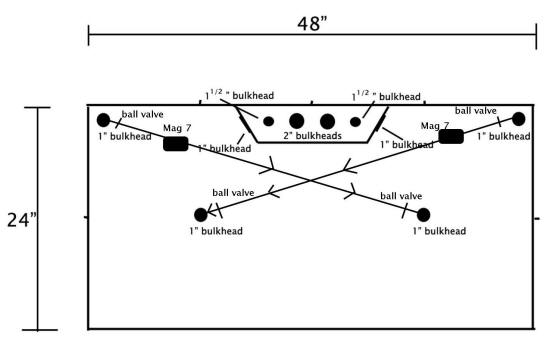
|
Plumbing 75 Gallon Reef Tank 8/12/07 Hello Crew!
I would first like to thank you so much for your abundance of
information and advice. It has done me wonders. I am currently moving
into a new house and am very excited to be upgrading my 20 gallon reef
tank to a 75 (48 x 18 x 21) gallon AGA reef tank, but am stumped on the
plumbing. I have been researching the best and most efficient way to
plumb the tank, and I would like to run my findings by you. I am
planning to have 2-2 inch bulkheads draining into a 55 sump/refugium,
and having the return branch into a T-bar and consist of 4-3/4 inch
returns, powered by a Little Giant 4-MDQX-SC pump (1 inch outlet). This
set up would allow me to have the 10 times turnover rate. So my
question for you is whether or not this system is a good idea in your
eyes? <Sounds good thus far> Is the pump sufficient and will the
3/4 bulkheads be able to handle the water coming from the pump? <Yes
and yes... there are other pump lines I prefer... archived on WWM:
http://www.wetwebmedia.com/marsetupindex2.htm Scroll down to the third
tray> Is this a good approach? Thank you for your time your advice
is invaluable. Have a nice weekend. Josh <Keep accumulating data,
honing your notes Josh... You'll do fine. Bob Fenner>
In a fix and need advice, SW set-up... Pb... 4/21/07
Bob <Tom> Thanks for the advice and for getting me headed in the
right direction. I want to take the time to comment on the great
information you and your staff provide. I have learned so much over the
past month and would have made an expensive mistake it if had not been
for the information provided in the articles and related FAQ's.
Once again, thanks for shedding some light on things. <Welcome>
Since we last chatted, I cancelled the order for the sump, skimmer, and
calcium reactor. I have since purchased a CS250 Euro-Reef protein
skimmer. I am also in the planning stages on a sump that will be
72"x18"x24" that will be behind the display tank in an
adjoining storage room. <Nice> I have access to water (hot water
tank feed), electricity (gas furnace), and a drain. This looks like a
good place for the sump because I have ample space for equipment, can
insulate room to help cut down on the noise of external pumps, perform
water changes, and have a storage area for make-up water. The only
negatives I can think of would be if I had to get the hot water heater
or furnace replaced. Any thoughts on this plan? <Mmm, good to have
such access, a "back room"... do just leave space
around/access to such appliances... as they eventually do have to be
serviced, replaced> Do you think the humidity would be a detriment
to the gas heater or to the room? <Maybe... I'd contact the
manufacturer re their suggestions> My planned system is as follows:
1) 215 gallon Oceanic with 4 drains(1.5"), and 4 returns(1"),
the center bulkhead will be feeding a closed loop system for
circulation using 1" PVC and 12-14 1/2" nozzles. 2)
72"x18"x18" sump with compartments for skimmer,
refugium, chemical, mechanical filtration. and return water. 3) two
external pumps, one for the closed loop and one for the return system
water 4) three 250w heaters (VisiTherm) 5) DSB of 5"-6" 6)
250-300lbs of liverock 7) Outer Orbit 72" 3x 250w MH, t5's,
HQI's and blue/white led's for a total of 1062w Now for the
questions, you just knew they were coming lol. My goal is to have a
system that will allow me to keep fishes along with invertebrates in
the beginning, I do want to be able to keep corals sometime in the
future after I do a lot of research and reading. I want to do
everything I can for the health and well being of my
"charges". I want this system set-up to be designed right
from the beginning and for the long haul as well as flexible enough to
maintain all marine life so long as I do my part. Questions: 1) Do you
feel that I will get sufficient flow from the three, 1 1/2"
drains? Would 2" at the same number be better? <Much>
(woops, that was two questions lol) 2) What percentage of the total
flow rate(3225 gph-4300 gph at head) is ideal to push though the sump?
<Mmm, the refugium portion... much less... Posted: http://wetwebmedia.com/refugpumpfaqs.htm> I know this has
to do with many factors, such as drain size/number, pump size, sump
design/size, and I am sure I am missing a few other things here, but, I
would like a solid number so I can design the sump to handle this flow
rate percentage. <Most all are covered on WWM... read on> 3) Will
using a true union valve between the sump and intake side of the system
pump (for removal and maintenance of pump only) cause too much
restriction on the pump if left in the "open position" while
in normal use? This will be an external pump. <Nope> These are
the questions I have at the moment, I do appreciate the time and effort
you put into this site and I do enjoy the learning experience. Thanks
to your wisdom, advice, and experiences, I know where I want to go,
just struggling with the how's and best methods to accomplish my
goals. <No need/use in "struggling"... take all a bit at a
time... Reduce to simpler questions, stated goals... You'll do
fine> Hopefully, in the end, I will have a system that is balanced,
reliable, thought out, and a real joy for the inhabitants (my wet
friends) and for onlookers as well. I know I can get there with proper
guidance, time, and the information provided here. Thanks and Best
Wishes Tom P.S. Great Book, "The Conscientious Marine
Aquarist", Everyone should read it at least once if not twice!
<Thank you for this. Bob Fenner>
Tank Plumbing...Pipe Diameter/Joint Sealing - 04/02/07 Hi
Guys! <<Hello Jason>> I am building a closed-system with
SCWD for circulation after reading many of your FAQs and articles.
<<Hmm...I think you mean a "closed-loop">> You
guys are great! <<Glad you think so>> I hope you can help
with some plumbing questions that I tried searching for on your FAQs.
<<I shall try>> I may be getting an Eheim pump... If the
output valve is 3/4", after reading your FAQs, you've said the
piping should be a bit bigger. Will 1" piping be fine for a
3/4" valve? <<It will>> I also read that you guys
suggest flexible hose piping to the valves to reduce vibration.
<<Yes>> Can I just use a clamp with your suggested silicone
on the valves? <<You can, yes...but if you are using the pump in
a "submerged" fashion I don't feel you need the
silicone>> When connecting joints that slip, is it fine just to
use Silicone to create a seal .. or must I use PVC solvent? <<Use
PVC solvent. Done correctly this will make a permanent watertight seal,
and if you make a mistake...is cheap to "redo">> Seems
to me that if joints are threaded together, you suggest silicone.
<<Ah yes, for "threaded" PVC joints the silicone will
do fine...and also allow the connections to be undone when/if
necessary. Though personally, with the exception of seating/sealing
bulkhead fittings, I prefer to use Teflon tape for threaded joints...is
quick and easy to apply/reapply with no waiting for silicone to
cure>> Thanks guys! Jason <<Happy to share.
EricR>>
Pump question for Aquavim tank... Not Reef Ready-
03/25/07 Hello guys! I recently purchased an Aquavim 88 gallon
seamless RR < http://www.aquavim.com/ rounded glass...> tank setup.
It's an awesome attention-getter in my living room, but I'm
getting frustrated trying to figure out a circulation/pump plan for
this very tall tank/stand. I'm calculating a head pressure of about
5.5 feet.(4.5 feet from sump to top of overflow box, then a 90 degree
turn, then a 45 degree turn into tank). It has a single 1"
outflow, then a 3/4" return. (I know, the 1" return is
killing me!) <As will the 3/4" return... Not RR... Reef
Ready> It seems like I'm in between pump sizes for my planned
FOWLR setup with Orca sump refuge. For example, the Mag 7 puts me
around 400-420 gph which is 4.6 turnovers. <The 1" return may
not fit this...> Moreover, the Mag 7 only has a 1/2" outlet so
I would lose even more head pressure going up to a 3/4" return.
<Not much... I wouldn't be concerned here> The Mag 9.5 would
be around 720-750. (Too much for a 1" return). <Way> The
pump has to be the submersible type as I don't have a bulkhead for
the return. <I'd cut, fit one... or switch sumps to this...>
I could go with a Mag 7 and do powerheads in-tank, but this is ugly
amongst the other issues. Could I valve-down a Mag 9.5??
<Could...> Is this safe?? <Is, but I wouldn't...> What
would you do?? <Try to see what sort of flow you can get through
both the present through-puts... and loop the discharge, return from
whatever pump you settle on to over the top... on/with some sort of
"closed loop" arrangement... this pre-drilled tank is not
really able to be used for the intended purpose...> Any other pump
brand or suggestions that would get me closer to 500 gph without having
to deal with valves?? Thanks guys!! Kris K <As stated... and posted.
Read here: http://www.wetwebmedia.com/marsetupindex2.htm It's... an
Bob Fenner>
|
|


