|
|
| Home | Marine Aquariums |
Freshwater Aquariums |
Planted Aquariums |
Brackish Systems |
Ponds,
lakes & fountains |
Turtles & Amphibians |
Aquatic Business |
Aquatic Science |
Ask the WWM Crew a Question |
| Please visit our Sponsors | ||||
|
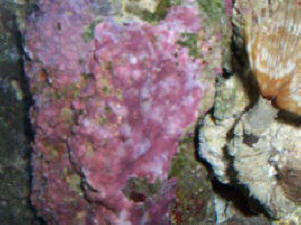
Coralline algae dry and dormant? Commercial "LR" claims 1/13/09 Hi there, A quick question for you, <Hello Kim.> I have a hobbyist that claims a retailer is trying to sell him DRY LIVE ROCK that is "DORMANT." This struck me as rather odd, and possible marketing nonsense. <It is. Live, but dry? Bunk!> His description of this material: "basically dormant liverock waiting to add water, no need for cycling, and it will grow coralline algae..." MY QUESTION: Can coralline algae survive a dormant dry period, and storage as such, to later resume normal growth in living form? <Hmm, no. There are greater issues here too. What about the other biodiversity from true live rock, it will not be here either. And to not need to cycle the tank, this is a big load shoveled out here. Dry rock can be a cost effective way to add more rock to a tank, but it is in no way shape or form the equivalent to real live rock.> Thanks and have a great day! Kim B. Parrish <Welcome, have a good one too! Scott V.>
Brittle star and coralline algae question... I've poured over your site and the net for a little bit of brittle star ID. I was hoping you could direct me to a website that has a nice thumbnail listing with pictures. I've tried http://home.att.net/~ophiuroid/home.html, but that didn't work either. <I suppose you've checked here: http://www.wetwebmedia.com/brittlestars.htm. Although I had no luck locating a site either, the Modern Coral Reef Aquarium volume 4 has excellent information and species descriptions w/ pictures.> I have 3 brittle stars all black or grey colored. one was sold to me as a midnight crawler. I plopped em in before I became a daily reader of your site as I am now 'enlightened'. I'm lucky enough to have a job where I'm online 90% of the day (and I still can't find that precious ID site) I've spent the last 2 weeks trying to read all your faq's (I'm beginning to think it's impossible to read them all). I pulled my green brittle star (damned assassin took a sally lightfoot crab and an emerald crab). he paid a heavy penalty. I'll spare you the details. <I hope that means you returned him to your LFS, otherwise there's no reason to kill it for your mistake.> ok, one more easy question for you, o great and mighty aqua gods! <lol> what are the benefits of coralline algae. does it soak up nitrates and/or phosphates? <Not to any practical extent.> does it release much needed oxygen into the water column?? <Well, it is an algae so it would.> are there any other benefits that you know of?? <It's really purdy. It is harder for hair algae to get a foothold on it, so it is an excellent thing to have your rocks covered with.> I can't imagine there are any detriments, are there? <Well, if you have enough growing it will deplete your calcium and alkalinity levels. This could be a problem if you don't test for them.> I thank you in advance for your replies and for previous replies welcoming me into the brotherhood (and sisterhood???) that is....aquaria...my new love. <Haha, enjoy! -Kevin> hopefully I won't need too much therapy later. Coralline algae (10-28-03) Hi guys,<Howdy, Cody here today.> Your website has been such a great resource lately, thanks for taking the time to make it available. My question is: there is someone on eBay selling coralline algae scrapings saying that it is a way to seed a tank. I was under the impression that this type of algae always grows in the presence of live rock, but that it would not grow until a tank is established for a long while. Any help would be appreciated. <If you have some LR with coralline on it should grow with time as long as you have the proper lighting, calcium'¦ If you don't have any present in your tank you could buy a piece with some on it and it will quickly grow. I would recommend you just buy some LR with it on it as that is a much safer way than getting it shipped to you. Cody>Thanks. Coralline Algae Growth Hello Crew! <Hello, Ryan with you today> Just can't seem to find the answer to these in the FAQ's (sometimes TOO MUCH good information to find a specific question). <I know! It's a bit overwhelming at times> 1. I have an open brain coral that I feed meaty treats (shrimp, clam, squid) 3 times per week. I noticed that it has 3 mouth-like structures that I put the food directly into and it gets sucked in. I have to stand guard else my ever hungry clowns will snatch the food up. Is it necessary to feed each mouth? Can I just feed one or two of them and the nutrients will get shared to the entire organism? The third is a little hard to see/reach and this direct feeding method is the only way I have found to feed it without others in the tank (clowns, shrimp) snatching the food for themselves. <The more each mouth eats, the better the entire colony will grow. Corals grow in a very deliberate way; To make the most of a certain environment. This said, I would either move the brain so that you can feed the entire thing, or make the extra effort. As for snatching, it's highly frustrating. Will a fish feeding just before will keep them distracted long enough?> 2. On my live rock, I have tons of coralline algae growing. Colors of purple, maroon, red, green and pink. On my glass, pumps and base rock (tufa), I only have one shade of purple growing. I would really like a mix of colors. Any ideas on how to encourage this process or why only one is spreading from the live rock to other areas? <One is outperforming the others at this given time. What's your calcium level? Some varieties of coralline won't grow unless high calcium levels are met. It's just a matter of luck, time and patience. Perhaps you could graft the variety you like to unclaimed territory before the more aggressive types have the opportunity?> Thanks a lot. You guys are a real credit to the hobby and I would be lost without you (or it least I would not have such a wonderful tank). <Great to hear! Hope this helps, and good luck- Ryan> -Ray New Liverock Came Shipped Chalky White Hello Mr. Fenner: <Steven Pro in today.> I have never written to you in the past and I spend at least 30 minutes a day reading all your great info on your website. I just have to say that I find WetWebMedia very informative. I just love it. I have your book and have pretty much read it over and over. It has helped me a lot. <From all of us, thank you for your praise. Be sure to tell your friends.> Now, here my question if I may. Is there a trick to getting the coralline algae on liverock to return? <No trick really. Maintain good levels of pH, alkalinity, and calcium levels and supply adequate lighting.> This rock is brand new to my tank. I purchased it from an online dealer (Aquacon). It is Tonga branch and Hapai, 50 pounds total and has been in my system for three days. It is as white as white could be, but, I thought I was getting mostly red coralline covered rock. The rock was shipped this way. This stuff is expensive! <Sorry to hear about your bad experience. Will make a mental note for myself and I am sure many of our readers will do the same.> My system has been up and running for 7 months now with 40 to 50 pounds of liverock purchased locally. Now, my system is a 75 gal tank with an Eheim wet/dry canister, magnum 350 canister, Marineland emperor penguin 400, two power heads and a prism skimmer (most of the filters were on this tank when it was a freshwater setup). My water readings are pretty good. Salinity 1.025, pH 8.3, alkalinity normal to high (the test I have only shows a color chart no numbers), calcium 450, and I add trace elements, Combisan once a week and Iodine drops once a week. My lighting is a Phazer compact pendant light with two 55 watt 10,000k ultra daylight bulbs and two 55 watt actinic blue bulbs with a grand total of 220 watts. Critters are as follows 1 Kole tang, 1 yellow Coris wrasse, 1 yellow tail damsel, 1 Foxface Rabbitfish, and 1 spunky coral beauty angel. I also have various cleanup critters red hermits, blue hermits, turbo snails, sally lightfoot crab and a emerald green crab. Then there are the hitchhikers on the previous liverock. Will this liverock regain its color or always remain chalk white? <In time, yes.> What can I do to bring it back? <Along with the items noted above, patience.> Thanks so much for your help. Sherry Spitz <You are welcome. -Steven Pro> Coralline question for Anthony Calfo This is a question to Anthonalamidingdong, the Calfonator, the Calfitola (ok I'm done) <but I'm not done yet: Father Calfo Sarducci, Calfaroni... the Calfster... Antoine the Beautiful... Antoine the vertically challenged... and once, only once... Sheila. OK... now I'm done> in your book "Book Of Coral Propagation." You State on pg 215 in the section on live foods. That systems that are left unlit for up to a year without predatory fish include extraordinary coralline algae growth. Sorry I'm para phrasing. <understood... but not exactly my sentiment/meaning. I'm referencing aquarists (many Europeans) that cure their live rock for 6-12 months in the dark or dimly lit aquarium with regular calcium/alkalinity dosing to boost corallines without the inconvenience of competitive nuisance algae, grazing herbivores like urchins, etc. All for the purpose of growing a massive coralline population in advance of stocking. For us impatient Americans <wink> we can get similarly good results by resisting hard grazing fishes, echinoderms and gastropods for at least 4 months, keep Ca and ALK at strong and consistent levels, and dose Reefchem's liquid calcium generously (a sugar-based organic calcium that is excellent for spurring coralline growth) > Your saying it will grow after the introduction of lights. <nope... during the dimly lit long curing period> A year later Right? <indeed a year is for the most patient aquarists. 4-6 months conditioning of live rock is very fine for most instead with a long view> The tank wont have "extraordinary coralline algae growths" from just ambient room light? <it may very well... but do add some good reef lighting to prevent shock> By the way love your book maybe one day it will be remade with more pictures so I wont have to look up things like "Pachyseris" in a coffee table book for a picture reference. <indeed a possibility!> Many thanks to you and the whole crew. <our great pleasure> I'm eagerly awaiting your new invert book that I preordered. <and with our kind thanks> I'm also hoping for a new Fennerino, Calfster, Book in the future. <you will not be disappointed, my friend> Keep on rockin... <...in the free world and beyond> Your Compadre in Coral-Steve Buchholz <your friend with a wicked wedgie, Anthony> Coralline algae Bob, my 180 gallon tank is being over run with purple coralline algae. There is a solid blanket on the back glass and I have to scrape the front every two weeks. Any advise on how to slow this growth down? Thanks tom >> There are a bunch of folks who would gladly trade tanks with you... but there are a few ways to cut back on the encrusting reds. You can cut back on your calcium concentration (are you supplementing? Cut back!). You can add some competitive encrusting green algae... like a Halimeda species... And increase your lighting... this favors non-red algae photosynthates. There are some encrusting red algae eaters... but let's hold off on these and opt for these other controls for now. Bob Fenner Is white growth (algae?) on live rock a good thing to have in a reef tank? >> Not a problem... typically these are sorts of encrusting red algae that are missing something (generally biominerals or alkalinity). Bob Fenner Reef Redux Mr. Fenner, The time has come, and I now must redo my 55-gallon reef tank. My question is if I scrub and/or boil the live rock, will it ever grow coralline algae again? Or should I keep it wet and simply pull all the little pieces of hair algae off one at a time, and will that work? As always, I thank you immensely for all your help. Thanks, Tracy <Corallines will grow on/over most any hard surface... if you kill the ones on the rock now, other/spores can be cultured on it later. Bob Fenner> Too much coralline algae too much? Can one have too much coralline algae? <Mmm, it is possible... mainly as a function of it out-competing other biomineralizing livestock for nutrients (principally alkaline and biomineral matter)... and looks-wise, sure... if you can't see into the tank...> I have a 30 G reef setup and everything in it is purple! The rock, snails, and hermit crab shells are all covered with coralline. It's beautiful to look at, yet is it spreading too freely? <Maybe... Please read through the coralline algae materials stored on the WetWebMedia.com site. There is a search feature there to hunt by key terms. Bob Fenner> Lucky, with anemone, clownfish Dear Bob, Love your site and all the time you have put into it. I have a few questions that I need to ask. I guess that I have been LUCKY, cause I add no chemical and have had my 75gal. for about 4 years now. <Perhaps lucky, but also smart... there is no to not much need to "add anything" to a properly set-up, stocked and maintained system.> I have about 45 to 60lbs. of live rock. I have several fish that I still have since I first started. I have just bought a Sebae Anemone and it is fine and the Clown is fine, but they have nothing to do with each other. <May not be "compatible"... this happens... or may take some time to become acquainted> It has been about 3 1/2 weeks and still no change. One last thing, all of the live rock and my jets, glass is purple and don't know if this is a good sign or what. <Better than not> I live in a very small town in Mississippi, so I don't have very many resources that I can go to for facts. <We have each other. Bob Fenner> |
|

|
Features: |
|
| Featured Sponsors: |