 |
|
| Home | Marine Aquariums |
Freshwater Aquariums |
Planted Aquariums |
Brackish Systems |
Ponds,
lakes & fountains |
Turtles & Amphibians |
Aquatic Business |
Aquatic Science |
Ask the WWM Crew a Question |
| Please visit our Sponsors | ||||
|
Bulkhead Flow Rate
And Reef Lighting 12/8/07 Hello, <Hi Terry> I have a question
about bulkhead flow. I have purchased a 90gal AGA with built in
overflow, and I am planning on using a 30 long that I have picked up
for the sump/fuge. I have been looking at different calculators and
I'm all confused now, my question is how much flow can I get using
both the bulkheads that are in the tank to drain? <I have no idea
what size your bulkhead fittings are so that would be difficult to
answer. Are they 1 inch, 1 1/4, etc?> I am planning on doing over
the back returns. <May not be necessary if your drains provide
enough flow.> My other question is about the Current USA SunPod
lighting, I really like the halide shimmer <And I also.> and the
LED shimmer so I thought this lighting would be great but I haven't
found many reviews or if this would be a good light for a reef LPS SPS
and maybe a clam? (sorry I'm referring to the 250w version, it has
2 250w halides and wh,bl LEDs). <I have a Current SunPod fixture on
a smaller experimental tank. I think the quality and workmanship is
very good and I've experienced no problems with it in over a year.
The system you refer to would be an excellent fixture for a 90 gallon
tank allowing you to keep any light loving corals/clams you desire.>
Thanks in advance, <You're welcome. Do let us know what size
your bulkhead fittings are and we will be able give you a flow rate for
these. James (Salty Dog)> Terry
Sump/pump issues: Water bubbles overtaking my tank!! Drain/s size... Reading... Dear crew: <Jonathan> I'm going to write this and desperately try not to sound like a complete moron. I just purchased a sump for my tank which has been drilled for a while (1.25" openings for both the return and the outlet) and the tank is about 4/4.5 feet above the area where the sump lies below the tank. <Is the size, volume of the tank germinal?> Well, I have the water draining from my tank via gravity into the sump. I have a Mag 3 and a Mag 5 pump. <Two pumps? How arranged?> First, the Mag 5 was just completely overwhelming me and filling the tank up way faster than the water was draining down. <Oh yes... can pump water faster than a 1.25" drain can supply...> I got it second hand without the pre-filter on it. <?... likely a screen mechanism on the intake side> I was recommended to purchase a Mag 3 pump from my LFS and guess what! The same exact thing is happening (albeit a bit slower than the Mag 5 problem). What happens is, the water is drained out of the sump in which the pump sits on the bottom of. But the water is getting returned to the tank a bit too fast and I'm having the problem with the pump sucking up air because of it and creating a huge stream of air bubbles that are getting shot into the tank via the return line. I tried to use the pre-filter sponge on the pump but it does little if anything to help. <Yes...> What options do I have with this as I'm a bit of a novice when it comes to plumbing ("a bit" is probably way understating it)? <Help is available... on WWM, elsewhere> Would you suggest drilling the sump on the side to insert the pump into? <Mmm, no> Basically, I'm using the set-up that a previous owner told me worked. He said he simply had the pump sitting inside the sump and had it connected with the return line (which is a 5 foot piece of 1.25" [1 inch opening] flexible PVC tubing). The only thing I can think of is that there's a lot more to it than that, as it seems to create almost a current in the water that just sucks up the air bubbles. I'm trying not to get too frustrated with this, but it's just confusing the living daylights out of me since I've tried a lot already to decrease the chance of air bubbles getting sucked into the pump to no avail because of the speed the pump is pushing the water back into the tank. - Jon <I would try utilizing the two existing through-puts as drains... and rig the return over the top (with a new bit of plumbing)... Please, take your time and read here: http://wetwebmedia.com/marsetupindex2.htm the third tray down... "overflows..." Bob Fenner> Looking for chart/info on bulkhead sizes, pipe sizes and flow rates 11/8/07 Looking to obtain a 80-120g glass tank for freshwater rainbow/Pleco tank. I really want to get the tank drilled in bottom corner or upper rear left for overflow/sump set up. Probably won't get it up and running immediately, but somewhere down the road. Seems like the time to get the bulkheads drilled is now.... <Yes, before you set the tank up is the ideal time.> Anyhow, combed through your site and was looking for recommendations on pipe sizes/bulkhead sizes for certain flow rates. Didn't see anything...can you point me to something, or answer this question in the alternative? <Simple answer, it depends on your individual plumbing setup. The bigger/more holes the safer, good to have redundancy here.> I'd be happy with 6-8xgallonge flow/hour, so targeting somewhere in the neighborhood of 800-1000gph. How many and what size hole(s) do I need for outflow and inflow (assuming with the latter that I am going to do an internal return)? <One 1.5' overflow bulkhead with one ¾' to 1' return will give you this. Two 1.5' bulkheads will give you the redundancy that should be included with any overflow.> Thanks Paul P.S. Any suggestions on how to build an overflow in glass tank? Should I stay away from plexi...bonding issues with silicone, right? <Yes, but the overflow can be held on with the bulkhead and just seal between the glass and acrylic with silicone. Check out this link for ideas. http://momsfishsupply.com/overflowinstallation.html You can build the box out of glass, personal preference. Have fun, Scott V.> Overflows modify 11/5/07 Guys you are all great and help more people than you will ever know. <We appreciate the kind words Mitch.> My question pertains to overflows. I'm moving my 180 rr with 40 gal sump/refuge and figured it would be a great time to modify some things. I want to cut out the two existing plastic corner overflows and use the existing hole as a closed loop. So two ¾ and two 1 inch bulkhead for the closed loop and then drill for four 2inch bulkheads on the back panel and install a Calfo style overflow box. I'm upgrading the refuge to a 125 and know I'll need more flow thru it and I'm hoping between the four new holes and 4 existing hole I would get a better circulation in the tank. I would like to rid my tank of power heads! Also the plastic overflows restrict flow, take up so valuable floor space and look so ugly. I know once I cut off the existing overflows there is no turning back so I would really like an outside opinion before I make this leap! Would this work or is there a flaw you'd point out. Thanks for the help Mitch <I love your idea. Many people drill their tanks, but not many are willing to cut out their existing overflows in search of something better. The stock overflows are very limiting on a system due to the size of the bulkheads, aren't that great and they do take up a lot of room. With four 2' bulkheads you will be able to have tons of flow, possibly more than you want through your sump. If you need this much flow, consider drilling the back for a closed loop intake and using your current holes as returns. You can then size your sump return for what you want to run through your sump, not what you want to circulate in your display. Have fun, great project, Scott V.> Overflows 11/4/07 Hi Crew Hi I have a problem I hate to bug you about but couldn't find on your site. <Hello, Scott V. with you, no problem.> Someone gave me a 220 gallon tank. It's center-bottom drilled for three one inch bulkheads. I was going to use the left and right ones for sump drains and the center for a teed off return from a Mag 18. I was planning on just using one inch pipes from the bulkheads with 3 inch reducer fitting on top of them with slots cut in them for overflows. I cant find any overflow to do it different except corner overflows. Would this be a decent set up? <This could work, but you do lose some surface skimming ability.> I was wondering if you would have an idea of how many GPH my 1 inch overflows would have? <On paper 600 gph each, in reality only 300 to 400 maximum safely.> Would you know of a company that makes overflows for center drilled tanks that I can silicone in or use my 1 inch bulkheads? I'm afraid that these will be too small. Any advice or input would be appreciated. <I'm sorry to say, but these bulkheads will definitely be too small for a Mag 18. You could possibly drill the bottom for more/bigger holes if the glass panel is not tempered. Another possibility would be to use the three holes for an input and outputs for a closed loop and drilling the back for an overflow to handle the Mag 18. You can contact Mike@Glass-Holes.com . He will be able to help you with overflow options as well as building a center overflow.> Thanks for all past and present! <You're welcome, thank you, Scott V.> Plumbing A New Refugium'¦ Bulkhead vs. Hose Diameter -- 10/13/07 Hey there, <<Ho there!>> I have a quick and probably stupid question here. <<Is this where I'm supposed to insert that cliché? [grin]>> I have decided to upgrade my filtration and go with a refugium made from a 55 gallon aquarium. <<An excellent decision/addition>> The overflow box I purchased has a bulkhead fitting of 1" according to the product description. I have been looking at drainage hoses (online to save some pennies) and I don't know whether I am to buy a 1" hose or if the hose should be maybe 3/4" so it fits inside the bulkheads I have. <<Get a 1' hose for a 1' bulkhead. Trying to utilize anything smaller will greatly restrict this already minimal drain flow volume (figure about 300gph per 1' bulkhead)>><At most. RMF> I am thinking a 1" hose fits a 1" bulkhead, <<Yep>> but without physically testing myself I am a little skittish about "gambling" with my budget. <<This 1' drain line should be a minimal expense, but you want to get tubing that is strong/rigid enough not to collapse when making bends (much like cheap vinyl tubing tends to do). Consider using either rigid PVC pipe or 'flexible' PVC tubing (Often found/carried as 'SpaFlex' tubing)>> Thanks, Justin <<Regards, EricR>> Marine Plumbing...Drain/Overflow Size -- 10/11/07 Hello Crew, <<Hi Terry>> First thank you ahead of time for all your help. <<Let's hope it is if use [grin]>> I am starting to build up for my first reef setup. <<Neat>> I have an AGA 65 that I am going to use. It is 36x18x24. I want to make and install an overflow in the corner. <<Okay>> How big of holes would I need to have drilled to be safe? <<Depends on what you have planned...but a 1.5' drain/bulkhead with a 1' return will likely suffice>> How big of a box should I make, <<Hmm...if the flow rate is kept to a maximum of about 750gph (recommended), a skimmer box with about 13 linear-inches of overflow surface should suffice. If you are planning to push more volume than this through your sump (can be problematic) the I suggest you increase the drain/bulkhead to 2'...this will allow a maximum of about 1150gph and will require about 18 linear-inches of overflow surface>> and can I use silicon like what AGA uses to mount it in the tank? <<Yes...If the skimmer box is plastic/acrylic, the silicone will not bond, but it will 'seal'>> I have a bunch of experience with acrylics just not installing it to glass. <<Ah, okay...>> I'm sure since I'm a long way from doing the actual setup I'll have a ton more questions. <<You know where to find us...but in the meantime, do spend some time reading here and among the associated links in blue at the top of the page: http://www.wetwebmedia.com/plumbingmarart.htm >> Oh I am going to build my own sump with 3/8" acrylic, and house the skimmer etc. in there. <<Sounds good>> Thanks again for all the info and all I'll I've learned from Wet Web Media. Terry <<Is a collective effort...we're glad to be of service. EricR>> Marine Plumbing Questions -- 09/14/07 Hi guys, <<Howdy Mike>> I am setting up a predrilled aquarium (AGA MegaFlow) with a ProClear 60 wet/dry sump, single drain pipe and return. <<At least 1.5' I hope...though I'm thinking these highly overstated (Mega!) returns only come as 1'>> Return pump is a Rio 2100. <<Do have a backup handy...these are about as 'bottom-end' as you can go for a return pump>> I've read a lot of the plumbing articles, but I can't really grasp how to prevent back siphon or set the system up to stop the tank from draining in the event of power failure. <<Concerns over back-siphon won't be an issue if the components are configured such as to only allow as much transient water volume to drain to the sump as it (the sump) can handle. You need to adjust the height/depth of overflow boxes and pump outlets, as well as the 'running' water level in the sump to accommodate this>> I can't determine if check-valves are a good way to go, and if they are, what type and where optimal placement would be in my system. <<Check-valves are NEVER a good option in my opinion. Much like siphon-overflow systems...sooner or later they WILL fail>> This is my first venture out of canister filtration and could really use the help. <<The addition/use of a sump will be a marked improvement...though use of the/a canister filter for ancillary chemical filtration is also recommended>> I feel like I'm going to make a lot of rookie mistakes here; could you guys also direct me to an article that demonstrates how to efficiently (as in avoiding disasters) start the wet/dry system for the first time? <<Ah yes, your education awaits...much info to be absorbed and available on our site. Please begin reading here (http://www.wetwebmedia.com/plumbingmarart.htm) and among the associated links in blue. And do feel free to write back to me if necessary>> Thanks for the help, Mike <<Regards, EricR>> Re: Marine Plumbing Questions -- 09/14/07 Thanks, Eric. <<You're quite welcome Mike'¦let me know if I can help with specific plumbing issues>> You are absolutely correct; the Mega is more of a Moderate Flow @ 1". <<Argghhh'¦yes, this is a pet peeve of mine, Bob's, others'¦marketing hype. As I have heard Bob state'¦do wish the manufacturer would 'get a clue!'>> I can use the Rio as a powerhead instead of the return pump; what would you recommend to take its place (54 G tank with PC 60 sump)? <<Talking submersibles'¦I have had much success with the MagDrive line of pumps over the years'¦and am currently utilizing Ocean Runner pumps which have performed admirably thus far and seem to have a bit more 'oomph' over a similarly sized MagDrive, though they are a bit 'bulky.' Considering the meager 1' drain on your 'Mega Flow' tank, either the MagDrive 5 or the Ocean Runner 3500; with gate-valve installed on the output side to temper flow as needed, would be sufficient>> I suspected that correctly configuring the predrilled overflow would stop flooding/back siphon, but it is a relief to have it confirmed. <<Indeed'¦if the overflow has holes/slots at the bottom you will need to either block these, or install a standpipe at the correct height. And don't forget about the out from the return pump'¦this will need to be positioned such that when the pump is off the siphon will 'break' before the sump/wet-dry filter overflows>> Thanks again, Mike <<Always happy to share. Eric Russell>> R2: Marine Plumbing Questions -- 09/14/07 Eric, <<Mike>> I'll let you know how it goes when setup is complete. <<Please do>> I think you have set me on the right path and the links were helpful as well (so much info!). <<Excellent'¦and indeed!>> Thanks again, and regards to you and the crew. Mike <<Be chatting my friend. EricR>> R2: Marine Plumbing Questions -- 09/23/07 Hey, Eric (or crew), <<Hey Mike'¦Eric here>> Just wanted to let you know everything is running great. <<Ah, good>> MegaFlow is certainly a misnomer. <<Ugh!'¦ Indeed so my friend>> I took your advice and bought the Mag 5; without a control valve, it just rapidly drains the sump regardless of how I configure the overflow. <<Mmm, yes'¦install that gate-valve, mate>> So the Rio remains until I can configure the Mag with a control valve. <<I see>> That said, even with the Rio everything is well. <<This is good to hear>> I intentionally attempted to flood the house with power outage, etc., but the water level/back flow never surpasses the sumps capacity (knock wood). <<This is good'¦'gravity' is a 'certainty'>> Thanks for the advice. <<Was my pleasure to give>> You guys are an invaluable resource for a beginning marine hobbyist like myself (and for experts as well, I'm sure). Mike <<Thank you'¦is gratifying to know. Eric Russell>> Re: Replacing Center Brace - 70 gallon Corner, now SW plumbing mostly 8/20/07 Mr. Fenner, first of all I'm numb ... you have no idea how big of a fan I am, I've spent 25 years as a freshwater aquarist and have decided to make the jump. Much of my past couple months has been spent reading CMA and Reef Invert's ... it's an honor. Getting back to the lights (and after taking some additional measurements), a 24" Solaris LED set (2 banks of lights) would fit perfectly within the cabinet with "no" effect from the center support. Have you had any experience with these - obviously a hefty price tag. <Have seen these... they are very nice... You may be a bit "ahead of the market" here... but LED technology is on the up and up> I also have an inquiry regarding an overflow. I'm considering putting a 12" by 2" overflow box on the back (advertised as 2000 gph - remember a 70 gallon tank). I'm thinking 3 drilled holes. 2 draining to the sump/refugium, <Mmm, you won't get 2k gallons per hour through two 2" ID drains> and one to a closed loop - pump and SCWD, plumbed back over the top of the tank and down to the bottom. <This sounds good> I'll have the sump pump connected to a manifold system surrounding the top of the tank - I just thought the SCWD would help "change-up" the constant flows from the manifold system. How big should the drilled holes be, and should the hole for the closed loop be slightly lower than the 2 draining to sump? <Yes re the closed loop... for the rest please read here: http://www.wetwebmedia.com/marsetupindex2.htm the fourth tray down... Plumbing... BobF> Greatly appreciated, Rick from Edmonton Bulkhead Installation...Can They Be 'Reversed?' -- 08/16/07 Hi, <<Hello>> I'm new to this wonderfully informative web site. <<I'm glad you found us>> I can't believe the amount of knowledge you collectively have mastered and the untiring desire and generosity you have in helping so many people! <<Quite the collaborative effort here... Thank you for the kind words>> Just a quick and somewhat foolish question??? Can you reverse the installation of a bulkhead? <<Certainly>> I am installing a 2-inch bulkhead on a 55 gallon sump for a reef ready 120-gal. and am having a difficult time getting the space I need to properly install all the PVC pipe because of the DIY stand I made. <<I see>> I have no problems when I switch the bulkhead around. <<So switch it... Most installations place the tail/threaded portion to the 'outside' of the vessel to provide less intrusion in to the tank/allow fitting a screen/ease installation/etc...but the fitting will still work fine if you wish to reverse this. (Tip: Place a smear of silicone under the nut during installation, tighten and let it cure overnight before filling the tank. The silicone won't create a permanent seal, but will seat/bed the nut and provide a leak-free installation)>> Thanks for your assistance in this matter. <<Quite welcome>> If you answered this before I apologize for wasting your time! <<No worries, mate>> Thanks again, Jim Henderson <I'm happy to assist. Eric Russell>> Water Flow'¦Four Two-Inch Drains And Still Having Problems -- 08/09/07 Hi Fish lovers, <<Hello Ian>> I have been running my system for about 10 months now and everything is growing/going well. However I have a niggling "little" problem that I cannot solve. <<Oh?>> I have a main tank that is 2.5m long, 1.2m wide and 900mm deep. <<Okay, and for clarity on 'this side' of the pond (if I got it right) this means this tank is about 97' long x 45' wide x 35' tall with a capacity of about 661-gallons (2,511-liters'¦or -litres [grin])'¦very nice>> I plumbed in 4x 50mm <<50mm = 2''¦or thereabouts>> exit pipes (2x each side at the back) to the sump. <<Mmm, okay'¦this is very similar to how I designed/plumbed my 375g with three bulkheads in each end panel of the tank>> I did this to avoid having the overflow boxes in the tank and also I view the tank from both sides. <<Indeed'¦is the same as/did it for the same reasons with mine>> These overflow exits do not flow as quickly as I assumed they might with the result that the startup after a power failure is a bit slow. <<Really? I've not had this problem'¦>> The present working level of the water is at the top side of the 50mm hole. <<Ah, so you don't have any type of weir then'¦just the 'holes' themselves or maybe a bulkhead screen? I actually fashioned 'individual' overflow weirs for each of my drain bulkheads by notching an ell and fitting it to the bulkhead with a bushing. This allows me to adjust/raise (by 'rotating' the ell) the working water height in my display 'above' the height of the throughput'¦perhaps this is the difference. I'm also guessing you probably have a very high-rate return pump here>> My sump is about 700l but with the baffle box and all the bio balls I probably only have about half that in my reservoir feeding my main return pump. <<Maybe a clue here>> My problem is that when I have a power failure (and there are many in Cape Town during the winter) my 4x 50mm returns do not feed the sump quick enough to keep the main pump from running out of water. Result is I have millions of bubbles, the sump fills up a little and then the main pump removes the water quicker than the sump can be filled. <<Mmm'¦sounds like maybe you are using a very high-capacity pump with a 'too small' sump'¦or'¦the flow from the pump is too much for the size/number of returns and they are 'surging'>> To alleviate this I have to switch off the main pump for a short while and let the flow get to a point where there is a balance. <<But there is indeed a permanent 'imbalance' here'¦somewhere between the size of the sump, pump, and drains'¦>> When designing the system I spent plenty of time agonizing over this very problem but I did not realize how fickle the flow can be through the exit pipes. <<Can be a delicate balance, yes'¦perhaps aspirating the drain lines would make the difference needed>> I have tried everything to speed it up (drilling tiny holes on the sides of the exit pipe, inserting pipes down the inside, etc.) but all I have been able to do is get the flow rate ok for normal working conditions. <<I see'¦ I think you may need to either add more drains'¦increase the size/volume of the sump'¦or reduce the flow rate of the return pump'¦or possibly even a combination of some/all of these>> I cannot seem to get this sorted and if this happens when I am not at home... <<Indeed>> So now I am thinking of building an overflow out of the back by drilling a further 2x50mm holes (or utilizing two of the existing) and gluing/silicone an overflow box onto the back/outside of the tank. Obviously the 2x 50mm pipes will exit from the base of this box and the flow should be much more positive into the sump. <<Not really, no'¦ The water will still have to 'exit' the tank through the existing bulkheads to get to the box. 'Adding' two more throughputs may well do the trick though>> This I believe will get the flow going much quicker and also give a further safety margin with regards to the overflow. <<Do consider my statements re>> Question is, can I silicone this box to the back of the tank, will it hold? <<If both are of glass then you may well be able too>> Is this the best solution? <<Not in my opinion'¦better/more simple to just add more drains or reduce flow>> Have I given you enough info? <<I would be interested to know the flow rate of your return pump>> Thank you very much for your time and effort. Regards, Ian <<Happy to assist. EricR>> Re: Water Flow'¦Four Two-Inch Drains And Still Having Problems -- 08/11/07 Hi EricR, <<Hello Ian>> Thanks for your timely response. <<Most welcome>> If I may I would like to continue this discussion with a few more questions. <<Sure>> Firstly to answer one of yours regarding my return volume, I have about 15-16000litre/ph coming back into the tank via 4x50mm inlets. <<Ah, okay'¦so you're processing about 4000gph through the sump>> It's a 20000 litre/ph pump but I siphon off for everything enroute, skimmer, chiller, refugium, calcium reactor so lose quite a bit. Could this be the problem in that I am removing from the sump quicker than I am delivering (20000 versus 16000) so start up will always be a problem? <<Mmm, the ancillary equipment will be returning water to the tank or the sump so I don't think this is the issue'¦but I do think your drain/plumbing configuration is such that the sump loses too much volume before the returns begin to flow enough to meet 'demand.' A larger sump may resolve this>> I used to have an even bigger pump but found that the return volume was far too much and caused endless problems trying to slow the water down prior to exiting; I had millions of micro-bubbles in the system. <<I have no doubt'¦plumbing/processing flow rates such as you describe can take a lot of fiddling to 'tweak''¦and again, a larger sump vessel would have been of help I think>> I solved that problem but now have another! Once I am up and running there is no problem with this so I have always assumed that it is something else. Perhaps I could increase the return flow by coupling an independent pump to the chiller and skimmer? <<Mmm, no'¦I think this would only make things worse by emptying the sump even faster than what you are experiencing now>> However if the water does not exit quick enough this does not help! <<Indeed>> On the inside of my 50mm bulkhead fittings I have fitted a 90 degree bend pipe fitting. (I assume the "ell" you speak of is a similar pipe?) <<It is, yes>> Attached to this I have a safety sieve to prevent my fish disappearing out of the tank into the sump! <<And a real danger with the throughputs/flow rates you have>> This 90 degree pipe I can also twist around and have the outlet above the actual bulkhead hole ( not by much however (20mm) as my holes are quite close to the top brace). Not sure why but to date I have always turned this pipe so the opening faces down! <<Ahh! A clue I think'¦ If the 'ends' of the return lines are submerged in the sump then every time you stop your return pump and the tank drains down the drain lines fill with air'¦with your 90-degree ells turned down, when you start the pump back up this are must be 'burped out' through the sump which may be delaying flow just as you are experiencing>> Note that as I mentioned the working level of the water is level with the top of the hole but covers the open end of the ell pipe by at least 75mm. Not sure if I am explaining this correctly. <<I think I get the gist of it>> I was also surprised that I have had a problem with the outflow volume. Do you think if I twisted the ell shape pipe to bring the opening above the height of the bulkhead it would improve the exit volume? <<If you can turn them 180-degrees so the air in the drain can exit 'up' then yes, I think this would help>> Unfortunately for me the holes were drilled fairly close to the top and therefore I do not have much space to play with. <<Perhaps you can 'chop' the ells to make them fit>> I have on occasion turned them higher but I then get the draining/gurgling noise from air being sucked in. <<Reducing the flow rate, aspirating the drain lines, and/or adding more drains will help with this>> When you say the outlets could be "surging" what exactly do you mean? <<This is when the drains alternately trap and flush air from the drain lines'¦not likely if your ells are turned down as you say>> Surely allowing the water to flow freely through the exit holes and then straight down into a holding overflow box with two or even three 50mm exit pipes leading straight down into the sump will speed up the volume return to the sump. <<Maybe'¦>> I imagine this box to be about 250mm long, 150mm wide with say 400mm deep if I keep to the same description I used on the tank. <<That's a large overflow box>> I am concerned about increasing the holding capacity of the sump (I could by simply removing one or two baffles and allowing more water through) because this will cause the main tank to overflow as the water is just not exiting quickly enough. <<Then you need to either reduce the return/flow rate'¦add more returns'¦or try turning the ells 'up' and tweaking the plumbing to try to eliminate the 'gurgling'>> At present the water level rises way above the exits (to just short 50mm of the top edge) but is just not getting enough "momentum" to get the volume up quick enough and the only thing preventing a flood is that the sump runs out of water!! <<Mmm, yes'¦it does sound like the drains are having to overcome the air trapped in the lines>> Perhaps as you say I simply need a few more exit pipes but I would love to understand why you do not have the exit flow problem. I do think it is because my drain ells are turned 'up' and the lines are aspirated to allow entrained air to escape'¦and I do not try to 'maximize' the flow rate for the diameter pipe used>> I read somewhere that a 50mm pipe can deliver up to about 8000l/ph? <<In a perfect world maybe, in actuality you should plan for about half that'¦maybe a 'bit' more>> So why am I battling to get half that? <<I still think it's the orientation of the ells on your drains>> By the way I also have a closed loop system that delivers about 10000l/ph through 8x inlets with these alternating 4 on, 4 off. <<Very nice>> Nothing to do with anything but thought you might like to know! <<Yes indeed>> Sorry to have waffled on like this and I hope to goodness that I have not further confused you. <<I think I am still with you, mate>> Thank you very much in advance for what I know will be a thoughtful response. <<Hope it turns out to be helpful>> Kind regards, Ian <<Be chatting, Eric Russell>> R2: Water Flow'¦Four Two-Inch Drains And Still Having Problems -- 08/13/07 Hi EricR <<Hello Ian>> I think I have enough food for thought. I will try all the various options we discussed (starting with the easiest) and see what will help. <<Ah yes...and if you have a gate-valve plumbed on the output side of the pump, well then...>> I have no doubt I will solve this. <<There 'is' a solution...>> Thank you very much for your input. <<My pleasure>> Often one thinks of an idea but is not sure if on the right track until you hear it from the "experts". I tell you I am not sure what most of us would do without this wonderful service from WetWebMedia! <<Gratifying to hear...and I am happy to be a part of it>> This hobby is so complex, with so many variables that I think it is a godsend we have access to a body that deals with ALL these problems on a never ending basis thereby getting the experience that a mate down the road or the local stockist could never provide.... <<Indeed...the range of experiences/varied backgrounds of the Crew under Bob's ever watchful and almost [grin] all-knowing eye...the wealth of written data available for public perusal...and the fact that everyone here is a 'volunteer' and truly wants to help, is what I think makes this service unique>> Cheers, Ian <<Good luck my friend...and please do let me know how this turns out. Eric Russell>> Plumbing/Water Noise Hassles...Big Drains With Lower-Than-Maximum Flow Rates Are Key -- 08/08/07 Hello Eric, <<Hello Faisal>> Hope you are fine. <<Yes my friend, thank you...and I must share with you...temperature is expected to reach 104F here today with heat indexes exceeding 110F! Not the 122F you're experiencing, but still...ugh! [grin]>> I have a question about the size of the Durso standpipe. <<Okay>> If you still remember that I have an upstream refugium (100" x 20" x 20" / 164G) with 7" DSB & Chaetomorpha. <<I do recall, yes>> The main tank (100" x 32" x 28" / 370G) will have 2 overflow boxes. I was planning to have two 2" Durso standpipes & two 1.5" returns but I have been told that these sizes/flow rates would be hard to keep quiet. <<If you 'max-out' the flow capacity of the 2' drains then I would agree. But if you utilize a pump that gives you about 1200gph-1500gph after head loss you might find this configuration to work/be quite 'manageable'>> On the other hand, I have been advised to use two 1.5" Durso standpipes & two 1" returns but then, through readings, I understood that these won't be enough. <Depends on what you are 'after' I suppose. This configuration could also work, though you would probably want to limit this flow to 1000gph-1200gph en toto for the two drains>> I know that the turnover between sump & display is not as important as the in-tank turnover. I am planning to have a closed-loop circulation & I already have 2 Tunze Stream (3170g/h each) & 2 Tunze Turbelle Electronic (1270g/h each) on a Tunze Multi-Controller. Also, you have advised me to have around 600 g/h through the upstream refugium down to the tank. So with all these inputs what Durso standpipe size should I use. Note that the tank will be SPS dominated tank (I hope) and an in-wall design (regarding noise from the Durso standpipes). <<Either configuration you have described will work... Considering you are providing sufficient water flow by other means, 'I' would likely go with the 1.5' standpipes/bulkheads to allow using smaller overflow boxes and keep the flow from the sump to the tank to around 1200gph (after head loss) to ease noise/plumbing hassles>> As always, your insights will be appreciated. Thank you & regards, Faisal Abbas <<Always a pleasure to assist...stay cool! Eric Russell>> Help With Plumbing For A 300-Gallon Tank...And The Need For A Bigger Drain Or A Smaller Pump! -- 07/17/07 I was hoping to get some of your opinions to help me on plumbing the returns to my tank. <<Okey-dokey>> I thought I had a good understanding on how I was going to go about setting this up, but the more thinking/planning about it I do- well, I think I've come to a point where I have thought it out too much and now I'm starting to confuse myself! <<Hee-hee!...does happen. Let's see if I can help make things clear again...>> I read, read, read and then read some more articles/posts but not everything is completely consistent...that or all this research is starting to become mind numbing <<Mmm, perhaps a bit of both... Keep in mind the information here comes from a wide array of opinions/experiences>> Anyway, my situation/question.... I recently acquired a 300-gallon acrylic tank <<Cool! I have a 375-gallon Tenecor acrylic display tank>> and it has one overflow chamber built in, and has several holes drilled for returns on the tank. <<Hmm...only one overflow on such a large tank? I hope it has a very large drain/bulkhead...>> The guy left all his plumbing for the returns attached, and was using 4 of the holes for returning the water (the rest have plugs). <<So there are extra throughputs available if needed?...excellent!>> Well first off....the overflow chamber... he had a 1.5'' bulkhead fitting but chose to reduce to a 1'' standpipe (doesn't make much sense)... <<Indeed... Typically the larger diameter is better for attenuating noise/helping with flow issues>> I want to utilize maximum flow rate, so I replaced w/ a new 1.5'' bulkhead (b/c the other was glued to the reducer) and added a 1.5'' Durso. <<Sounds like you know what you're doing thus far...>> OK, so the overflow/drain is good to go now.... <<Is a good start, agreed...but do realize the type pipe/tubing and configuration of the plumbing (drain line) will also contribute to the final result>> As for the returns, he used 1/2'' pvc piping. I want to achieve somewhere around 1200 gph so will need to replace the piping....I plan on using a Mag-Drive 18.... <<I'm afraid this pump and this flow rate are not really practical for a single 1.5' gravity drain. Anything much over 700gph and you are going to begin to experience noise/flow issues...in my opinion/experience. This lower flow rate utilizing a smaller pump is still 'plenty' for circulation through the sump. If you 'must have' the higher flow rate through the sump, then you will need to install another 1.5' drain/bulkhead...or increase the existing drain/bulkhead to 2'>> I will be attaching a tee and elbow w/ ball valve going back into the sump so I can adjust flow... <<I strongly urge you to consider a 'gate-valve' rather than the ball-valve, the former allows much more 'finesse' for tempering flow>> My question finally....I was under the impression that I need to use a 3/4'' to 1'' male adapter on the pump outlet so I can use a 1'' pipe for the return line (to handle that flow)... <<Mmm, yes...'necking-up' the diameter of the pipe on the output side does seem to help maintain flow rates with these Mag-Drive pumps>> Things I have been reading are now confusing me (mainly friction loss and pressure). <<A good rule-of-thumb is to add a foot of head-height for each turn in the plumbing (tee/ell), and a foot of head-height for every ten-feet of horizontal run. So, as an example...if you have a four-foot rise, a ten-foot horizontal run, and four turns...your total head-height (head-pressure) would be equal to a vertical rise of 9-feet (4 + 1 + 4). Make sense?>> I will be running the return line about a foot up and then splitting w/a tee into two lines... then about another foot outward on each of those lines will be split with another tee to make a total of four returns lines back into the tank.... <<Mmm...4+ feet of head-pressure then...though you will likely find the multiple tees and splitting up of the flow will result in a bit more loss than plumbing the same number of simple 'turns' on a 'single' line. Also, if you are after 'vigorous' flow from the return lines, you will need to figure about 350gph for a ½' nozzle (i.e. 350 x four returns), and about 650gph for a ¾' nozzle (650 x four returns). But, you also can't lose sight of the fact your current drain configuration will only handle about 700gph en toto. Are we having fun yet? [grin]>> Since I am doing this, can I just stick with 3/4'' piping, or did I have the right idea in the first place to go to 1''?? <<If you increase the number/size of the drain bulkhead and stick with the Mag-Drive 18 pump then yes, I would use the 1' pipe but reduce the output nozzles to ½' for more forceful flow at these terminations>> Or do you guys have any other suggestions?? <<Digest what I have put forth thus far, consider how you want to proceed, and then we can discuss further>> And, the return holes in the tank are 1/2'', I was planning on drilling them bigger (to accommodate for bigger piping/fittings) ... <<Not necessary for reasons stated>> Or is there any way I can avoid doing that and use what is already there??? <<Indeed there is...>> I hope I explained everything well enough... <<I have a pretty good idea, yes>> I am at work <<Shhhh...so am I!>> so I can't post any pics of the back of the tank, but I think the description should give you a pretty good idea of what I'm working with... <<Yes>> I can always post pics when I get home in the morning...Please, any info you could offer would be great!! <<Give me a shout back if you need/wish to discuss this more. EricR>>
How High Should My Overflow Be? -- 06/08/07 Hey crew, <<Hey Casey>> I'm designing a glass aquarium and have a question about my overflow wall. <<Okay>> The aquarium will be 36" x 10" x 14" with a false wall parallel and about 4" away from one of the 10" walls. The false wall will have a flat top, not teeth, and will have about 700 to 800 gph flowing over it. <<Sounds fine>> My question is how much higher will the water level in the display be over the top of the wall? <<If your throughput will easily handle the flow...likely 3/16' or so>> I don't want to build it with the wall being 1/2" below the top of the aquarium and end up needing 5/8" for the amount of flow that will be in the tank. <<Indeed, but shouldn't be a problem considering the width of the overflow and the flow rate you stated...just be sure to put large enough throughputs inside the overflow...a pair of 1.5' bulkheads would be dandy here. And as an extra assurance, do plumb a gate-valve after the return pump to allow adjustment of the flow if need be. Adding the valve will also allow you to install a slightly 'oversize' pump if you wish. By doing so and tempering the flow to the system now, you will be able to easily 'increase' flow as the walls of the plumbing become coated with the bio-film that will accumulate over time, and hinder flow somewhat>> I appreciate the time and enjoy the site, Casey <<As do we appreciate your interest/involvement. Regards, EricR>> I Need To Drain And Drill My Tank...Please Critique My Plan -- 05/25/07 Hi crew! <<Cheers Glen!>> I have been madly studying all the articles and FAQs and I am learning a tremendous amount. <<Excellent>> I am driving my wife mad, she thinks I have turned into an aquatic lunatic. <<And this is bad how? [grin]>> But I am happy. <<Ahh...well then...>> We recently bought a 6x2x2.5 (200g?) <<A bit more (224), but close enough>> tank with HOT skimmer (AKS SK100 http://www.aquariumsrus.com.au/filters/skimmer.htm). I have 100kg of base rock and 20kg of live rock cycling with 9000lph of circulation on a 1" sand bed, Ammonia has gone back to zero, but Nitrites are still at 2ppm. <<A bit more cycling to do then>> The cycle was hastened by the addition of some colonized bio-noodles from the LFS. A few creatures are emerging from the LR, which is wonderful: a little brown crab, some segmented worms, 2 anemones and some dark green algae. <<Do be cautious of the crab (would remove were this my tank), and the 'anemones' are likely Aiptasia or Anemonia majano and best to control at this early stage. Do peruse/search/read on our site re these organisms>> The LR had only been at the LFS for 1 day, but I didn't mind, as I had no livestock in the tank. <<Indeed...I like to obtain my rock 'fresh' as well for the added benefit of 'extra' organisms one will usually obtain...though this also means keeping an eye out and dealing with the 'undesirables'>> I have been looking at gravity feeding my 3' sump with an overflow box, but I have to get a custom one due to the top bracing in my tank. <<Mmm, yes...I once had a custom 'Euro-braced' tank that presented the same issues. My solution was to modify the bracing at the location of the overflow>> When I was talking to the Aquarium and glass people here in Brisbane (AquariumsRus), they mentioned that would come and drill the tank if it was empty. <<A better solution...>> I would much prefer a drilled tank over an overflow, but I am not willing to dump 850 litres of salt water, the salt is expensive and I just put it in there 2 weeks ago! <<Understood...and no need to 'dump' this water>> Nitrates are only ~10ppm. Would you be so kind as to peruse my plan and suggest improvements or outline silliness? <<Gladly>> 1) I will unload all the base rock and LR into big tubs and clean plastic bins 2) Circulate and aerate the tubs after filling with tank water 3) Siphon out 1" sand substrate (after battling with sand storms I have decided to go 7" DSB in sump and BBT in Display) 4) Get glazier to drill 2 x 1.5" holes in the base of the tank, one in each back corner 5) Install 1"bulkhead fittings into the new holes (with 100% silicone sealant) 6) Attach 27" high PVC tube risers to the bulkhead fittings to set water height in the tank (3" from tank top?) <<You can this...though I would consider installing sealed overflow towers around the standpipes/risers to prevent draining the tank in the event of a problem with a bulkhead fitting>> 7) I am considering NOT drilling the back of the tank and have the return water come in over the top at the back via 1" PVC <<Not sure I understand this sentence. Are you saying you won't consider drilling the back panel (my preference over 'bottom drilled' tanks) for the throughputs as opposed to drilling the bottom?>> 8) Install base rock and LR back in the tank, pump water back in 9) Monitor possible re-cycle from LR disturbance? <<Yes>> Some peripheral questions if I may? <<Of course...>> 1) Are glass weirs required in the above solution? <<Not 'required'...depends much on the installation...but do 'suggest' them in this instance>> I think I have seen PVC tubes used in the LFS from holes in the bottom of tanks. <<Indeed...have even set up such systems myself>> 2) Will the ceramic bio-noodles function well at the bottom of my sump DSB for NNR or should I just keep them underwater in the sump? <<Honestly, once the tank cycles I would remove these altogether...though if you wish to leave them in the sump (but not under the sand) this too is fine>> 3) How long will the LR survive in the tubs while the silicone cures? The silicone says 7 days!? <<You are just using the silicone to 'seat' the bulkhead fittings as described on our site, yes? No need to wait 7-days for the silicone to completely cure...give it 24-hrs to 'set up' and you can return the rock/water to the tank>> Thanks very much for your input and advice. Glen Hendry Brisbane, Australia <<Is a pleasure to share. Eric Russell...Columbia, South Carolina>>
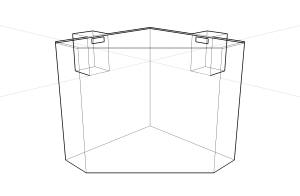
Hang-On Overflow Noise (Water Volume vs. Pipe Diameter) -- 05/14/07 I just upgraded my 29 gal reef to a CPR100 overflow and draining into a 10 gal sump. I decided to hard pipe the overflow in with 3/4pvc and two elbows. No matter how I position the straight down tube into the sump sock I get the constant sucking and releasing sound in the box. <<You are likely trying to push too much water through the overflow. The 1' bulkhead that comes with the overflow will only handle about 300gph (yeah, I know they are rated for more flow...just not practical), by reducing the output diameter to ¾' as you have done with the PVC pipe you have reduced the flow capacity even more to about 150gph or so...which is more than enough, by the way, for this tank/sump combination in my opinion>> Will the Durso pipe solve this problem of noise? <<I have seen what looks like a modified/compact version of the 'Stockman' standpipe for hang-on overflow boxes (see here: http://www.aquariumlife.net/projects/diy-overflow/74.asp), but whether or not it will help is probably a matter of trial and error. It may help smooth flow a bit but if you are getting a surge effect as you describe you will probably have to back off on the pump output from the sump (easily accomplished with a gate-valve plumbed in-line after the pump)>> Even if I put the sump pipe under water it still makes and ton of noise and I am really trying to understand this problem. I want the tank to run with the least amount of noise as possible and the splashing in the sump will be easy to fix if I can get the overflow to stop sucking and making gurgling noises. Any other suggestions? Thanks. Will <<Definitely sounds like a case of too much water volume coupled with a too small throughput diameter to me. Regards, EricR>> Re: Hang-On Overflow Noise (Water Volume vs. Pipe Diameter) -- 05/15/07 Question regarding the 3/4 PVC. <<Ok>> I am trying to get some clarification on what sizes I have used. <<...?>> The 1'' bulkhead accepts a schedule-40 3/4'' connection piece and then goes to 1" elbow. <<Mmm, no...the 1' bulkhead will utilize 1' pipe/fittings...a 1' ell will require 1' pipe. If you have used ¾' pipe then you either have ¾' fittings and bulkhead, or you have use 1' to ¾' reducer fittings>> I noticed that the 1" PVC pipe is the same size as ¾' fittings. <<The outside diameter of 1' PVC pipe is very close to the outside diameter of a ¾' PVC fitting, yes...but in no way are the two compatible without the proper reducer fittings>> Why is this. <<The ¾' fitting must be large enough to fit around the outside diameter of the ¾' pipe...and a 1' fitting for 1' PVC pipe is noticeably larger by comparison>> Basically I am saying that 1" pipe fits in 1'" bulkheads but the 1" is really ¾' in order to fit in that space. <<No...>> This is confusing to me and makes me wonder what size I hard piped mine in with. Please advise. <<If you used 'all' 1' PVC fittings and pipe then figure your flow based on a 1' diameter drain...if you used ¾' pipe or fittings (even just one) in combination with the 1' PVC pipe and fittings, then figure your flow based on a ¾' diameter drain>> Also my Mag 5 with head pumps about 300 gal/hr and I was wondering if the gate-valve would be alright to use to restrict flow from the pump? <<Absolutely...the way these magnetic pumps are designed/work makes them very compatible for use with a gate-valve for tempering flow>> Thanks for your help. Will <<Happy to share. Eric Russell>> Filter question, overflow boxes, 4/30/07 I have read over your Q&A's and still have a couple questions. I hope you can help. I am setting up a 150 gallon saltwater tank, which is not pre-drilled. The LFS nor the local glass company will touch it, which means I need an (two) overflow. Would the overflow with the airlifted pump or the U-tube be a better choice? <The latter> (I know you don't suggest either one, but I have no choice) Would two boxes, with a 1 1/2" outlet be ok with a return pump to handle 00 gph? <? I would not use a pump/mechanism that just one of these (should the other fail) could not accommodate> I am going to go with a sump (using the one posted as a design) or a W/D. The LFS advised the W/D, due to my messy eaters. <Nah> Would the bio-balls creating nitrates still be a concern? <Yeah> I've read you can use "Home Depot" sand? Do you recommend this or stay with the aragonite sand and seed it? <Read on... http://www.wetwebmedia.com/marine/setup/index.htm Scroll down to the brown line...> My LFS also advised, if you want to get up and running overnight, use the boxed seawater. Is this really as beneficial to the tank as would be the actual cycling process? (Or are they looking for a $$?) <A bit of both> Lastly, can you clarify these for me. If putting the heater in the sump or W/D, would a 800 watt heater be ok? <Yep> If putting the skimmer in the sump or W/D, does the water flow back into the first chamber? <Mmm? Flows from the first on ward...> And if using seafood from the seafood dept. should you freeze it before use? <Not likely necessary... Should be safe if deemed fit for human consumption> Thank you for your time, I'm not sure if the LFS is helping or if they are looking for the $$. After reading your site, I wanted to make sure I'm headed in the right direction. I will continue to read, as there's sooo much to learn. <Ah, yes... and to enjoy, share. Do ask about... perhaps there is a more local club... or distal one that you can query others re who drilled their tanks... Some clubs have the gear, folks that actually do this themselves... And do keep reading! Cheers, Bob Fenner> Re: How many holes should be drilled in bottom of tank for a CL? 5/2/07 Many THANKS for your advice and links! I'm learning so much that I needed to know. GS <Ahh! Outstanding! BobF> Re: Filter question, overflow boxes, 5/7/07 Thank you for your recent response. Regarding the U-Tube Overflows. I could use 2 overflow boxes for 600 gph (1 in @ corner) and a return pump to handle 1200 gph, correct? <Mmm, yes> Using your diagram for the sump, is a 20 gallon ok? Or should I go bigger? <Bigger would/will be much better... for a few reasons... more safe for when something goes amiss pump-wise (for transit volume), more functional....> A friend might sell his Pro Clear 150, would this be ok? <Mmm... yes... see WWM re sump design, conversion of wet-dries... Please read here: http://www.wetwebmedia.com/marsetupindex2.htm...> One last question, about the box seawater. If using this, is it really possible to actually set-up & put fish in right away? <Not really> Do you still have a cycling process? <Yes... though it may be that this is greatly expedited... again... You would do well to learn to/use our site... You ask good questions, but are likely unaware of useful to vital "ancillary" issues... Please read on the above cited index re Establishing Biological Filtration...> Thank you <Welcome. Bob Fenner> Mag-Drive 18 and Two 1' Overflows? -- 04/16/07 Hello, <<Howdy>> I have a 150gallon MegaFlow tank with 2 internal overflow boxes. <<Mmm, ok...so two 1' drain lines I presume?>> My question... Can my Mag Drive 18 (with a 3ft head height) handle these 2 overflows? I also have a SCWD on it. <<It's more a question of can the overflows handle the Mag 18? And no, I don't think they will, even with the SCWD to add extra head pressure...at least not easily/quietly. Most 'calculators' will rate a 1' gravity flow drain line at about 600 gph but I always recommend folks shoot for about half that to ease plumbing issues/hassles. I recommend you plumb a gate-valve on the output side of the pump so you can temper the flow if/as needed>> Thanks, Cherie <<Happy to assist. EricR>> Horizontal Overflow 3/30/07 Anthony, <Mmm, not here... You might try at the marinedepot.com site> I love the idea of the horizontal overflow. I have a 125-gallon tank, 6 foot long, that I'm getting ready to set up, and upgrade from a 55-gallon. The new 125-gallon tank will have drains that consist of 2 two inch bulk heads, and I plan on using a mag-36 on the return with approx 4-5 feet of head. Currently I have a 55-gallon sump, and will be upgrading my refugium from 10 to 20-gallons. I've searched this sight, <site> and several others, but I can't seem to locate anyone, or anything, that can help me figure out what dimensions I should use to build a horizontal overflow. <Mmm, do try Antoine's book, "Reef Propagation"...> I have a tendency to over do things, thinking that bigger is better. Can you please advise me on how deep, wide, and long, I should build this? I'm afraid that if I go to large, that may create areas of stagnant water, but if I go to small, it might not be able to keep up. Any advise is greatly appreciated. From what I can gather, you are the Guru on these horizontal overflows. Chris Harris <This information is presented, though in bits and pieces... Here: http://wetwebmedia.com/overfloboxfaqs.htm and the linked files above. Bob Fenner> Can you show me a link about a diy linear overflow? 3/28/07 Thanks, Chris <Mmm, don't know what this actually is... Suspect that it's some sort of term describing plumbing that leads water vertically (via gravity) down to another container... Perhaps here: http://wetwebmedia.com/marsetupindex2.htm The articles, FAQs files on Plumbing et al. Bob Fenner> Re: Linear overflow 3/28/07 Thanks Bob and great site. The linear overflow, I think is also called a horizontal or shelf overflow. <Ohhh> Instead of running from the bottom of the tank to the top, the overflow box is attached to the back wall over the drain holes drilled in the back of the tank. <Ah, yes... have seen these... and they are indeed presented...> I will check out the link later this evening. Any additional information you can find will be great. Anthony discussed it in a chat titled "Internal Horizontal Overflow 2/22/05" on this faq page... More FAQs about Overflows, Boxes and Plumbing Aquatic Systems 1. Thanks, Chris <Yes... let's see: http://wetwebmedia.com/thrhullrat.htm among many places else... Perhaps on Ozreef.org, a great DIY aquatics site. Bob Fenner> Overflow Pipe Size? - 03/27/06 I will be getting a 300g acrylic tank. <<Neat!>> My LFS said that I should go with four 2" pipes on each side of the tank. <<Is not bad advice...better to have more than you need than otherwise>> This will make sure that there will be enough flow for the drain and return. <<Indeed>> I will be using two Iwaki MD100RLT pumps, one for the return on each side of the overflows. I want to turn over the tank at least 10x-20x for a reef system. <<Understood...and is a lot of flow to manage through a sump. Utilizing a large vessel placed distal from the display to help with noise abatement can make plumbing issue less of an...issue>> Is having two returns and drains pipes on each side overkill? <<Not at all. If you have been doing your research re reef systems you are aware how important good flow is to the health and vigor of the system...having multiple returns will aid in providing that flow throughout the tank>> Will this weaken the acrylic tank too much? <<Not if placed/installed correctly. Spacing the holes at least as far apart as the distance equal to their diameter from all edges/seams/each other will help to maintain structural integrity. You can likely get by with spacing them closer, but I have found this rule of thumb to be reliable. If you need to fit the holes closer than this, I recommend you shoot-off an email to someone like Tenecor and see what they recommend>> Is my calculation correct? 2000gph pump w/4' head / 300g = 6.6 x 2 pumps = 13.2 turn overs. <<Of combined flow...yes>> Would four smaller pumps be better to reach a higher turn-over of 15-20x? <<Not better...in my opinion. If you want more flow I suggest "bigger" pumps...but as already indicated, increasing flow through a sump comes with its own challenges. I have a 375g acrylic reef display in my living room; because of its location/concerns over excessive noise, I opted to use Tunze Stream pumps for primary water movement and utilize a Mag-Drive 12 for processing water through my 75g sump>> Also would it be possible to cut a hole in the internal overflow box and put in a Tunze Stream head? It would be sealed. I really don't want it to be sticking out too much. I attached a sample. <<I see it. This should be fine, but do keep in mind you will want to be able to remove this pump periodically (2-3 times a year) for a good cleaning/vinegar soak and rinse so the "seal" can't be permanent, but must be tight enough to preclude draining your tank when the pumps are off>> Thank You. <<Happy to share, EricR>> Plumbing.. Standpipe Diameter 3/2/07 <Hello Andy> I read all of the FAQ's about standpipes and I think I am an oddball. Most questions had the WWM Crew urging people to upgrade from 1" to 1.5" pipe. I am preparing to purchase a 65 gallon glass aquarium (48" x 18" x 17" tall) and I was planning to put a single 2" drain in one back corner and running the return line(s) to the opposite back corner to maximize my circulation. I realize that with most equipment (skimmer, sterilizer, air pump, etc.) there is no such thing as equipment that is too big, but that it is quite possible to choose equipment so oversized that it provides no measurable improvement over the next size down. Is a 2" drain going to provide me with any real advantage over a 1.5" drain for this tank, and would that answer change if I instead opted for the 90 gal (25" tall") tank on the same footprint? <Andy, a 1.5" diameter standpipe, providing no elbows or reducers are used, will allow approximately 1200gph into your sump. I usually recommend at least 10X tank volume for total water flow. The 1.5" pipe gives you plenty of room to work with.> I was noticing the Durso recommends building standpipes out of the thin-wall pipe. Should I build the drain line below the bulkhead out of thin-wall pipe as well? I'm guessing that it would be foolish to build the return out of thin-wall pipe. Is that correct? <I would build with standard PVC, I like a little beef in my plumbing and my burgers.> Thanks for your help. <You're welcome. James (Salty Dog)> -Andy Those Darn "Megaflow" Throughputs - 12/28/06 On 10/18/2006 EricR responded to a viewer question. <<Tis I, EricR, here yet again (still?)...>> During the response EricR made it very clear his displeasure of the AGA Megaflow. <<Indeed...sadly, the throughputs are too few and undersized>> I read his reasons and am a little worried because I was given a brand new 90 AGA for a gift. <<Congratulations on the gift...and as long as you recognize its limitations all will be fine>> This tank came with one "Megaflow" and I am wondering if there are modifications I can make to make it better? <<Mmm...will your orientation of this system allow throughputs through the back glass? Otherwise, about all you can do is employ a better drainpipe/standpipe such as a Durso or similar to help keep things quiet>> Obviously I can't drill bigger or more holes due to the tempered glass. <<Do check with the manufacturer re, but I believe only the 'bottoms' are tempered glass>> I can and will replace the bulkheads with better quality and lose the barbed fitting. Should I replace the drainpipe and return as well? <<Just as previously mentioned>> Any other thoughts are greatly appreciated. <<You'll only get about 300-400 gph through the single 1" bulkhead (before it becomes problematic) so do plan for additional flow "within" the tank>> Mike <<Regards, Eric Russell>> Those Darn "Megaflow" Throughputs - 12/29/06 Thanks so much Eric. I will compensate with more flow in DT. <<Good luck...and enjoy your gift. EricR>> |
|

|
Features: |
|
| Featured Sponsors: |
 Whichever kind, number you use... SCREEN
THEM
Whichever kind, number you use... SCREEN
THEM